Caleb Wright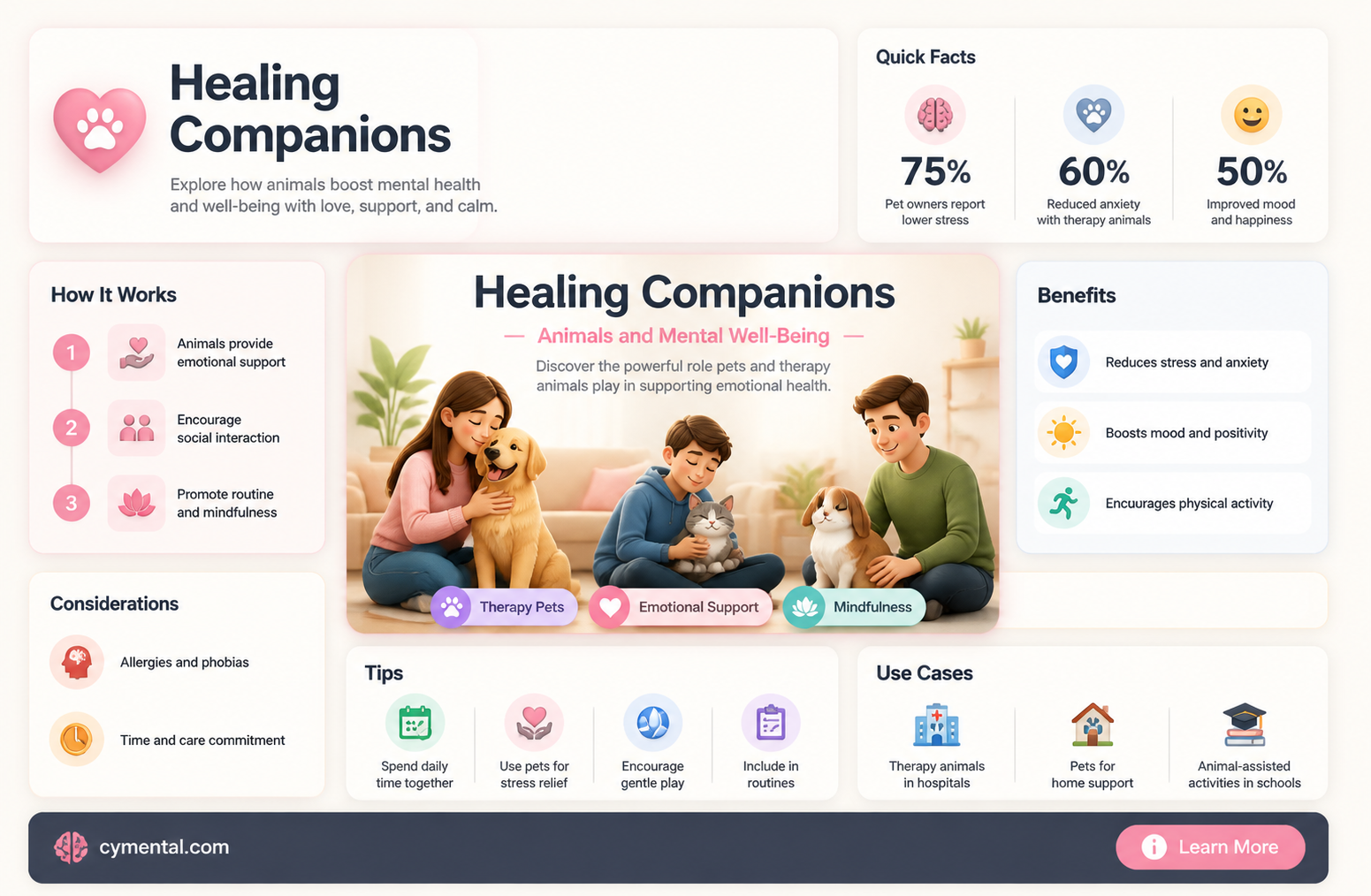
Animals have long been recognized as more than just companions; they play a significant role in supporting mental health and emotional well-being. From therapy dogs assisting individuals with anxiety and depression to the calming presence of a pet at home, animals offer unconditional love, reduce stress, and provide a sense of purpose. Research has shown that interactions with animals can lower cortisol levels, increase oxytocin (the feel-good hormone), and even alleviate symptoms of PTSD and loneliness. Whether through formal animal-assisted therapy or the simple joy of pet ownership, animals have a unique ability to connect with humans on an emotional level, fostering resilience and improving mental health in profound ways.
| Characteristics | Values |
|---|---|
| Stress Reduction | Interacting with animals, such as petting a dog or cat, has been shown to lower cortisol (stress hormone) levels and reduce anxiety. |
| Emotional Support | Animals provide unconditional love and companionship, which can alleviate feelings of loneliness and depression. |
| Physical Activity | Owning a pet, especially a dog, encourages regular exercise through activities like walking, which improves mood and overall mental health. |
| Routine and Purpose | Caring for an animal establishes a daily routine, giving individuals a sense of responsibility and purpose. |
| Social Interaction | Pets can serve as social catalysts, helping their owners connect with others in public spaces or through pet-related communities. |
| Reduction in Symptoms of PTSD | Service animals, particularly dogs, are trained to assist individuals with PTSD by providing comfort, interrupting nightmares, and creating a sense of security. |
| Improved Mood | Spending time with animals increases the production of serotonin and dopamine, neurotransmitters associated with happiness and well-being. |
| Enhanced Coping Mechanisms | Animal-assisted therapy (AAT) has been shown to improve coping strategies for individuals dealing with trauma, anxiety, or grief. |
| Lower Blood Pressure | Interacting with animals can lead to reduced blood pressure, which is beneficial for overall mental and physical health. |
| Increased Oxytocin Levels | Petting or bonding with animals boosts oxytocin, a hormone linked to trust, empathy, and bonding, promoting emotional stability. |
| Therapeutic Presence | Animals in therapy settings provide a non-judgmental and calming presence, making it easier for individuals to open up and engage in treatment. |
| Cognitive Benefits | Interacting with pets, especially for older adults, can improve cognitive function and reduce the risk of cognitive decline. |
| Reduced Feelings of Isolation | Animals offer consistent companionship, which is particularly beneficial for individuals living alone or with limited social support. |
| Behavioral Improvements | Children and adults with autism or ADHD often show improved social skills and reduced behavioral issues when interacting with animals. |
| Mindfulness and Presence | Caring for an animal encourages mindfulness, as it requires focus and attention on the present moment. |
Explore related products


What You'll Learn
- Emotional Support Animals: Trained animals provide comfort, reduce anxiety, and improve emotional well-being for individuals
- Therapy Animals in Hospitals: Animals visit patients to reduce stress, pain, and loneliness during medical treatments
- Pet Ownership Benefits: Owning pets lowers depression, increases social interaction, and promotes daily routines and responsibility
- Animal-Assisted Therapy: Structured sessions with animals to improve mental health conditions like PTSD and autism
- Nature and Wildlife Exposure: Interacting with nature and wildlife reduces stress, enhances mood, and fosters mindfulness

Emotional Support Animals: Trained animals provide comfort, reduce anxiety, and improve emotional well-being for individuals
Animals have an innate ability to sense and respond to human emotions, a trait that has been harnessed in the training of emotional support animals (ESAs). These specially trained companions are not just pets; they are a vital part of a therapeutic approach to managing mental health. The presence of an ESA can significantly reduce feelings of anxiety and loneliness, offering a sense of security and routine that is often lacking in individuals struggling with mental health issues. For instance, a person with generalized anxiety disorder might find that the simple act of petting a dog can lower their heart rate and induce a sense of calm, a phenomenon supported by studies showing a decrease in cortisol levels during human-animal interactions.
The training of ESAs is a meticulous process, focusing on temperament, obedience, and the ability to provide comfort in various environments. Unlike service animals, which are trained to perform specific tasks, ESAs are taught to offer emotional solace through their presence and behavior. This distinction is crucial, as it allows ESAs to cater to a broader range of mental health conditions, from depression to post-traumatic stress disorder (PTSD). For example, a cat trained as an ESA might be taught to recognize signs of distress in its owner and respond by cuddling or purring, actions that have been shown to release oxytocin, a hormone associated with bonding and stress reduction.
Incorporating an ESA into one's life requires consideration of the individual's lifestyle and specific needs. For children with autism, a small, calm dog might be ideal, providing a consistent companion that helps navigate social interactions and reduces sensory overload. Adults dealing with chronic depression may benefit from a more active animal, such as a bird or a horse, which can encourage physical activity and engagement with the outside world. It’s essential to match the animal’s temperament and energy level with the individual’s personality and daily routine to maximize the therapeutic benefits.
While the benefits of ESAs are well-documented, it’s important to approach their integration with practical considerations. Regular veterinary care, proper training, and adherence to public access laws are necessary to ensure the well-being of both the animal and the individual. Additionally, individuals should consult with mental health professionals to determine if an ESA is the right fit for their treatment plan. For those who find the right match, the bond formed with an ESA can be transformative, offering not just comfort but a renewed sense of purpose and connection.
The role of ESAs in mental health is a testament to the profound connection between humans and animals. By providing unconditional love and support, these trained companions can help individuals navigate the challenges of mental health conditions with greater resilience and hope. Whether through the gentle nudge of a dog or the soothing purr of a cat, ESAs remind us of the healing power of companionship and the importance of nurturing these bonds.
Medications for Mental Illness: A Helpful Treatment or Not?
You may want to see also
Explore related products


Therapy Animals in Hospitals: Animals visit patients to reduce stress, pain, and loneliness during medical treatments
Hospitals, by their nature, are places of stress and anxiety. Patients face uncertainty, pain, and isolation, all of which can exacerbate existing mental health struggles or create new ones. Enter therapy animals, a growing trend in healthcare that leverages the unique bond between humans and animals to combat these challenges.
Trained therapy animals, often dogs but sometimes cats, rabbits, or even horses, are brought into hospitals to interact with patients. These visits are carefully structured, with handlers ensuring the animals are calm, clean, and suitable for the environment.
The benefits are tangible. Studies show that interaction with therapy animals can lead to a significant decrease in cortisol levels, the stress hormone, and an increase in oxytocin, the "love hormone" associated with bonding and relaxation. This physiological shift translates to real-world improvements: patients report reduced pain perception, lower blood pressure, and a greater sense of calm.
Consider the case of a child undergoing chemotherapy. The fear and discomfort of treatment can be overwhelming. A visit from a gentle therapy dog, with its soft fur and wagging tail, provides a welcome distraction. The child focuses on petting the dog, playing fetch, or simply enjoying its presence, momentarily forgetting the hospital setting. This break from anxiety can be crucial for both emotional well-being and physical recovery.
For elderly patients, therapy animals can combat loneliness, a common issue in hospitals. A friendly cat curled up on a lap or a dog eager for a scratch behind the ears can provide companionship and a sense of connection, alleviating feelings of isolation.
While the benefits are clear, it's important to remember that therapy animal visits are not a replacement for traditional medical treatment. They are a complementary therapy, a tool to enhance patient experience and support overall well-being. Hospitals must ensure strict hygiene protocols are followed, and patients with allergies or fears of animals should be accommodated accordingly.
Arrested or Assisted: Mental Illness and the Justice System's Dilemma
You may want to see also
Explore related products


$9.99 $14.99


Pet Ownership Benefits: Owning pets lowers depression, increases social interaction, and promotes daily routines and responsibility
Pets have a profound impact on mental health, and their presence in our lives can be a powerful tool for combating depression. Studies show that interacting with pets releases oxytocin, often referred to as the "love hormone," which promotes feelings of happiness and reduces stress. For individuals struggling with depression, the simple act of petting a cat or dog can provide immediate emotional relief. A 2018 study published in the *Journal of Psychiatric Research* found that pet owners reported significantly lower levels of depression compared to non-pet owners. This effect is particularly notable in older adults, where loneliness and isolation can exacerbate depressive symptoms. Owning a pet provides a sense of purpose and companionship, acting as a natural buffer against the weight of depression.
Beyond emotional support, pets serve as social catalysts, breaking down barriers and fostering connections between people. Dog owners, for instance, are more likely to engage in conversations with strangers during walks, whether at the park or in the neighborhood. This increased social interaction is crucial for mental well-being, as it combats feelings of isolation and builds a sense of community. Research from the *American Psychological Association* highlights that pet owners are more likely to get to know people in their neighborhood, enhancing their social networks. Even small pets, like hamsters or birds, can spark conversations and create opportunities for social engagement, making them valuable companions for those who may struggle with initiating social interactions.
One of the most practical benefits of pet ownership is its ability to instill structure and responsibility into daily life. Pets rely on their owners for feeding, exercise, and care, creating a routine that can be particularly beneficial for individuals with mental health challenges. For example, dog owners must adhere to a schedule for walks, meals, and playtime, which can help regulate their own daily habits. This routine not only promotes physical activity but also provides a sense of accomplishment and stability. A study in *BMC Psychiatry* found that pet owners with mental health conditions reported improved adherence to daily routines, which in turn positively impacted their overall mental health. Establishing and maintaining these routines can be a therapeutic practice, offering a sense of control and predictability in an often unpredictable world.
To maximize the mental health benefits of pet ownership, it’s essential to choose a pet that aligns with your lifestyle and needs. For those with limited mobility or time, low-maintenance pets like fish or cats may be ideal. Conversely, active individuals might benefit from the companionship of a dog, which encourages regular exercise and outdoor activity. Regardless of the pet, consistency in care is key. Dedicate 15–30 minutes daily to focused interaction, such as grooming, training, or playtime, to strengthen the bond and enhance emotional benefits. Additionally, integrating pet care into a structured daily schedule can help reinforce routines and responsibility. By thoughtfully incorporating pets into your life, you can harness their potential to lower depression, increase social interaction, and promote a healthier, more balanced mental state.
Journaling for Mental Health: Unlocking Emotional Healing and Self-Discovery
You may want to see also
Explore related products

$17.28 $20


$15.8 $16.99


Animal-Assisted Therapy: Structured sessions with animals to improve mental health conditions like PTSD and autism
Animals have an uncanny ability to sense human emotions, often providing comfort without uttering a word. This intuitive connection forms the backbone of Animal-Assisted Therapy (AAT), a structured intervention where trained animals—dogs, horses, or even rabbits—are integrated into therapeutic sessions to address specific mental health conditions. Unlike casual pet interactions, AAT is goal-oriented, led by licensed professionals, and tailored to conditions like PTSD, autism, anxiety, and depression. For instance, a PTSD patient might work with a therapy dog to practice grounding techniques during flashbacks, while a child with autism could use equine therapy to improve social cues and emotional regulation.
Consider the mechanics: A typical AAT session lasts 30–60 minutes, conducted weekly over 6–12 weeks, depending on the individual’s needs. The animal acts as a nonjudgmental co-therapist, reducing anxiety and fostering trust. In PTSD cases, dogs trained in "pressure therapy" apply gentle weight to a patient’s lap during panic attacks, mimicking the calming effect of a weighted blanket. For autism, structured activities like brushing a horse or teaching a dog commands help improve focus, communication, and sensory processing. Research shows that oxytocin levels rise during these interactions, counteracting stress hormones like cortisol, which are often elevated in these conditions.
However, AAT isn’t a one-size-fits-all solution. Success hinges on careful pairing—a high-energy child might benefit from an active dog, while a sensitive individual could thrive with a calm cat. Hygiene and safety are paramount; therapy animals undergo rigorous training and health screenings. Practitioners must also monitor for overstimulation, especially in autism cases, where sensory overload can occur. Despite these considerations, the evidence is compelling: a 2021 study in *Frontiers in Psychology* found that AAT reduced PTSD symptoms by 30% in veterans after 12 weeks, while autistic children showed a 40% improvement in social interaction skills post-equine therapy.
To integrate AAT into a treatment plan, start by consulting a mental health professional who specializes in this modality. Organizations like Pet Partners or the Equine Assisted Growth and Learning Association (EAGALA) offer certified programs. For parents of autistic children, begin with short, supervised sessions to gauge comfort levels. Adults with PTSD should pair AAT with traditional therapies like CBT for comprehensive care. While not a standalone cure, AAT’s unique blend of emotional support and structured interaction makes it a powerful adjunctive tool in the mental health toolkit.
Exercise Boosts Elderly Mental Health: Benefits and Strategies for Wellbeing
You may want to see also
Explore related products



Nature and Wildlife Exposure: Interacting with nature and wildlife reduces stress, enhances mood, and fosters mindfulness
Spending just 20–30 minutes daily in green spaces—parks, forests, or even urban gardens—can measurably lower cortisol levels, the body's primary stress hormone. This isn’t mere anecdote; studies, including research from the University of Michigan, confirm that nature exposure acts as a physiological reset, calming the nervous system and reducing anxiety. The effect is so pronounced that "forest bathing," a practice rooted in Japan's *shinrin-yoku*, has gained global traction as a therapeutic intervention for stress-related disorders.
Consider this a prescription: to maximize benefits, aim for environments rich in biodiversity. A walk through a wooded area with varied flora and fauna engages multiple senses—the scent of pine, the sound of rustling leaves, the sight of birds—amplifying the restorative impact. Even small doses, like a 10-minute pause near a tree-lined street, can yield immediate mood improvements. For urban dwellers, apps like iNaturalist can turn these moments into interactive experiences, encouraging mindfulness through observation and identification of local wildlife.
Contrast this with indoor environments, where stress levels often plateau or rise due to artificial lighting, noise, and screen exposure. A 2015 study published in *Proceedings of the National Academy of Sciences* found that participants who walked in nature for 90 minutes reported fewer repetitive negative thoughts compared to those in urban settings. The takeaway? Nature isn’t just a backdrop; it’s an active agent in mental health management, particularly for those grappling with rumination or mild depression.
For families or educators, incorporating wildlife interaction can deepen these benefits. Activities like birdwatching, gardening, or even maintaining a small terrarium foster a sense of responsibility and connection. Children, especially, thrive in such settings; a study in *Frontiers in Psychology* noted that kids who engaged in nature-based play exhibited higher levels of creativity and emotional resilience. Practical tip: pair these activities with journaling to encourage reflection, turning fleeting moments into lasting mindfulness practices.
Finally, while nature’s benefits are universal, accessibility isn’t. For those with limited mobility or living in concrete jungles, technology offers a bridge. Virtual reality (VR) nature experiences, though not a substitute, have shown promise in reducing stress and improving mood. A 2021 study in *JMIR Mental Health* found that VR forest simulations lowered anxiety levels comparably to real-world exposure for elderly participants. Pairing such tools with indoor plants or pet care can create a hybrid approach, ensuring everyone can tap into nature’s healing power, regardless of circumstance.
IQ Tests and Mental Health: Diagnostic Tool or Misleading Measure?
You may want to see also
Frequently asked questions
Yes, animals can significantly improve mental health by reducing stress, anxiety, and depression. Interacting with pets releases oxytocin and serotonin, which promote feelings of happiness and relaxation.
Dogs and cats are most commonly associated with mental health benefits due to their affectionate nature, but other animals like rabbits, birds, and even fish can also provide comfort and companionship.
Therapy animals are specifically trained to provide emotional support and comfort in various settings, such as hospitals or schools, while regular pets offer companionship without formal training.
Yes, animals, particularly service dogs, can be trained to assist individuals with PTSD or anxiety disorders by providing grounding techniques, interrupting panic attacks, and offering emotional support.
While animals are generally beneficial, some individuals may have allergies or fear of animals, and pet ownership requires time, effort, and financial responsibility, which can be stressful for some.