Caleb Wright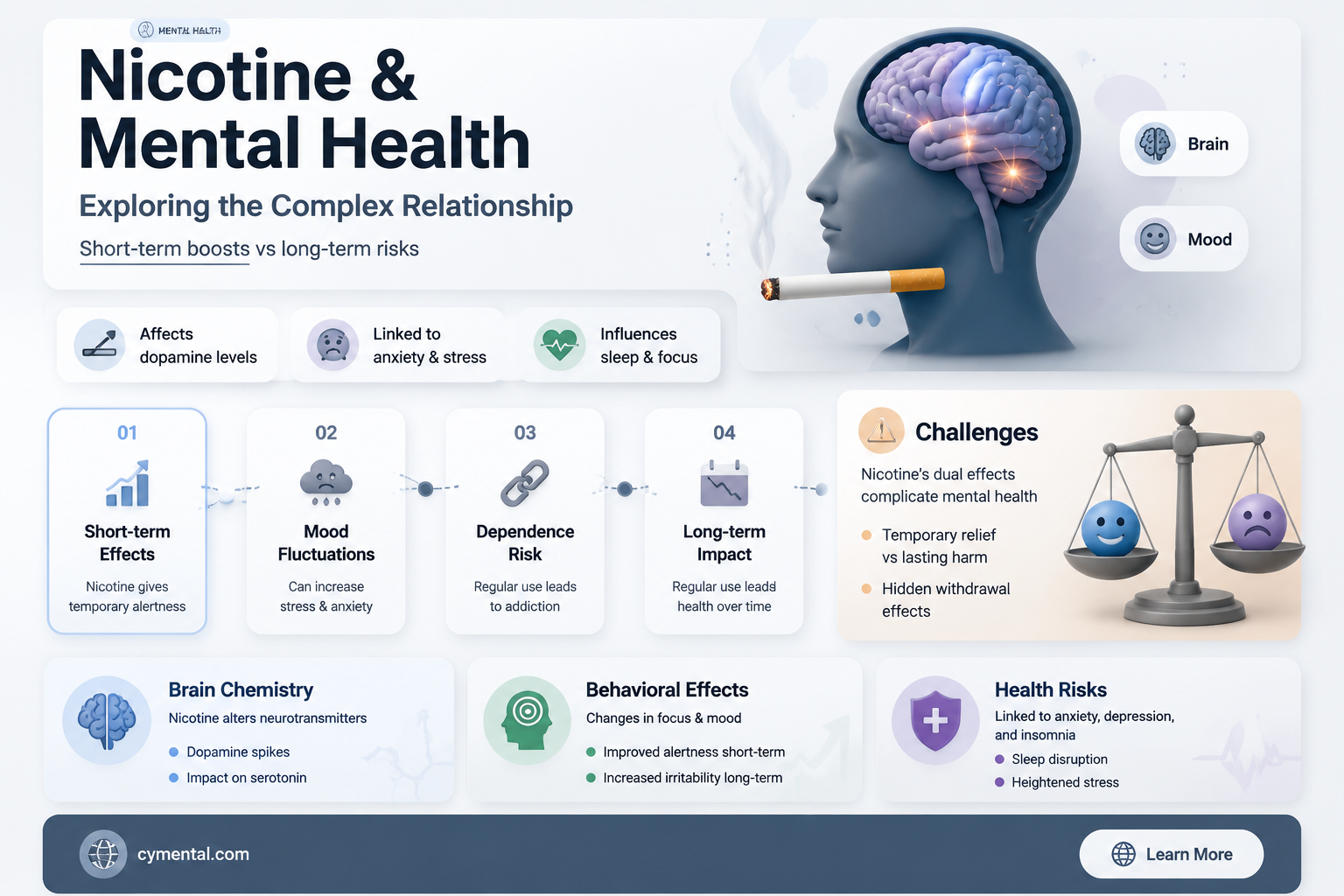
The relationship between nicotine and mental health is complex and multifaceted, sparking both interest and debate among researchers and healthcare professionals. While nicotine, commonly consumed through tobacco products or vaping, is often associated with addiction and physical health risks, some studies suggest it may have temporary cognitive and mood-enhancing effects, such as improved focus and reduced stress. However, these potential short-term benefits are often overshadowed by long-term consequences, including increased anxiety, dependence, and withdrawal symptoms, which can exacerbate mental health issues. Additionally, the self-medication hypothesis posits that individuals with mental health conditions, such as depression or ADHD, may use nicotine to alleviate symptoms, creating a cycle of reliance. As research continues to explore this nuanced connection, it remains crucial to weigh the perceived benefits against the significant health risks and consider safer alternatives for managing mental health.
Explore related products





What You'll Learn

Nicotine's impact on anxiety reduction
Nicotine’s role in anxiety reduction is a double-edged sword, often misunderstood. While many smokers report feeling calmer after a cigarette, this effect is short-lived and rooted in the temporary relief of withdrawal symptoms rather than genuine anxiety alleviation. Research shows that nicotine acts as both a stimulant and a relaxant, depending on dosage and individual tolerance. For instance, low doses (1-2 mg, equivalent to a few puffs) can activate the parasympathetic nervous system, creating a sense of calm. However, higher doses (5-10 mg or more) may increase heart rate and agitation, exacerbating anxiety. This paradox highlights the complexity of nicotine’s interaction with the brain’s stress response systems.
Consider the mechanism: nicotine binds to nicotinic acetylcholine receptors in the brain, triggering the release of neurotransmitters like dopamine and serotonin, which are linked to mood regulation. For individuals with anxiety disorders, this can provide immediate, albeit temporary, relief. A study published in *Psychopharmacology* found that nicotine reduced self-reported anxiety levels in participants within 10 minutes of administration. However, this effect diminishes with prolonged use, as the body develops tolerance, requiring higher doses to achieve the same result. This cycle can lead to dependence, making nicotine a risky tool for long-term anxiety management.
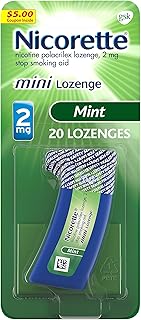
Practical application of nicotine for anxiety reduction requires caution. For adults over 18, nicotine replacement therapies (NRTs) like patches (7-21 mg/day) or gum (2-4 mg per piece) offer controlled dosing without the harmful effects of smoking. However, these should be used under medical supervision, especially for those with cardiovascular conditions or pregnant individuals. A key takeaway is that nicotine is not a substitute for evidence-based treatments like cognitive-behavioral therapy (CBT) or medication. Instead, it may serve as a temporary adjunct for acute anxiety episodes, particularly in smokers trying to quit, as withdrawal itself can heighten anxiety.
Comparing nicotine to other anxiolytics reveals its limitations. Unlike benzodiazepines or SSRIs, nicotine does not address the root causes of anxiety. Its efficacy is superficial and short-term, making it a poor choice for chronic management. Moreover, the health risks of smoking—such as lung cancer, heart disease, and stroke—far outweigh any potential mental health benefits. For those seeking alternatives, mindfulness practices, exercise, or herbal supplements like L-theanine have shown promise without the addictive risks. Ultimately, while nicotine may offer fleeting relief, its use for anxiety reduction is neither sustainable nor advisable.
Napping for Mental Health: Can Short Sleeps Ease Symptoms?
You may want to see also
Explore related products


Effects of nicotine on depression symptoms
Nicotine's impact on depression symptoms is a complex interplay of temporary relief and long-term risks. While some individuals report mood elevation and reduced anxiety after nicotine intake, this effect is short-lived and often followed by withdrawal symptoms that can exacerbate depressive episodes. Studies suggest that nicotine stimulates the release of dopamine, a neurotransmitter associated with pleasure and reward, which may provide a brief sense of well-being. However, chronic use can lead to desensitization, requiring higher doses to achieve the same effect and potentially deepening the cycle of dependency.
Consider the case of a 30-year-old individual diagnosed with mild depression who uses nicotine patches (7 mg/day) as a self-medication strategy. Initially, they experience improved focus and mood stabilization. Over time, however, tolerance develops, and the patches become less effective. This scenario highlights the dual nature of nicotine: it may offer symptomatic relief but lacks the therapeutic depth of evidence-based treatments like SSRIs or cognitive-behavioral therapy. For those seeking immediate mood enhancement, nicotine might seem appealing, but its transient benefits come with significant health trade-offs.
From a comparative perspective, nicotine’s role in depression management pales in comparison to established interventions. While antidepressants target serotonin and norepinephrine imbalances over weeks, nicotine’s dopamine-driven effects are immediate but unsustainable. Moreover, nicotine use is associated with increased cardiovascular risks, respiratory issues, and addiction—factors that can worsen overall mental health. For instance, a 2020 study published in *JAMA Psychiatry* found that smokers with depression were less likely to achieve remission compared to non-smokers, even when receiving antidepressant treatment.
For individuals contemplating nicotine as a coping mechanism, practical steps should prioritize safer alternatives. Incorporating mindfulness practices, regular exercise, and a balanced diet can provide sustained mood improvements without the risks. If nicotine is already part of the routine, gradual reduction under professional guidance is advisable. For example, switching from cigarettes to nicotine gum (2–4 mg per piece) can help manage cravings while minimizing harm. However, this should be a temporary measure, not a long-term solution.
In conclusion, while nicotine may offer fleeting relief from depression symptoms, its limitations and risks far outweigh any perceived benefits. Relying on it as a mental health tool is akin to treating a chronic condition with a band-aid—ineffective and potentially harmful. Instead, evidence-based strategies and professional support remain the cornerstone of sustainable depression management.
Mental Health Treatment: Boosting Welfare-to-Work Program Success?
You may want to see also
Explore related products


Nicotine and cognitive function enhancement
Nicotine, a potent parasympathomimetic stimulant, has long been associated with cognitive enhancements, particularly in attention, memory, and alertness. Studies suggest that it acts on nicotinic acetylcholine receptors in the brain, modulating neurotransmitter release and improving neural efficiency. For instance, a 2019 meta-analysis published in *Neuroscience & Biobehavioral Reviews* found that nicotine administration in non-smokers led to significant improvements in working memory and attention tasks. However, these effects are dose-dependent; low to moderate doses (1-2 mg via gum or patch) are linked to cognitive benefits, while higher doses (>4 mg) may impair performance due to overstimulation.
To harness nicotine’s cognitive benefits, consider its form and delivery method. Transdermal patches (e.g., 2 mg for 6 hours) provide steady, controlled release, minimizing side effects like jitteriness. Alternatively, nicotine gum (2 mg pieces) allows for titrated dosing, ideal for task-specific focus. For younger adults (18-35), who often seek cognitive enhancement for academic or professional demands, combining nicotine with structured study sessions may yield better results. Caution is advised for older adults (>65), as nicotine can exacerbate cardiovascular risks or interact with medications.
While nicotine’s cognitive benefits are tempting, they come with caveats. Regular use can lead to tolerance, diminishing its effectiveness over time. Moreover, nicotine is highly addictive, and cessation often results in withdrawal symptoms like irritability and cognitive fog. A practical tip: limit use to high-demand cognitive periods (e.g., exams or deadlines) and avoid daily reliance. Pairing nicotine with caffeine in moderation (1-2 cups of coffee) can synergistically enhance focus, but monitor for increased anxiety or insomnia.
Comparatively, nicotine’s cognitive enhancements are more pronounced in individuals with pre-existing deficits, such as those with ADHD or mild cognitive impairment. A 2020 study in *Psychopharmacology* demonstrated that nicotine improved sustained attention in ADHD patients, rivaling the effects of stimulant medications in some cases. However, this does not justify self-medication; consult a healthcare provider before using nicotine for therapeutic purposes. For healthy individuals, natural alternatives like mindfulness training or aerobic exercise may offer safer, long-term cognitive benefits.
In conclusion, nicotine’s role in cognitive function enhancement is nuanced. When used strategically and in controlled doses, it can provide short-term boosts in attention and memory. However, its addictive nature and potential risks demand careful consideration. For those exploring this route, start with the lowest effective dose, monitor responses, and prioritize non-pharmacological strategies for sustained cognitive health. Nicotine is a tool, not a solution—use it wisely.
Exploring Ayahuasca's Potential in Treating Mental Health Disorders
You may want to see also
Explore related products

$46.59



Role of nicotine in stress relief
Nicotine, a potent parasympathomimetic stimulant, interacts with the brain's nicotinic acetylcholine receptors, triggering the release of neurotransmitters like dopamine, norepinephrine, and serotonin. This neurochemical cascade can produce a sense of relaxation and improved focus, which many users anecdotally report as stress relief. For instance, a 2018 study published in *Psychopharmacology* found that nicotine administration reduced stress-induced cortisol levels in healthy adults, suggesting a direct physiological mechanism for its calming effects. However, the dosage is critical: low to moderate nicotine intake (e.g., 1-2 mg via gum or patch) may provide these benefits, while higher doses (e.g., 10 mg or more) can increase anxiety and heart rate, counteracting its stress-relieving potential.
Consider the scenario of a 30-year-old professional using nicotine gum during a high-pressure workday. By chewing a 2 mg piece when stress peaks, they may experience a temporary reduction in tension and improved cognitive clarity within 10-15 minutes. This targeted use aligns with harm reduction strategies, as it avoids the long-term health risks associated with smoking while leveraging nicotine's acute effects. However, reliance on nicotine for stress relief can lead to dependence, underscoring the need for moderation and alternative stress management techniques, such as mindfulness or exercise, to complement its use.
From a comparative perspective, nicotine's stress-relieving properties resemble those of caffeine, another stimulant that enhances focus and reduces fatigue. Yet, nicotine's impact on mood is more pronounced due to its direct influence on dopamine pathways, often described as a "calm energy." Unlike caffeine, which can cause jitteriness, nicotine's effects are smoother for some users, particularly when delivered via non-combustible methods like patches or vapes. However, individual responses vary: while 40% of users report stress reduction, 20% may experience heightened anxiety, according to a 2020 survey by the *Journal of Addiction Medicine*.
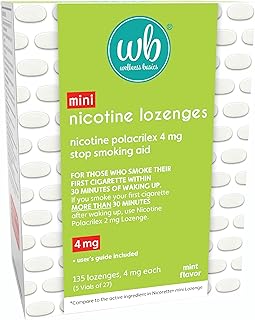
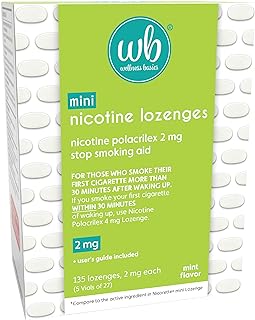
To maximize nicotine's stress-relieving benefits while minimizing risks, follow these practical steps: first, limit daily intake to 4-6 mg, equivalent to 2-3 pieces of 2 mg gum or a single 4 mg patch. Second, pair nicotine use with deep breathing exercises to enhance relaxation. Third, avoid combining nicotine with other stimulants like caffeine to prevent overstimulation. Finally, monitor your response: if anxiety increases, reduce the dose or switch to a lower-strength product. For individuals under 18 or pregnant women, nicotine use is strongly discouraged due to its adverse effects on brain development and fetal health.
In conclusion, nicotine's role in stress relief is nuanced, offering temporary benefits when used strategically and in moderation. While it is not a long-term solution for chronic stress, its acute effects can provide a valuable tool for managing acute episodes. By understanding its mechanisms, dosages, and limitations, users can harness its potential while mitigating risks, ensuring a balanced approach to mental health management.
Supporting Mental Health: Practical Ways to Help Loved Ones Heal
You may want to see also
Explore related products



$17.99 $19.99

Potential risks vs. mental health benefits
Nicotine’s dual nature as both a stimulant and a relaxant complicates its role in mental health. On one hand, it activates the release of dopamine, offering temporary relief from stress and anxiety. On the other, chronic use can lead to increased anxiety and mood instability. For instance, while a single dose of nicotine (e.g., one cigarette or 1-2 mg of nicotine gum) may provide a short-term calming effect, repeated use can desensitize receptors, requiring higher doses to achieve the same result. This cycle mirrors addiction patterns, highlighting the fine line between benefit and risk.
Consider the case of individuals with ADHD or schizophrenia, populations where nicotine use is disproportionately high. Studies suggest nicotine may improve focus and cognitive function in ADHD patients, potentially due to its interaction with acetylcholine receptors. However, this comes at a cost: long-term smoking increases the risk of cardiovascular disease, respiratory issues, and cancer. For schizophrenia, nicotine’s ability to reduce antipsychotic side effects like tardive dyskinesia is noted, but the habit often exacerbates overall health decline. Balancing these trade-offs requires careful consideration of dosage and delivery method—vaping or patches, for example, avoid the carcinogens in cigarettes but still carry risks.
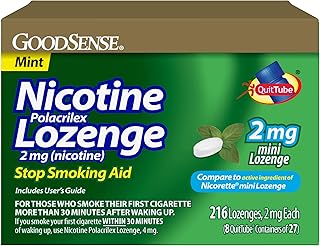
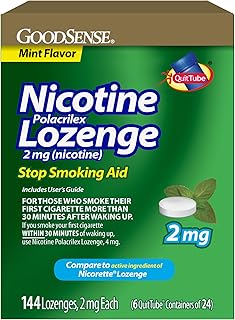
From a practical standpoint, anyone considering nicotine for mental health should start with low doses (e.g., 2 mg gum or lozenge) and monitor effects closely. Pairing nicotine use with behavioral therapy or medication can maximize benefits while minimizing dependency. For younger adults (ages 18-25), whose brains are still developing, nicotine poses heightened risks of addiction and cognitive impairment, making it particularly unsuitable. Older adults (over 65) must weigh nicotine’s potential cognitive benefits against its interaction with existing medications and health conditions.
The persuasive argument for nicotine’s mental health benefits often overlooks its addictive nature. Unlike prescribed stimulants like methylphenidate, nicotine lacks regulated dosing and long-term safety data. Its accessibility—in cigarettes, vapes, or gums—makes it easy to misuse. Advocates point to its rapid onset of action (within 10-20 minutes for gum or vaping), but this immediacy can foster psychological reliance. Before turning to nicotine, individuals should explore alternatives like exercise, mindfulness, or non-nicotine medications, which offer sustained benefits without the risk of addiction.
In conclusion, nicotine’s potential mental health benefits are fleeting and outweighed by its risks. While it may provide temporary relief or cognitive enhancement, the long-term consequences—addiction, physical health decline, and withdrawal symptoms—demand caution. For those seeking mental health support, nicotine should be a last resort, not a first choice. Always consult a healthcare provider to explore safer, more effective options tailored to individual needs.
Staying Active: How Keeping Busy Boosts Mental Health and Well-being
You may want to see also
Frequently asked questions
While nicotine may temporarily enhance focus and attention in some individuals, including those with ADHD, it is not a recommended treatment. The effects are short-lived, and nicotine use carries significant health risks, including addiction and cardiovascular problems. Safer, evidence-based treatments for ADHD, such as medication and therapy, are available and should be prioritized.
Nicotine may provide temporary relief from anxiety or depression due to its stimulant effects, but this is often followed by increased anxiety and withdrawal symptoms. Long-term nicotine use can worsen mental health conditions and create a cycle of dependence. Healthier alternatives, such as therapy, medication, and lifestyle changes, are more effective and sustainable for managing anxiety and depression.
Nicotine is not a safe or healthy way to manage stress. While it may provide temporary relaxation, it increases heart rate and blood pressure, contributing to overall stress on the body. Additionally, nicotine dependence can lead to increased stress when not using it. Better stress management strategies include exercise, mindfulness, and seeking support from mental health professionals.