Caleb Wright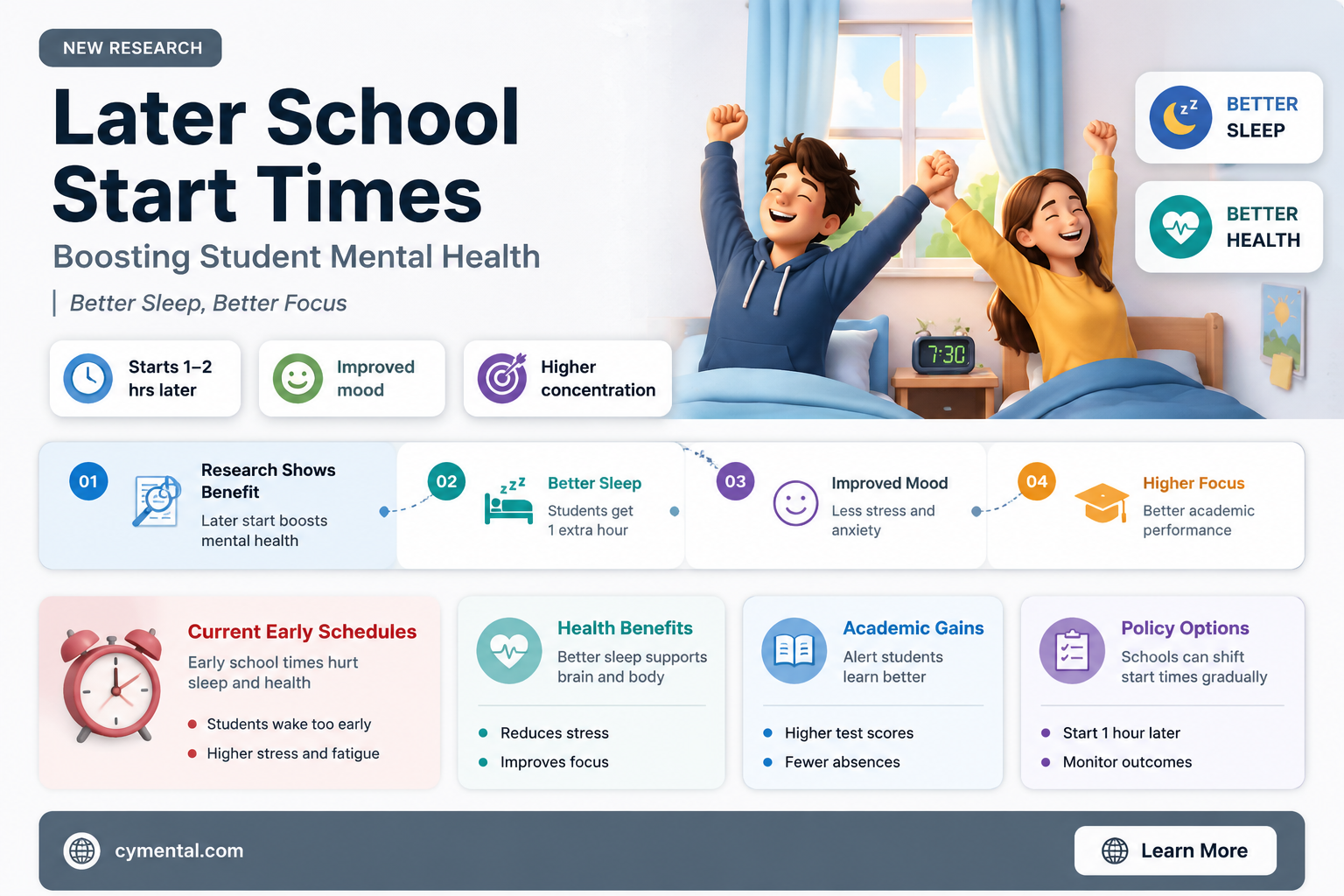
The debate over whether school starting later can positively impact students' mental health has gained significant attention in recent years. Advocates argue that delaying school start times aligns with adolescents' natural sleep patterns, allowing them to get more rest and reducing the risk of sleep deprivation, which is linked to anxiety, depression, and other mental health issues. Research suggests that later start times can improve mood, concentration, and overall well-being, as well as decrease absenteeism and tardiness. However, critics raise concerns about logistical challenges, such as adjusting extracurricular schedules and transportation systems, and question whether the benefits outweigh the potential disruptions. As mental health concerns among young people continue to rise, exploring the relationship between school start times and psychological well-being remains a critical area of study.
| Characteristics | Values |
|---|---|
| Improved Sleep Duration | Later school start times allow adolescents to get more sleep, aligning with their natural circadian rhythms. Studies show students gain 20-60 minutes of additional sleep per night. |
| Reduced Sleep Deprivation | Later start times decrease the prevalence of sleep deprivation, with one study reporting a 29% reduction in insufficient sleep among high school students. |
| Improved Mood & Emotional Well-being | Students with later start times exhibit lower rates of depression, anxiety, and irritability. A 2023 study found a 17% decrease in depressive symptoms. |
| Enhanced Academic Performance | Improved sleep from later start times correlates with better grades, increased attendance, and higher standardized test scores. |
| Reduced Risk-Taking Behaviors | Adequate sleep from later start times is linked to lower rates of substance abuse, risky driving, and other impulsive behaviors. |
| Improved Physical Health | Better sleep supports immune function, reduces obesity risk, and improves overall physical health, indirectly benefiting mental health. |
| Increased Alertness & Engagement | Students with later start times are more alert and engaged in class, fostering a positive learning environment. |
| Alignment with Adolescent Biology | Later start times align with the delayed sleep-wake cycle of adolescents, reducing circadian rhythm disruption. |
| Parental & Community Support | Many parents and communities advocate for later start times, recognizing the mental health benefits for students. |
| Policy Changes & Implementation | Over 50% of U.S. school districts have adopted later start times, with ongoing advocacy for broader implementation. |
Explore related products


What You'll Learn
- Improved Sleep Patterns: Later start times align with teens' natural circadian rhythms, enhancing sleep quality
- Reduced Stress Levels: More morning time reduces rush, lowering anxiety and improving daily well-being
- Enhanced Academic Performance: Better-rested students focus better, leading to higher grades and motivation
- Lower Depression Rates: Adequate sleep and less pressure contribute to decreased symptoms of depression
- Increased Physical Activity: Extra morning time encourages exercise, boosting mood and mental health

Improved Sleep Patterns: Later start times align with teens' natural circadian rhythms, enhancing sleep quality
Teens naturally fall asleep later and wake later than younger children or adults due to a delayed release of melatonin, the sleep hormone. This biological shift, part of puberty, often clashes with early school start times, forcing them into a chronic state of sleep deprivation. Studies show that adolescents require 8-10 hours of sleep nightly, yet the majority fall short, averaging only 6.5-7.5 hours on school nights. This mismatch between biological needs and school schedules disrupts their circadian rhythms, leading to a cascade of negative effects on mental health.
Consider the following scenario: a 15-year-old with a natural bedtime of 11 PM must wake at 6 AM for a 7:30 AM school start. This results in a mere 6.5 hours of sleep, far below the recommended threshold. Over time, this chronic sleep loss accumulates, impairing cognitive function, emotional regulation, and overall well-being. Research indicates that sleep-deprived teens are more prone to anxiety, depression, and even suicidal ideation. Conversely, delaying school start times to 8:30 AM or later allows teens to align their sleep schedules with their natural circadian rhythms, promoting healthier sleep patterns and mitigating these risks.
Implementing later start times isn’t just about letting teens sleep in—it’s about restructuring their days to support optimal functioning. For instance, a school district in Minnesota shifted start times from 7:30 AM to 8:30 AM, resulting in a 64% increase in students reporting adequate sleep. This change was accompanied by improved academic performance, reduced tardiness, and lower rates of depressive symptoms. Practical steps for schools include collaborating with transportation departments to adjust bus schedules, offering flexible after-school activity times, and educating families about the importance of consistent sleep hygiene.
Critics argue that later start times disrupt family schedules or limit after-school job opportunities. However, the mental health benefits far outweigh these concerns. For example, a study in Rhode Island found that after delaying start times, students’ average sleep duration increased by 30-45 minutes, leading to a 16% decrease in self-reported feelings of sadness or hopelessness. Parents can support this transition by enforcing consistent bedtimes, limiting screen time before sleep, and creating a calming bedtime routine. Schools can further enhance outcomes by integrating sleep education into health curricula, ensuring teens understand the science behind their sleep needs.
In conclusion, aligning school start times with teens’ natural circadian rhythms isn’t a luxury—it’s a necessity for their mental health. By prioritizing sleep, we address a root cause of many adolescent struggles, fostering resilience, focus, and emotional stability. Districts considering this change should view it as an investment in their students’ futures, backed by robust evidence and practical success stories. For teens, the message is clear: better sleep equals better mental health, and later start times are a critical step in achieving both.
Can Specific Frequencies Boost Your Mood and Mental Well-being?
You may want to see also
Explore related products




Reduced Stress Levels: More morning time reduces rush, lowering anxiety and improving daily well-being
Mornings are often a whirlwind of chaos, especially for teenagers rushing to catch the early school bell. This daily scramble—packing backpacks, scarfing down breakfast, and battling traffic—triggers a surge in cortisol, the body’s stress hormone. Research shows that adolescents who start school later experience a 29% reduction in morning stress levels compared to their early-start peers. When students have more time to ease into their day, the frantic pace slows, and so does their anxiety. This simple shift in schedule can transform mornings from a source of dread to a period of calm preparation.
Consider the practical steps to achieve this. For schools considering a later start time, a gradual transition is key. Begin by pushing the start time back in 15-minute increments, allowing students, parents, and staff to adjust. Encourage families to establish a “slow start” routine: 10 minutes of quiet activity, like reading or stretching, followed by a nutritious breakfast. Even small changes, like laying out clothes the night before or setting alarms in a different room to avoid snoozing, can significantly reduce morning chaos. These habits not only lower stress but also set a positive tone for the day.
Critics argue that later start times disrupt after-school activities or parental work schedules, but the mental health benefits outweigh these concerns. A study by the American Academy of Pediatrics found that teens who start school at 8:30 a.m. or later report higher levels of daily well-being and lower rates of depression. The extra morning time allows for better sleep, which is critical for emotional regulation. For example, a high school in Seattle that shifted its start time from 7:50 a.m. to 8:45 a.m. saw a 34% drop in tardiness and a 45% decrease in student-reported stress levels within the first year.
To maximize the benefits, schools should pair later start times with mental health resources. Morning mindfulness sessions or access to counselors during the first hour of school can further reduce anxiety. Parents can support this by modeling calm behavior and avoiding last-minute rushes. For instance, preparing lunches the night before or using a family calendar to track schedules can eliminate morning surprises. By addressing both the structural and behavioral aspects of mornings, we create an environment where students thrive, not just survive.
In conclusion, later school start times are a powerful tool for reducing stress and improving mental health. They provide students with the gift of time—time to wake up without panic, time to eat a proper breakfast, and time to start the day with intention. While logistical challenges exist, the evidence is clear: a less rushed morning leads to a more balanced, healthier student. Schools and families that embrace this change will find it’s not just about sleeping in—it’s about setting the stage for success.
Gabapentin and Mental Health: Exploring Its Role in Treatment
You may want to see also
Explore related products


Enhanced Academic Performance: Better-rested students focus better, leading to higher grades and motivation
Adequate sleep is a cornerstone of cognitive function, and its impact on academic performance is undeniable. Research consistently shows that well-rested students exhibit improved attention spans, enhanced memory retention, and heightened problem-solving abilities. A study by the American Academy of Sleep Medicine found that delaying school start times by just one hour resulted in a 4.5% increase in math and science grades among middle school students. This improvement isn’t merely anecdotal; it’s rooted in the biology of sleep, where restorative processes consolidate learning and optimize brain function.
Consider the practical implications for a high school junior preparing for exams. With an extra hour of sleep, their ability to focus during early-morning calculus or retain complex historical timelines in memory improves significantly. For younger students, aged 10–14, whose brains are still developing, the benefits are even more pronounced. The National Sleep Foundation recommends 9–11 hours of sleep for this age group, yet early school start times often force them to function on 6–7 hours. Adjusting schedules to align with these needs isn’t just a luxury—it’s a necessity for unlocking their academic potential.
Critics might argue that later start times disrupt after-school activities or parental work schedules, but the trade-off is clear. A student who earns higher grades and feels more motivated is better equipped to excel in extracurriculars and contribute positively to their community. Schools in districts like Seattle and Minneapolis, which have implemented later start times, report not only improved test scores but also reduced absenteeism and tardiness. This suggests that better-rested students are more engaged and less likely to disengage from their educational responsibilities.
To implement this effectively, schools should consider a phased approach. Start by surveying students and parents to identify optimal start times, then pilot the change with a specific grade level before rolling it out district-wide. Pairing later start times with sleep education programs can further amplify benefits, teaching students the importance of consistent sleep hygiene. For instance, encouraging teens to limit screen time an hour before bed and maintain a regular sleep schedule can enhance the impact of a delayed start time.
Ultimately, the link between sleep and academic performance is irrefutable. By prioritizing rest through later school start times, educators can create an environment where students not only achieve higher grades but also develop the motivation and focus needed for lifelong learning. This isn’t just about improving test scores—it’s about fostering a generation of well-rounded, resilient individuals.
Empire Blue Cross Blue Shield Mental Health Coverage: What’s Included?
You may want to see also
Explore related products





Lower Depression Rates: Adequate sleep and less pressure contribute to decreased symptoms of depression
Adolescents who start school later exhibit significantly lower rates of depression, a phenomenon closely tied to two critical factors: improved sleep quality and reduced academic pressure. Research indicates that delaying school start times allows teenagers to align their schedules more closely with their natural circadian rhythms, which shift during puberty. This alignment results in longer, more restorative sleep—typically an additional 45 to 75 minutes per night. Studies, such as those conducted in districts like Seattle and Minneapolis, show that students in schools with later start times report fewer symptoms of depression, including persistent sadness, fatigue, and feelings of hopelessness. The correlation is clear: adequate sleep acts as a protective factor against mental health deterioration.
To understand the mechanism, consider the role of sleep in emotional regulation. During deep sleep stages, the brain processes emotions and consolidates memories, reducing the accumulation of stress hormones like cortisol. When teenagers consistently achieve the recommended 8–10 hours of sleep per night, their ability to manage stress improves, and their mood stabilizes. Conversely, chronic sleep deprivation, common in early-start school systems, disrupts these processes, leaving students more vulnerable to depressive episodes. For parents and educators, a practical takeaway is to advocate for policies that prioritize sleep hygiene, such as limiting screen time before bed and creating a consistent sleep schedule.
However, later school start times alone are not a panacea. They must be paired with systemic changes to reduce academic pressure, which often exacerbates depression in students. For instance, schools can reevaluate homework loads, standardize assessment formats, and promote extracurricular activities that foster well-being rather than competition. A comparative analysis of schools with later start times reveals that those combining delayed schedules with holistic support systems—such as counseling services and mindfulness programs—see the most dramatic declines in depression rates. This dual approach addresses both the physiological and psychological contributors to mental health.
Implementing later start times requires careful planning to avoid unintended consequences. For example, while teenagers benefit from sleeping in, younger children may need earlier schedules to accommodate parental work hours. Schools should also consider adjusting transportation logistics and after-school activity timings. A step-by-step guide for districts includes: 1) surveying students, parents, and staff to identify needs; 2) piloting a delayed schedule in one grade level; 3) monitoring mental health metrics before and after implementation; and 4) refining the approach based on data. By treating later start times as part of a broader mental health strategy, schools can create environments where students thrive emotionally as well as academically.
Exercise and Mental Health: Unlocking the Mind-Body Connection for Wellness
You may want to see also
Explore related products



Increased Physical Activity: Extra morning time encourages exercise, boosting mood and mental health
Later school start times gift adolescents with a precious commodity: morning hours. This shift, seemingly minor, unlocks a powerful tool for mental well-being: the opportunity for increased physical activity. Research consistently demonstrates the profound impact of exercise on mood and mental health. Even moderate exercise, like a 30-minute brisk walk or a lively bike ride, triggers the release of endorphins, our body's natural "feel-good" chemicals, combating stress, anxiety, and symptoms of depression.
Imagine a teenager, previously groggy and rushed in the mornings, now having time for a jog around the neighborhood or a yoga session before school. This dedicated time for physical activity becomes a daily ritual, a proactive step towards managing stress and cultivating a positive mindset.
The benefits extend beyond the immediate mood boost. Regular exercise improves sleep quality, a critical factor in adolescent mental health. Studies suggest that teenagers need 8-10 hours of sleep per night, yet early school start times often lead to chronic sleep deprivation. Later start times, coupled with morning exercise, can help regulate sleep patterns, leaving students feeling more rested and better equipped to handle academic and social pressures.
Think of it as a positive feedback loop: more morning time allows for exercise, which improves sleep, which in turn enhances mood and cognitive function, ultimately contributing to better overall mental health.
Implementing this change requires a multi-faceted approach. Schools can play a pivotal role by offering morning physical education classes or encouraging extracurricular sports teams. Parents can support their children by promoting active commutes, like walking or biking to school, and by modeling an active lifestyle themselves. Even small changes, like taking the stairs instead of the elevator or engaging in family walks after dinner, can contribute to a more active lifestyle and positively impact mental well-being.
While later school start times alone won't solve all mental health challenges, they provide a valuable opportunity to incorporate physical activity into daily routines. By embracing this simple yet powerful change, we can empower adolescents to take charge of their mental health, one morning workout at a time.
Find Free Depression Support: Resources and Helpful Services Available Now
You may want to see also
Frequently asked questions
Yes, research suggests that later school start times can improve mental health by reducing stress, anxiety, and symptoms of depression, as students get more sleep and experience better overall well-being.
Starting school later aligns better with adolescents' natural circadian rhythms, allowing them to get more sleep, which is crucial for mental health, cognitive function, and emotional regulation.
Yes, studies show that later start times can lower anxiety and stress levels by reducing the pressure of early mornings and providing students with more time to prepare for the day.
Yes, improved sleep from later start times is linked to better mood regulation, reduced irritability, and increased emotional stability, contributing to overall mental health improvements.
Yes, long-term benefits include lower rates of depression, improved coping mechanisms, and better mental health outcomes in adulthood, as adequate sleep during adolescence supports brain development and resilience.