Lucas Bennett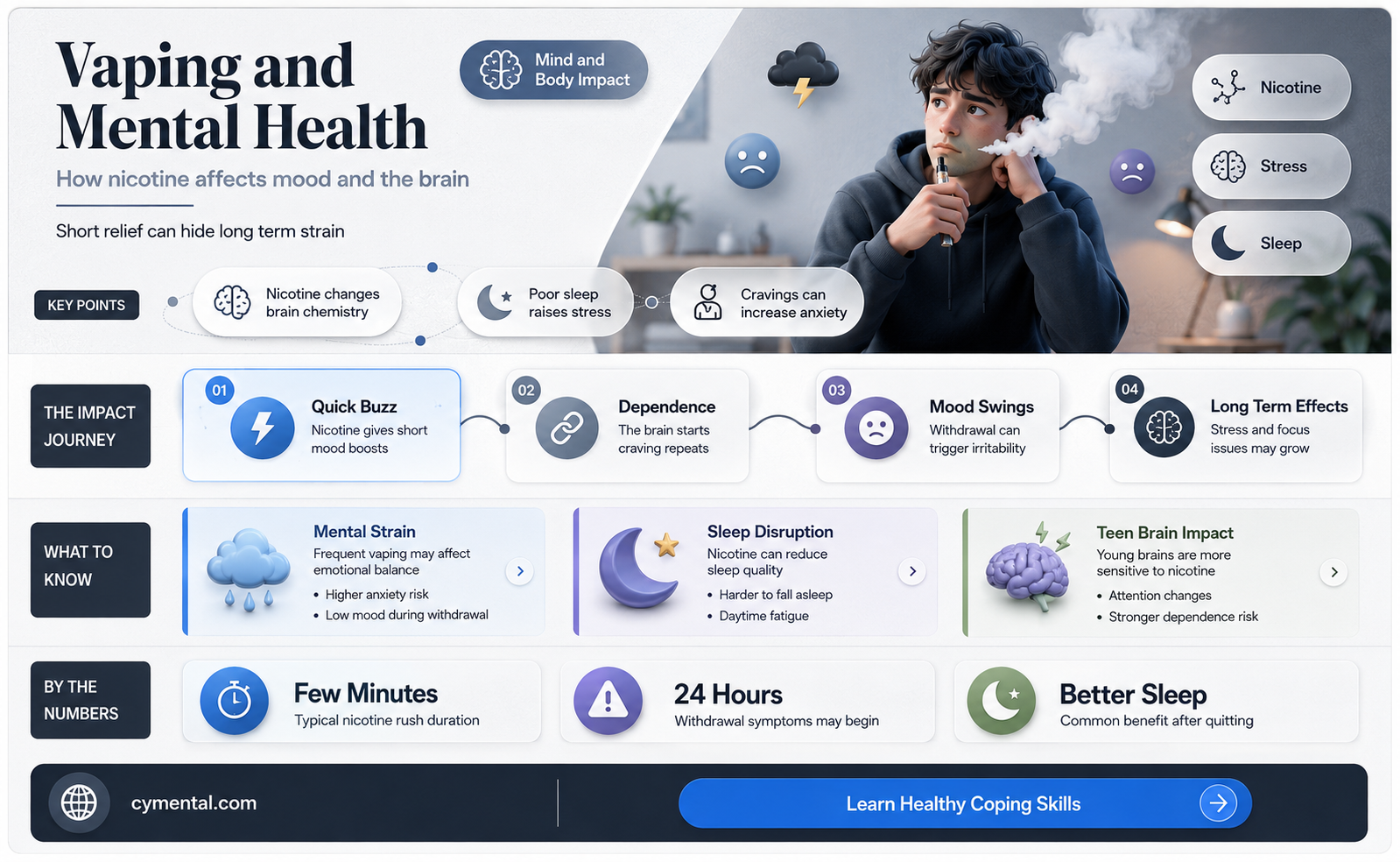
The relationship between vaping and mental health is a complex and increasingly debated topic. While some individuals report using vaping as a coping mechanism for stress, anxiety, or depression, claiming it provides a sense of relaxation or distraction, scientific evidence remains inconclusive. Research suggests that nicotine, a common component in many vaping products, can exacerbate anxiety and mood disorders, potentially leading to dependence and withdrawal symptoms that negatively impact mental well-being. Additionally, the long-term effects of inhaling vaping chemicals on brain health are still not fully understood. As such, while vaping may offer temporary relief for some, it is not a proven or recommended strategy for improving mental health, and its potential risks must be carefully considered.
| Characteristics | Values |
|---|---|
| Stress Relief | Some users report temporary stress reduction due to nicotine's stimulant effects, but this is not a long-term solution and can lead to dependence. |
| Anxiety | Mixed evidence; nicotine may temporarily alleviate anxiety for some, but withdrawal symptoms can worsen it. Vaping does not address the root causes of anxiety. |
| Depression | No conclusive evidence that vaping improves depression. Nicotine dependence can exacerbate depressive symptoms over time. |
| Mood Enhancement | Short-term mood elevation due to nicotine, but this effect diminishes with tolerance and dependence. |
| Addiction Risk | Vaping can lead to nicotine addiction, which may worsen mental health by increasing stress, anxiety, and withdrawal symptoms. |
| Long-Term Impact | Limited long-term studies, but nicotine addiction and potential exposure to harmful chemicals in vape products may negatively impact mental health. |
| Alternative to Smoking | Often marketed as a smoking cessation tool, but not proven to improve mental health directly. May reduce harm compared to smoking but does not address mental health issues. |
| Youth Mental Health | Vaping among youth is associated with increased risk of anxiety, depression, and other mental health issues due to nicotine's impact on brain development. |
| Placebo Effect | Some users may experience perceived mental health benefits due to the ritualistic nature of vaping, rather than the substance itself. |
| Overall Conclusion | Vaping does not provide proven mental health benefits and may contribute to or worsen mental health issues due to nicotine dependence and potential long-term risks. |
Explore related products


What You'll Learn
- Vaping and Stress Relief: Potential calming effects of vaping on anxiety and stress levels
- Nicotine’s Impact on Mood: How nicotine in vapes may influence mood and mental states
- Vaping vs. Smoking: Comparing mental health effects of vaping and traditional smoking
- Addiction and Mental Health: Risks of vaping addiction exacerbating mental health issues
- Vaping as Coping Mechanism: Use of vaping as a substitute for healthier coping strategies

Vaping and Stress Relief: Potential calming effects of vaping on anxiety and stress levels
Vaping's potential as a stress-relief tool has sparked curiosity, with many turning to it as a modern alternative to traditional relaxation methods. The act of inhaling and exhaling vapor, often accompanied by flavored e-liquids, mimics the ritualistic aspect of smoking, which some find inherently soothing. This sensory experience can provide a momentary escape, allowing individuals to focus on the present and temporarily alleviate anxiety. For instance, a 2020 study published in the *Journal of Addiction Medicine* suggested that certain vaping routines might offer a psychological distraction from stressors, particularly for those seeking a replacement for cigarette breaks. However, it’s crucial to note that this effect is largely behavioral and not inherently tied to vaping itself.
From an analytical perspective, the calming effects of vaping are often attributed to the inhalation of nicotine, a stimulant known to release dopamine and improve mood in the short term. A typical e-cigarette pod contains 1.5–5% nicotine by volume, and users may find that micro-dosing—taking small, controlled puffs—can create a sense of relaxation without overstimulation. For example, a user might take 3–5 puffs during a 5-minute break, focusing on slow, deliberate breaths to enhance the calming effect. However, this approach requires self-regulation, as excessive nicotine intake can lead to increased heart rate and heightened anxiety, particularly in individuals with pre-existing anxiety disorders or those under 25, whose brains are still developing.
Persuasively, proponents argue that vaping’s customizable nature—from nicotine levels to flavor profiles—allows users to tailor their experience to their stress-relief needs. For instance, lavender or chamomile-flavored e-liquids, though not scientifically proven to enhance relaxation, may provide a placebo effect for some. Additionally, devices with adjustable wattage settings enable users to control vapor production, offering a tactile and visual component to the ritual. A practical tip for maximizing calming effects is to pair vaping with deep-breathing exercises: inhale for 4 seconds, hold for 2, exhale for 6, and repeat. This technique combines the physical act of vaping with proven stress-reduction methods.
Comparatively, vaping’s stress-relief potential must be weighed against its risks. While it may offer temporary relief, it lacks the long-term benefits of evidence-based practices like mindfulness, exercise, or therapy. A 2021 review in *Psychology Today* highlighted that reliance on vaping for stress relief can lead to dependency, particularly in younger adults aged 18–24, who are more susceptible to nicotine addiction. Furthermore, the absence of standardized regulations means e-liquid quality varies widely, with some products containing harmful additives. For those considering vaping as a stress-relief tool, it’s essential to consult a healthcare provider, especially if you have respiratory conditions or mental health concerns.
Descriptively, the experience of vaping for stress relief can be deeply personal. Imagine a 30-year-old professional stepping outside during a hectic workday, the cool mint vapor filling their lungs as they gaze at the sky. The ritual becomes a signal to their brain that it’s time to unwind, even if only for a few minutes. For some, this moment of pause is invaluable, offering a sense of control in chaotic environments. However, this scenario underscores the importance of moderation and mindfulness. Vaping should complement, not replace, holistic stress management strategies, such as maintaining a balanced diet, prioritizing sleep, and fostering social connections. In this context, vaping can be a tool—but it’s not a solution.
Stuffed Animals: Surprising Mental Health Benefits and Comfort They Offer
You may want to see also
Explore related products


Nicotine’s Impact on Mood: How nicotine in vapes may influence mood and mental states
Nicotine, the primary compound in vapes, acts as both a stimulant and a relaxant, creating a dual effect on mood and mental states. When inhaled, nicotine triggers the release of neurotransmitters like dopamine, which can induce feelings of pleasure and reduced stress. For individuals experiencing anxiety or depression, this immediate boost might seem beneficial. However, the effect is short-lived, typically lasting 20–30 minutes, leading users to crave repeated doses to maintain the desired mood state. This cycle can exacerbate dependency, making it crucial to understand the transient nature of nicotine’s mood-altering properties.
Consider the dosage: a single puff from a vape can deliver 0.5 to 2 mg of nicotine, depending on the device and e-liquid concentration. While low doses may enhance focus and reduce irritability, higher doses can lead to jitteriness, increased heart rate, and heightened anxiety. Adolescents and young adults, whose brains are still developing, are particularly vulnerable to nicotine’s effects. Studies show that nicotine exposure during these years can disrupt neural circuits related to mood regulation, potentially increasing the risk of mental health disorders later in life.
To mitigate risks while exploring nicotine’s mood effects, start with low-concentration e-liquids (3–6 mg/mL) and monitor your body’s response. If you notice increased anxiety or restlessness, reduce intake or switch to nicotine-free alternatives. Pairing vaping with mindfulness practices, such as deep breathing or meditation, can help distinguish between nicotine-induced calmness and genuine relaxation. Remember, nicotine is not a substitute for evidence-based mental health treatments like therapy or medication.
Comparing nicotine’s impact to caffeine can provide clarity. Both substances offer a temporary energy boost but differ in their long-term effects. While moderate caffeine use is generally safe for adults, nicotine’s addictive nature and potential for withdrawal symptoms (e.g., mood swings, cravings) make it a less sustainable option for mood management. For those seeking mental health support, prioritizing non-addictive strategies like exercise, social connection, and professional guidance is essential.
In conclusion, nicotine’s influence on mood is complex and context-dependent. While it may offer temporary relief from stress or low mood, its addictive properties and potential long-term risks outweigh the benefits. If you’re considering vaping for mental health reasons, consult a healthcare provider to explore safer, more effective alternatives tailored to your needs.
Mental Health Parity: Does It Truly Bridge the Care Gap?
You may want to see also
Explore related products


Vaping vs. Smoking: Comparing mental health effects of vaping and traditional smoking
The debate over vaping versus smoking often centers on physical health, but mental health implications are equally critical. Vaping, marketed as a less harmful alternative, is sometimes framed as a tool for stress relief or anxiety reduction, particularly among younger adults. Traditional smoking, on the other hand, is linked to nicotine dependence, which can exacerbate mental health issues like depression and anxiety. While both deliver nicotine, the delivery method, social perception, and chemical additives differ significantly, influencing their mental health impacts.
Consider the role of nicotine in mental health. A 2020 study in *Addiction* found that while nicotine can provide temporary mood elevation, chronic use leads to increased anxiety and withdrawal symptoms. Vaping devices often allow users to control nicotine dosage more precisely than cigarettes, which contain around 10–20 mg of nicotine but deliver approximately 1–2 mg per cigarette. For individuals with mental health conditions, this precision could theoretically reduce over-reliance, but evidence is mixed. Vaping’s customizable nicotine levels might appeal to those seeking to taper off, yet the ease of frequent use can perpetuate dependency, counteracting potential mental health benefits.
Social and behavioral factors further distinguish vaping from smoking. Smoking has long been stigmatized, often isolating users and contributing to stress. Vaping, however, is sometimes perceived as trendy or less harmful, reducing social stigma for some users. A 2021 survey in *JAMA Network Open* noted that young adults who vape report lower stress levels compared to smokers, but this could reflect demographic differences rather than a direct effect of vaping. For instance, younger vapers may have fewer chronic health concerns or financial stressors associated with long-term smoking.
Practical considerations are essential for those weighing the mental health effects of vaping versus smoking. If transitioning from smoking to vaping, start with lower nicotine concentrations (e.g., 3–6 mg/mL) and gradually reduce intake. Monitor mental health symptoms during this period; if anxiety or depression worsens, consult a healthcare provider. Avoid dual use, as it increases nicotine intake and dependency. For smokers with pre-existing mental health conditions, nicotine replacement therapies (NRTs) like patches or gum may be safer alternatives, as they lack the behavioral and social triggers associated with vaping or smoking.
In conclusion, while vaping may offer some advantages over smoking in terms of nicotine control and social perception, its mental health benefits remain uncertain. Both habits carry risks of dependency and mood disruption, making them poor long-term solutions for stress or anxiety management. Prioritize evidence-based strategies like therapy, exercise, or mindfulness for mental health support, and approach vaping or smoking cessation with a structured plan tailored to individual needs.
Fishing for Calm: How Angling Boosts Mental Health and Wellness
You may want to see also
Explore related products


$13.59 $15.99


Addiction and Mental Health: Risks of vaping addiction exacerbating mental health issues
Vaping, often marketed as a safer alternative to smoking, has become a popular habit among adolescents and young adults, with over 20% of high school students in the U.S. reporting current use, according to the CDC. While some argue it aids in stress relief or serves as a coping mechanism, the addictive nature of nicotine in vapes poses significant risks, particularly for mental health. Nicotine, a highly addictive substance, can alter brain development in individuals under 25, increasing vulnerability to anxiety, depression, and other mental health disorders. This dual threat—addiction and mental health deterioration—creates a dangerous cycle that is difficult to break.
Consider the mechanism: nicotine triggers the release of dopamine, providing temporary relief from stress or negative emotions. However, repeated use leads to tolerance, requiring higher doses to achieve the same effect. For someone vaping a standard 5% nicotine pod (equivalent to 1 pack of cigarettes), this escalation can occur within weeks. Over time, the brain’s reward system becomes dependent on nicotine, making it harder to cope with stress without it. This dependency exacerbates existing mental health issues, as withdrawal symptoms—irritability, anxiety, and mood swings—mirror or intensify symptoms of conditions like generalized anxiety disorder or major depressive disorder.
A comparative analysis reveals a stark contrast between short-term relief and long-term harm. While vaping may temporarily alleviate symptoms of stress or depression, studies show that regular users are 60% more likely to report symptoms of depression and 30% more likely to experience anxiety compared to non-users. This is particularly concerning for teens, whose brains are still developing. For instance, a 16-year-old vaping daily may experience heightened impulsivity and reduced emotional regulation, behaviors linked to both nicotine addiction and mental health struggles. The interplay between addiction and mental health creates a feedback loop: stress drives vaping, vaping worsens mental health, and deteriorating mental health increases reliance on vaping.
To mitigate these risks, practical steps are essential. First, limit nicotine intake by choosing lower-concentration products (e.g., 2% or less) or gradually reducing usage. For those using vaping as a coping mechanism, replace it with healthier alternatives like deep breathing exercises, mindfulness, or physical activity. For example, a 5-minute walk or 10 minutes of journaling can provide immediate stress relief without the addictive risks. Parents and educators should monitor signs of addiction in teens, such as increased secrecy, irritability, or declining academic performance, and intervene early with open conversations about the risks.
In conclusion, while vaping may offer fleeting relief, its addictive nature and impact on mental health far outweigh any perceived benefits. Breaking the cycle requires awareness, proactive strategies, and a shift toward non-addictive coping mechanisms. By addressing both addiction and mental health holistically, individuals can reclaim control and foster long-term well-being.
Hamsters as Emotional Support: Boosting Mental Health and Well-Being
You may want to see also
Explore related products





Vaping as Coping Mechanism: Use of vaping as a substitute for healthier coping strategies
Vaping has increasingly become a go-to method for individuals seeking relief from stress, anxiety, or other mental health challenges. While some users report temporary relaxation, the practice often serves as a substitute for healthier coping mechanisms, creating a cycle of dependency rather than addressing underlying issues. This reliance on vaping as a crutch can delay the development of more sustainable strategies for emotional regulation.
Consider the scenario of a 25-year-old professional who vapes during work breaks to manage job-related stress. Instead of engaging in mindfulness exercises, seeking social support, or practicing deep breathing, they reach for their device. Over time, this habit reinforces the idea that nicotine or the ritual of vaping is the only effective way to cope, overshadowing proven techniques like progressive muscle relaxation or journaling. The immediate gratification of vaping provides a false sense of control, while long-term mental health needs remain unmet.
From an analytical perspective, the substitution of vaping for healthier coping strategies can be understood through the lens of behavioral psychology. Vaping activates the brain’s reward system, releasing dopamine, which temporarily alleviates negative emotions. However, this quick fix does not teach individuals how to manage stress or anxiety without the aid of a substance. For instance, a study published in the *Journal of the American College of Cardiology* highlights that nicotine dependence can exacerbate anxiety over time, creating a paradox where the coping mechanism becomes a source of distress.
To break this cycle, individuals should adopt a step-by-step approach. First, identify triggers for vaping, such as specific times of day or emotional states. Second, replace vaping with targeted alternatives: for example, a 5-minute walk for restlessness, a glass of water for oral fixation, or a 2-minute breathing exercise for anxiety. Third, set measurable goals, such as reducing vaping sessions by one per day each week. Caution should be taken to avoid replacing one unhealthy habit with another, like excessive caffeine or screen time.
In conclusion, while vaping may offer fleeting relief, its role as a coping mechanism often undermines mental health in the long run. By recognizing this substitution pattern and actively integrating healthier strategies, individuals can reclaim control over their emotional well-being and reduce reliance on nicotine. Practical, incremental changes are key to fostering resilience without the crutch of vaping.
Sea Salt Baths: A Natural Remedy for Mental Health Relief?
You may want to see also
Frequently asked questions
While some people report temporary stress relief from vaping, there is no scientific evidence that vaping improves mental health. Nicotine, a common component in vapes, can actually increase anxiety and stress over time.
Vaping may provide a temporary distraction or mood lift due to nicotine’s stimulant effects, but it is not a healthy or effective coping mechanism. Long-term use can lead to dependence and worsen mental health symptoms.
Vaping is not a mental health treatment and does not offer therapeutic benefits. While it may be less harmful than smoking in some ways, it still poses risks to both physical and mental health, including addiction and increased stress.
Yes, quitting vaping can improve mental health over time. Reducing nicotine dependence can lower anxiety, improve mood stability, and enhance overall well-being, though withdrawal symptoms may temporarily worsen mental health during the quitting process.