Noah Parker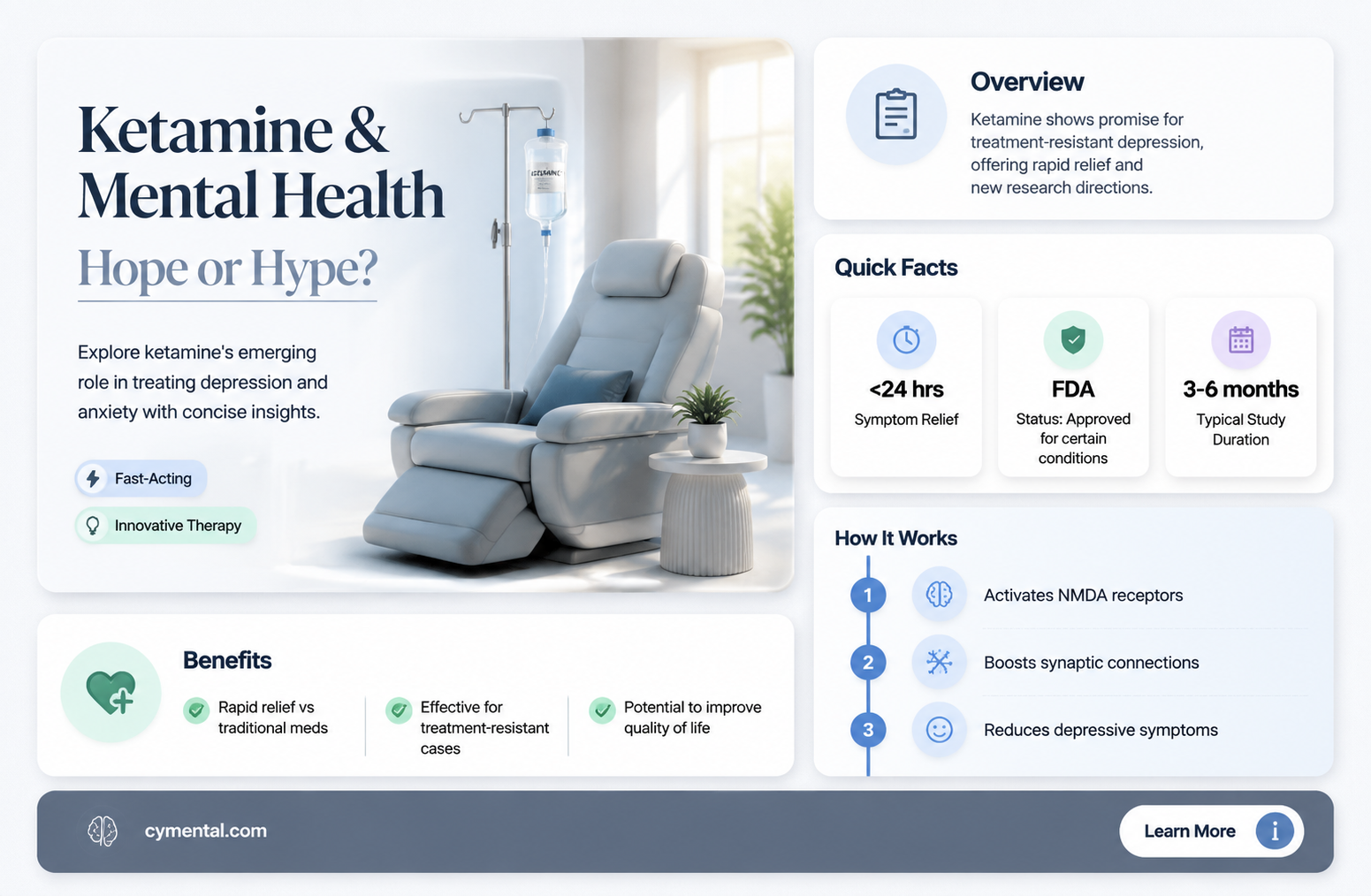
Ketamine, originally developed as an anesthetic, has emerged as a promising treatment for various mental illnesses, particularly treatment-resistant depression, anxiety, and post-traumatic stress disorder (PTSD). Unlike traditional antidepressants, which can take weeks to show effects, ketamine often provides rapid relief, sometimes within hours, making it a groundbreaking option for those in acute distress. Its unique mechanism of action, involving the glutamate system and synaptic plasticity, sets it apart from conventional medications. While research continues to explore its long-term efficacy and safety, ketamine’s potential to alleviate symptoms of mental illness has sparked significant interest in the medical and psychiatric communities, offering hope for individuals who have not responded to other treatments.
Explore related products

$12.25 $12.25


$12.35 $19.99


What You'll Learn

Ketamine for depression treatment
Ketamine, originally developed as an anesthetic, has emerged as a groundbreaking treatment for depression, particularly for those who have not responded to traditional antidepressants. Unlike conventional medications that can take weeks to show effects, ketamine often provides rapid relief, sometimes within hours. This unique characteristic has positioned it as a beacon of hope for individuals grappling with treatment-resistant depression. Administered in controlled doses, typically via intravenous infusion or nasal spray, ketamine targets the brain’s glutamate system, fostering neural connections that alleviate depressive symptoms. Its efficacy has sparked a paradigm shift in mental health treatment, offering a lifeline to those who previously saw no way out.
The process of ketamine treatment for depression is both precise and personalized. Patients typically undergo a series of infusions over several weeks, with each session lasting around 40 minutes to an hour. Dosage is carefully calibrated based on factors like weight, severity of symptoms, and individual response, often starting at 0.5 mg/kg for intravenous administration. For the nasal spray version, such as esketamine (Spravato), doses are standardized but still tailored to patient needs. It’s crucial to note that treatment occurs in a clinical setting under professional supervision due to potential side effects like dissociation or elevated blood pressure. While the cost and accessibility remain barriers for some, the transformative potential for many outweighs these challenges.
One of the most compelling aspects of ketamine’s use in depression treatment is its ability to address not just symptoms but also suicidal ideation. Studies have shown that a single dose can significantly reduce suicidal thoughts within 24 hours, a critical advantage in emergency psychiatric care. This rapid action has led to its adoption in specialized clinics and hospitals worldwide, particularly for high-risk patients. However, ketamine is not a one-size-fits-all solution. Its effects are often temporary, requiring maintenance treatments, and it’s not suitable for everyone, including individuals with a history of substance abuse or certain medical conditions. This duality of promise and caution underscores the need for careful patient selection and monitoring.
Comparing ketamine to traditional antidepressants highlights its revolutionary role in mental health care. While selective serotonin reuptake inhibitors (SSRIs) and serotonin-norepinephrine reuptake inhibitors (SNRIs) work by modulating neurotransmitters like serotonin, ketamine acts on glutamate, a key player in synaptic plasticity. This mechanism not only explains its rapid efficacy but also its potential to reverse the brain’s atrophy often seen in chronic depression. However, the long-term effects of repeated ketamine use are still under study, and concerns about tolerance or dependence persist. Despite these uncertainties, its ability to offer immediate relief where other treatments fail makes it an invaluable tool in the psychiatrist’s arsenal.
For those considering ketamine as a treatment option, practical steps can enhance its effectiveness and safety. First, consult a mental health professional to determine eligibility, as not all cases of depression warrant this approach. If approved, prepare for the treatment by arranging transportation, as patients cannot drive immediately afterward. During sessions, focus on relaxation techniques to mitigate any discomfort or dissociation. Afterward, maintain open communication with your care team to track progress and adjust the treatment plan as needed. Combining ketamine with therapy, such as cognitive-behavioral therapy (CBT), can amplify its benefits, fostering lasting recovery. While ketamine is not a cure-all, its potential to restore hope and functionality in the lives of those with severe depression is undeniable.
Dropping Mental Filters: Unveiling New Perspectives on Everyday Experiences
You may want to see also
Explore related products


PTSD and ketamine therapy benefits
Ketamine, originally developed as an anesthetic, has emerged as a groundbreaking treatment for PTSD, offering hope to those who have found little relief through traditional therapies. Unlike conventional antidepressants, which can take weeks to show effects, ketamine often provides rapid symptom reduction, sometimes within hours. This unique characteristic makes it particularly valuable for individuals experiencing severe, treatment-resistant PTSD. Administered in controlled, low-dose infusions (typically 0.5 mg/kg intravenously), ketamine targets the brain’s glutamate system, fostering neural plasticity and rewiring maladaptive pathways associated with trauma.
Consider the case of a 34-year-old combat veteran who, after years of nightmares and hypervigilance, underwent a series of six ketamine infusions over three weeks. Within days, he reported a significant decrease in intrusive thoughts and an improved ability to engage in daily activities. Such outcomes are not isolated; clinical trials have shown that up to 70% of PTSD patients experience symptom relief after ketamine treatment. However, success hinges on careful patient selection and monitoring. Ideal candidates are those with chronic, severe PTSD who have exhausted other treatments, though individuals with a history of substance abuse or psychosis require cautious evaluation due to ketamine’s dissociative effects.
While ketamine’s benefits are promising, its use is not without challenges. The effects of a single infusion typically last 7–14 days, necessitating repeated sessions for sustained relief. Maintenance protocols vary, but a common approach involves booster infusions every 2–4 weeks. Cost and accessibility remain barriers, as insurance coverage is inconsistent, and specialized clinics are limited. Additionally, the long-term safety of repeated ketamine use is still under study, with concerns about potential cognitive effects or dependence. Patients must weigh these factors with their healthcare provider to determine if ketamine therapy aligns with their treatment goals.
For those considering ketamine therapy, preparation is key. Patients should avoid food and beverages for at least six hours before treatment to minimize nausea, a common side effect. During the infusion, which lasts 40–60 minutes, patients are monitored for blood pressure, heart rate, and oxygen levels. The dissociative experience, often described as a dreamlike state, can be intense but is temporary. Afterward, integrating therapy, such as cognitive-behavioral therapy (CBT), is crucial to solidify the gains made during treatment. This combination approach addresses both the neurochemical and psychological aspects of PTSD, maximizing the potential for lasting recovery.
In conclusion, ketamine therapy represents a paradigm shift in PTSD treatment, offering rapid and significant relief for many. Its ability to disrupt entrenched trauma responses provides a lifeline for those who have struggled with conventional methods. Yet, it is not a one-size-fits-all solution. Careful patient selection, ongoing monitoring, and adjunctive therapies are essential to harness its full potential. As research continues, ketamine stands as a beacon of hope, illuminating new pathways to healing for those burdened by the shadows of trauma.
School Psychologists: Essential Mental Health Support in Education
You may want to see also
Explore related products


Anxiety reduction with ketamine use
Ketamine, originally developed as an anesthetic, has emerged as a promising treatment for anxiety disorders, particularly when traditional therapies fall short. Clinical studies have shown that low-dose ketamine infusions, typically administered at 0.5 mg/kg over 40 minutes, can produce rapid and significant reductions in anxiety symptoms. Unlike conventional antidepressants, which may take weeks to show effects, ketamine often provides relief within hours, making it a valuable option for individuals experiencing acute anxiety or suicidal ideation. This rapid onset is attributed to ketamine’s unique mechanism of action, which involves modulating glutamate receptors in the brain, fostering neural plasticity and restoring disrupted stress response pathways.
For those considering ketamine as an anxiety treatment, it’s essential to understand the process and precautions. Treatment is usually administered in a controlled clinical setting under the supervision of a healthcare professional. Patients may receive a series of infusions over several weeks, with maintenance sessions as needed. While generally safe, potential side effects include dissociation, dizziness, and increased blood pressure during the infusion. Long-term risks are still under study, emphasizing the importance of undergoing treatment with a qualified provider who can monitor progress and adjust dosages accordingly. Combining ketamine with therapy, such as cognitive-behavioral therapy (CBT), can enhance its efficacy by addressing underlying psychological patterns.
A comparative analysis highlights ketamine’s advantages over traditional anxiety treatments. Selective serotonin reuptake inhibitors (SSRIs) and benzodiazepines, while effective for many, often come with drawbacks such as tolerance, dependence, or delayed results. Ketamine’s ability to target treatment-resistant cases and provide immediate relief positions it as a breakthrough for individuals who have exhausted other options. However, it’s not a one-size-fits-all solution; factors like age, medical history, and the severity of anxiety must be considered. For instance, ketamine may be less suitable for individuals with a history of substance abuse or cardiovascular issues, necessitating a thorough evaluation before starting treatment.
Descriptively, the experience of ketamine treatment for anxiety can be transformative. Patients often report a sense of detachment during the infusion, followed by a profound shift in perspective post-treatment. This altered state of consciousness is thought to disrupt negative thought patterns, allowing individuals to approach their anxiety with renewed clarity. Practical tips for maximizing benefits include maintaining a consistent sleep schedule, practicing mindfulness, and engaging in regular physical activity to support overall mental health. While ketamine is not a cure-all, its potential to alleviate severe anxiety symptoms offers hope for those who have struggled to find relief through conventional means.
Diagnosis and Beyond: How Mental Health Labels Impacted My Journey
You may want to see also
Explore related products


![SAFE LIFE Ketamine Dip Card Test Kit | Urine Screening for KET/keta, 1000 ng/mL Cutoff [ 10 Pack]](https://m.media-amazon.com/images/I/81o7KNkZAWL._AC_UY218_.jpg)


Ketamine’s impact on bipolar disorder
Ketamine, originally developed as an anesthetic, has emerged as a potential treatment for bipolar disorder, a complex mental health condition characterized by extreme mood swings. Unlike traditional antidepressants, which can take weeks to show effects, ketamine often produces rapid improvements in depressive symptoms, sometimes within hours. This unique property has sparked significant interest in its application for bipolar disorder, particularly during acute depressive episodes. However, its use is not without controversy, as the drug’s mechanism of action and long-term effects in bipolar patients are still under investigation.
One of the most compelling aspects of ketamine’s impact on bipolar disorder is its ability to target treatment-resistant depression, a common challenge in bipolar management. Studies have shown that low-dose intravenous ketamine infusions (typically 0.5 mg/kg over 40 minutes) can alleviate depressive symptoms in bipolar patients who have not responded to conventional therapies. For instance, a 2018 study published in the *American Journal of Psychiatry* found that a single ketamine infusion led to significant reductions in depressive symptoms within 24 hours for individuals with bipolar depression. However, the effects were often transient, lasting only a week or two, necessitating repeated treatments for sustained relief.
Despite its promise, ketamine’s use in bipolar disorder requires careful consideration due to potential risks. One major concern is the possibility of inducing manic or hypomanic episodes, as ketamine’s glutamatergic mechanism can destabilize mood in susceptible individuals. To mitigate this, clinicians often start with lower doses (e.g., 0.25 mg/kg) and closely monitor patients during and after treatment. Additionally, ketamine is not recommended for individuals with a history of substance abuse, as its dissociative properties carry a risk of misuse. Patients and caregivers must be educated about these risks and the importance of adhering to a structured treatment plan.
Comparatively, ketamine’s role in bipolar disorder contrasts with its use in unipolar depression, where the focus is solely on alleviating depressive symptoms. In bipolar disorder, the treatment must balance depression relief with mood stabilization to avoid triggering manic episodes. This delicate equilibrium highlights the need for personalized treatment approaches, often involving a combination of ketamine therapy and mood stabilizers like lithium or valproate. Collaborative decision-making between patients, psychiatrists, and anesthesiologists is essential to ensure safety and efficacy.
In practical terms, ketamine treatment for bipolar disorder is typically administered in a clinical setting under medical supervision. Patients may receive infusions once or twice weekly initially, with maintenance sessions spaced further apart based on response. Oral or intranasal formulations, such as esketamine (a ketamine derivative), offer alternative delivery methods but are less commonly used in bipolar populations due to limited research. Cost and accessibility remain barriers, as insurance coverage for ketamine therapy varies widely, and not all healthcare facilities offer this treatment.
In conclusion, ketamine represents a promising yet complex tool in the management of bipolar disorder, particularly for treatment-resistant depression. Its rapid-acting nature offers hope for those in acute distress, but careful monitoring and individualized treatment plans are crucial to navigate potential risks. As research progresses, ketamine may become a more integrated component of bipolar care, but for now, it remains a specialized intervention reserved for select cases. Patients considering ketamine therapy should consult their healthcare provider to weigh the benefits and risks in the context of their unique condition.
Supporting Mental Health: Practical Ways to Make a Positive Impact
You may want to see also
Explore related products


Treating suicidal ideation with ketamine
Suicidal ideation, a distressing symptom of severe depression and other mental health disorders, often resists conventional treatments like antidepressants and therapy. Ketamine, originally an anesthetic, has emerged as a rapid-acting intervention for such cases. Unlike traditional antidepressants that take weeks to show effects, ketamine can alleviate suicidal thoughts within hours, offering a critical window of relief for individuals in acute crisis. This unique property has positioned ketamine as a breakthrough therapy in psychiatry, particularly for those at high risk of self-harm.
The mechanism behind ketamine’s efficacy involves its action on the brain’s glutamate system, specifically the NMDA receptors. By blocking these receptors, ketamine triggers a cascade of neurochemical changes that promote synaptic growth and restore neural connections impaired by chronic stress and depression. This process, known as synaptogenesis, underpins its rapid antidepressant and antisuicidal effects. Clinical studies have demonstrated that a single intravenous infusion of ketamine (typically 0.5 mg/kg over 40 minutes) can reduce suicidal ideation in up to 70% of patients within 24 hours, with effects often lasting days to weeks.
Administering ketamine for suicidal ideation requires careful consideration of dosage, frequency, and setting. For adults, the standard protocol involves a series of six infusions over two to three weeks, followed by booster sessions as needed. While intravenous administration is most common, intranasal esketamine (a ketamine derivative) has been approved for treatment-resistant depression and is sometimes used off-label for suicidal ideation. However, this method is less predictable in its effects and requires close monitoring. Patients must be supervised in a clinical environment during treatment due to potential side effects, such as dissociation, elevated blood pressure, and nausea.
Despite its promise, ketamine is not a panacea. Its effects are temporary, and long-term outcomes depend on integrating it with comprehensive care, including psychotherapy and traditional medications. Additionally, ketamine’s potential for misuse and its psychoactive properties necessitate strict screening to exclude individuals with substance use disorders or certain psychiatric conditions, such as schizophrenia, where it could exacerbate symptoms. Cost and accessibility also remain barriers, as ketamine treatment is often not covered by insurance and requires specialized facilities.
For clinicians and patients alike, ketamine represents a powerful tool in the fight against suicidal ideation, but it must be wielded thoughtfully. Its rapid action can stabilize individuals in crisis, providing a crucial opportunity to engage them in long-term treatment strategies. As research continues to refine protocols and explore its full potential, ketamine stands as a testament to the evolving landscape of mental health care, offering hope where conventional methods fall short.
Vitamin D's Role in Boosting Mental Health and Well-being
You may want to see also
Frequently asked questions
Yes, ketamine has shown significant promise in treating depression, particularly treatment-resistant depression. It works rapidly, often providing relief within hours to days, compared to traditional antidepressants that may take weeks. However, its effects are often temporary, and repeated doses or maintenance therapy may be needed.
Ketamine has been studied for its potential to alleviate symptoms of anxiety disorders, including generalized anxiety disorder (GAD) and social anxiety disorder. While some studies show positive results, more research is needed to fully understand its efficacy and long-term safety for anxiety.
Ketamine has demonstrated potential in reducing symptoms of PTSD, particularly in cases where other treatments have failed. Its rapid action can help alleviate intrusive thoughts, hyperarousal, and emotional numbing. However, like its use in depression, effects may be temporary, and ongoing treatment may be required.