Lucas Bennett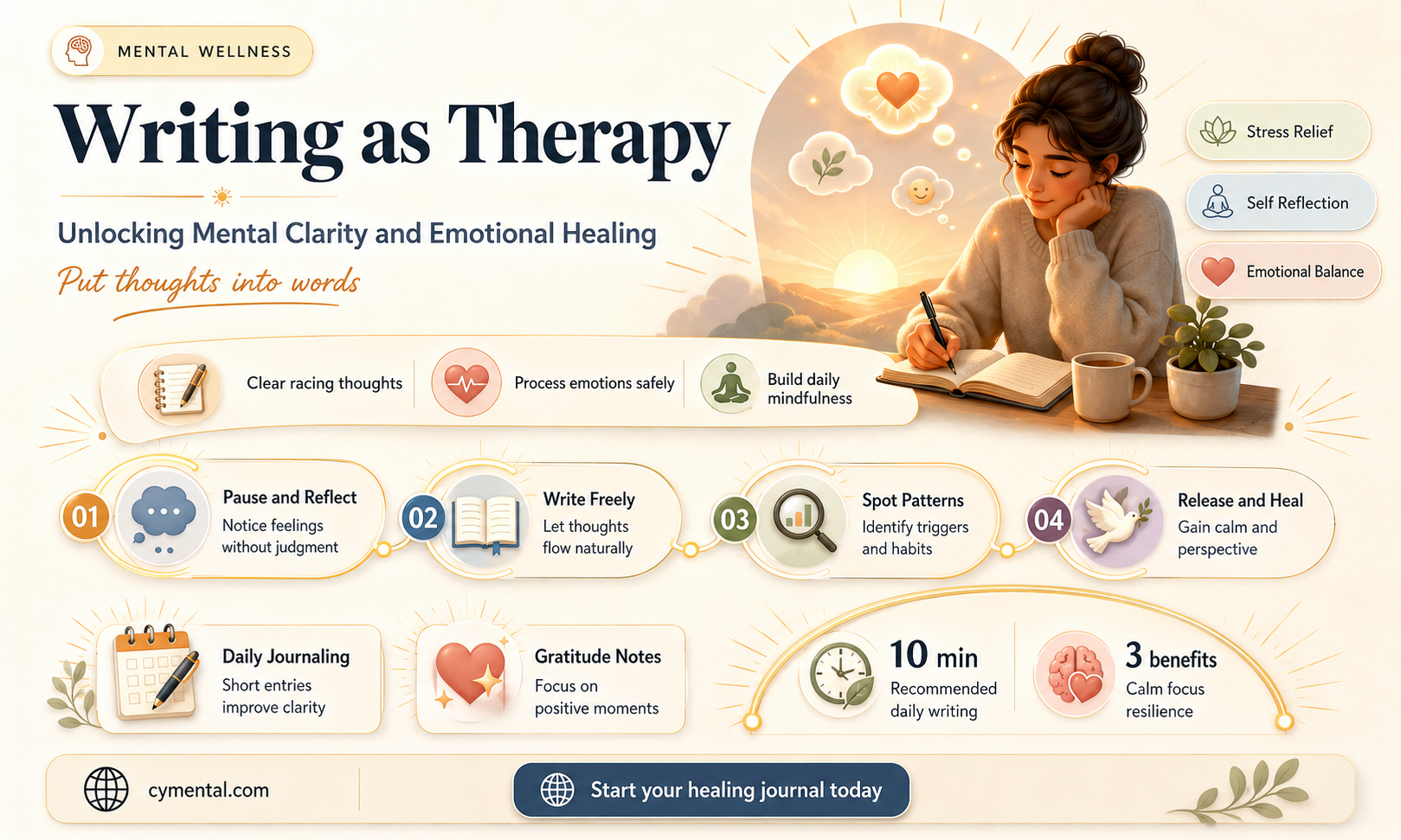
Writing has long been recognized as a powerful tool for mental and emotional well-being, offering a unique outlet for self-expression, reflection, and processing complex thoughts and feelings. Whether through journaling, creative writing, or even simple note-taking, the act of putting pen to paper or typing words on a screen can help clarify emotions, reduce stress, and provide a sense of control over one's inner world. Research suggests that writing can alleviate symptoms of anxiety and depression, improve mood, and even enhance cognitive function by fostering mindfulness and self-awareness. By externalizing thoughts, individuals can gain perspective, identify patterns, and work through challenges in a safe and private space, making writing a valuable practice for mental health and personal growth.
| Characteristics | Values |
|---|---|
| Stress Reduction | Writing about stressful events or emotions can reduce stress levels by helping individuals process and make sense of their experiences. Studies show a significant decrease in cortisol (stress hormone) levels after expressive writing sessions. |
| Improved Mood | Regular journaling or creative writing can boost mood and increase feelings of well-being. Writing about positive experiences or gratitude amplifies these effects. |
| Enhanced Emotional Regulation | Writing helps individuals identify, understand, and manage their emotions, leading to better emotional regulation and resilience. |
| Cognitive Processing | Writing organizes thoughts, improves clarity, and enhances problem-solving abilities by externalizing internal mental processes. |
| Trauma Healing | Expressive writing about traumatic events can aid in emotional recovery, reduce symptoms of PTSD, and improve mental health outcomes over time. |
| Memory Improvement | Writing about personal experiences or learning material reinforces memory retention and recall, benefiting cognitive function. |
| Increased Self-Awareness | Reflective writing encourages introspection, helping individuals gain deeper insights into their thoughts, behaviors, and motivations. |
| Boosted Creativity | Creative writing stimulates imagination, fosters innovative thinking, and provides an outlet for self-expression. |
| Anxiety Reduction | Writing about worries or fears can reduce anxiety by externalizing concerns and providing a sense of control over them. |
| Goal Achievement | Writing down goals and progress increases motivation, accountability, and the likelihood of achieving desired outcomes. |
| Social Connection | Sharing written work (e.g., blogs, letters) can foster social connections and reduce feelings of loneliness. |
| Mindfulness Practice | Stream-of-consciousness writing or journaling promotes mindfulness by focusing attention on the present moment. |
| Coping Mechanism | Writing serves as a healthy coping strategy for dealing with difficult emotions or life challenges. |
| Improved Sleep | Writing before bed, especially about worries or plans, can improve sleep quality by clearing the mind. |
| Enhanced Communication Skills | Regular writing practice improves vocabulary, articulation, and the ability to express ideas effectively. |
Explore related products


What You'll Learn

Stress Reduction Through Journaling
Journaling isn’t just a hobby for writers or teenagers with diaries. It’s a scientifically backed tool for stress reduction, with studies showing that expressive writing can lower cortisol levels, the body’s primary stress hormone. A 2018 study in the *Journal of American Medical Association* found that patients who wrote about their stressful experiences for 20 minutes a day over three days reported significantly reduced stress levels compared to those who wrote about neutral topics. The act of translating chaotic thoughts into words appears to organize and diminish their emotional weight, offering immediate and measurable relief.
To harness journaling for stress reduction, start small. Dedicate 10–15 minutes daily to write freely about what’s causing tension, without worrying about grammar or coherence. Focus on emotions rather than facts—describe how a situation made you feel, not just what happened. For example, instead of writing, “My boss criticized my report,” try, “I felt my chest tighten when my boss criticized my report, and now I’m worried I’m not good enough.” This emotional specificity helps process stress more effectively. Keep your journal private; knowing your thoughts are for your eyes only encourages honesty and vulnerability, key to releasing pent-up anxiety.
Not all journaling is created equal. While some find relief in recounting daily events, others benefit from structured prompts. Try these: “What’s one thing I’m overthinking today?” or “What’s a small win I’m overlooking?” For those overwhelmed by blank pages, bullet journaling or jotting down keywords can feel less daunting. Digital journaling apps like Day One or Penzu offer password protection and reminders, but research suggests handwriting may engage the brain more deeply, enhancing emotional processing. Experiment to find what works best for you.
One caution: journaling about stress can sometimes amplify negative emotions if done incorrectly. Avoid rehashing problems without reflecting on solutions or lessons. Pair venting with gratitude or future-focused entries to balance perspective. For instance, after writing about a stressful event, end with, “What’s one thing I can do tomorrow to feel more in control?” This shifts the focus from rumination to action, preventing journaling from becoming a spiral of negativity.
Incorporating journaling into a routine doesn’t require a time-consuming commitment. Even 5 minutes of mindful writing before bed can clear mental clutter and improve sleep quality, a critical factor in stress management. For teens and young adults, who often face academic and social pressures, journaling can be particularly effective. A 2020 study in *Psychology Today* noted that students who journaled weekly reported lower anxiety levels during exam periods. Whether you’re 15 or 50, journaling offers a simple, cost-free way to reclaim calm in a chaotic world.
Sea Moss Gel: A Natural Boost for Mental Health?
You may want to see also
Explore related products


Emotional Clarity via Creative Writing
Creative writing isn’t just about crafting stories or poems—it’s a tool for untangling the knots of emotion. When you put pen to paper, you externalize feelings that often linger in the abstract, making them tangible and examinable. This process, known as *affect labeling*, has been shown in studies to reduce emotional intensity by activating the prefrontal cortex, the brain’s rational center. For instance, labeling an emotion as “anxiety” instead of simply feeling overwhelmed can decrease its grip by 20%, according to research from UCLA. Writing transforms amorphous distress into something you can name, frame, and eventually manage.
To harness this benefit, start with a simple prompt: “I feel ____ because ____.” Spend 10–15 minutes daily writing freely without judgment. Avoid overthinking structure or grammar; the goal is emotional release, not literary perfection. For younger writers (teens and young adults), journaling in metaphor or dialogue can feel less intimidating than direct confession. For example, instead of writing “I’m angry,” try “The storm in my chest won’t stop raging.” This indirect approach often uncovers deeper truths without the pressure of self-exposure.
However, creative writing isn’t a one-size-fits-all solution. While it can clarify emotions, it may also stir up unresolved trauma if not approached thoughtfully. If writing about a painful event feels overwhelming, ground yourself by focusing on sensory details rather than the narrative. For instance, describe the texture of a memory—the roughness of a hospital blanket, the sharpness of a broken laugh—rather than retelling the story. This technique keeps you present while still engaging with the emotion.
Comparing creative writing to other emotional outlets highlights its unique strengths. Unlike verbal therapy, which relies on real-time processing, writing allows you to revisit and revise your thoughts. Unlike meditation, which emphasizes detachment, writing encourages engagement. It’s a bridge between feeling and understanding, action and reflection. For maximum benefit, combine writing with a consistent routine: set aside the same time daily, use a dedicated notebook, and pair it with a calming ritual like tea or soft music.
The takeaway is clear: creative writing isn’t just an artistic outlet—it’s a cognitive strategy for emotional clarity. By translating feelings into words, you gain distance from their immediacy, making them easier to navigate. Whether you’re 16 or 60, the practice is accessible, requiring nothing more than a pen and the willingness to explore. Start small, stay consistent, and let the process unfold. Over time, you’ll find that the page doesn’t just hold your words—it holds your truth.
United Healthcare Mental Health Support: Coverage, Benefits, and Resources
You may want to see also
Explore related products


$8.44 $14.99


Cognitive Benefits of Daily Writing
Writing daily, even for as little as 15 minutes, can significantly enhance cognitive function by improving working memory. This is because the act of translating thoughts into written words requires the brain to hold and manipulate information actively. A study published in the *Journal of Experimental Psychology* found that participants who engaged in daily expressive writing showed a 20% improvement in memory recall tasks compared to those who did not. To maximize this benefit, focus on descriptive or reflective writing rather than rote journaling. For instance, describing a recent experience in detail forces the brain to retrieve and organize memories, strengthening neural pathways associated with recall.
Another cognitive advantage of daily writing is its ability to enhance problem-solving skills. Writing allows individuals to externalize complex thoughts, making abstract problems more tangible and manageable. A comparative analysis in *Cognitive Psychology* revealed that individuals who wrote about a challenging situation were 30% more likely to identify a solution than those who merely thought about it. To leverage this, try structuring your writing as a step-by-step breakdown of a problem, followed by potential solutions. For example, if you’re facing a work-related issue, write out the problem, list contributing factors, and brainstorm actionable steps. This methodical approach not only clarifies thinking but also fosters creativity.
Daily writing also serves as a powerful tool for emotional regulation, which indirectly supports cognitive clarity. When emotions are unprocessed, they can cloud judgment and impair focus. A study in *Psychological Science* demonstrated that individuals who wrote about their emotions for 20 minutes a day experienced a 25% reduction in stress levels, leading to improved concentration and decision-making. To incorporate this practice, set aside time in the morning or evening to write freely about your feelings without judgment. Avoid censoring yourself—the goal is to release emotional tension, not to craft perfect prose. Over time, this habit can create a mental space conducive to sharper cognitive performance.
Finally, daily writing fosters metacognition, the ability to think about one’s own thinking. By regularly articulating thoughts and ideas, individuals become more aware of their cognitive processes, enabling them to identify biases, gaps in logic, or areas for improvement. A longitudinal study in *Educational Psychology* found that students who maintained a reflective writing habit for six months demonstrated a 40% increase in metacognitive awareness compared to their peers. To cultivate this benefit, incorporate reflective prompts into your writing routine, such as “What did I learn today?” or “How could I approach this differently?” This practice not only sharpens self-awareness but also empowers individuals to refine their thinking strategies proactively.
Supporting Mental Health: Practical Ways to Help Loved Ones Heal
You may want to see also
Explore related products




Writing as Therapy for Anxiety
Writing can serve as a powerful tool for managing anxiety, offering a structured way to externalize and process overwhelming emotions. Research suggests that expressive writing, where individuals detail their thoughts and feelings about stressful events, can reduce anxiety symptoms by up to 20% over time. This practice helps clarify chaotic thoughts, making them feel more manageable. For instance, spending 15–20 minutes daily journaling about anxiety triggers or worries can lead to noticeable improvements within weeks. The key lies in consistency; treating writing as a routine rather than a sporadic activity maximizes its therapeutic benefits.
Unlike verbal communication, writing allows for reflection without interruption, enabling individuals to explore their anxiety in a safe, private space. This process fosters self-awareness, as patterns in thoughts and behaviors become more apparent on the page. For example, a person might notice through writing that their anxiety spikes during specific social interactions, prompting them to address those situations directly. To enhance this effect, try structuring entries with prompts like, "What triggered my anxiety today?" or "How did I respond, and how could I respond differently?" Such guided reflection deepens the therapeutic impact.
While writing is accessible and cost-effective, it’s not a one-size-fits-all solution. For some, revisiting traumatic experiences through writing can exacerbate anxiety without proper guidance. Caution is advised for individuals with severe anxiety or PTSD, who may benefit from combining writing with professional therapy. Additionally, setting boundaries—such as limiting writing sessions to 20–30 minutes—prevents emotional overwhelm. Pairing writing with grounding techniques, like deep breathing before and after, can further stabilize the experience.
Comparatively, writing therapy differs from traditional talk therapy by emphasizing personal agency and creativity. It allows individuals to craft narratives that reframe their anxiety, transforming it from an insurmountable obstacle to a challenge they can navigate. For instance, rewriting anxious thoughts in a third-person perspective can create emotional distance, reducing their intensity. This technique, known as narrative distancing, is particularly effective for those who feel consumed by their anxiety. Over time, such practices can rewire thought patterns, fostering resilience.
Incorporating writing into an anxiety management toolkit requires minimal resources but yields significant returns. Start with a dedicated notebook or digital document to create a sense of ritual. Experiment with formats—bullet points, letters, or even poetry—to find what resonates. For teens and young adults, who often face anxiety related to academic or social pressures, writing can be especially impactful. Parents and educators can encourage this practice by providing prompts or setting aside quiet writing time. Ultimately, writing as therapy for anxiety is not about perfection but about progress—one sentence, one day at a time.
Does MaineCare Cover Inpatient Mental Health Treatment? What You Need to Know
You may want to see also
Explore related products

$9.99 $14.99


Expressive Writing for Trauma Healing
Trauma leaves invisible scars, often manifesting as anxiety, depression, or intrusive memories. Expressive writing, a structured practice of putting emotions and experiences into words, has emerged as a powerful tool for healing these wounds. Unlike journaling, which can be unstructured, expressive writing involves guided prompts and focused reflection, allowing individuals to confront and process traumatic events in a safe, controlled manner.
Research shows that this practice can reduce symptoms of post-traumatic stress disorder (PTSD), improve emotional regulation, and even boost immune function. For instance, a study by James Pennebaker, a pioneer in this field, found that participants who wrote about traumatic experiences for 15-20 minutes a day over four consecutive days experienced significant improvements in both physical and mental health.
To begin expressive writing for trauma healing, find a quiet, private space where you feel safe. Set a timer for 15-20 minutes and respond to a prompt like, "Write about the most traumatic experience of your life and how it has affected you." Write continuously without worrying about grammar, structure, or judgment. Let the words flow freely, even if they feel chaotic or painful. Repeat this process daily for 3-5 days. It’s crucial to approach this practice with self-compassion; if emotions become overwhelming, take breaks or seek support from a therapist. For adolescents and adults, this method is particularly effective, though younger children may benefit from modified versions, such as drawing or storytelling.
While expressive writing is accessible and cost-effective, it’s not a one-size-fits-all solution. Some individuals may experience temporary increases in distress as they confront difficult emotions. For those with severe PTSD or complex trauma, this practice should complement, not replace, professional therapy. Combining expressive writing with techniques like mindfulness or cognitive-behavioral therapy can enhance its effectiveness. Additionally, group settings, where participants share their writings (if comfortable), can foster a sense of community and validation.
The power of expressive writing lies in its ability to externalize trauma, transforming abstract pain into tangible words. This process helps individuals make sense of their experiences, reducing the grip of unresolved emotions. For example, a veteran struggling with combat memories might find that writing allows him to reframe his trauma as a part of his story, rather than its defining element. Similarly, a survivor of abuse might discover that putting her experiences into words diminishes their power over her daily life. By engaging with trauma on a narrative level, expressive writing empowers individuals to reclaim their voices and rewrite their emotional narratives.
Ginkgo Biloba: Enhancing Mental Function and Memory – Fact or Fiction?
You may want to see also
Frequently asked questions
Yes, writing can significantly reduce stress and anxiety by allowing individuals to express their thoughts and emotions, providing clarity, and helping to process difficult feelings.
Absolutely, writing helps organize thoughts, prioritize tasks, and declutter the mind, leading to improved mental clarity and enhanced focus.
Yes, writing about traumatic or painful experiences can be therapeutic, aiding in emotional healing, reducing distress, and fostering a sense of control over one’s narrative.
Writing, especially journaling or expressive writing, can boost mood by releasing pent-up emotions, fostering gratitude, and promoting self-reflection, which contributes to better mental well-being.
Yes, writing can help manage depression by providing an outlet for emotions, tracking progress, and identifying negative thought patterns, which can lead to greater self-awareness and coping strategies.