Noah Parker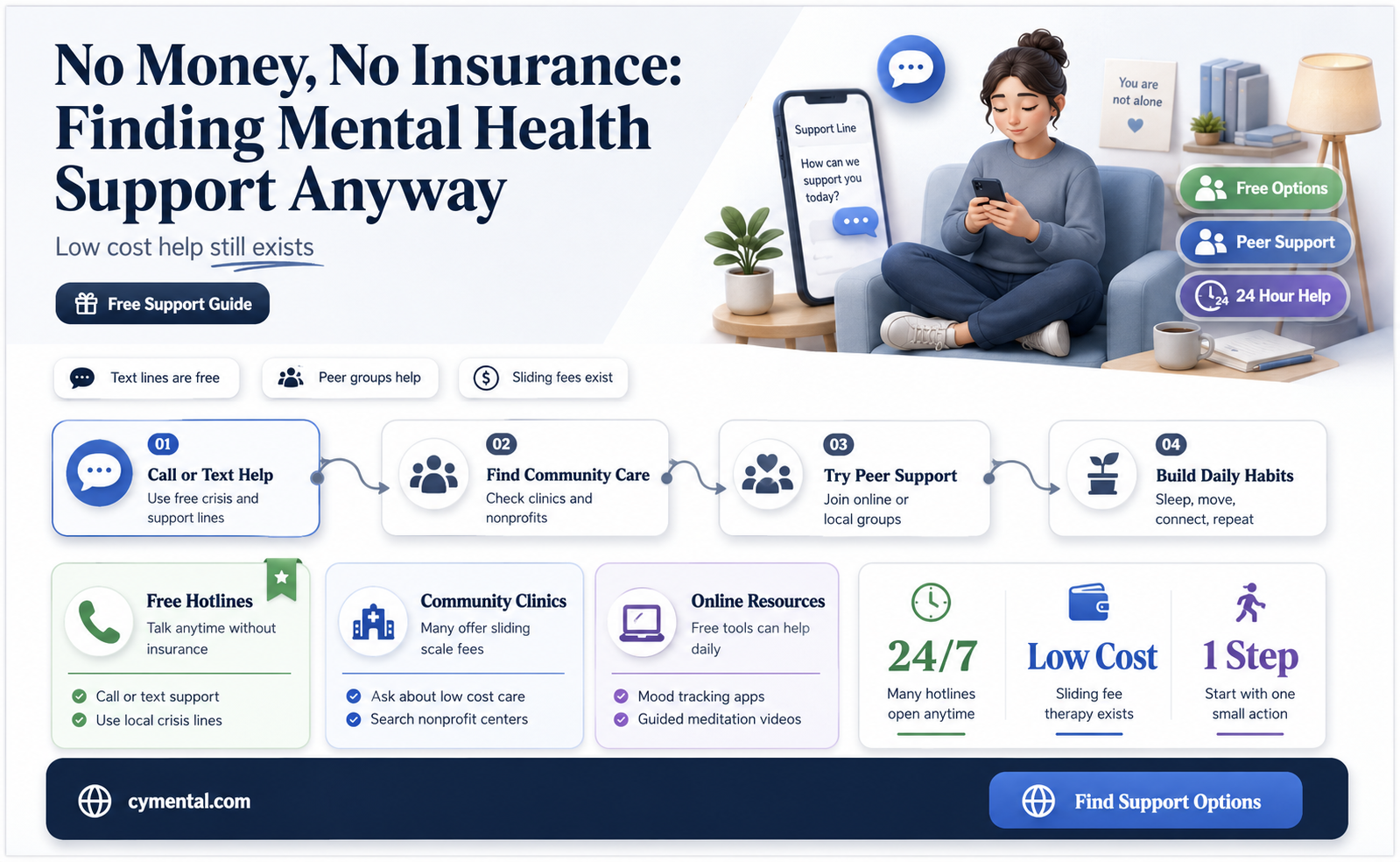
Many individuals face a daunting challenge when seeking mental health support due to financial constraints and lack of insurance coverage. The struggle to access affordable care can exacerbate existing mental health issues, creating a cycle of distress and uncertainty. Without the means to pay for therapy, medication, or counseling, those in need often feel trapped, leading to increased feelings of hopelessness and isolation. This issue highlights the critical need for accessible and affordable mental health resources, as well as systemic changes to ensure that financial barriers do not prevent anyone from receiving the care they deserve.
Explore related products


What You'll Learn
- Free Mental Health Hotlines: Access 24/7 crisis support via free, confidential phone or text services nationwide
- Community Health Clinics: Low-cost or sliding-scale therapy and counseling services based on income
- Online Therapy Platforms: Affordable or free mental health resources and peer support communities online
- Local Nonprofits: Organizations offering free mental health programs, workshops, and group therapy sessions
- Government Assistance: State or federal programs providing mental health services for uninsured individuals

Free Mental Health Hotlines: Access 24/7 crisis support via free, confidential phone or text services nationwide
In moments of mental health crisis, immediate support can be a lifeline, yet financial barriers often stand in the way. Free mental health hotlines offer a critical solution, providing 24/7 access to confidential, professional assistance without the need for insurance or payment. These services are designed to address urgent emotional distress, suicidal thoughts, or overwhelming anxiety, ensuring that no one faces their darkest moments alone.
Consider the National Suicide Prevention Lifeline (988), a nationwide network available to anyone in the U.S. Callers are connected to trained counselors who provide active listening, crisis intervention, and local resource referrals. For those uncomfortable with voice calls, the Crisis Text Line (text HOME to 741741) offers a text-based alternative, pairing individuals with counselors skilled in de-escalation techniques. Both services are anonymous, ensuring privacy for those hesitant to seek help due to stigma or fear of judgment.
While these hotlines are invaluable for immediate crises, they are not a substitute for long-term therapy. However, they often serve as a bridge to ongoing care by providing referrals to low-cost clinics, support groups, or sliding-scale therapists. For instance, the Substance Abuse and Mental Health Services Administration (SAMHSA) helpline (1-800-662-HELP) connects individuals to treatment programs, including those tailored for specific demographics like veterans, LGBTQ+ individuals, or youth.
Practical tips for using these services include keeping the numbers saved in your phone or written down for quick access. If you’re texting, be concise but clear about your situation to help counselors respond effectively. For those supporting a loved one, encourage them to use these resources while offering to stay on the line or nearby for added comfort. Remember, reaching out is a sign of strength, not weakness, and these free hotlines are here to ensure no one struggles in silence.
Inpatient Mental Health Facilities: Effective Treatment or Temporary Relief?
You may want to see also
Explore related products


Community Health Clinics: Low-cost or sliding-scale therapy and counseling services based on income
For those without insurance or financial means, community health clinics offer a vital lifeline to mental health services. These clinics operate on a low-cost or sliding-scale fee structure, adjusting charges based on individual income levels. This model ensures that therapy and counseling remain accessible to people who might otherwise be excluded from care due to financial barriers. By prioritizing need over profit, these clinics address a critical gap in the mental health landscape.
Consider the mechanics of how these clinics function. Typically, patients are asked to provide proof of income, such as recent pay stubs or tax returns, to determine their eligibility for reduced fees. For instance, someone earning below the federal poverty level might pay as little as $10–$20 per session, while those with slightly higher incomes may pay $40–$60. Some clinics even offer free services for those in extreme financial hardship. This tiered approach makes mental health care feasible for a broader demographic, including students, low-wage workers, and the unemployed.
One of the strengths of community health clinics lies in their integration with local resources. Many clinics collaborate with social workers, case managers, and community organizations to provide holistic support. For example, a patient struggling with both depression and housing instability might receive counseling while also being connected to affordable housing programs. This wraparound approach not only addresses mental health but also tackles the social determinants that often exacerbate psychological distress.
However, accessing these services requires proactive effort. Start by researching clinics in your area through online directories like the Health Resources and Services Administration (HRSA) website or local mental health advocacy groups. Call ahead to inquire about their sliding-scale policies and any required documentation. Be prepared to discuss your financial situation openly, as this transparency is key to receiving appropriate fee adjustments. Additionally, ask about wait times, as demand for low-cost services can sometimes lead to delays in scheduling appointments.
Despite their benefits, community health clinics are not without limitations. Staffing shortages and funding constraints can affect the availability of specialized services, such as trauma-focused therapy or couples counseling. Patients may also encounter shorter session times or less frequent appointments compared to private practice settings. Yet, for many, these clinics represent the only viable option for professional mental health support. By leveraging their services, individuals can begin addressing their mental health needs without the burden of overwhelming costs.
Do Mental Hospitals Effectively Treat Depression? Exploring Benefits and Alternatives
You may want to see also
Explore related products





Online Therapy Platforms: Affordable or free mental health resources and peer support communities online
The digital age has democratized access to mental health support, offering a lifeline to those without financial means or insurance. Online therapy platforms and peer support communities have emerged as cost-effective, sometimes free, alternatives to traditional therapy. These resources leverage technology to connect individuals with licensed professionals, trained volunteers, or peers facing similar challenges, breaking down barriers of cost, geography, and stigma.
Analytical Perspective:
Online therapy platforms like BetterHelp, Talkspace, and 7 Cups operate on subscription models, often costing significantly less than in-person sessions. For instance, BetterHelp starts at $60–$90 per week, billed monthly, but financial aid programs can reduce this to $0 for those in need. Free alternatives, such as Crisis Text Line or Befrienders Worldwide, provide immediate support through text or chat, though they are not substitutes for long-term therapy. Peer support communities, like those on Reddit’s r/mentalhealth or MentalHealthAmerica’s online forums, offer a sense of belonging without any cost. However, the lack of professional oversight in peer-based platforms can limit their effectiveness for severe conditions, highlighting the need to choose resources based on the severity of one’s mental health needs.
Instructive Approach:
To access affordable or free online mental health resources, start by researching platforms that align with your needs. For structured therapy, apply for financial aid on platforms like BetterHelp or explore Open Path Collective, which offers sessions as low as $30–$60 for those without insurance. For immediate support, use Crisis Text Line (text “HOME” to 741741) or the 988 Suicide & Crisis Lifeline. Join peer communities like 7 Cups or MentalHealthAmerica’s forums for ongoing support. Always verify the credentials of therapists or counselors on paid platforms and set clear boundaries in peer interactions to maintain safety and privacy.
Persuasive Argument:
Online therapy and peer support are not just stopgaps for those without insurance; they are transformative tools for mental health accessibility. Studies show that online therapy can be as effective as in-person sessions for conditions like depression and anxiety, particularly when delivered by licensed professionals. Peer support, while informal, fosters resilience through shared experiences, reducing feelings of isolation. Critics argue that digital resources lack the intimacy of face-to-face interaction, but the convenience, affordability, and anonymity of online platforms often outweigh these drawbacks, making them invaluable for underserved populations.
Comparative Analysis:
Unlike traditional therapy, online platforms offer flexibility and scalability. For example, apps like Calm or Headspace provide self-guided tools for stress and anxiety at minimal cost, while platforms like Talkspace offer live video sessions with therapists. Peer communities, on the other hand, provide emotional support without professional guidance, making them ideal for mild symptoms or supplementary care. While in-person therapy remains irreplaceable for complex cases, online resources fill critical gaps, particularly for those who cannot afford or access traditional care.
Descriptive Example:
Imagine a 25-year-old college graduate, unemployed and uninsured, struggling with anxiety. They discover 7 Cups, where they chat anonymously with a trained listener for free, gaining immediate relief. Simultaneously, they join a Reddit mental health community, finding solace in shared stories. After a month, they apply for financial aid on BetterHelp and begin weekly sessions with a licensed therapist for $0. This combination of peer support and professional guidance helps them manage their anxiety while they stabilize their financial situation, illustrating how online resources can provide comprehensive care without insurance or significant cost.
By leveraging these online tools, individuals without financial means or insurance can access the mental health support they need, proving that affordability and accessibility are no longer barriers to care.
Hamsters as Emotional Support: Boosting Mental Health and Well-Being
You may want to see also
Explore related products





Local Nonprofits: Organizations offering free mental health programs, workshops, and group therapy sessions
In communities across the country, local nonprofits are stepping up to fill the gap for those who lack the financial means or insurance coverage to access mental health services. These organizations often operate on shoestring budgets, yet they manage to provide free or low-cost programs, workshops, and group therapy sessions that can be life-changing for individuals in need. For instance, organizations like the National Alliance on Mental Illness (NAMI) offer free peer-led support groups, while others, such as the Mental Health America (MHA) affiliates, provide workshops on stress management, mindfulness, and coping strategies. These programs are typically open to all ages, though some may have specific groups for teens, adults, or seniors. To find such resources, start by searching online directories like the Substance Abuse and Mental Health Services Administration (SAMHSA) treatment locator or contacting your local United Way.
One of the most compelling aspects of these nonprofits is their community-driven approach. Unlike clinical settings, which can feel intimidating or impersonal, nonprofit programs often foster a sense of belonging and shared experience. For example, a free weekly art therapy workshop might bring together individuals struggling with anxiety or depression, allowing them to express themselves creatively while connecting with others who understand their challenges. Similarly, group therapy sessions led by trained volunteers can provide a safe space for participants to share their stories and learn coping mechanisms. These programs are not one-size-fits-all; they often adapt to the unique needs of the community, whether that means offering bilingual sessions, addressing trauma in marginalized groups, or focusing on specific issues like grief or addiction.
While these resources are invaluable, it’s important to approach them with realistic expectations. Nonprofit programs may have limited availability due to funding constraints, and waitlists can be long. Additionally, while group settings can be incredibly supportive, they may not replace the individualized care of a licensed therapist for those with severe or complex mental health conditions. To maximize the benefits, consider combining these programs with other free tools, such as mental health apps (like Insight Timer for meditation) or online resources (like the Crisis Text Line). If you’re unsure where to start, reach out to a local nonprofit directly—many have intake coordinators who can guide you to the most appropriate services.
A practical tip for navigating these resources is to be proactive and persistent. Many nonprofits rely on grants and donations, which can affect their ability to maintain consistent programming. By staying informed about their offerings and attending regularly, you not only benefit from the services but also help demonstrate the demand for continued funding. Additionally, consider volunteering or donating if you’re able—these organizations thrive on community support, and even small contributions can make a significant impact. For those without insurance or financial means, local nonprofits are more than just a resource; they’re a lifeline, offering hope and healing in a world where mental health care is often out of reach.
Chakras and Mental Health: Exploring Healing Energy for Inner Balance
You may want to see also
Explore related products


Government Assistance: State or federal programs providing mental health services for uninsured individuals
In the United States, approximately 8.1% of adults had no health insurance in 2022, leaving many without access to essential mental health services. For those struggling financially, government assistance programs can be a lifeline. Both state and federal initiatives offer mental health resources tailored to uninsured individuals, ensuring that financial barriers don’t prevent access to care. Understanding these programs is the first step toward securing the help you or a loved one may need.
Federal programs like Medicaid and SAMHSA (Substance Abuse and Mental Health Services Administration) provide critical support for uninsured individuals. Medicaid, a joint federal and state program, offers mental health coverage to eligible low-income adults, pregnant women, children, and people with disabilities. To qualify, income must fall below a certain threshold, which varies by state. For instance, in 2023, a single adult in California could qualify with an annual income of up to $18,754. SAMHSA’s Single State Agencies (SSAs) fund community mental health centers that provide services on a sliding fee scale, meaning costs are adjusted based on income. For example, someone earning $15,000 annually might pay as little as $10 per therapy session.
At the state level, programs like California’s Mental Health Services Act (MHSA) and New York’s Office of Mental Health (OMH) offer localized solutions. MHSA funds prevention and early intervention programs, including free peer support groups and crisis hotlines. OMH provides uninsured individuals access to community clinics where a 60-minute therapy session might cost $20–$50, depending on income. To find similar programs in your state, visit your state’s Department of Health website or call the local health department. Pro tip: Many states have dedicated mental health hotlines (e.g., California’s 988 Crisis Line) that can connect you to free or low-cost resources immediately.
Navigating these programs can feel overwhelming, but practical steps can simplify the process. Start by checking your eligibility for Medicaid through Healthcare.gov or your state’s Medicaid portal. If ineligible, contact SAMHSA’s National Helpline (1-800-662-HELP) for referrals to local low-cost clinics. Keep documentation of your income and uninsured status handy, as most programs require proof of financial need. Caution: Some state programs have waitlists, so apply as soon as possible. Additionally, non-profit organizations like NAMI (National Alliance on Mental Illness) often partner with government programs to provide additional support, such as free educational workshops or advocacy services.
While government assistance programs are invaluable, they’re not without limitations. Funding shortages can lead to reduced services or longer wait times. For instance, a 2021 report found that 56% of U.S. counties had no practicing psychiatrists, disproportionately affecting rural areas. To bridge gaps, consider combining government resources with free or low-cost alternatives like Open Path Collective, which offers therapy sessions for $30–$60, or 7 Cups, an online platform providing free emotional support chats. By leveraging both government programs and supplementary resources, uninsured individuals can access the mental health care they need without financial strain.
Crying and Mental Health: Unlocking Emotional Release for Well-Being
You may want to see also
Frequently asked questions
Many communities offer free or low-cost mental health resources, including clinics, hotlines, and support groups. Contact local health departments, nonprofits, or use online directories like SAMHSA’s treatment locator.
Yes, hotlines like the National Alliance on Mental Illness (NAMI) Helpline (1-800-950-NAMI) or the Crisis Text Line (text HOME to 741741) provide free, confidential support 24/7.
Some therapists offer sliding scale fees or pro bono services. Additionally, community mental health centers, universities with psychology programs, or faith-based organizations may provide free or low-cost therapy.
Self-help strategies include mindfulness, exercise, journaling, joining support groups, and using free mental health apps like Calm or Insight Timer. Online resources like TED Talks or mental health blogs can also be helpful.
Programs like RxAssist or NeedyMeds offer assistance for low-cost or free medications. Some pharmacies also provide generic medications at reduced prices. Discuss options with your healthcare provider.