Lucas Bennett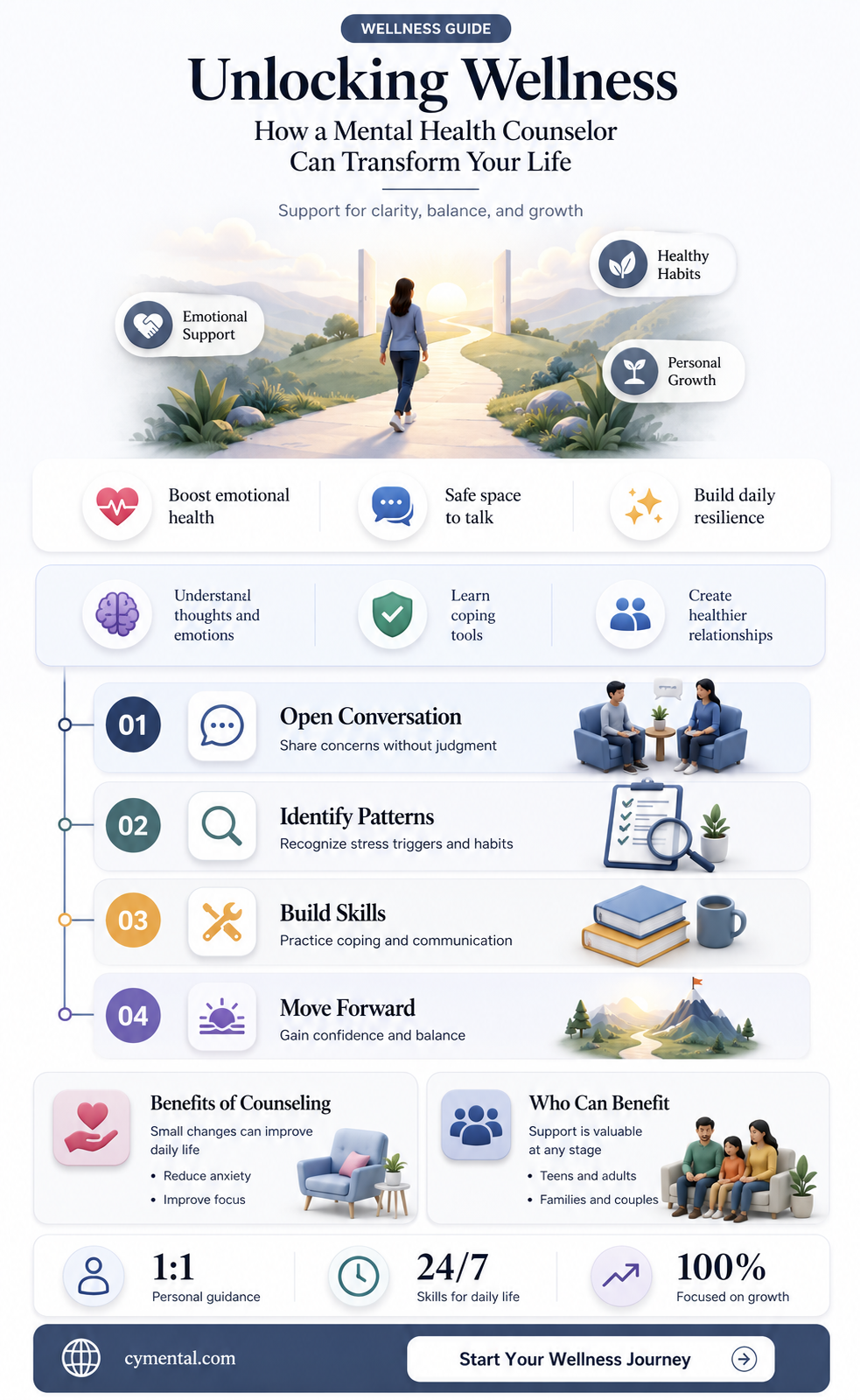
A mental health counselor can be a transformative ally in navigating life’s challenges, offering professional support tailored to your unique needs. Through evidence-based therapies and compassionate listening, counselors help individuals address issues like anxiety, depression, trauma, or relationship struggles, fostering self-awareness and coping strategies. They provide a safe, nonjudgmental space to explore emotions, set goals, and develop healthier thought patterns, empowering clients to build resilience and improve overall well-being. Whether you’re seeking clarity, healing, or personal growth, a counselor can guide you toward lasting positive change.
Explore related products


What You'll Learn
- Managing stress and anxiety effectively through tailored therapeutic techniques and coping strategies
- Overcoming depression with evidence-based interventions and emotional support for lasting recovery
- Improving relationships by addressing communication issues and fostering healthier interpersonal dynamics
- Healing trauma using specialized approaches like CBT or EMDR for resilience
- Enhancing self-esteem and personal growth through self-awareness and goal-setting exercises

Managing stress and anxiety effectively through tailored therapeutic techniques and coping strategies
Stress and anxiety are not just fleeting emotions; they are physiological responses that, when chronic, can rewire your brain’s neural pathways, making you more susceptible to future episodes. A mental health counselor doesn’t just offer a listening ear—they act as a neuroplasticity architect, helping you reshape these pathways through tailored therapeutic techniques. For instance, Cognitive Behavioral Therapy (CBT) identifies and reframes negative thought patterns, while mindfulness-based interventions train your brain to stay grounded in the present, reducing the hyperactivity of the amygdala, the brain’s alarm center. These methods aren’t one-size-fits-all; they’re calibrated to your unique triggers, whether it’s work deadlines, social pressures, or existential worries.
Consider this: stress and anxiety often stem from a mismatch between your environment and your coping mechanisms. A counselor doesn’t just teach you strategies—they help you *test* them in real-time. For example, if you’re a perfectionist, they might introduce graded exposure, where you incrementally face tasks without overpreparing, proving to your brain that imperfection doesn’t lead to catastrophe. Or, if you’re a ruminator, they might prescribe a structured worry journal, allocating 15 minutes daily to address concerns, then physically closing the journal to signal mental closure. These aren’t generic tips; they’re personalized experiments to recalibrate your stress response.
The power of tailored coping strategies lies in their specificity. For instance, a counselor might recommend diaphragmatic breathing (inhale for 4 seconds, hold for 7, exhale for 8) to activate the parasympathetic nervous system, paired with progressive muscle relaxation to release physical tension. But they’ll also assess when these techniques are most effective—perhaps before a meeting, not during a panic attack. For younger clients (teens or early 20s), they might incorporate technology, like biofeedback apps that track heart rate variability, turning stress management into a gamified skill. The goal isn’t to eliminate stress but to transform it from an overwhelming force into a manageable signal.
Here’s the caution: not all strategies work for everyone, and some can backfire. For example, mindfulness meditation, while effective for many, can heighten anxiety in individuals with trauma histories if not guided properly. A skilled counselor knows when to pivot—maybe replacing meditation with sensorimotor psychotherapy or grounding techniques like the 5-4-3-2-1 method (naming five things you see, four you touch, etc.). They also address lifestyle factors often overlooked in self-help guides, such as sleep hygiene (keeping the bedroom at 65°F for optimal rest) or the timing of caffeine intake (avoiding it after 2 p.m. to prevent nighttime anxiety spikes).
The takeaway is this: managing stress and anxiety isn’t about adopting a new habit; it’s about rewiring your brain’s default mode. A counselor acts as both scientist and coach, experimenting with techniques until they find the combination that clicks for you. Whether it’s through CBT, somatic experiencing, or even creative outlets like art therapy, the process is iterative, not linear. You won’t just learn to cope—you’ll learn to thrive, turning stress from an adversary into an ally that sharpens your focus and resilience. This isn’t just therapy; it’s a blueprint for a calmer, more intentional life.
Daily Learning Boosts Mental Health: Unlocking Cognitive Benefits Every Day
You may want to see also
Explore related products





Overcoming depression with evidence-based interventions and emotional support for lasting recovery
Depression often feels like an insurmountable wall, but evidence-based interventions paired with emotional support can dismantle it brick by brick. Cognitive Behavioral Therapy (CBT), for instance, is a cornerstone treatment backed by decades of research. This structured approach helps individuals identify and reframe negative thought patterns, replacing them with healthier, more adaptive ones. A typical CBT program involves 12 to 20 sessions, each lasting 45 to 60 minutes, tailored to the individual’s needs. For example, a counselor might guide a client through a thought record exercise, where they dissect a distressing situation, the emotions it triggered, and the underlying beliefs, then challenge those beliefs with evidence from their own experiences.
While therapy provides tools, emotional support acts as the scaffolding that holds recovery together. A mental health counselor offers a nonjudgmental space where clients can express their deepest fears and frustrations without fear of rejection. This therapeutic alliance is critical; studies show that a strong counselor-client relationship can predict better treatment outcomes. For instance, a counselor might use empathy to validate a client’s feelings of worthlessness, saying, “It makes sense that you feel this way given what you’ve been through,” before gently introducing a more balanced perspective. This combination of validation and challenge fosters resilience and hope.
Practical strategies complement these interventions, turning abstract concepts into actionable steps. Behavioral activation, a CBT technique, encourages individuals to schedule pleasurable or meaningful activities, even when they don’t feel like it. For someone with depression, this might mean committing to a 15-minute walk daily or calling a friend once a week. These small actions, though seemingly insignificant, can disrupt the cycle of inactivity and isolation that fuels depression. A counselor might also recommend lifestyle changes, such as improving sleep hygiene by limiting screen time before bed or incorporating mindfulness exercises like deep breathing for 5 minutes daily.
However, lasting recovery requires more than just symptom management; it demands a shift in mindset. A counselor can help clients cultivate self-compassion, a practice rooted in treating oneself with the same kindness one would offer a friend. Research shows that self-compassion reduces depressive symptoms and enhances emotional well-being. For example, instead of berating themselves for “failing” to complete a task, clients learn to acknowledge their struggles with phrases like, “This is really hard right now, and that’s okay.” Over time, this internal dialogue becomes a buffer against the self-criticism that often accompanies depression.
Finally, integrating these interventions into daily life is key to sustaining progress. A counselor might work with a client to create a relapse prevention plan, identifying early warning signs of depression and strategies to address them. This could include maintaining a gratitude journal, revisiting coping skills learned in therapy, or reaching out to a support network. For adolescents, involving family members in treatment can provide additional layers of accountability and encouragement. For older adults, adapting interventions to address age-related challenges, such as chronic pain or grief, ensures relevance and effectiveness. By combining evidence-based practices with personalized emotional support, mental health counselors empower individuals to not just survive depression, but to thrive beyond it.
Amy Bouzaglo's Mental Health Journey: Did She Seek Professional Help?
You may want to see also
Explore related products


Improving relationships by addressing communication issues and fostering healthier interpersonal dynamics
Effective communication is the cornerstone of any healthy relationship, yet it’s often where breakdowns occur. Misunderstandings, unspoken expectations, and emotional barriers can create distance between partners, family members, or friends. A mental health counselor acts as a neutral guide, helping individuals identify destructive communication patterns—such as criticism, defensiveness, or stonewalling—and replace them with constructive strategies. For instance, instead of saying, "You never listen to me," a counselor might teach rephrasing it as, "I feel unheard when we discuss this topic," which reduces blame and opens dialogue.
Consider the case of a couple struggling with frequent arguments over household chores. Through counseling, they learn the "speaker-listener technique," where one person shares their perspective uninterrupted for two minutes, followed by the other paraphrasing what they heard. This structured approach fosters empathy and clarity, transforming a heated debate into a collaborative problem-solving session. Such tools are not innate; they require practice, and a counselor provides the framework and accountability to integrate them into daily interactions.
Fostering healthier interpersonal dynamics goes beyond communication skills—it involves understanding underlying emotions and attachment styles. For example, someone with an anxious attachment style might seek constant reassurance, while a partner with an avoidant style may withdraw under pressure. A counselor helps individuals recognize these patterns and develop strategies to meet each other’s needs without triggering insecurities. This might include setting boundaries, scheduling dedicated "check-in" times, or practicing emotional regulation techniques like deep breathing during conflicts.
One practical exercise counselors often recommend is the "Four Steps to Conflict Resolution": (1) Pause and calm down before responding, (2) State your feelings using "I" statements, (3) Listen actively without interrupting, and (4) Brainstorm solutions together. This method, when practiced consistently, can defuse tension and rebuild trust. However, it’s crucial to approach these steps with patience; change doesn’t happen overnight, and setbacks are part of the process. A counselor provides the support needed to navigate these challenges without losing hope.
Ultimately, improving relationships through counseling is about creating a safe space for vulnerability and growth. It’s not just about resolving conflicts but also about deepening connections and fostering mutual respect. By addressing communication issues and understanding each other’s emotional landscapes, individuals can transform strained relationships into sources of strength and support. The investment in counseling pays dividends in the form of healthier, more fulfilling interpersonal dynamics that enrich every aspect of life.
Do Mental Health Facilities Truly Aid Recovery and Healing?
You may want to see also
Explore related products


$10.88 $15.99

$17.49 $17.95


Healing trauma using specialized approaches like CBT or EMDR for resilience
Trauma can leave deep, invisible scars that affect every aspect of life, from relationships to daily functioning. Yet, with the right tools, healing is not only possible but transformative. Specialized approaches like Cognitive Behavioral Therapy (CBT) and Eye Movement Desensitization and Reprocessing (EMDR) are designed to address trauma at its core, rewiring the brain’s response to distressing memories. These methods don’t just manage symptoms—they foster resilience, enabling individuals to reclaim control and rebuild their lives.
Consider CBT, a structured, goal-oriented therapy that typically spans 12 to 20 sessions. It works by identifying and challenging negative thought patterns that stem from traumatic experiences. For instance, a survivor of a car accident might believe, “I’m not safe on the road.” CBT helps reframe this thought to, “I can take steps to feel safer while driving.” This shift reduces anxiety and empowers the individual to face triggers with confidence. Homework assignments, such as journaling or gradual exposure to feared situations, reinforce progress between sessions. While CBT is effective for all ages, it’s particularly adaptable for adolescents and adults, as it requires active participation and self-reflection.
EMDR, on the other hand, takes a different approach by targeting the way traumatic memories are stored in the brain. During 6 to 12 sessions, clients focus on a distressing memory while engaging in bilateral stimulation, such as side-to-side eye movements or tapping. This process mimics the rapid eye movement (REM) stage of sleep, helping the brain reprocess the memory so it’s less emotionally charged. For example, a veteran haunted by combat flashbacks might find these memories become more distant and less intrusive after EMDR. This therapy is especially effective for single-event traumas but can also be adapted for complex trauma cases. It’s crucial, however, to work with a certified EMDR therapist to ensure safety and efficacy.
Both CBT and EMDR share a common goal: building resilience. Resilience isn’t about erasing the past but about developing the ability to bounce back from adversity. Through these therapies, individuals learn to manage distress, reframe negative beliefs, and cultivate a sense of agency. Practical tips to enhance resilience include maintaining a consistent sleep schedule, practicing mindfulness, and leaning on a support network. Combining these strategies with professional therapy amplifies their impact, creating a foundation for long-term healing.
Choosing between CBT and EMDR depends on the nature of the trauma and personal preferences. CBT is ideal for those who want a logical, step-by-step approach, while EMDR suits individuals seeking a more experiential, body-based method. In some cases, therapists integrate both techniques for a comprehensive treatment plan. The key is to start—trauma may feel insurmountable, but with the right support and specialized tools, resilience is within reach. Healing isn’t linear, but every step forward is a victory.
Nature's Healing Power: Can Outdoor Therapy Ease Mental Illness?
You may want to see also
Explore related products


Enhancing self-esteem and personal growth through self-awareness and goal-setting exercises
Self-esteem often hinges on how well we understand our strengths, weaknesses, and values. A mental health counselor employs self-awareness exercises like journaling, mindfulness practices, or reflective questioning to uncover these aspects. For instance, a counselor might ask, "What are three things you’re proud of accomplishing this week?" or guide you through a values clarification worksheet. These tools help identify patterns in behavior and thought, laying the groundwork for targeted personal growth. Without this clarity, even well-intentioned goals can feel misaligned or overwhelming.
Goal-setting, when paired with self-awareness, transforms vague aspirations into actionable steps. Counselors use frameworks like SMART goals (Specific, Measurable, Achievable, Relevant, Time-bound) to structure progress. For example, instead of saying, "I want to be more confident," a counselor might help reframe this as, "I will practice public speaking for 10 minutes daily for the next month." This specificity not only makes goals more attainable but also provides measurable milestones to celebrate, reinforcing self-esteem with each small victory.
However, goal-setting without self-compassion can backfire. A counselor acts as a buffer, ensuring goals are challenging yet realistic, and encouraging flexibility when setbacks occur. For instance, if a client misses a week of their planned exercise routine, the counselor might reframe this as an opportunity to explore underlying barriers rather than a failure. This approach fosters resilience, teaching that growth is iterative, not linear, and that self-worth isn’t tied to perfection.
Practical integration is key. A counselor might assign a daily self-reflection prompt, such as, "What did I learn about myself today?" paired with a weekly goal review. For younger clients (teens or early adults), visual tools like habit trackers or mood charts can make progress tangible. For older adults, linking goals to long-term values, such as family or legacy, can deepen motivation. Regardless of age, the combination of self-awareness and structured goal-setting creates a sustainable cycle: as self-esteem rises, ambition grows, and with it, the capacity to tackle larger challenges.
Mental Hospitals: Effective Support for Suicidal Thoughts and Recovery?
You may want to see also
Frequently asked questions
A mental health counselor can help you identify the root causes of your stress and anxiety, teach coping strategies, and provide tools to manage symptoms effectively. They create a safe space for you to explore your thoughts and emotions, offering guidance to improve your overall well-being.
A counselor can help you understand and process the underlying issues contributing to depression, develop healthier thought patterns, and set achievable goals. They may also use evidence-based therapies like cognitive-behavioral therapy (CBT) to support your recovery.
Yes, counselors often work with individuals to address relationship challenges by improving communication skills, resolving conflicts, and fostering self-awareness. They can also help you explore patterns in relationships and build healthier connections.
A counselor provides a supportive environment to process traumatic experiences, using techniques like trauma-focused therapy to reduce distress and promote healing. They help you develop coping mechanisms and regain a sense of control and safety.