Ava Ramirez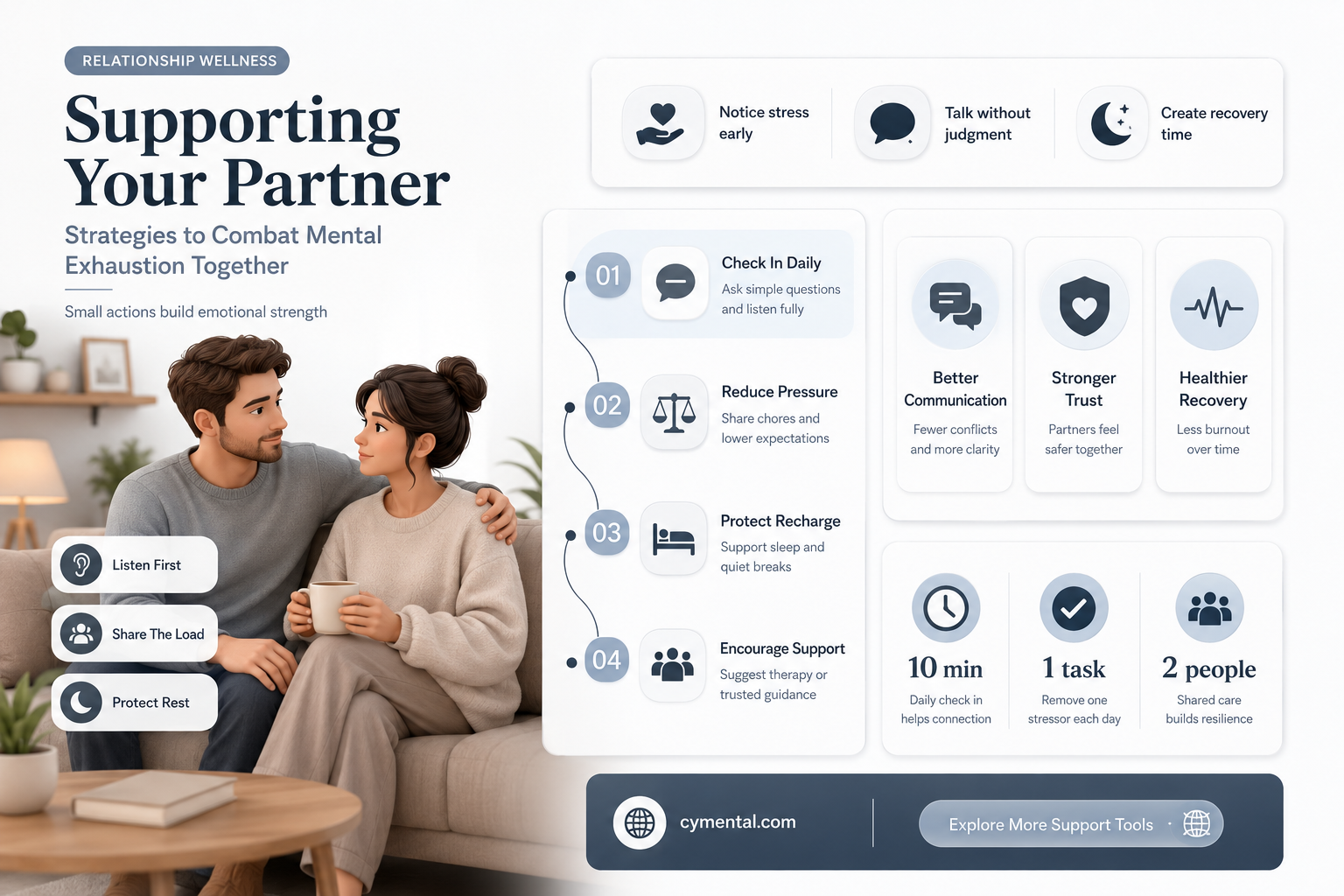
When dealing with mental exhaustion, having a supportive significant other can make a profound difference in your recovery and overall well-being. A partner who actively listens without judgment, offers emotional reassurance, and creates a safe space for vulnerability can help alleviate the weight of stress and anxiety. They should also encourage self-care practices, such as rest, exercise, or hobbies, while sharing responsibilities to reduce your workload. By fostering open communication, showing patience, and prioritizing your needs, a significant other can provide the emotional and practical support necessary to help you recharge and regain balance in your life.
Explore related products


What You'll Learn
- Active Listening: Give undivided attention, validate feelings, and avoid interrupting during conversations about stress
- Shared Responsibilities: Lighten the load by equally dividing household chores and daily tasks
- Encouraging Breaks: Promote rest, suggest downtime, and create opportunities for relaxation and self-care
- Emotional Support: Offer reassurance, empathy, and a safe space to express vulnerability without judgment
- Healthy Habits: Foster routines like exercise, nutrition, and sleep to combat mental fatigue together

Active Listening: Give undivided attention, validate feelings, and avoid interrupting during conversations about stress
Mental exhaustion often manifests as a silent struggle, making it crucial for partners to create a safe space for open dialogue. Active listening is not merely hearing words but engaging fully with the speaker’s emotional state. When your significant other shares their stress, put away distractions—phones, TVs, or wandering thoughts. Maintain eye contact, nod in acknowledgment, and use nonverbal cues like a gentle touch or a supportive smile. This undivided attention communicates that their feelings matter, fostering trust and emotional connection.
Validation is the cornerstone of active listening, yet it’s often misunderstood. It doesn’t mean agreeing with every sentiment but acknowledging the legitimacy of their emotions. Phrases like, “It makes sense that you’d feel overwhelmed given everything on your plate,” or “I can see how hard this has been for you,” show empathy without judgment. Avoid minimizing their experience with statements like, “It could be worse,” or “Just think positively.” Such responses invalidate their struggle and can deepen feelings of isolation.
Interrupting, even with good intentions, derails the flow of vulnerability. Resist the urge to offer solutions or share your own experiences mid-conversation. Instead, let them express themselves fully before responding. If you must speak, ask permission: “Would it help if I shared a thought?” or “Can I offer a suggestion?” This respects their agency and ensures the focus remains on their needs. Remember, the goal is to provide a safe space for them to unload, not to fix the problem immediately.
Practical implementation of active listening requires mindfulness and practice. Set aside dedicated time for these conversations, ensuring both partners are emotionally available. For instance, a 15-minute “check-in” before dinner can be more effective than sporadic, half-hearted attempts. If distractions arise, gently redirect the focus back to the speaker. Over time, this habit not only alleviates mental exhaustion but strengthens the bond between partners, creating a resilient foundation for navigating life’s challenges together.
Self-Control and Mental Health: A Powerful Tool for Disorder Management
You may want to see also
Explore related products


Shared Responsibilities: Lighten the load by equally dividing household chores and daily tasks
Mental exhaustion often stems from the relentless accumulation of small, repetitive tasks that drain energy without offering respite. Sharing household chores equally isn’t just about fairness—it’s a practical strategy to redistribute mental load. For instance, if one partner handles meal planning, grocery shopping, and cooking, while the other manages laundry and cleaning, both contribute visibly. However, invisible tasks like remembering appointments, restocking toiletries, or organizing social events often default to one person, disproportionately increasing their cognitive burden. A study by the *Journal of Family Psychology* found that unequal division of these tasks correlates with higher stress levels, even when both partners work full-time. The solution? Explicitly list all household duties, categorize them as visible or invisible, and assign them based on mutual agreement, not assumed roles.
Consider this step-by-step approach to implement shared responsibilities effectively. First, conduct a “task audit” by documenting every chore and daily duty for a week. Include both visible tasks (e.g., mowing the lawn) and invisible ones (e.g., scheduling vet visits). Next, rank each task by frequency and mental effort required—for example, paying bills monthly might be less frequent but more mentally taxing than daily dishwashing. Then, negotiate a division that balances both partners’ strengths and preferences. For instance, if one partner dislikes cooking but enjoys organizing, they could handle meal planning and grocery lists while the other cooks. Use tools like shared calendars or apps (e.g., Trello or Cozi) to track responsibilities and ensure accountability without micromanaging.
Critics might argue that equal division ignores individual capacities or preferences, but this overlooks the adaptability of shared systems. For example, if one partner works longer hours, they could take on fewer tasks but contribute financially to outsourcing (e.g., hiring a cleaner). The key is proportionality, not strict 50/50 splits. A persuasive counterpoint lies in the long-term benefits: when both partners feel their efforts are recognized and valued, resentment diminishes, and mental exhaustion decreases. A survey by *Harvard Business Review* found that couples who share chores report higher relationship satisfaction and lower stress levels. This isn’t about keeping score—it’s about creating a sustainable partnership where neither person feels overwhelmed.
Descriptively, imagine a weekend morning where both partners wake up without the unspoken expectation that one will handle breakfast while the other relaxes. Instead, they alternate roles weekly, or one prepares the meal while the other sets the table and cleans up afterward. This shared rhythm extends beyond weekends; during weekdays, they split evening tasks like one walking the dog while the other preps lunches for the next day. The takeaway is that shared responsibilities transform household chores from solitary duties into collaborative efforts, reducing mental exhaustion by fostering a sense of teamwork. When both partners actively participate, the home becomes a space of mutual support, not a source of stress.
Exploring Medical Cannabis as a Potential Mental Health Treatment Option
You may want to see also
Explore related products





Encouraging Breaks: Promote rest, suggest downtime, and create opportunities for relaxation and self-care
Mental exhaustion thrives in environments where rest is seen as a luxury rather than a necessity. A significant other can disrupt this cycle by actively encouraging breaks, not just passively allowing them. This means recognizing the signs of fatigue—irritability, decreased focus, or emotional withdrawal—and intervening before burnout sets in. For instance, suggesting a 10-minute walk after a stressful meeting or proposing a weekend afternoon with no screens can reframe rest as a priority, not an afterthought.
The art of suggesting downtime lies in making it feel natural and guilt-free. Instead of framing it as a response to failure or weakness, position it as a proactive step toward well-being. For example, "Let’s take a break—you’ve been pushing hard, and this will help you recharge." Pairing rest with a shared activity, like brewing tea or listening to music, can make it more appealing. Research shows that even short breaks of 15–20 minutes can improve cognitive function and reduce stress, so specificity in timing can lend credibility to the suggestion.
Creating opportunities for relaxation often requires intentional planning. A significant other can take the lead by scheduling downtime into shared routines, such as a weekly “unplugged” evening or a monthly spa day at home. Practical tips include setting reminders for hydration, preparing a cozy space with soft lighting and comfortable seating, or curating a playlist of calming sounds. For those resistant to self-care, starting small—like a 5-minute guided meditation—can build momentum without feeling overwhelming.
Comparing the impact of forced productivity versus intentional rest highlights the value of breaks. Studies reveal that overworked individuals experience a 20% decline in performance, while those who take regular breaks maintain consistency and creativity. By advocating for rest, a partner not only supports mental health but also enhances overall productivity. This comparative perspective can shift the narrative from “rest is lazy” to “rest is strategic,” fostering a culture of self-care within the relationship.
Ultimately, encouraging breaks is an act of empathy and foresight. It requires understanding a partner’s limits, respecting their need for space, and actively removing barriers to relaxation. Whether it’s taking over household tasks to free up time or simply reminding them to breathe, these actions communicate, “Your well-being matters.” In a world that glorifies busyness, a significant other who champions rest becomes a sanctuary—a reminder that slowing down is not just allowed but essential.
Belonging and Mental Health: How Connection Impacts Well-Being
You may want to see also
Explore related products



Emotional Support: Offer reassurance, empathy, and a safe space to express vulnerability without judgment
Mental exhaustion often silences its victims, trapping them in a cycle of isolation and self-doubt. A significant other can break this cycle by offering emotional support that fosters openness and trust. Start by creating a safe space where vulnerability isn’t met with judgment but with acceptance. For instance, instead of dismissing concerns with phrases like “it’s not that bad,” respond with, “I see how hard this is for you, and I’m here to listen.” This simple shift validates their experience, encouraging them to share more freely.
Empathy is the cornerstone of this support system. It requires actively stepping into your partner’s emotional world, even when it’s uncomfortable. For example, if they’re overwhelmed by work stress, don’t offer solutions immediately. Instead, say, “It sounds like this project is draining you—how can I help you feel less alone right now?” This approach acknowledges their struggle while inviting collaboration. Research shows that empathetic responses reduce cortisol levels, the stress hormone, making this a tangible way to alleviate mental exhaustion.
Reassurance is another critical tool, but it must be specific and genuine. Blanket statements like “everything will be okay” can feel dismissive. Instead, tie your reassurance to their strengths or past successes. For instance, “I know you’re doubting yourself, but remember how you handled that last crisis? You’ve got this.” Tailoring your words to their unique situation reinforces their self-worth and resilience. Aim to offer at least one specific reassurance daily, especially during high-stress periods.
Creating a judgment-free zone requires intentional effort. Set boundaries around criticism, even if well-intentioned. For example, avoid phrases like “you should have done this differently” when they share a failure. Instead, focus on their emotions: “That sounds really frustrating—how are you feeling about it now?” This reframing keeps the conversation centered on their emotional experience rather than perceived mistakes. Over time, this consistency builds trust, making it easier for them to lean on you when mental exhaustion strikes.
Finally, emotional support isn’t a one-time act but a daily practice. Small, consistent gestures—like asking open-ended questions, offering a hug without words, or simply sitting in silence together—accumulate into a foundation of security. Remember, the goal isn’t to “fix” their exhaustion but to remind them they’re not alone in carrying it. By offering reassurance, empathy, and a safe space, you become a sanctuary where they can recharge and face the world anew.
Vitamin D's Role in Boosting Mental Health and Well-being
You may want to see also
Explore related products


Healthy Habits: Foster routines like exercise, nutrition, and sleep to combat mental fatigue together
Mental exhaustion thrives in the absence of structure, and a significant other can be a powerful ally in rebuilding routines that fortify resilience. Start by anchoring your days with consistent sleep schedules. Aim for 7-9 hours of uninterrupted sleep, synchronizing bedtimes and wake times even on weekends. A partner can help by creating a calming bedtime ritual—dimming lights, limiting screens an hour before bed, or practicing a 10-minute guided meditation together. Research shows that shared routines strengthen emotional bonds and improve sleep quality, a cornerstone of mental recovery.
Nutrition is another battlefield where teamwork makes a difference. Mental fatigue often leads to cravings for quick energy fixes like sugar or caffeine, which exacerbate burnout. Instead, plan meals rich in omega-3s (salmon, walnuts), complex carbs (quinoa, sweet potatoes), and antioxidants (berries, spinach). A significant other can take turns preparing meals or grocery shopping, ensuring the pantry is stocked with brain-boosting foods. For instance, a morning smoothie with spinach, banana, and flaxseeds provides sustained energy without the crash. Small, consistent choices compound into resilience.
Exercise is not just about physical health—it’s a potent antidote to mental exhaustion. However, when drained, even a 10-minute walk feels daunting. Here’s where a partner can step in as a motivator and accountability buddy. Schedule joint activities like yoga, hiking, or even a brisk walk after dinner. Studies show that couples who exercise together report higher satisfaction and reduced stress. Start with 20-30 minutes of moderate activity three times a week, gradually increasing intensity. The key is consistency, not perfection.
Finally, recognize that routines are not one-size-fits-all. What works for one person may not work for another, and flexibility is crucial. A significant other can help by observing patterns—does mental fatigue spike after long work hours? Are weekends spent recovering instead of recharging? Adjust routines accordingly. For example, if evenings are particularly draining, shift exercise to mornings or incorporate short mindfulness breaks throughout the day. The goal is to build habits that feel supportive, not restrictive.
In fostering these routines, a partner becomes more than a supporter—they become a co-architect of a healthier, more resilient life. By prioritizing sleep, nutrition, and exercise together, couples can transform mental exhaustion from an isolating struggle into a shared journey of growth. The power lies not just in the habits themselves, but in the unity and commitment behind them.
Napping for Mental Health: Can Short Sleeps Ease Symptoms?
You may want to see also
Frequently asked questions
They can help by actively listening without judgment, offering emotional support, and creating a calm, safe space for you to rest and recharge. Small acts like preparing meals, handling chores, or simply being present can alleviate your burden.
Avoid pressuring you to "snap out of it," dismissing your feelings, or adding more responsibilities. Instead, be patient, understanding, and avoid overwhelming you with questions or demands.
They can gently suggest activities like taking a walk, meditating, or enjoying a hobby together. Offering to join you in self-care practices or giving you space when needed shows they care without being intrusive.
They can help by having open conversations about what’s causing your exhaustion and brainstorming solutions together. Encouraging professional help if needed and supporting boundaries at work or in personal life can also be invaluable.