Noah Parker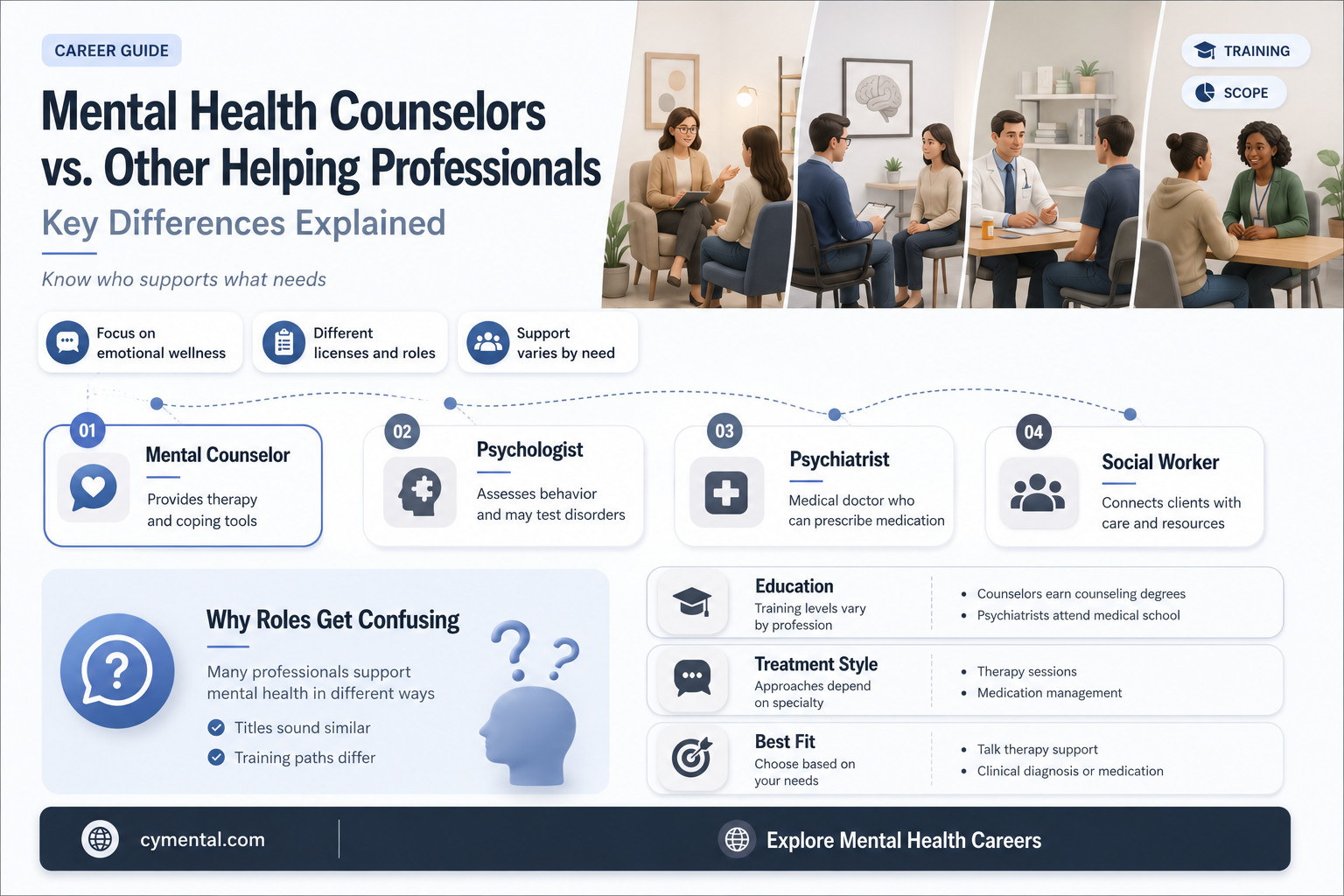
Mental health counselors play a distinct role in the field of helping professions, setting them apart from other professionals like social workers, psychologists, or psychiatrists. While all these roles aim to support individuals in need, mental health counselors focus specifically on providing therapeutic interventions to address emotional, behavioral, and psychological challenges. Unlike social workers, who often emphasize case management and systemic advocacy, counselors prioritize one-on-one therapy and evidence-based counseling techniques. Compared to psychologists, who may conduct research or administer psychological assessments, counselors typically concentrate on clinical practice and client-centered therapy. Psychiatrists, being medical doctors, can prescribe medication, whereas mental health counselors focus on talk therapy and holistic approaches to mental wellness. This specialization allows counselors to offer tailored, non-medical interventions that foster personal growth, resilience, and improved mental health outcomes.
Explore related products


What You'll Learn
- Education and Training: Focus on counseling-specific degrees, licensure, and supervised clinical hours
- Therapeutic Approaches: Emphasis on talk therapy, evidence-based modalities, and client-centered techniques
- Scope of Practice: Address mental health issues, not medical diagnoses or prescription management
- Client Relationship: Build long-term, trust-based partnerships for emotional and psychological growth
- Specializations: Focus on areas like trauma, addiction, or couples counseling within mental health

Education and Training: Focus on counseling-specific degrees, licensure, and supervised clinical hours
Mental health counselors undergo specialized education and training that distinguishes them from other helping professionals. Unlike social workers or psychologists, who may have broader academic backgrounds, counselors typically pursue degrees specifically in mental health counseling, clinical mental health counseling, or a closely related field. These programs are designed to provide a deep understanding of counseling theories, techniques, and ethical practices, ensuring that graduates are well-equipped to address a wide range of mental health issues. For instance, a master’s degree in clinical mental health counseling often includes coursework in psychopathology, multicultural counseling, and crisis intervention, tailored to the unique demands of the profession.
Licensure is another critical component that sets mental health counselors apart. To practice independently, counselors must meet state-specific licensure requirements, which typically include completing a master’s degree from an accredited program, accruing a minimum of 2,000 to 4,000 supervised clinical hours, and passing a national exam such as the National Clinical Mental Health Counseling Examination (NCMHCE). This rigorous process ensures that counselors have both the theoretical knowledge and practical experience necessary to provide effective, ethical care. Supervised clinical hours, in particular, are a cornerstone of training, allowing counselors to apply their skills under the guidance of experienced professionals while honing their ability to assess, diagnose, and treat clients.
The focus on counseling-specific degrees and licensure highlights a key difference between mental health counselors and other helping professionals. For example, while social workers often hold degrees in social work (MSW) and may specialize in mental health, their training emphasizes case management, advocacy, and systems-level interventions. Psychologists, on the other hand, typically complete doctoral degrees (PhD or PsyD) and focus on research, assessment, and psychological testing. Mental health counselors, however, are trained exclusively in therapeutic techniques and client-centered approaches, making them uniquely suited to provide individual, group, and family counseling services.
Practical considerations also play a role in the education and training of mental health counselors. Supervised clinical hours, for instance, are not just a requirement for licensure but a vital opportunity for counselors to develop their clinical skills in real-world settings. These hours are often completed in diverse environments, such as community mental health centers, schools, or private practices, allowing counselors to work with varied client populations. Additionally, many programs incorporate experiential learning, such as role-playing or practicum experiences, to bridge the gap between theory and practice. Aspiring counselors should carefully research accredited programs and ensure they meet their state’s licensure requirements, as these can vary significantly.
In conclusion, the education and training of mental health counselors are purposefully structured to cultivate expertise in counseling-specific practices. From specialized degrees to stringent licensure requirements and supervised clinical hours, every aspect of their training is designed to prepare them for the unique challenges of mental health counseling. This focused approach not only distinguishes them from other helping professionals but also ensures they are well-prepared to provide compassionate, evidence-based care to those in need. For anyone considering a career in mental health counseling, understanding these distinctions is essential for navigating the path to becoming a licensed professional.
Recognizing the Signs: When to Seek Mental Health Support
You may want to see also
Explore related products


Therapeutic Approaches: Emphasis on talk therapy, evidence-based modalities, and client-centered techniques
Mental health counselors distinguish themselves through their mastery of therapeutic approaches, particularly in the realm of talk therapy. Unlike professionals who may rely on medication management or brief interventions, counselors engage clients in structured, ongoing conversations aimed at exploring emotions, thoughts, and behaviors. This emphasis on verbal exchange allows for deep, nuanced understanding of a client’s experiences, fostering a collaborative environment where change is cultivated through dialogue rather than directive advice.
Evidence-based modalities form the backbone of a counselor’s toolkit, ensuring interventions are grounded in research and proven effective. Cognitive Behavioral Therapy (CBT), for instance, is widely used to address anxiety and depression by identifying and restructuring negative thought patterns. Dialectical Behavior Therapy (DBT) offers skills for emotional regulation, particularly for individuals with borderline personality disorder. These modalities are not one-size-fits-all; counselors adapt them to meet the unique needs of each client, often blending techniques to maximize efficacy. For example, a counselor might integrate mindfulness practices from DBT into CBT sessions to enhance a client’s ability to stay present during cognitive reframing exercises.
Client-centered techniques further differentiate mental health counselors by prioritizing the individual’s autonomy and perspective. Rooted in Carl Rogers’ person-centered therapy, this approach emphasizes empathy, unconditional positive regard, and congruence. Counselors create a nonjudgmental space where clients feel safe to express themselves, trusting that their experiences are validated and respected. This client-led process empowers individuals to identify their own solutions, fostering a sense of ownership over their healing journey. For instance, a counselor might use open-ended questions like, “What do you think is at the root of this feeling?” to guide clients toward self-discovery rather than imposing interpretations.
Practical application of these therapeutic approaches requires skill and intentionality. Sessions typically last 45–60 minutes, with frequency ranging from weekly to biweekly depending on the client’s needs. Counselors often assign “homework”—such as journaling or practicing coping skills—to extend the therapeutic process beyond the session. For younger clients, creative modalities like play therapy or art-based interventions may be incorporated to engage those who struggle with verbal expression. The goal is not just symptom reduction but holistic growth, achieved through a partnership that honors the client’s voice and leverages evidence-based strategies.
In contrast to other helping professionals, mental health counselors weave these therapeutic approaches into a cohesive framework that prioritizes both science and humanity. While psychiatrists may focus on pharmacological solutions and social workers on systemic advocacy, counselors excel in the art of talk therapy, blending evidence-based modalities with client-centered techniques to facilitate profound, lasting change. This unique combination positions them as indispensable guides in the journey toward mental wellness.
Kicking Stigma: Football's Impact on Mental Health and Well-Being
You may want to see also
Explore related products


Scope of Practice: Address mental health issues, not medical diagnoses or prescription management
Mental health counselors operate within a distinct scope of practice that prioritizes therapeutic interventions over medical procedures. Unlike psychiatrists or primary care physicians, counselors do not diagnose medical conditions, prescribe medications, or manage physical health symptoms. Their expertise lies in addressing psychological, emotional, and behavioral issues through evidence-based talk therapies, such as cognitive-behavioral therapy (CBT) or dialectical behavior therapy (DBT). For instance, while a psychiatrist might prescribe a selective serotonin reuptake inhibitor (SSRI) like fluoxetine (20–60 mg/day for adults) to manage depression, a mental health counselor would focus on helping clients reframe negative thought patterns and develop coping strategies.
Consider a client presenting with symptoms of anxiety. A mental health counselor would explore the root causes of the anxiety, teach relaxation techniques (e.g., deep breathing exercises at a 4-7-8 rhythm), and work on behavioral activation to reduce avoidance patterns. In contrast, a physician might first rule out thyroid dysfunction or cardiovascular issues before considering a prescription for beta-blockers (e.g., propranolol 10–40 mg/day) to manage physical symptoms. The counselor’s role is to address the psychological underpinnings, not to administer or adjust medications, even if the client is already on a pharmacological regimen.
This delineation is critical for client safety and ethical practice. Mental health counselors are trained to recognize when a client’s symptoms may require medical attention, such as persistent insomnia or unexplained weight loss, and refer them to appropriate healthcare providers. For example, a counselor working with a teenager exhibiting severe mood swings would collaborate with a psychiatrist to ensure a comprehensive evaluation for bipolar disorder, while continuing to provide therapeutic support. This collaborative approach ensures clients receive holistic care without overstepping professional boundaries.
Practical tips for clients include understanding the limits of a counselor’s role and being proactive in communicating symptoms. If a client feels their mental health issues are accompanied by physical symptoms (e.g., chronic fatigue or migraines), they should inform their counselor, who can then facilitate a referral to a medical professional. Conversely, counselors can educate clients on the benefits of therapy as a standalone or complementary treatment, emphasizing its effectiveness in managing conditions like generalized anxiety disorder or mild to moderate depression without medication.
In summary, the scope of practice for mental health counselors is purposefully narrow, focusing on therapeutic interventions rather than medical diagnoses or prescription management. This specialization allows counselors to provide deep, targeted support for mental health issues while ensuring clients receive appropriate medical care when needed. By understanding this distinction, both professionals and clients can navigate the mental health landscape more effectively, fostering better outcomes through clear roles and collaborative care.
Hydration and Mind: How Drinking Water Boosts Mental Health
You may want to see also
Explore related products


Client Relationship: Build long-term, trust-based partnerships for emotional and psychological growth
Mental health counselors distinguish themselves by fostering client relationships that extend beyond symptom management, aiming for profound, long-term emotional and psychological growth. Unlike professionals who focus on acute interventions or short-term solutions, counselors commit to partnerships that evolve over months or years, allowing clients to explore deep-seated issues and develop resilience. This approach requires a unique blend of empathy, patience, and strategic planning, as counselors navigate the complexities of human experience alongside their clients.
Consider the process of building trust, a cornerstone of this relationship. It begins with consistent, nonjudgmental listening—a skill counselors refine through rigorous training. For instance, a counselor might spend the first 3–5 sessions solely on understanding a client’s narrative, avoiding premature advice or solutions. This initial phase is critical, as it establishes safety and signals to the client that their story matters. Practical tips include using reflective statements ("It sounds like you’ve been carrying this burden for a long time") and maintaining eye contact (when culturally appropriate) to convey attentiveness.
As trust solidifies, counselors introduce evidence-based techniques tailored to the client’s goals. For example, a 30-year-old struggling with anxiety might engage in cognitive-behavioral therapy (CBT) exercises, such as identifying and challenging negative thought patterns. However, unlike a CBT-focused psychologist who might conclude treatment after 12–16 sessions, a mental health counselor integrates these tools into a broader framework of personal growth. They might explore how childhood experiences influence current behaviors or encourage journaling as a long-term practice for self-reflection.
A key differentiator is the counselor’s role as a collaborative partner, not an authority figure. Clients are encouraged to take ownership of their progress, with counselors providing guidance rather than directives. For instance, instead of prescribing a specific coping mechanism, a counselor might ask, "What strategies have helped you feel grounded in the past?" This empowers clients to draw on their strengths, fostering independence rather than dependency.
Finally, the long-term nature of these partnerships allows counselors to address relapses or new challenges as they arise, viewing them as opportunities for deeper learning rather than failures. For a client who experiences a setback after six months of progress, a counselor might reframe the situation: "This is a chance to practice the skills we’ve developed and strengthen your resilience." Such an approach underscores the counselor’s commitment to sustained growth, setting them apart from professionals focused on quick resolutions. By prioritizing trust, collaboration, and adaptability, mental health counselors create relationships that transform lives, not just symptoms.
Therapy for Autism: How Mental Health Support Enhances Well-Being
You may want to see also
Explore related products


Specializations: Focus on areas like trauma, addiction, or couples counseling within mental health
Mental health counselors often carve out specialized niches to address specific client needs, distinguishing them from general practitioners in the helping professions. Unlike social workers who may juggle case management and advocacy, or psychologists focused on research and assessment, counselors like those specializing in trauma, addiction, or couples therapy dedicate their practice to mastering targeted interventions. This focused expertise allows them to navigate complex issues with precision, offering clients evidence-based strategies tailored to their unique struggles.
Consider trauma-focused counselors: they undergo specialized training in modalities like Eye Movement Desensitization and Reprocessing (EMDR) or Cognitive Processing Therapy (CPT), both proven effective for PTSD. These therapists understand the neurobiological impact of trauma, employing techniques to help clients reprocess distressing memories. For instance, EMDR involves bilateral stimulation (such as eye movements or taps) to facilitate memory reconsolidation, often reducing symptom severity in 8–12 sessions. This level of specificity contrasts sharply with the broader, more generalized approaches of non-specialized helpers.
Addiction counselors, another specialized cohort, operate within frameworks like the Stages of Change Model or Motivational Interviewing, tools rarely utilized by professionals outside addiction treatment. They are trained to address co-occurring disorders, such as depression or anxiety, which complicate recovery. For example, a counselor might integrate contingency management—a reward-based system for maintaining sobriety—into treatment plans. This method, backed by decades of research, has shown efficacy in reducing relapse rates, particularly when combined with medication-assisted treatment (e.g., methadone or buprenorphine for opioid addiction).
Couples counseling presents yet another specialization, where practitioners employ models like the Gottman Method or Emotionally Focused Therapy (EFT). These approaches focus on strengthening emotional bonds and improving communication patterns. EFT, for instance, has demonstrated success in 70–75% of cases, often resolving issues within 8–20 sessions. Counselors trained in this modality can identify and intervene in negative interaction cycles, a skill set distinct from those of family therapists or mediators who may lack this depth of relational focus.
Specialization within mental health counseling not only enhances efficacy but also fosters trust with clients. When a counselor demonstrates mastery in a specific area, clients feel more confident in their ability to address nuanced challenges. This targeted expertise sets mental health counselors apart, ensuring they provide more than generic support—they offer transformative, evidence-based solutions to complex problems.
Virginia Woolf's Battle: Seeking Aid for Her Mental Health Struggles
You may want to see also
Frequently asked questions
Mental health counselors focus on providing talk therapy and counseling to individuals, couples, or groups to address emotional, behavioral, and mental health issues. Psychologists, on the other hand, often have doctoral degrees (PhD or PsyD) and may conduct psychological testing, research, or prescribe medication in some states, in addition to therapy.
Mental health counselors primarily specialize in therapeutic techniques to address mental health concerns, while social workers often focus on case management, advocacy, and connecting clients with community resources. Social workers may also address broader systemic issues, whereas counselors tend to concentrate on individual or relational therapy.
Mental health counselors provide therapy and counseling but do not prescribe medication. Psychiatrists are medical doctors (MDs) who specialize in mental health and can diagnose, treat, and prescribe medication for mental health disorders. Counselors often work collaboratively with psychiatrists to provide comprehensive care.


![The Counselor (Unrated Extended Cut) [Blu-ray]](https://m.media-amazon.com/images/I/91a3JYsKU8L._AC_UY218_.jpg)