Ava Ramirez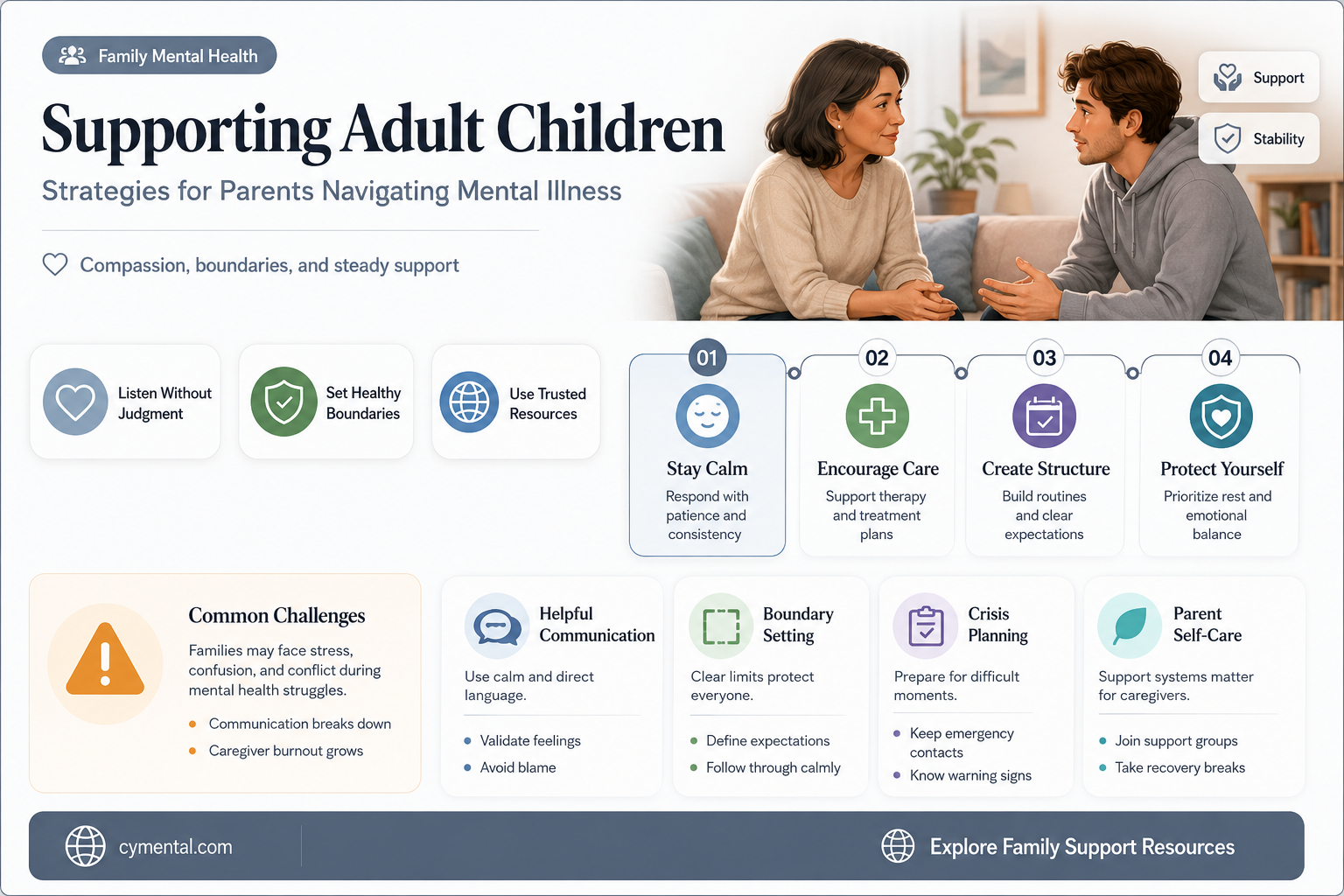
Supporting a mentally ill adult child can be emotionally challenging yet profoundly impactful for parents. By fostering open communication, parents can create a safe space for their child to express their struggles without fear of judgment. Educating themselves about their child’s condition helps them better understand the challenges and advocate effectively. Encouraging professional treatment, such as therapy or medication, while respecting their child’s autonomy, is crucial. Parents can also provide practical support, like helping manage daily tasks or accompanying them to appointments, while maintaining boundaries to avoid burnout. Emotional support, patience, and unconditional love are essential, as is prioritizing self-care to remain resilient in this caregiving role. Balancing support with encouraging independence empowers the child to navigate their mental health journey while fostering their self-reliance.
Explore related products


What You'll Learn
- Educate Yourself: Learn about their illness, symptoms, treatments, and effective communication strategies
- Set Boundaries: Establish clear limits to protect your well-being while supporting their independence
- Encourage Treatment: Help them access therapy, medication, and support groups consistently
- Offer Emotional Support: Listen without judgment, validate their feelings, and show unconditional love
- Promote Independence: Assist with life skills and decision-making while fostering self-reliance

Educate Yourself: Learn about their illness, symptoms, treatments, and effective communication strategies
Understanding your adult child's mental illness begins with recognizing that knowledge is power. Mental health conditions are complex, often misunderstood, and can manifest differently in each individual. For instance, depression in one person might present as persistent sadness, while in another, it could lead to irritability and anger. By educating yourself about their specific diagnosis, you gain insight into their experiences, which is crucial for providing meaningful support. Start by researching reputable sources such as the National Alliance on Mental Illness (NAMI) or the American Psychiatric Association (APA) to learn about the illness's symptoms, triggers, and progression. This foundational knowledge will help you differentiate between typical behavior and symptoms of the illness, enabling you to respond more effectively.
Once you grasp the basics, delve into the treatments and therapies available for their condition. For example, if your child is diagnosed with schizophrenia, familiarize yourself with antipsychotic medications like olanzapine or risperidone, their potential side effects, and typical dosages (e.g., 5–20 mg daily for olanzapine). Learn about psychotherapy options such as Cognitive Behavioral Therapy (CBT) or Dialectical Behavior Therapy (DBT), which are often used in conjunction with medication. Understanding these treatments allows you to engage in informed conversations with your child and their healthcare providers, ensuring you’re all on the same page. Additionally, knowing the treatment plan can help you recognize if your child is adhering to it or if adjustments are needed.
Effective communication is a cornerstone of supporting a mentally ill adult child, but it requires a tailored approach. For instance, if your child has anxiety, avoid phrases like “just calm down” or “it’s all in your head,” as these can minimize their experience. Instead, use validating statements such as “I see how hard this is for you” or “How can I help right now?” Practice active listening by giving them your undivided attention and reflecting back what they’ve said to show you understand. For children with conditions like bipolar disorder, be mindful of their mood states and adjust your communication style accordingly—during manic episodes, remain calm and avoid confrontation, while during depressive episodes, offer gentle encouragement without pushing them too hard.
A critical aspect of educating yourself is staying updated on the latest research and treatment advancements. Mental health is a rapidly evolving field, with new therapies and medications emerging regularly. For example, transcranial magnetic stimulation (TMS) has become a promising treatment for treatment-resistant depression, while apps like Calm or Headspace offer accessible tools for managing anxiety. Subscribing to mental health newsletters, attending workshops, or joining support groups for parents of mentally ill adults can keep you informed and connected. This ongoing education not only equips you with practical tools but also demonstrates your commitment to your child’s well-being.
Finally, while educating yourself is essential, it’s equally important to approach this process with empathy and humility. Avoid the trap of becoming an armchair expert or overriding your child’s autonomy. Remember, your role is to support, not to diagnose or treat. Encourage open dialogue by asking your child how they prefer to be supported and what resources they find helpful. By combining your knowledge with their insights, you can foster a partnership that respects their independence while providing the guidance they need. This balanced approach ensures that your efforts are both informed and compassionate, strengthening your relationship in the process.
Mental Health Parity: Does It Truly Bridge the Care Gap?
You may want to see also
Explore related products


Set Boundaries: Establish clear limits to protect your well-being while supporting their independence
Supporting a mentally ill adult child often blurs the line between caregiving and self-sacrifice. Without clear boundaries, parents risk emotional exhaustion, financial strain, and compromised relationships. Establishing limits isn’t abandonment—it’s a lifeline. For instance, a parent might decide to provide financial assistance only for essential needs like rent or medication, not for discretionary spending. This distinction protects the parent’s resources while encouraging the child to develop financial responsibility. Boundaries create a sustainable framework for support, ensuring both parties can thrive within their roles.
Consider the analogy of a garden: boundaries are like a trellis, guiding growth without stifling it. For example, a parent might set a boundary around communication, such as agreeing to discuss their child’s mental health only during scheduled weekly check-ins, rather than being available 24/7. This prevents emotional overload while maintaining consistent support. Similarly, physical boundaries, like respecting the child’s living space, foster independence. A parent might resist the urge to constantly check in or clean their child’s apartment, allowing them to manage their environment. These limits teach self-reliance while preserving the parent’s peace of mind.
Setting boundaries requires clarity and consistency, but it’s not without challenges. Start by identifying non-negotiables—areas where compromise would harm your well-being. For example, a parent might refuse to co-sign loans or cover debts, even if it means their child faces financial consequences. This can be difficult, but it reinforces accountability. Communicate these limits directly and empathetically, using "I" statements to avoid sounding accusatory. For instance, "I need to focus on my health, so I can’t drive you to appointments anymore. Let’s explore public transportation options together." This approach balances firmness with compassion.
One common pitfall is guilt, which can erode even the most well-intentioned boundaries. Parents often fear they’re being selfish or unsupportive. Reframe this by recognizing that self-care isn’t selfish—it’s essential. A parent who prioritizes their mental and physical health is better equipped to provide meaningful support. For example, a parent might allocate specific hours for self-care activities, like exercise or therapy, and communicate this as a non-negotiable boundary. Over time, this models healthy behavior for the child, demonstrating that independence and well-being go hand in hand.
Ultimately, boundaries are a form of love, not a withdrawal of it. They create a structure where both parent and child can flourish. For instance, a parent might set a boundary around emotional labor, refusing to engage in repetitive, unproductive conversations about their child’s struggles. Instead, they might redirect the child to professional resources or coping strategies. This empowers the child to take ownership of their mental health while freeing the parent from the role of perpetual therapist. By setting limits, parents foster resilience in their children and preserve their own capacity to care.
Finding Mental Health Support: A Guide to Accessible Resources and Services
You may want to see also
Explore related products





Encourage Treatment: Help them access therapy, medication, and support groups consistently
One of the most effective ways to support a mentally ill adult child is to actively encourage and facilitate their engagement with professional treatment. Mental health treatment often involves a combination of therapy, medication, and support groups, each playing a unique role in managing symptoms and improving quality of life. However, many adults with mental illness face barriers to accessing these resources, such as stigma, cost, or lack of awareness. As a parent, your role is to bridge these gaps by providing practical assistance and emotional encouragement.
Start by researching therapists, psychiatrists, and support groups in your area that specialize in your child’s condition. For example, if they struggle with depression, look for cognitive-behavioral therapists or dialectical behavior therapy (DBT) programs. If medication is recommended, help them schedule appointments with a psychiatrist who can prescribe appropriate options, such as selective serotonin reuptake inhibitors (SSRIs) for anxiety or mood stabilizers for bipolar disorder. Be mindful of potential side effects and dosage adjustments, which often require patience and monitoring. For instance, SSRIs may take 4–6 weeks to show full effects, and dosages may need tweaking based on response and tolerance.
Practical assistance is key. Offer to accompany them to appointments if they feel overwhelmed, or help them organize transportation if logistics are a barrier. Financial support, such as covering copays or therapy costs, can also remove a significant hurdle. Additionally, assist with administrative tasks like filling prescriptions or scheduling follow-ups. For support groups, explore local or online options tailored to their condition, such as NAMI (National Alliance on Mental Illness) family support groups or Anxiety and Depression Association of America (ADAA) online forums. Consistency is crucial, so help them establish a routine, such as marking therapy sessions on a shared calendar or setting reminders for medication.
Encouragement must be paired with respect for their autonomy. Avoid pressuring them into treatment they’re not ready for, as this can create resentment. Instead, frame your support as a collaborative effort, emphasizing that you’re there to help them achieve their goals. For example, say, “I found a therapist who specializes in anxiety—would you like me to reach out and set up an appointment for you?” rather than “You need to start therapy now.” Acknowledge their efforts, even if progress seems slow, and celebrate small victories, like attending their first support group meeting or sticking to a medication schedule for a month.
Finally, educate yourself about their condition to better understand their challenges and treatment needs. For instance, if they have schizophrenia, learn about antipsychotic medications and their potential side effects, such as weight gain or tardive dyskinesia. This knowledge will enable you to provide informed support and advocate for them when necessary. Remember, your role is not to be their therapist but to be a consistent, compassionate ally in their journey toward mental wellness. By helping them access and engage with treatment, you empower them to take control of their health and build a more stable, fulfilling life.
Benzodiazepines and Mental Health: Effective Treatment or Risky Solution?
You may want to see also
Explore related products

$10.21 $18.95


$15.9 $18.99


Offer Emotional Support: Listen without judgment, validate their feelings, and show unconditional love
One of the most powerful ways to support a mentally ill adult child is to create a safe space for them to express their emotions without fear of judgment. Mental illness often comes with a heavy burden of shame and self-criticism, making it difficult for individuals to open up about their struggles. As a parent, your role is to foster an environment where your child feels heard and accepted, no matter how chaotic or distressing their thoughts may seem. Start by actively listening—not just waiting for your turn to speak, but fully engaging with their words and emotions. Avoid interrupting or offering quick fixes; instead, reflect back what they’ve shared to show you understand. For example, if your child says, “I feel like I’m drowning,” respond with, “It sounds like you’re overwhelmed and struggling to keep up.” This simple act of validation can help them feel less alone.
Validation is a cornerstone of emotional support, but it requires a shift in perspective. It’s natural to want to minimize your child’s pain or offer reassurance, but phrases like “It’s not that bad” or “You’ll get over it” can invalidate their experience. Instead, acknowledge the reality of their feelings, even if you don’t fully understand them. For instance, if your child expresses fear of leaving the house, say, “It must be terrifying to feel that way,” rather than dismissing their anxiety. Validation doesn’t mean you agree with their perspective—it means you respect their emotional truth. Over time, this approach builds trust and encourages them to share more openly, which is crucial for their healing process.
Unconditional love is the foundation upon which emotional support is built, but it’s often easier said than done. Mental illness can test even the strongest relationships, as symptoms like irritability, withdrawal, or self-destructive behaviors may trigger frustration or worry. Remind yourself that your child’s illness does not define them—it’s a part of their experience, not their identity. Show love through small, consistent actions: a daily text to check in, a favorite meal prepared with care, or simply sitting quietly in their presence. These gestures communicate that your love isn’t contingent on their ability to “get better” or meet your expectations. For example, if your child is going through a depressive episode and cancels plans, respond with, “I’m here whenever you’re ready,” instead of expressing disappointment.
Practical tips can make emotional support more tangible. Set aside dedicated time each week for open-ended conversations, free from distractions like phones or TV. Use “I” statements to express concern without sounding accusatory—for instance, “I’ve noticed you seem more tired lately, and I’m here if you want to talk.” Educate yourself about their specific mental health challenges, but avoid playing the role of therapist; instead, encourage professional help while reassuring them of your unwavering support. Finally, model emotional vulnerability by sharing your own feelings (when appropriate) to normalize the experience of struggling and seeking help. This reciprocal openness strengthens your bond and reinforces the message that it’s okay to not be okay.
The impact of offering emotional support in this way cannot be overstated. It helps your adult child feel seen, valued, and secure—emotions that are often elusive in the midst of mental illness. While it may not “fix” their condition, it provides a vital source of stability and encouragement as they navigate their journey. Remember, emotional support is not a one-time act but a continuous practice, requiring patience, empathy, and self-awareness. By listening without judgment, validating their feelings, and showing unconditional love, you become a lifeline in their darkest moments—a reminder that they are not alone, no matter how isolating their illness may feel.
Shiatsu Therapy: A Natural Approach to Mental Health and Wellness
You may want to see also
Explore related products


Promote Independence: Assist with life skills and decision-making while fostering self-reliance
Mental illness can erode an adult child’s confidence in managing daily life, from paying bills to maintaining relationships. Parents often step in to fill the gaps, but over-helping can inadvertently reinforce dependency. Striking the right balance requires intentional strategies that teach, not just do. For instance, instead of paying bills directly, guide your child through budgeting apps like Mint or YNAB, setting up automatic payments, and explaining due dates. This hands-on approach builds financial literacy while preserving their autonomy.
Consider the analogy of teaching someone to ride a bike. You don’t run alongside forever; you gradually let go. Similarly, break life skills into manageable steps and let your child take the lead. For example, if they struggle with grocery shopping, start by asking them to plan one meal per week, then progress to creating a full shopping list, and finally navigating the store independently. Each step reinforces their capability, reducing the fear of failure that often paralyzes mentally ill individuals.
Decision-making is another critical area where parents can foster independence. Rather than dictating choices, use open-ended questions to encourage critical thinking. For instance, instead of saying, “You should apply for this job,” ask, “What are the pros and cons of this opportunity?” or “How does it align with your long-term goals?” This approach not only empowers your child but also helps them internalize a problem-solving framework they can apply to future decisions.
However, promoting independence doesn’t mean withdrawing support entirely. Establish clear boundaries and communicate them empathetically. For example, agree on a specific time frame for financial assistance while simultaneously enrolling your child in a vocational training program. This ensures they understand the temporary nature of the help and remain motivated to build self-reliance.
Finally, celebrate small victories. Mental illness often distorts self-perception, making achievements feel insignificant. Acknowledge their progress—whether it’s cooking a meal or attending a therapy session—to reinforce their sense of competence. Over time, these cumulative successes will rebuild their confidence, transforming dependency into a sustainable, independent lifestyle.
Mental Exercise and Dementia: Unlocking Brain Health Benefits
You may want to see also
Frequently asked questions
Parents can support their adult child by maintaining open communication, offering emotional support without being overbearing, and encouraging professional treatment. Respect their autonomy by involving them in decision-making and setting boundaries that honor their independence.
Parents can research mental health resources, assist with finding therapists or psychiatrists, and help navigate insurance or financial barriers. They can also offer to accompany their child to appointments if invited, but ultimately let them take the lead.
Parents should prioritize self-care by seeking support from friends, family, or support groups, and consider therapy for themselves. Setting emotional boundaries and practicing stress-reduction techniques can also help maintain their own mental health.
Parents can express concern and encourage treatment gently, but ultimately cannot force an adult child to seek help. Focus on maintaining a supportive relationship and provide resources they can access when ready. In crisis situations, consult a mental health professional for guidance.
Parents can encourage gradual independence by teaching and reinforcing life skills, such as managing finances, maintaining a routine, or handling household tasks. Offer guidance and support without taking over, and celebrate small achievements to build their confidence.