Madison Cole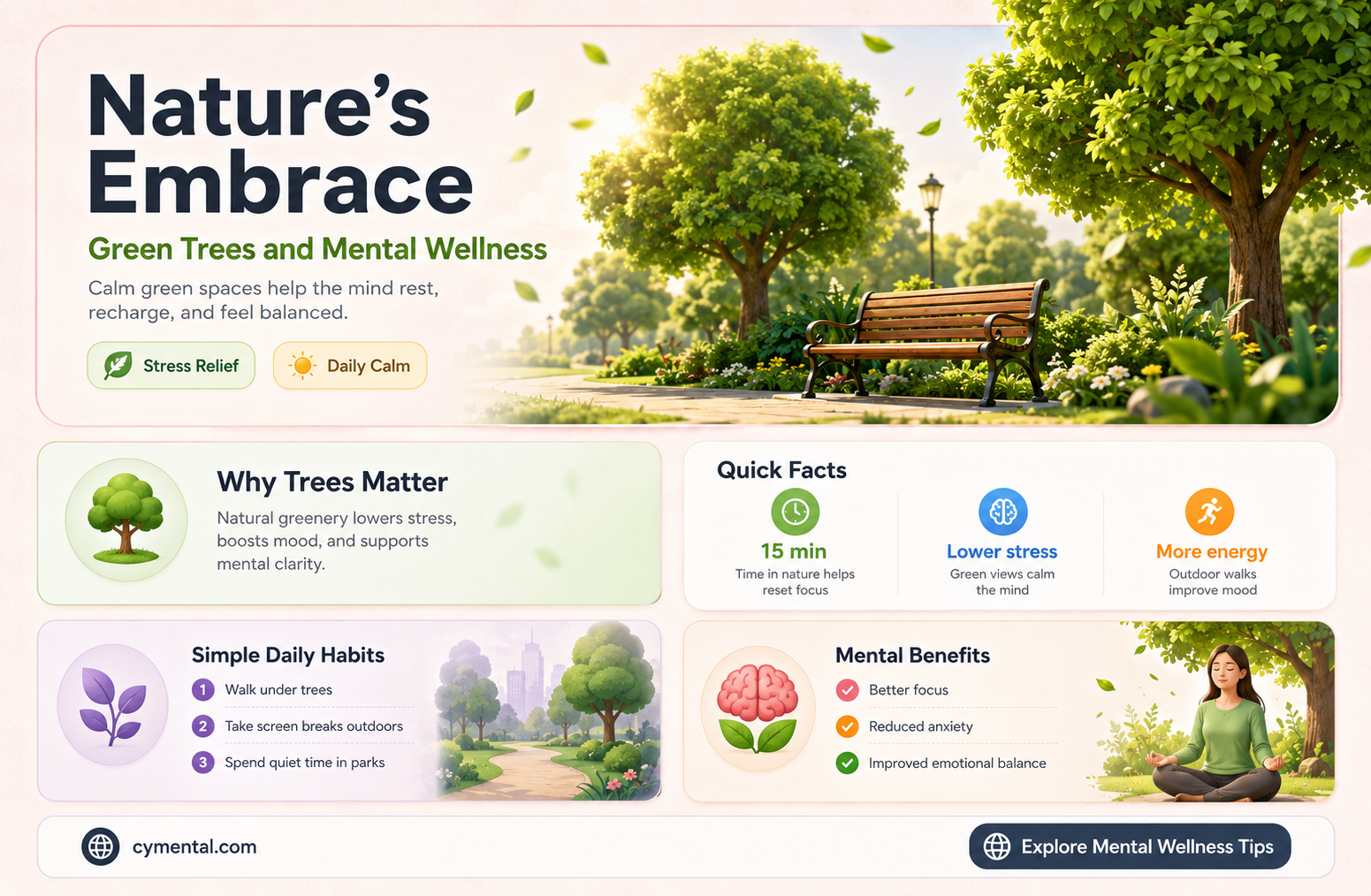
Spending time around green trees and in natural environments has been shown to have profound benefits for mental health. Research indicates that exposure to nature, particularly leafy green spaces, can reduce stress, anxiety, and symptoms of depression by promoting relaxation and lowering cortisol levels. Trees and plants release phytoncides, which have been linked to improved mood and reduced blood pressure, while the soothing sounds and sights of nature can enhance focus and cognitive function. Additionally, being in green spaces encourages physical activity, social interaction, and a sense of connection to the environment, all of which contribute to overall well-being. Whether it’s a walk in a forest, a park, or simply sitting under a tree, incorporating nature into daily life can be a powerful tool for nurturing mental health.
Explore related products


What You'll Learn
- Reduced Stress Levels: Trees lower cortisol, promoting relaxation and calming the mind naturally
- Improved Mood: Green spaces boost serotonin, enhancing happiness and overall emotional well-being
- Enhanced Focus: Nature exposure increases attention span and cognitive function effectively
- Decreased Anxiety: Trees create a peaceful environment, reducing symptoms of anxiety disorders
- Better Sleep Quality: Exposure to greenery regulates circadian rhythms, aiding restful sleep

Reduced Stress Levels: Trees lower cortisol, promoting relaxation and calming the mind naturally
Spending time among trees isn't just a pleasant pastime—it's a scientifically backed method for reducing stress. Research shows that exposure to green spaces, particularly those rich in trees, can significantly lower cortisol levels, the hormone associated with stress. A study published in the *International Journal of Environmental Research and Public Health* found that participants who spent just 20 minutes in a forest environment experienced measurable decreases in cortisol concentrations. This natural intervention rivals the effects of mindfulness practices and even some pharmacological treatments, offering a simple yet powerful tool for stress management.
To harness this benefit, consider incorporating "forest bathing," or *shinrin-yoku*, into your routine. This Japanese practice involves immersing yourself in nature, focusing on sensory experiences like the rustling of leaves or the scent of pine. Start with a 30-minute walk in a wooded area, ideally daily or at least three times a week. For urban dwellers, even a park with mature trees can provide similar benefits. Pair this with deep breathing exercises to maximize relaxation. For instance, inhale for a count of four, hold for four, exhale for six, and repeat for five minutes while surrounded by greenery.
Children and older adults, in particular, can benefit from tree-rich environments. A study in *Environmental Health and Preventive Medicine* found that schoolchildren who spent time in forests exhibited lower stress levels and improved mood compared to those in urban settings. For seniors, combining gentle walks in tree-lined areas with social interaction, such as a group stroll, can enhance both mental and physical well-being. Aim for at least 15–20 minutes of exposure, as even short durations have been shown to yield positive results.
While the benefits are clear, it’s important to note that not all green spaces are created equal. Dense forests or areas with diverse tree species tend to be more effective than sparse, monoculture environments. Additionally, combining tree exposure with other stress-reducing activities, like journaling or meditation, can amplify the effects. For those with limited access to natural areas, bringing elements of nature indoors—such as potted plants or nature sounds—can serve as a temporary substitute, though outdoor exposure remains superior.
Incorporating trees into your stress-reduction strategy is both accessible and cost-effective. Whether it’s a weekend hike, a midday park visit, or simply sitting under a tree during lunch, consistent exposure to these natural wonders can create a profound impact on your mental health. By lowering cortisol levels and promoting relaxation, trees offer a timeless remedy for the stresses of modern life—one that requires no prescription and is available to nearly everyone.
Ftm Testosterone Therapy: Mental Health Benefits and Emotional Well-being
You may want to see also
Explore related products




Improved Mood: Green spaces boost serotonin, enhancing happiness and overall emotional well-being
Spending just 20–30 minutes daily in a green space can measurably increase serotonin levels, the neurotransmitter linked to mood regulation and happiness. This isn’t mere anecdote—studies using salivary cortisol and self-reported mood scales consistently show that exposure to trees and greenery reduces stress markers while elevating feelings of contentment. For instance, a 2019 study published in *Nature Sustainability* found that individuals who spent at least 120 minutes per week in nature reported significantly higher life satisfaction scores. The takeaway? Prioritize short, consistent doses of green time to harness this serotonin-boosting effect.
To maximize mood enhancement, combine passive exposure (like sitting under a tree) with active engagement (such as walking or gardening). Movement in green environments amplifies serotonin production by stimulating both physical activity and sensory interaction with nature. For children and adolescents, whose serotonin systems are still developing, unstructured play in tree-filled areas can improve emotional resilience. Adults, particularly those over 50, benefit from the dual effect of greenery and social interaction—joining a community garden or tree-planting group can double the mood-lifting impact.
Not all green spaces are created equal. Dense clusters of mature trees, with their canopy cover and dappled light, create environments that feel both calming and invigorating. Compare this to sparse, manicured lawns, which lack the sensory richness and biodiversity that drive serotonin release. Practical tip: Seek out parks or trails with varied foliage, water features, and natural sounds. Even urban dwellers can benefit by positioning indoor plants near windows or creating a small balcony garden with evergreen species like ficus or spider plants.
While the serotonin boost from green spaces is powerful, it’s not a standalone solution for severe mood disorders. Think of it as a complementary tool—pair it with therapy, medication, or mindfulness practices for holistic well-being. Caution: Overloading on screen time immediately after nature exposure can negate its benefits, as blue light suppresses serotonin synthesis. Instead, follow green time with activities that sustain relaxation, such as journaling or listening to nature sounds. By integrating these strategies, you can turn tree-filled environments into a reliable source of emotional uplift.
Culture's Impact: Shaping Mental Health Attitudes and Help-Seeking Behaviors
You may want to see also
Explore related products



Enhanced Focus: Nature exposure increases attention span and cognitive function effectively
Spending just 20 minutes in a park surrounded by trees can significantly enhance your ability to focus, according to a study published in the *Journal of Environmental Psychology*. This isn’t merely anecdotal—research shows that nature exposure triggers a physiological response, reducing stress hormones like cortisol and increasing brain activity in areas linked to attention. Imagine swapping your cluttered desk for a tree-lined path; it’s not just a change of scenery but a proven cognitive reset.
To harness this benefit, incorporate "green breaks" into your daily routine. For adults, a 30-minute walk in a tree-dense area during lunch can improve afternoon productivity. Children, particularly those aged 8–12, show marked improvements in concentration after outdoor play in natural settings. Even passive exposure, like a 10-minute tree-view from a window, can yield measurable gains in sustained attention. The key is consistency—think of it as a mental workout, where regular "reps" in nature compound over time.
Contrast this with urban environments, where constant stimuli overload the brain’s attentional resources. Trees, with their rhythmic patterns and calming colors, offer a visual and auditory respite. A comparative study found that students studying near green spaces retained 20% more information than those in concrete settings. This isn’t about escaping work; it’s about optimizing how you engage with it. Pairing nature exposure with tasks requiring deep focus—like problem-solving or creative brainstorming—amplifies its effectiveness.
However, not all green spaces are created equal. Dense forests with diverse foliage outperform sparse parks in boosting cognitive function. For urban dwellers, strategically placing potted trees indoors or near workspaces can mimic this effect. Apps like *Shade* or *Planty* help identify nearby tree-rich areas for quick escapes. Remember, this isn’t a luxury—it’s a practical tool. Just as you’d schedule a meeting, block time for tree-time. Your focus, and your mental health, will thank you.
Supporting Mental Health: How Can We Effectively Help Those Struggling?
You may want to see also
Explore related products

$30.71 $44.99



Decreased Anxiety: Trees create a peaceful environment, reducing symptoms of anxiety disorders
The presence of trees in our surroundings has a profound impact on our mental well-being, particularly in alleviating anxiety. Research shows that spending just 20-30 minutes in a forested area can significantly lower cortisol levels, the body's primary stress hormone. This natural remedy is not only accessible but also free, making it an invaluable resource for those seeking to manage anxiety disorders. Imagine a serene park or a quiet woodland; these green spaces act as sanctuaries where the mind can find respite from the chaos of daily life.
From an analytical perspective, the connection between trees and reduced anxiety can be attributed to several factors. Firstly, the color green has been psychologically linked to feelings of calmness and relaxation. The lush foliage of trees provides a visual feast that soothes the nervous system. Secondly, the sounds of nature, such as rustling leaves and chirping birds, create a calming auditory environment that drowns out the noise of urban life. Studies have shown that even viewing scenes of nature through a window can decrease anxiety, though the effects are more pronounced when physically immersed in a green setting.
For those looking to harness the anxiety-reducing benefits of trees, practical steps can be taken to incorporate this natural therapy into daily life. Start by identifying local green spaces, such as parks, botanical gardens, or nature reserves. Aim to spend at least 30 minutes in these areas, engaging in activities like walking, meditation, or simply sitting quietly. For individuals with limited mobility or access to outdoor spaces, bringing elements of nature indoors can be beneficial. Potted plants, especially those with broad leaves, can mimic the calming effect of trees. Additionally, nature-inspired art or screensavers featuring forests can provide a temporary mental escape.
A comparative analysis reveals that the anxiety-reducing effects of trees are not just psychological but also physiological. Unlike pharmaceutical interventions, which often come with side effects, spending time around trees offers a holistic approach to mental health. For instance, a study conducted in Japan found that forest bathing, or *Shinrin-yoku*, led to a 12.4% decrease in cortisol levels compared to urban walks. This highlights the unique advantage of nature-based therapies in addressing anxiety disorders without the risks associated with medication.
In conclusion, trees serve as powerful allies in the battle against anxiety, creating a peaceful environment that nurtures both mind and body. By understanding the science behind their calming effects and incorporating practical strategies, individuals can effectively reduce anxiety symptoms. Whether through a walk in the woods or a potted plant on a windowsill, the healing power of trees is within reach for everyone. Embrace the green, and let nature be your sanctuary.
Steroids and Mental Health: Exploring Potential Benefits and Risks
You may want to see also
Explore related products


Better Sleep Quality: Exposure to greenery regulates circadian rhythms, aiding restful sleep
The human body operates on a 24-hour cycle known as the circadian rhythm, which regulates sleep-wake patterns. Exposure to natural light, particularly during the day, is crucial for synchronizing this internal clock. Green spaces, such as parks and forests, provide an ideal environment for this synchronization. Studies show that spending at least 20–30 minutes outdoors in green areas daily can significantly enhance the body’s ability to regulate its circadian rhythm, leading to improved sleep quality. This simple practice can be particularly beneficial for individuals with irregular sleep schedules or those experiencing insomnia.
From a physiological perspective, greenery influences sleep through its impact on melatonin production. Trees and plants emit phytoncides, organic compounds that have been shown to reduce stress and lower cortisol levels. Lower cortisol in the evening signals to the body that it’s time to wind down, promoting the natural release of melatonin, the sleep hormone. Research indicates that individuals living in areas with higher tree density report better sleep duration and quality. For instance, a study published in the *Journal of Environmental Psychology* found that residents of urban areas with access to green spaces experienced a 15% improvement in sleep efficiency compared to those in concrete-dominated neighborhoods.
To harness these benefits, consider incorporating specific habits into your daily routine. Start by taking a morning or afternoon walk in a nearby park or forest, allowing natural light to reset your circadian rhythm. If access to green spaces is limited, bring nature indoors by placing potted plants in your living or workspace. Plants like snake plants and peace lilies not only improve air quality but also create a calming environment conducive to relaxation. Additionally, reduce exposure to artificial blue light from screens at least an hour before bedtime, as this can interfere with melatonin production and counteract the benefits of greenery exposure.
A comparative analysis reveals that the impact of greenery on sleep is not limited to adults. Children and adolescents, who are increasingly affected by sleep disorders due to screen time and academic pressures, can also benefit. Schools with green playgrounds or nearby parks report lower rates of sleep disturbances among students. For older adults, who often face age-related sleep disruptions, regular exposure to green spaces has been linked to improved sleep continuity and reduced nighttime awakenings. This underscores the universal applicability of greenery as a natural sleep aid across age groups.
In conclusion, integrating greenery into daily life is a practical and effective strategy for enhancing sleep quality. Whether through outdoor activities, indoor plants, or intentional exposure to natural light, these small changes can regulate circadian rhythms and promote restful sleep. By prioritizing access to green spaces and adopting nature-centric habits, individuals can address sleep issues holistically, improving both mental and physical well-being. The evidence is clear: greenery is not just a luxury but a necessity for optimal sleep health.
Seeking Support: Overcoming Fear to Prioritize Your Mental Health
You may want to see also
Frequently asked questions
Being around green trees reduces stress, anxiety, and depression by promoting relaxation and lowering cortisol levels, while also enhancing mood and overall well-being.
Yes, exposure to green spaces, including trees, has been shown to improve focus, memory, and creativity, likely due to reduced mental fatigue and increased oxygen levels.
Trees create a calming environment, encourage physical activity, and provide a sense of connection to nature, which can alleviate symptoms of anxiety and depression.
Studies suggest that spending time around trees triggers physiological changes, such as lowered blood pressure and reduced stress hormones, while also increasing the production of serotonin, a mood-regulating neurotransmitter.
Research indicates that as little as 20–30 minutes in a green environment daily can provide noticeable mental health benefits, though longer or more frequent exposure may yield greater results.