Caleb Wright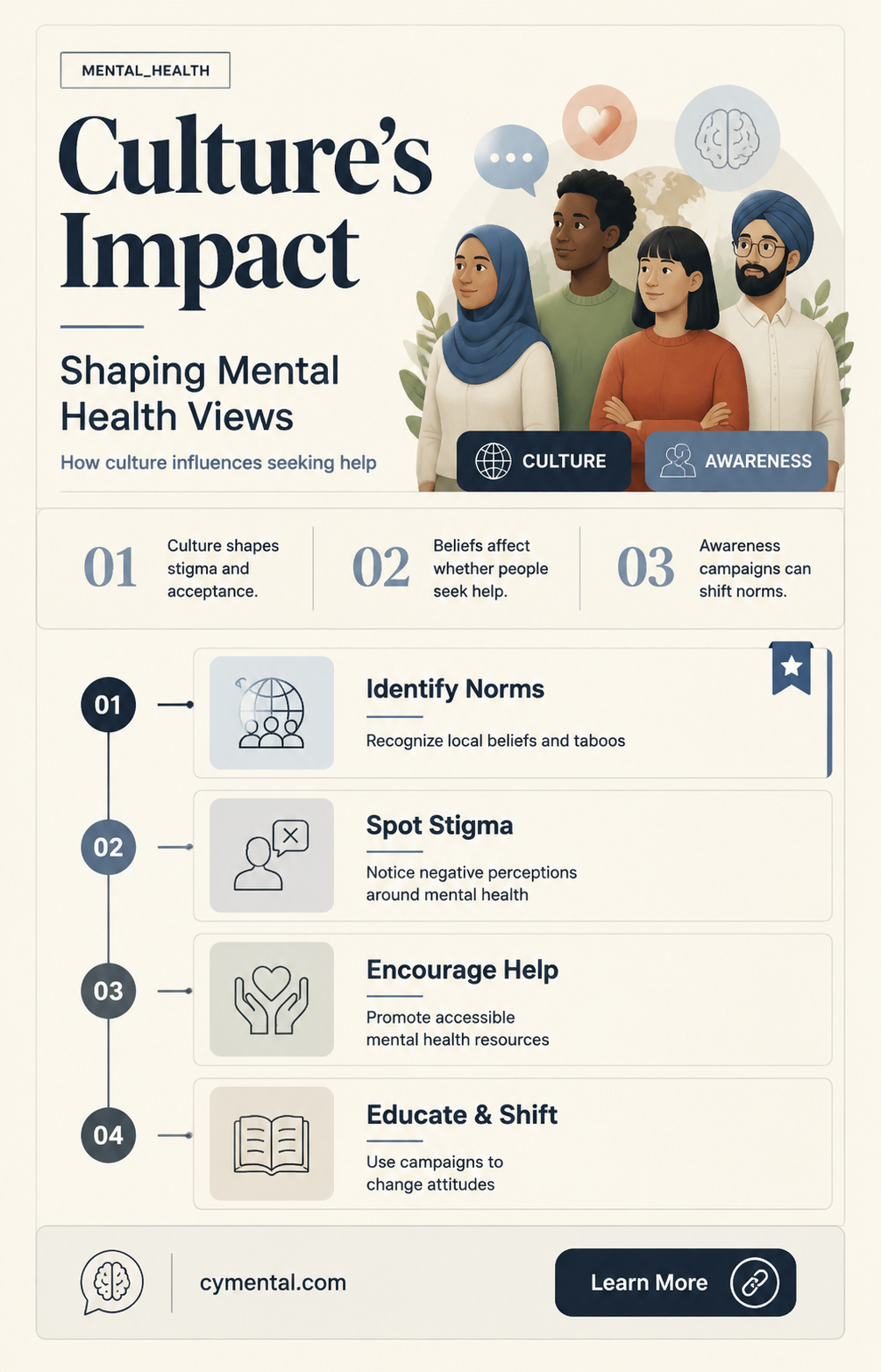
Culture plays a significant role in shaping attitudes towards mental health and the willingness to seek help, as it influences how individuals perceive, interpret, and respond to psychological distress. Cultural norms, values, and beliefs can either stigmatize mental health issues, leading to silence and avoidance, or foster openness and acceptance, encouraging individuals to access support. For example, in some cultures, mental illness may be viewed as a personal weakness or a result of spiritual or supernatural forces, deterring people from seeking professional treatment. Conversely, cultures that prioritize community and collective well-being may offer more supportive environments for discussing mental health challenges. Understanding these cultural dynamics is essential for developing inclusive and effective mental health services that respect diverse perspectives and reduce barriers to care.
| Characteristics | Values |
|---|---|
| Cultural Stigma | Many cultures view mental illness as a sign of weakness, personal failure, or even a punishment from a higher power. This stigma can lead to shame, guilt, and reluctance to seek help. |
| Collectivist vs. Individualist Societies | In collectivist cultures, family and community reputation are paramount. Mental health issues may be seen as bringing shame to the family, discouraging individuals from seeking help. Individualist cultures may prioritize personal autonomy, potentially leading to more openness about mental health struggles. |
| Religious and Spiritual Beliefs | Some religious beliefs may attribute mental illness to spiritual possession or sin, leading to reliance on religious leaders or practices instead of professional help. Others may offer support and community, fostering acceptance and understanding. |
| Communication Styles | Direct communication about emotions may be less common in some cultures, making it difficult to express mental health concerns openly. |
| Perception of Mental Health Professionals | In some cultures, mental health professionals may be viewed with suspicion or seen as a last resort. Traditional healers or family elders may be preferred sources of support. |
| Access to Resources | Cultural and language barriers can limit access to mental health services, even in countries with available resources. |
| Historical Trauma | Communities that have experienced historical trauma, such as colonization or genocide, may have higher rates of mental health issues and unique cultural coping mechanisms. |
| Gender Roles | Cultural expectations around gender can influence how mental health is perceived and addressed. Men may face greater pressure to suppress emotions, while women may be more likely to be diagnosed with certain conditions. |
| Generational Differences | Younger generations within a culture may be more open to discussing mental health and seeking professional help compared to older generations. |
| Immigration and Acculturation | Immigrants may face unique challenges related to cultural adjustment, language barriers, and access to familiar support systems, impacting their mental health and help-seeking behaviors. |
Explore related products


$39.14 $59.99

$21.77 $24.95


What You'll Learn
- Cultural stigma and stereotypes surrounding mental illness
- Influence of collectivism vs. individualism on help-seeking behaviors
- Role of religion and spirituality in mental health perceptions
- Impact of cultural communication styles on expressing emotional distress
- Traditional healing practices versus Western mental health treatments

Cultural stigma and stereotypes surrounding mental illness
Cultural stigma surrounding mental illness often manifests as silence, where discussing mental health struggles is taboo. In many Asian cultures, for instance, mental health issues are frequently dismissed as a sign of weakness or a lack of self-discipline. This silence perpetuates the problem, as individuals suffer in isolation, fearing judgment or shame if they seek help. A study published in the *Journal of Affective Disorders* found that in collectivist societies, where family honor is paramount, admitting to mental health struggles can be seen as a stain on the entire family, further discouraging open dialogue.
Stereotypes about mental illness vary widely across cultures but share a common thread: they often dehumanize those affected. In Western societies, individuals with mental health conditions are sometimes labeled as "crazy" or "dangerous," a stereotype perpetuated by media portrayals. Conversely, in some African cultures, mental illness is attributed to spiritual causes, such as curses or possession, leading to stigmatization and exclusion from community activities. These stereotypes not only distort public perception but also create barriers to accessing care, as individuals may fear being defined by these labels rather than receiving support.
To dismantle cultural stigma, education is key. Schools, workplaces, and community centers can serve as platforms to disseminate accurate information about mental health, challenging misconceptions and fostering empathy. For example, in India, the *Live Love Laugh Foundation* has launched campaigns to normalize conversations about mental health, targeting both urban and rural populations. Similarly, in the United States, the *National Alliance on Mental Illness* (NAMI) offers culturally tailored programs to address stigma in diverse communities, including Spanish-speaking and African American populations.
Practical steps can also be taken at the individual level. Families can start by encouraging open conversations about emotions and well-being, normalizing the idea that seeking help is a sign of strength, not weakness. For instance, parents can model vulnerability by sharing their own experiences with stress or anxiety, creating a safe space for children to express their feelings. Additionally, healthcare providers can improve cultural competency by understanding the specific beliefs and practices of their patients, ensuring that treatment approaches are respectful and effective.
Ultimately, addressing cultural stigma and stereotypes requires a multifaceted approach that combines systemic change with personal action. By challenging harmful narratives, promoting education, and fostering inclusive environments, societies can create a culture where mental health is prioritized and seeking help is seen as a natural part of self-care. This shift not only benefits individuals but also strengthens communities, as mental well-being becomes a shared responsibility rather than a source of shame.
Collagen and Mental Health: Unraveling the Mind-Body Connection
You may want to see also
Explore related products


$69.37 $99.95


Influence of collectivism vs. individualism on help-seeking behaviors
Cultural dimensions, particularly collectivism versus individualism, significantly shape attitudes toward mental health and help-seeking behaviors. In collectivist cultures, where group harmony and interdependence are prioritized, mental health struggles are often viewed as a reflection on the family or community. This can lead to stigma, as individuals fear bringing shame or burdening others. For example, in many East Asian societies, openly discussing mental health issues may be perceived as a failure to maintain familial honor, discouraging individuals from seeking professional help. Conversely, in individualistic cultures, such as those in North America or Western Europe, personal autonomy and self-reliance are emphasized, making it more socially acceptable to seek help as a sign of self-care.
Consider the practical implications of these cultural differences. In collectivist settings, mental health interventions may need to involve family or community members to reduce stigma and encourage participation. For instance, group therapy sessions or family counseling can align with collectivist values while addressing individual needs. In individualistic cultures, however, interventions often focus on empowering the individual to take independent action, such as through one-on-one therapy or self-help resources. Tailoring mental health services to these cultural norms can improve engagement and outcomes.
A comparative analysis reveals that collectivist cultures often rely on informal support networks, such as family or close friends, rather than formal mental health services. This can delay professional intervention, as individuals may exhaust personal resources before seeking expert help. In contrast, individualistic cultures tend to normalize professional help-seeking, with higher rates of therapy attendance and mental health literacy. However, this does not imply that individualistic cultures are free from stigma; the emphasis on self-reliance can lead to feelings of personal failure when seeking help, particularly among younger age groups (e.g., adolescents and young adults).
To bridge the gap between collectivism and individualism in mental health care, practitioners can adopt culturally sensitive strategies. For collectivist populations, framing mental health as a collective responsibility rather than an individual flaw can reduce stigma. For example, educational campaigns emphasizing "family well-being" over "personal illness" may resonate more effectively. In individualistic contexts, destigmatizing help-seeking can involve reframing therapy as a proactive choice for personal growth rather than a last resort. Additionally, integrating digital platforms can cater to both cultural orientations, offering anonymity for collectivist individuals while providing accessible resources for individualists.
Ultimately, understanding the influence of collectivism versus individualism on help-seeking behaviors is crucial for designing inclusive mental health systems. By acknowledging these cultural nuances, policymakers, healthcare providers, and educators can create interventions that respect collective values while fostering individual well-being. This dual approach ensures that mental health support is both culturally relevant and universally accessible, breaking down barriers to care across diverse populations.
Exploring Ayahuasca's Potential in Treating Mental Health Disorders
You may want to see also
Explore related products


Role of religion and spirituality in mental health perceptions
Religion and spirituality often shape how individuals perceive mental health, influencing whether they seek help or suffer in silence. For instance, in many Christian communities, mental health struggles may be attributed to a lack of faith or spiritual weakness, discouraging professional intervention. Conversely, some Buddhist traditions view mental distress as an opportunity for spiritual growth, encouraging mindfulness practices over medication. These contrasting perspectives highlight how deeply intertwined religious beliefs are with mental health attitudes, often dictating the path to healing or hindrance.
Consider the practical implications of these beliefs. In Islamic cultures, seeking counseling may be less stigmatized if framed as a pursuit of *tawakkul* (reliance on God) alongside professional guidance. Similarly, in Hinduism, mental health issues might be addressed through rituals or consultations with spiritual leaders, blending divine intervention with human effort. Such examples illustrate how religion can either complement or complicate mental health care, depending on interpretation and implementation. For those navigating these intersections, understanding these dynamics is crucial for fostering acceptance and effective treatment.
A persuasive argument emerges when examining the role of religious communities in mental health support. Faith-based organizations often provide a sense of belonging and purpose, which can mitigate feelings of isolation and despair. However, they may also inadvertently perpetuate stigma by labeling mental illness as a moral failing. To bridge this gap, mental health advocates should collaborate with religious leaders to reframe narratives, emphasizing compassion and evidence-based solutions. This approach not only respects cultural values but also promotes holistic well-being.
Comparatively, secular societies often prioritize scientific explanations for mental health issues, sidelining spiritual perspectives. Yet, studies show that integrating spirituality into therapy can enhance outcomes for many individuals. For example, incorporating prayer or meditation into treatment plans has been linked to reduced anxiety and improved coping mechanisms. This suggests that dismissing spiritual beliefs outright may deprive individuals of valuable coping tools. Instead, a balanced approach that respects both science and spirituality could revolutionize mental health care.
In conclusion, the role of religion and spirituality in mental health perceptions is complex, offering both barriers and bridges to seeking help. By acknowledging these influences and fostering dialogue between faith and mental health communities, we can create more inclusive and effective support systems. Whether through faith-based interventions or secular therapies, the goal remains the same: to heal the mind, body, and spirit in harmony with one’s cultural and spiritual identity.
Supporting the Mentally Handicapped: Are Current Efforts Truly Making a Difference?
You may want to see also
Explore related products


Impact of cultural communication styles on expressing emotional distress
Cultural communication styles significantly shape how individuals express emotional distress, often dictating whether they seek help for mental health issues. In collectivist cultures, such as those in East Asia or the Middle East, emotional distress is frequently communicated indirectly, through physical symptoms like headaches or fatigue, rather than explicit emotional disclosure. This phenomenon, known as *somatization*, allows individuals to express distress in a culturally acceptable manner, avoiding the stigma associated with mental health struggles. For instance, a study in Japan found that 70% of patients presenting with somatic complaints had underlying psychological issues, highlighting the interplay between culture and symptom expression.
Contrast this with individualistic cultures, like those in the United States or Western Europe, where direct emotional expression is often encouraged. Here, phrases like "I’m feeling overwhelmed" or "I’m struggling with anxiety" are more common. However, even within these cultures, subcultures or generational differences can influence communication styles. For example, older adults in the U.S. may still adhere to stoic norms, suppressing emotional distress to maintain self-reliance, while younger generations are more likely to openly discuss mental health, thanks to campaigns like #MentalHealthAwareness.
The impact of these communication styles on help-seeking behavior cannot be overstated. In cultures where emotional distress is expressed indirectly, individuals may delay seeking professional help, mistaking psychological issues for physical ailments. This delay can exacerbate mental health conditions, as evidenced by higher rates of untreated depression in collectivist societies. Conversely, direct emotional expression in individualistic cultures can facilitate earlier intervention but may also lead to over-reliance on self-disclosure without actionable steps, such as therapy or medication.
To bridge these cultural gaps, mental health professionals must adapt their approaches. For collectivist cultures, incorporating family or community members into therapy sessions can reduce stigma and encourage open dialogue. For instance, in some Asian communities, family therapy is more effective than individual counseling because it aligns with cultural values of interdependence. In individualistic cultures, practitioners should balance empathy with practical strategies, ensuring that emotional expression translates into concrete treatment plans.
Ultimately, understanding cultural communication styles is essential for fostering a global mental health framework that respects diversity while promoting effective care. By recognizing how culture shapes the expression of emotional distress, we can design interventions that are both culturally sensitive and clinically effective, ensuring no one is left behind in the pursuit of mental well-being.
Social Workers: Essential Allies in Mental Health Support and Recovery
You may want to see also
Explore related products


![The Victorious Attitude: [Annotated] How Positive Thinking Shapes Your Destiny](https://m.media-amazon.com/images/I/71nmxNhM0UL._AC_UY218_.jpg)

Traditional healing practices versus Western mental health treatments
Cultural beliefs and practices significantly shape how individuals perceive and address mental health issues, often leading to a divergence between traditional healing methods and Western psychiatric treatments. In many non-Western societies, mental distress is frequently attributed to spiritual or communal imbalances rather than biochemical disorders. For instance, in some African cultures, depression might be seen as a result of ancestral displeasure or witchcraft, prompting interventions like rituals or consultations with traditional healers. Conversely, Western frameworks typically diagnose such conditions through symptom checklists and treat them with pharmaceuticals or psychotherapy, rooted in evidence-based practices. This fundamental difference in understanding mental health creates a rift in how individuals seek and accept help.
Consider the role of community in traditional healing practices. In Indigenous cultures, such as those in Australia or North America, healing often involves collective ceremonies, storytelling, or connection to the land. These methods emphasize restoring harmony within the individual and their environment, addressing mental health holistically. For example, the practice of "Dreamtime" in Aboriginal cultures uses storytelling to heal emotional wounds by reconnecting individuals to their cultural identity. In contrast, Western treatments often focus on the individual, with therapies like cognitive-behavioral therapy (CBT) or medication regimens targeting specific symptoms. While effective for many, this approach may alienate those who value communal or spiritual dimensions of healing.
A practical example of this divide can be seen in the use of herbal remedies versus prescription medications. In traditional Chinese medicine, herbs like ginseng or St. John’s wort are used to alleviate anxiety or depression, often in conjunction with practices like acupuncture. These methods are perceived as natural and aligned with the body’s energy flow. Western treatments, however, rely on pharmaceuticals such as SSRIs (selective serotonin reuptake inhibitors), which require precise dosages—typically starting at 10–20 mg daily for adults—and come with potential side effects like nausea or weight gain. While both approaches aim to heal, their methodologies and philosophical underpinnings differ drastically, influencing patient preferences and adherence.
To bridge this gap, integrative approaches are emerging, combining elements of both traditions. For instance, some mental health practitioners incorporate mindfulness or meditation—practices rooted in Eastern philosophies—into Western therapy sessions. Similarly, traditional healers in countries like South Africa are collaborating with psychiatrists to address mental health crises more comprehensively. However, challenges remain, such as skepticism from both sides and the risk of cultural appropriation. For individuals navigating these systems, it’s crucial to research and communicate openly with providers about their beliefs and preferences. For example, a patient might ask their therapist about incorporating cultural practices into their treatment plan or consult a traditional healer about potential interactions with prescribed medications.
Ultimately, the choice between traditional and Western mental health treatments should not be an either-or proposition. By understanding the strengths and limitations of each approach, individuals can make informed decisions that honor their cultural values while addressing their mental health needs effectively. For instance, a young adult from a Native American community might participate in a sweat lodge ceremony for emotional cleansing while also attending CBT sessions for anxiety management. This dual approach respects cultural identity while leveraging evidence-based interventions, illustrating how tradition and modernity can coexist in mental health care.
Occupational Therapy's Role in Mental Health: A Comprehensive Guide
You may want to see also
Frequently asked questions
Culture shapes beliefs, values, and norms about mental health, determining whether it is viewed as a personal weakness, a spiritual issue, or a medical condition. For example, some cultures stigmatize mental illness, while others integrate it into community support systems.
Yes, cultural background significantly impacts help-seeking behavior. In collectivist cultures, individuals may avoid seeking help to prevent bringing shame to their family, whereas individualistic cultures may encourage personal responsibility and professional intervention.
Cultural beliefs can influence how mental health symptoms are interpreted. For instance, some cultures may attribute depression to spiritual causes rather than a clinical condition, delaying or preventing professional treatment.
Yes, cultural preferences vary. Some cultures may favor traditional healing practices, family support, or religious guidance over Western psychotherapy or medication, reflecting differing trust in formal mental health systems.
Cultural awareness helps mental health professionals tailor their approach to meet the unique needs of diverse populations. This includes using culturally sensitive language, incorporating traditional practices, and addressing stigma to build trust and accessibility.