Noah Parker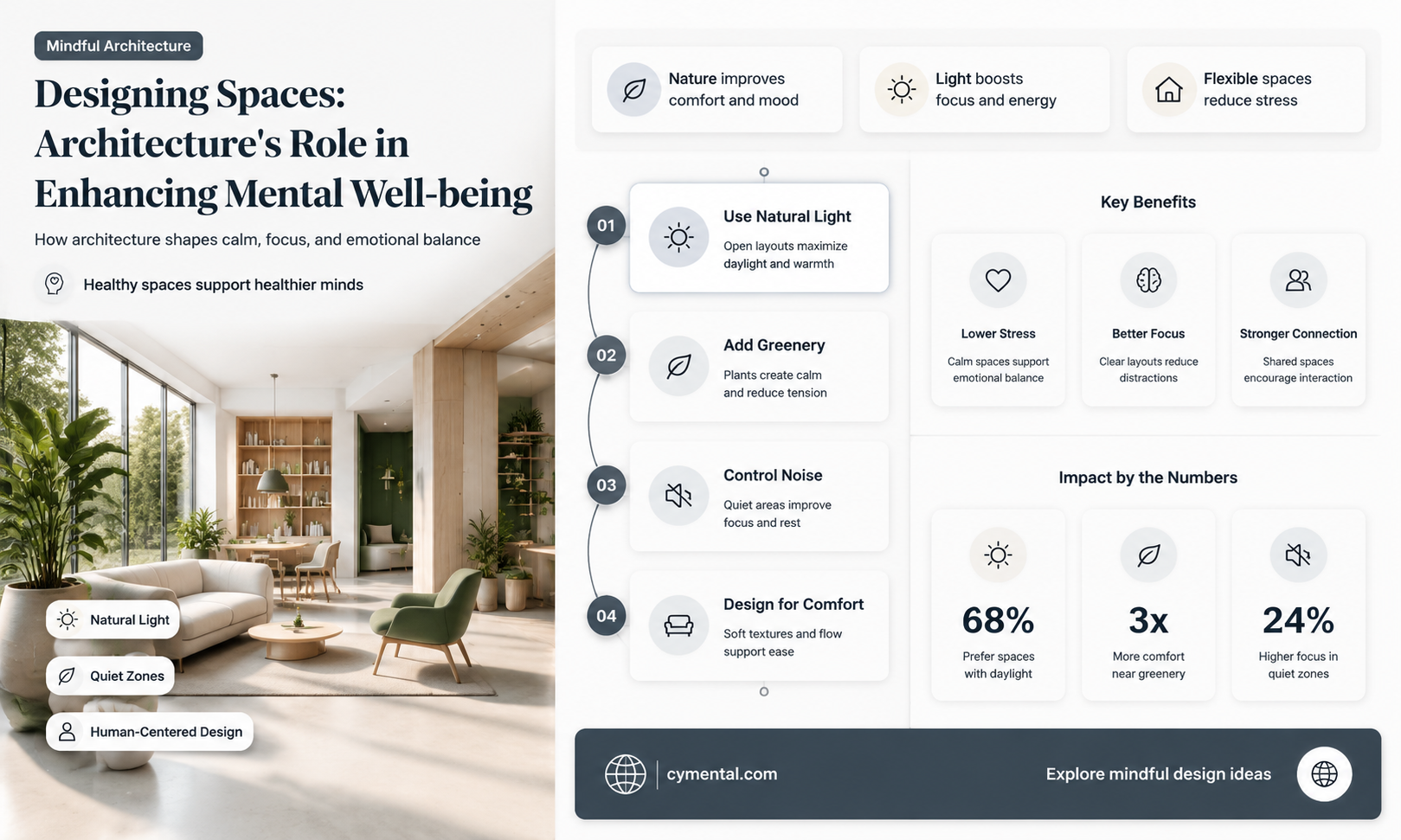
Architecture plays a pivotal role in shaping environments that can significantly impact mental health and well-being. Thoughtfully designed spaces can foster a sense of calm, reduce stress, and promote emotional balance by incorporating elements such as natural light, greenery, and open layouts that encourage social interaction. For instance, access to nature through biophilic design has been shown to lower anxiety and improve mood, while flexible, inclusive spaces can enhance feelings of safety and belonging. Additionally, the strategic use of materials, colors, and acoustics can create soothing atmospheres that support mental clarity and relaxation. By prioritizing human-centered design principles, architecture has the potential to act as a therapeutic tool, addressing mental health challenges and creating environments that nurture both the body and mind.
Explore related products

$71.29 $98.95


$17.95 $24.99

$43.44 $54.99


What You'll Learn
- Biophilic Design: Incorporating nature into buildings to reduce stress and enhance well-being
- Natural Light: Optimizing daylight to regulate mood and circadian rhythms effectively
- Acoustic Comfort: Designing spaces to minimize noise, promoting calm and focus
- Flexible Spaces: Creating adaptable environments to support diverse mental health needs
- Color Psychology: Using hues to evoke positive emotions and reduce anxiety

Biophilic Design: Incorporating nature into buildings to reduce stress and enhance well-being
Human beings have an innate connection to nature, a bond that has been severed by the concrete jungles we increasingly inhabit. Biophilic design seeks to mend this rift by integrating natural elements into the built environment, offering a powerful tool to combat the stress and disconnection that plague modern life.
Imagine a hospital room bathed in sunlight, with a living wall teeming with greenery and a gentle fountain murmuring in the corner. This isn't a spa retreat, but a real-world example of biophilic design in action. Studies show that patients in such rooms experience reduced anxiety, lower blood pressure, and faster recovery times.
The benefits extend beyond healthcare. Offices with ample natural light, indoor plants, and views of greenery boast increased employee productivity, creativity, and overall well-being. Schools incorporating biophilic principles see improved student focus, reduced stress levels, and enhanced cognitive function. Even in urban apartments, strategically placed houseplants, natural materials like wood and stone, and access to natural light can create a sanctuary that promotes relaxation and reduces feelings of isolation.
The key to successful biophilic design lies in going beyond mere decoration. It's about creating a multi-sensory experience that engages sight, sound, touch, and even smell. Incorporate flowing water features, textured natural materials, and fragrant plants. Maximize natural light through strategic window placement and skylights. Consider green roofs and vertical gardens to bring nature vertically into urban spaces.
While the benefits are undeniable, implementing biophilic design requires careful consideration. Factors like maintenance, accessibility, and cost must be addressed. However, the long-term gains in terms of improved mental health and well-being far outweigh the initial investment. By embracing biophilic design, we can create spaces that not only shelter us but also nurture our connection to the natural world, fostering healthier, happier, and more resilient communities.
Cleaning for Clarity: How Tidying Boosts Mental Well-Being
You may want to see also
Explore related products


Natural Light: Optimizing daylight to regulate mood and circadian rhythms effectively
Human bodies are hardwired to respond to natural light, a phenomenon rooted in our evolutionary biology. Daylight acts as a powerful zeitgeber, an external cue that synchronizes our internal circadian rhythms, governing sleep-wake cycles, hormone production, and mood regulation. Insufficient exposure to natural light disrupts this delicate balance, contributing to conditions like seasonal affective disorder (SAD) and circadian rhythm sleep disorders. Conversely, optimized daylight exposure can enhance alertness, improve cognitive function, and mitigate symptoms of depression and anxiety.
To harness the benefits of natural light, architects must consider both quantity and quality. Research suggests that adults require a minimum of 1000 lux (a measure of light intensity) for at least 30 minutes daily to regulate circadian rhythms effectively. For workspaces, this translates to designing large windows that allow ample daylight penetration, supplemented by reflective surfaces like light-colored walls and ceilings to distribute light evenly. In residential settings, strategically placing windows in bedrooms and living areas ensures occupants receive sufficient morning light, critical for cortisol production and wakefulness.
However, not all daylight is created equal. The color temperature of light, measured in Kelvin, shifts throughout the day, influencing our physiological responses. Cool, blue-toned light (5000–6500K) in the morning mimics sunrise, signaling the body to awaken, while warmer, amber tones (2700–3000K) in the evening promote melatonin production and prepare the body for sleep. Architects can integrate dynamic glazing or smart glass technologies that adjust light transmission and color temperature throughout the day, mimicking natural light cycles indoors.
A cautionary note: excessive or poorly managed daylight can lead to glare, overheating, and discomfort. To mitigate these risks, incorporate shading devices like louvers, overhangs, or light shelves that filter and diffuse sunlight without blocking it entirely. Additionally, consider the geographical location and seasonal variations in daylight duration. In northern latitudes, for instance, light wells or atriums can amplify daylight penetration during shorter winter days, while in equatorial regions, deep eaves and perforated screens can prevent overheating from intense sunlight.
In practice, the Bullitt Center in Seattle exemplifies daylight optimization. Its design features a central stairwell with a skylight that funnels natural light deep into the building, supplemented by automated blinds that adjust based on sunlight intensity. Occupants report higher energy levels and improved mood, underscoring the tangible benefits of thoughtful daylight design. By prioritizing natural light as a core design element, architects can create spaces that not only illuminate but also heal, fostering mental well-being through the subtle yet profound power of daylight.
Nature's Healing Power: Boosting Mental Health Through Outdoor Connection
You may want to see also
Explore related products


Acoustic Comfort: Designing spaces to minimize noise, promoting calm and focus
Excessive noise pollution is a silent aggressor, contributing to heightened stress, reduced productivity, and even cardiovascular issues. The World Health Organization estimates that long-term exposure to noise levels above 55 decibels (comparable to a busy street) can lead to chronic health problems. In architectural design, addressing acoustic comfort isn’t just about luxury—it’s a critical intervention for mental well-being. By strategically minimizing noise intrusion, spaces can foster environments that promote calm, focus, and recovery.
Consider the example of healthcare facilities, where patients often struggle with sleep due to ambient noise. A study in the *Journal of the Acoustical Society of America* found that reducing hospital room noise levels to below 30 decibels (similar to a whisper) improved patient recovery rates by up to 20%. Architects achieve this through sound-absorbing materials like acoustic ceiling tiles, double-glazed windows, and strategically placed partitions. For residential spaces, incorporating white noise systems or designing buffer zones between living areas and external noise sources can create sanctuaries of tranquility.
Designing for acoustic comfort requires a multi-faceted approach. Start with material selection: heavy curtains, carpeted floors, and textured wall panels absorb sound waves, reducing echo and reverberation. Next, consider spatial layout. Open-plan offices, for instance, benefit from the inclusion of soundproof pods or zoned areas for focused work. In urban settings, orienting windows away from high-traffic areas or using laminated glass can significantly cut down external noise. For public spaces like libraries or schools, incorporating greenery—such as vertical gardens—not only enhances aesthetics but also acts as a natural sound barrier.
However, achieving acoustic comfort isn’t without challenges. Over-reliance on soundproofing materials can make spaces feel sterile or disconnected. Striking a balance between noise reduction and maintaining a sense of openness is key. For instance, using translucent partitions in offices allows light to flow while dampening sound. Additionally, integrating smart technology, such as noise-canceling systems that adapt to ambient sound levels, can provide dynamic solutions without compromising design integrity.
The takeaway is clear: acoustic comfort is a cornerstone of mental health-conscious architecture. By thoughtfully addressing noise at the design stage, architects can create spaces that not only shield occupants from auditory stress but also enhance their ability to concentrate, relax, and thrive. Whether in homes, workplaces, or public areas, prioritizing sound management is an investment in the well-being of those who inhabit these spaces.
Mental Health Meds and Pain Relief: Exploring the Connection
You may want to see also
Explore related products

$6.79 $14.99


Flexible Spaces: Creating adaptable environments to support diverse mental health needs
Mental health needs are as diverse as the individuals experiencing them, yet many environments remain static, failing to adapt to shifting emotional and psychological demands. Flexible spaces, designed with adaptability in mind, can serve as a dynamic tool to support mental well-being by offering users control over their surroundings. For instance, modular furniture, movable partitions, and multi-purpose rooms allow individuals to reconfigure spaces based on their immediate needs—whether for solitude, social interaction, or focused work. This adaptability reduces stress by empowering users to create environments that align with their mental state, fostering a sense of agency and comfort.
Consider the design of a workplace or educational setting. Incorporating adjustable lighting, acoustic panels, and biophilic elements like plants or natural materials can significantly impact mood and focus. Studies show that access to natural light and greenery reduces anxiety and improves cognitive function, while customizable lighting temperatures can cater to circadian rhythms, enhancing sleep quality and overall mental health. For example, a classroom with movable desks and walls can transform from a lecture hall into small group discussion areas, accommodating both extroverted and introverted learners. Such flexibility ensures that the environment supports diverse needs without requiring users to conform to a one-size-fits-all model.
However, creating flexible spaces is not without challenges. Architects and designers must balance adaptability with structural integrity and cost-effectiveness. Overly complex systems can become cumbersome, defeating the purpose of flexibility. A practical approach involves prioritizing user-centered design, engaging with mental health professionals and end-users to identify key needs. For instance, in healthcare settings, adaptable consultation rooms with adjustable privacy levels can better serve patients with varying comfort levels around disclosure. Similarly, residential spaces with retractable walls or convertible furniture can accommodate fluctuating family dynamics or personal mental health episodes.
The takeaway is clear: flexible spaces are not a luxury but a necessity in addressing the spectrum of mental health needs. By embedding adaptability into the design process, architects can create environments that evolve with their users, promoting resilience and well-being. Practical tips include using lightweight, durable materials for movable elements, integrating smart technology for seamless adjustments, and ensuring accessibility for all users. Ultimately, flexible spaces recognize the fluidity of human experience, offering a built environment that supports mental health as actively as it shelters physical bodies.
Physical Activity Benefits for Mental Disabilities: Enhancing Well-Being and Quality of Life
You may want to see also
Explore related products





Color Psychology: Using hues to evoke positive emotions and reduce anxiety
Color, a silent yet powerful force in our environment, can significantly influence mental health. Research shows that specific hues can alter mood, reduce anxiety, and even lower heart rates. For instance, soft blues and greens, reminiscent of nature, have been proven to evoke calmness and reduce stress, making them ideal for spaces like hospitals and therapy rooms. Conversely, harsh reds and bright yellows, while energizing, can increase anxiety if overused. Understanding this, architects and designers can strategically employ color to create environments that nurture mental well-being.
To harness the benefits of color psychology, consider the function of a space and its intended emotional impact. In healthcare settings, pale blue walls can promote tranquility, while in educational environments, muted greens can enhance focus without overstimulation. For residential spaces, warm neutrals like beige or soft gray paired with accents of sage green or lavender can create a soothing retreat. However, caution is necessary: overly saturated colors or clashing combinations can have the opposite effect, heightening stress rather than alleviating it.
Practical application requires a nuanced approach. For example, in a bedroom, use cooler tones on walls to encourage relaxation, but introduce warmer accents through textiles or decor to prevent the space from feeling sterile. In workspaces, incorporate pops of blue or green to reduce anxiety while maintaining productivity. For children’s areas, softer pastels can create a calming effect without dampening creativity. Always consider natural light, as it can alter the perception of color throughout the day.
A comparative analysis reveals the cultural and individual differences in color perception. While blue universally promotes calm, its intensity matters—deep navy may feel oppressive, while pale aqua is uplifting. Similarly, cultural associations play a role; white symbolizes purity in Western cultures but mourning in some Eastern traditions. Architects must therefore balance universal principles with context-specific considerations to ensure colors resonate positively with users.
In conclusion, color psychology is a potent tool in architectural design for mental health. By thoughtfully selecting hues, designers can create spaces that not only look appealing but also actively contribute to emotional well-being. Whether through calming blues, grounding greens, or warm neutrals, the right color palette can transform a space into a sanctuary for the mind.
Puppies and Mental Health: How Canine Companions Boost Well-being
You may want to see also
Frequently asked questions
Architecture can influence mental health by creating spaces that promote comfort, safety, and well-being. Thoughtful design, such as natural lighting, access to green spaces, and calming color schemes, can reduce stress and anxiety while fostering a sense of peace.
Natural light in architecture boosts mental health by regulating circadian rhythms, reducing symptoms of depression, and improving mood. Large windows, skylights, and open layouts maximize sunlight exposure, creating brighter and more uplifting environments.
Incorporating green spaces, such as gardens, courtyards, or indoor plants, in architecture reduces stress, enhances focus, and promotes relaxation. Biophilic design, which connects humans to nature, has been shown to improve mental clarity and emotional balance.
Yes, architecture can reduce anxiety and stress in public spaces by incorporating elements like quiet zones, comfortable seating, and soothing materials. Thoughtful spatial planning and acoustic design can minimize sensory overload, creating calmer environments.
Accessible architecture supports mental health by reducing feelings of exclusion or frustration. Inclusive design, such as ramps, wide doorways, and clear signage, fosters independence and dignity, positively impacting self-esteem and overall well-being.