Noah Parker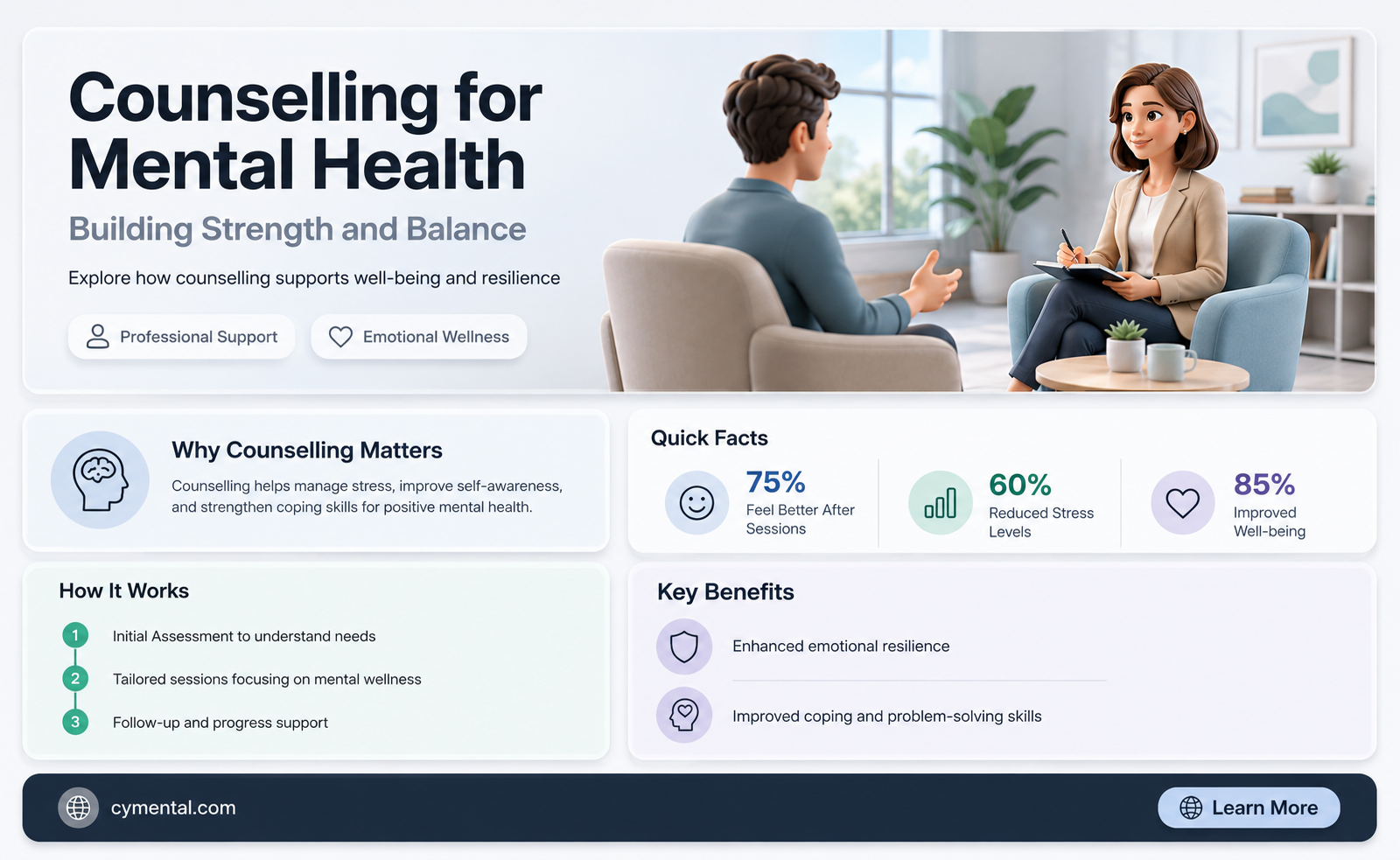
Counseling plays a pivotal role in promoting positive mental health by providing individuals with a safe, non-judgmental space to explore their thoughts, emotions, and behaviors. Through evidence-based techniques and empathetic support, counselors help clients develop coping strategies, build resilience, and gain insight into their challenges. By addressing underlying issues such as stress, anxiety, or trauma, counseling fosters self-awareness, emotional regulation, and healthier relationships. It empowers individuals to set achievable goals, challenge negative thought patterns, and cultivate a more positive mindset, ultimately enhancing overall well-being and quality of life. Whether through individual, group, or family therapy, counseling serves as a proactive tool to prevent mental health issues and nurture long-term psychological growth.
| Characteristics | Values |
|---|---|
| Provides a Safe Space | Counselling offers a confidential and non-judgmental environment where individuals can openly express their thoughts and emotions without fear of criticism or rejection. |
| Enhances Self-Awareness | Through guided conversations, individuals gain deeper insights into their thoughts, feelings, and behaviors, fostering a better understanding of themselves. |
| Develops Coping Strategies | Counsellors teach practical tools and techniques to manage stress, anxiety, and other mental health challenges effectively. |
| Improves Emotional Regulation | Counselling helps individuals identify and process emotions, leading to better emotional control and resilience. |
| Strengthens Relationships | By addressing communication patterns and interpersonal issues, counselling can improve relationships with family, friends, and colleagues. |
| Promotes Problem-Solving Skills | Individuals learn to approach problems systematically, finding constructive solutions and reducing feelings of overwhelm. |
| Encourages Goal Setting | Counselling supports the setting of realistic and achievable goals, providing motivation and direction for personal growth. |
| Reduces Symptoms of Mental Health Disorders | Evidence-based therapies used in counselling can alleviate symptoms of depression, anxiety, PTSD, and other mental health conditions. |
| Fosters Resilience | Counselling helps build mental toughness, enabling individuals to bounce back from adversity and cope with life’s challenges. |
| Increases Self-Esteem and Confidence | By challenging negative self-beliefs and reinforcing positive qualities, counselling boosts self-worth and confidence. |
| Supports Behavioral Change | Counselling assists in identifying and modifying unhealthy behaviors, promoting healthier lifestyle choices. |
| Provides Validation and Empathy | Counsellors offer empathy and validation, helping individuals feel understood and accepted, which is crucial for emotional healing. |
| Encourages Mindfulness and Presence | Techniques like mindfulness are often incorporated to help individuals stay grounded and focused on the present moment. |
| Facilitates Acceptance and Forgiveness | Counselling aids in processing past traumas and fostering acceptance and forgiveness, leading to emotional liberation. |
| Promotes Work-Life Balance | Counselling helps individuals prioritize their well-being, leading to a healthier balance between personal and professional life. |
| Supports Long-Term Mental Well-being | Regular counselling sessions contribute to sustained mental health improvements, preventing relapse and promoting overall well-being. |
Explore related products


What You'll Learn
- Building Resilience: Counselling teaches coping strategies to manage stress and adversity effectively
- Emotional Regulation: Helps individuals understand and control their emotions for better mental balance
- Self-Awareness: Encourages introspection to identify thoughts, feelings, and behaviors impacting mental health
- Healthy Relationships: Promotes communication skills and boundaries for supportive, positive connections
- Goal Setting: Guides individuals in setting achievable goals to foster purpose and motivation

Building Resilience: Counselling teaches coping strategies to manage stress and adversity effectively
Life throws curveballs. Job losses, relationship breakdowns, health scares – stress and adversity are inevitable. While we can't control these events, we can control how we respond. This is where resilience comes in, and counselling plays a pivotal role in building it.
Imagine resilience as a muscle. Just like physical exercise strengthens your body, counselling provides the mental workouts needed to fortify your ability to bounce back from challenges.
Counselling equips individuals with a toolbox of coping strategies tailored to their unique needs. These strategies go beyond generic advice like "stay positive." They are practical, actionable techniques grounded in evidence-based practices. For instance, cognitive reframing helps individuals challenge negative thought patterns that fuel stress. Instead of catastrophizing a job loss as a personal failure, a counsellor might guide someone to view it as an opportunity for growth and exploration of new career paths.
Mindfulness techniques, another common tool, teach individuals to observe their thoughts and emotions without judgment, reducing the overwhelming impact of stress. Deep breathing exercises, progressive muscle relaxation, and grounding techniques are simple yet powerful tools to manage anxiety in the moment.
The beauty of counselling lies in its personalized approach. A skilled counsellor doesn't offer a one-size-fits-all solution. They work collaboratively with the individual to identify their specific stressors, triggers, and coping mechanisms that have worked (or haven't) in the past. This personalized approach ensures the strategies learned are relevant, effective, and sustainable.
Building resilience through counselling is an investment in long-term mental well-being. It's not about eliminating stress entirely, but about developing the inner strength and skills to navigate life's challenges with greater ease and confidence. By learning to manage stress effectively, individuals can prevent it from escalating into more serious mental health issues like anxiety or depression.
Phy Ed's Impact: Boosting Children's Mental Health and Well-being
You may want to see also
Explore related products

$20.49 $36.99
![NCMHCE Exam Study Cards: NCMHCE Test Prep 2025 and 2026 for the National Clinical Mental Health Counseling Examination [Full Color Cards]](https://m.media-amazon.com/images/I/61Vg-0Wk9RL._AC_UL320_.jpg)


Emotional Regulation: Helps individuals understand and control their emotions for better mental balance
Emotions, when left unchecked, can spiral into overwhelming anxiety, debilitating depression, or destructive anger. Counselling provides a structured framework for emotional regulation, teaching individuals to recognize, understand, and manage their emotional responses effectively. Through techniques like cognitive reframing and mindfulness, clients learn to interrupt negative thought patterns and cultivate healthier emotional habits. For instance, a person prone to panic attacks might be guided to identify triggers, practice deep breathing exercises, and reframe catastrophic thoughts into more realistic ones, reducing the intensity and frequency of episodes.
Consider the case of a 32-year-old professional who struggles with workplace stress. In counselling, they might explore how unprocessed emotions from past experiences—like a history of perfectionism or fear of failure—exacerbate their current anxiety. By using journaling to track emotional triggers and engaging in progressive muscle relaxation techniques, they can begin to disentangle work pressures from personal worth. Over time, this emotional regulation not only alleviates stress but also enhances productivity and interpersonal relationships.
While emotional regulation is a cornerstone of mental health, it’s not a one-size-fits-all solution. Different therapeutic modalities, such as Dialectical Behavior Therapy (DBT) or Acceptance and Commitment Therapy (ACT), offer tailored approaches. DBT, for example, emphasizes skills like distress tolerance and emotional observation, particularly beneficial for individuals with borderline personality disorder or chronic emotional instability. ACT, on the other hand, focuses on accepting emotions without judgment and committing to values-driven actions, ideal for those struggling with avoidance or procrastination.
Practical tips for emotional regulation include setting aside 10–15 minutes daily for mindfulness meditation, using a mood-tracking app to identify patterns, and creating a "calm kit" with sensory items like essential oils or a stress ball. For adolescents, incorporating creative outlets like art or music can make emotional exploration less intimidating. Parents can model emotional regulation by verbalizing their feelings and problem-solving strategies, fostering a family environment that values emotional intelligence.
Ultimately, emotional regulation through counselling is not about suppressing emotions but about fostering a balanced, adaptive relationship with them. By equipping individuals with the tools to navigate their emotional landscape, counselling empowers them to respond to life’s challenges with resilience and clarity. This process not only mitigates mental health issues but also lays the foundation for sustained well-being and personal growth.
Supporting Mental Health Recovery: Compassionate Strategies for Healing and Resilience
You may want to see also
Explore related products


Self-Awareness: Encourages introspection to identify thoughts, feelings, and behaviors impacting mental health
Self-awareness is the cornerstone of mental health improvement, yet many struggle to cultivate it without guidance. Counselling provides a structured environment where individuals can explore their inner world with the support of a trained professional. Through techniques like cognitive-behavioral therapy (CBT), clients learn to observe their thoughts and emotions without judgment, a practice rooted in mindfulness. For instance, a 30-minute daily journaling exercise, as often recommended in therapy, can help individuals track patterns in their mood and reactions, fostering a deeper understanding of their mental triggers.
Consider the case of a 28-year-old professional who, through counselling, identified a recurring thought pattern: "I’m not good enough." This introspection revealed how this belief influenced their behavior, such as overworking to seek validation. By examining this thought in therapy, they began to challenge its validity, replacing it with evidence-based affirmations. This process, known as cognitive restructuring, is a key tool in counselling that promotes self-awareness and mental resilience. Research shows that such interventions can reduce symptoms of anxiety and depression by up to 50% in as little as 12 weeks.
However, self-awareness is not without its challenges. Confronting painful emotions or harmful habits can be uncomfortable, even daunting. Counsellors often emphasize pacing—encouraging clients to explore one issue at a time to avoid overwhelm. For example, a therapist might suggest focusing on a single week’s worth of journal entries to analyze feelings of stress, rather than attempting to dissect years of unresolved issues. This gradual approach ensures that self-awareness becomes a sustainable practice, not a source of additional stress.
To integrate self-awareness into daily life, practical strategies are essential. One effective method is the "STOP" technique: Stop what you’re doing, Take a breath, Observe your thoughts and feelings, and Proceed with intention. This 30-second exercise, taught in many counselling sessions, helps individuals pause and reflect in real-time, preventing impulsive reactions. Pairing this with weekly therapy sessions amplifies its effectiveness, as the counsellor can provide feedback and tailor the approach to the client’s needs.
Ultimately, self-awareness through counselling is not about achieving perfection but about building a compassionate relationship with oneself. By identifying the thoughts, feelings, and behaviors that shape their mental health, individuals gain the power to make informed choices. Whether it’s recognizing the early signs of burnout or understanding the root of relationship conflicts, this introspective journey equips people with tools to navigate life’s challenges. As one client aptly put it, "Counselling didn’t change my life—it gave me the clarity to change it myself."
Supporting Asian Mental Health: A Christian Guide to Compassionate Care
You may want to see also
Explore related products
$105.84 $156


$33.49 $70.95

Healthy Relationships: Promotes communication skills and boundaries for supportive, positive connections
Effective communication is the cornerstone of any healthy relationship, yet many individuals struggle to express their needs, emotions, or boundaries clearly. Counselling provides a structured environment where clients can practice active listening, assertiveness, and empathy under professional guidance. For instance, a therapist might role-play scenarios with a client to help them articulate their feelings without resorting to blame or defensiveness. This skill-building process not only strengthens interpersonal connections but also reduces misunderstandings that often lead to conflict or emotional distance. Research shows that couples who engage in communication-focused therapy report higher relationship satisfaction within as few as 12 sessions.
Boundaries are another critical component of healthy relationships, yet they are often misunderstood or overlooked. Counselling helps individuals identify their personal limits and communicate them effectively to others. For example, a therapist might work with a client to draft a script for setting boundaries with a partner or family member, emphasizing clarity and respect. This practice empowers individuals to protect their mental and emotional well-being while fostering mutual respect in relationships. Studies indicate that individuals who establish clear boundaries experience lower levels of anxiety and higher self-esteem, contributing to overall positive mental health.
Consider the case of a young adult struggling to balance their need for independence with their family’s expectations. Through counselling, they learn to express their desires calmly and confidently, while also understanding their family’s perspective. This balanced approach not only preserves the relationship but also strengthens it by fostering trust and understanding. Practical tips from therapy, such as using "I" statements to avoid sounding accusatory, can be applied immediately in real-life situations, making the learning process tangible and impactful.
While communication and boundaries are essential, they must be practiced consistently to yield long-term benefits. Counselling provides accountability and ongoing support, helping clients track their progress and adjust their strategies as needed. For instance, a therapist might assign "homework" such as initiating one boundary-setting conversation per week or journaling about communication challenges. These actionable steps ensure that clients not only learn new skills but also integrate them into their daily lives. Over time, this practice transforms relationships into sources of support and positivity, rather than stress or conflict.
In conclusion, counselling plays a vital role in promoting positive mental health by enhancing communication skills and boundary-setting within relationships. Through targeted practice, practical tools, and professional guidance, individuals can build connections that are both supportive and fulfilling. Whether addressing familial tensions, romantic challenges, or friendships, the skills developed in therapy create a foundation for healthier, more resilient relationships. By investing in these areas, individuals not only improve their own mental well-being but also contribute to a more positive and understanding social environment.
Can Therapists Effectively Help Clients Manage and Overcome Stress?
You may want to see also
Explore related products


![NCMHCE Secrets Study Guide - Exam Review and NCMHCE Practice Test for the National Clinical Mental Health Counseling Examination: [2nd Edition]](https://m.media-amazon.com/images/I/61st2jwaFIL._AC_UL320_.jpg)


Goal Setting: Guides individuals in setting achievable goals to foster purpose and motivation
Goal setting in counselling is a structured process that transforms vague aspirations into actionable steps, providing individuals with a sense of direction and control. Unlike arbitrary resolutions, this approach emphasizes SMART goals—specific, measurable, achievable, relevant, and time-bound. For instance, instead of saying, "I want to feel less stressed," a SMART goal might be, "I will practice mindfulness meditation for 10 minutes daily for the next 30 days to reduce stress." This clarity not only enhances motivation but also allows progress to be tracked, fostering a sense of accomplishment.
The act of setting achievable goals in counselling serves as a psychological anchor, grounding individuals in the present while propelling them toward a desired future. Research shows that goal-directed behavior activates the brain’s reward system, releasing dopamine, which reinforces motivation. However, the process must be tailored to the individual’s capacity and circumstances. For example, a person recovering from burnout might start with smaller, daily goals like "I will take a 15-minute walk three times this week" rather than committing to a marathon training plan. This incremental approach prevents overwhelm and builds confidence over time.
One of the most powerful aspects of goal setting in counselling is its ability to reconnect individuals with their values and purpose. Often, mental health struggles stem from a sense of aimlessness or disconnection from what truly matters. A counsellor might guide a client through a values clarification exercise, asking questions like, "What activities make you feel most alive?" or "What kind of person do you want to be remembered as?" Once these values are identified, goals can be aligned with them, ensuring that efforts are not just productive but also meaningful. For a teenager struggling with anxiety, a goal like "I will join a community art group to express myself creatively" might address both social isolation and self-esteem.
While goal setting is a potent tool, it’s not without pitfalls. Unrealistic expectations or rigid adherence to outcomes can backfire, leading to frustration or self-criticism. Counsellors often emphasize the importance of flexibility and self-compassion. If a goal isn’t working, it’s not a failure—it’s an opportunity to reassess and adjust. For instance, someone aiming to complete a project in two weeks might extend the deadline or break it into smaller tasks. This adaptive mindset shifts the focus from perfection to progress, aligning with the principles of positive mental health.
In practice, goal setting in counselling is a collaborative, iterative process. The counsellor acts as a guide, helping the individual identify obstacles, brainstorm solutions, and celebrate milestones. For older adults, goals might focus on maintaining independence, such as "I will attend a weekly yoga class to improve my balance." For young professionals, it could be "I will set boundaries by leaving work on time three days a week." Regardless of age or circumstance, the key is to ensure goals are personalized, realistic, and aligned with long-term well-being. By fostering purpose and motivation, goal setting becomes more than a tool—it becomes a pathway to resilience and fulfillment.
Supporting Loved Ones: A Guide to Accessing Mental Health Assistance
You may want to see also
Frequently asked questions
Counselling provides tools and strategies to manage stress and anxiety by identifying triggers, teaching coping mechanisms, and fostering self-awareness, leading to greater emotional resilience.
Yes, counselling helps individuals challenge negative self-beliefs, explore personal strengths, and build a more positive self-image, enhancing overall confidence and self-worth.
Counselling teaches individuals to recognize and understand their emotions, develop healthy ways to express them, and reduce impulsive reactions, promoting emotional balance.
Absolutely, counselling improves communication skills, fosters empathy, and addresses patterns of behavior that may hinder relationships, leading to more fulfilling connections.
Counselling encourages self-reflection, problem-solving, and the development of positive habits, equipping individuals with lifelong skills to maintain and enhance their mental health.