Ava Ramirez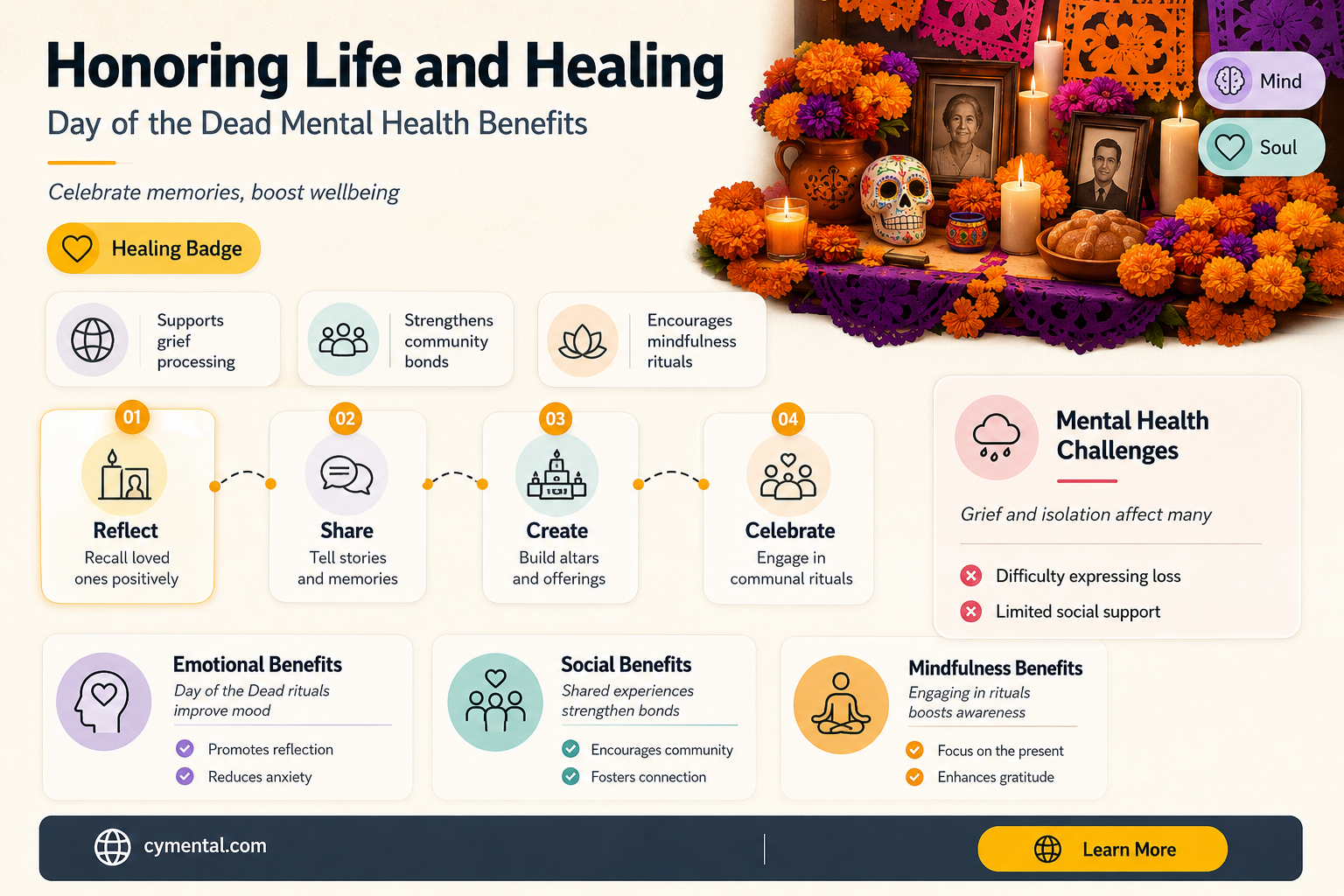
The Day of the Dead, or Día de los Muertos, is a vibrant and deeply meaningful Mexican tradition that offers profound lessons in coping with grief, honoring loved ones, and fostering mental well-being. By creating a space to openly remember and celebrate those who have passed, this cultural practice encourages individuals to confront their emotions in a healthy and constructive way, reducing the stigma around death and loss. The rituals, such as building altars, sharing stories, and engaging in communal activities, provide a sense of connection and continuity, helping to alleviate feelings of isolation and sadness. Additionally, the emphasis on remembrance and gratitude can promote mindfulness and acceptance, key components of mental health resilience. Through its blend of artistry, spirituality, and community, the Day of the Dead serves as a powerful reminder that acknowledging mortality can enrich our lives and nurture emotional healing.
| Characteristics | Values |
|---|---|
| Cultural Connection | Engaging in Day of the Dead traditions fosters a sense of belonging and connection to cultural roots, which can reduce feelings of isolation and improve mental well-being. |
| Grief Processing | The holiday provides a structured and culturally accepted way to mourn and honor deceased loved ones, helping individuals process grief in a healthy manner. |
| Community Support | Participating in communal activities, such as altar building and parades, strengthens social bonds and offers emotional support from others who share similar experiences. |
| Ritual and Routine | The rituals associated with Day of the Dead create a sense of predictability and stability, which can be comforting for individuals dealing with anxiety or depression. |
| Positive Remembrance | Focusing on joyful memories of the deceased rather than solely on loss can shift perspectives, promoting gratitude and reducing feelings of sadness. |
| Artistic Expression | Creating ofrendas (altars), calaveras (skulls), and other art forms allows for emotional expression and can serve as a therapeutic outlet for complex emotions. |
| Mindfulness and Reflection | The holiday encourages reflection on mortality and the value of life, fostering mindfulness and a deeper appreciation for the present moment. |
| Reduction of Stigma | By openly discussing death and grief, Day of the Dead helps normalize these topics, reducing the stigma around mental health issues related to loss. |
| Spiritual Comfort | For those who are spiritual or religious, the holiday offers a sense of continuity and belief in an afterlife, providing comfort and hope. |
| Educational Impact | Learning about the history and symbolism of Day of the Dead can be intellectually stimulating and empowering, contributing to overall mental resilience. |
Explore related products


What You'll Learn
- Honoring Loved Ones: Rituals foster grief processing, reducing emotional burden and promoting acceptance
- Community Connection: Shared traditions combat loneliness, fostering belonging and social support
- Cultural Pride: Celebrating heritage boosts self-esteem and identity, enhancing mental well-being
- Mindfulness Practices: Altar creation and reflection encourage present-moment awareness, reducing stress
- Life-Death Reflection: Confronting mortality inspires gratitude, shifting focus to meaningful living

Honoring Loved Ones: Rituals foster grief processing, reducing emotional burden and promoting acceptance
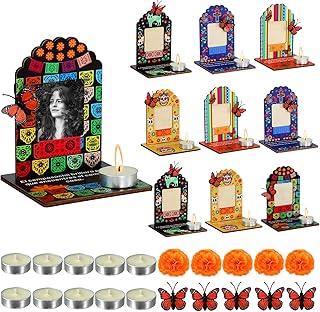
Grief, often a solitary journey, finds communal expression in the rituals of Día de los Muertos. This Mexican tradition, far from being morbid, offers a vibrant framework for processing loss. By creating altars adorned with marigolds, photographs, and favorite foods of the deceased, participants actively engage with their memories. This tangible act of remembrance transforms abstract sorrow into a structured, shared experience, lightening the emotional load.
Consider the ritual of writing letters to the departed, a practice often incorporated into Day of the Dead celebrations. This simple act encourages individuals to articulate unspoken thoughts, fears, and longings, providing a cathartic release. Psychologically, such expressive writing has been shown to reduce symptoms of depression and anxiety, fostering a sense of closure. For those struggling with unresolved grief, this ritual can serve as a therapeutic tool, bridging the gap between silence and acceptance.
Contrast this with Western mourning practices, which often emphasize stoicism and brevity. In many cultures, grief is expected to be private and time-bound, leaving individuals to navigate their pain without communal support. Día de los Muertos, however, normalizes grief as an ongoing dialogue, not a phase to be hurriedly completed. This perspective shift can be particularly beneficial for younger mourners, aged 18–30, who may feel pressured to "move on" quickly. By participating in these rituals, they learn that honoring loss is a lifelong process, not a race.
Practical integration of these rituals need not be limited to November 1st and 2nd. Incorporate elements year-round: keep a dedicated journal for reflections, display a small memorial corner in your home, or host a monthly gathering to share stories of loved ones. For families, involving children in age-appropriate ways—such as crafting paper flowers or selecting altar offerings—can help normalize conversations about death and grief. The key is consistency; regular engagement with these practices ensures that grief processing becomes a natural part of daily life, reducing its emotional weight over time.
Ultimately, the rituals of Día de los Muertos teach us that honoring the dead is not about dwelling in sorrow but about celebrating life’s continuity. By fostering connection, expression, and communal support, these practices offer a roadmap for transforming grief into a bearable, even beautiful, part of the human experience. Adoption of such rituals, whether in their traditional form or adapted to personal needs, can provide profound relief and a renewed sense of acceptance.
Baking Therapy: How Baking Boosts Mental Health and Well-being
You may want to see also
Explore related products


Community Connection: Shared traditions combat loneliness, fostering belonging and social support
Loneliness is a silent epidemic, often exacerbated by the individualistic nature of modern life. Day of the Dead, or Día de los Muertos, offers a powerful antidote through its emphasis on communal rituals. Unlike holidays that focus on individual celebration, this tradition is inherently collective, bringing families and neighbors together to honor their ancestors. The act of preparing altars, sharing stories, and participating in public processions creates a shared purpose that transcends age and background. For those struggling with isolation, these activities provide a structured way to connect, reminding participants that they are part of something larger than themselves.
Consider the practical steps involved in engaging with this tradition. Start by joining or organizing a local altar-building workshop, often hosted by cultural centers or community groups. These gatherings not only teach the symbolism behind elements like marigolds and pan de muerto but also encourage collaboration. For older adults, intergenerational participation can be particularly beneficial, as it bridges generational gaps and fosters mentorship. Younger individuals, especially those aged 18–25 who report higher levels of loneliness, can find a sense of belonging by contributing their creativity to altar designs or community murals. The key is active involvement—simply observing is not enough to reap the mental health benefits.
A cautionary note: while the communal aspects of Day of the Dead are healing, they can also highlight feelings of loss or exclusion for those without strong social ties. To mitigate this, communities should create inclusive spaces, such as public events where newcomers are paired with experienced participants. For example, a "buddy system" during cemetery vigils can ensure no one feels left out. Additionally, virtual platforms can extend the tradition’s reach, allowing those unable to attend in person to share photos of their altars or join livestreamed ceremonies. This hybrid approach ensures the tradition remains accessible while preserving its communal essence.
The takeaway is clear: shared traditions like Day of the Dead are not just cultural practices but therapeutic tools. By engaging in these rituals, individuals combat loneliness through collective action, fostering a sense of belonging that extends beyond the holiday itself. For mental health professionals, incorporating cultural traditions into therapy can provide clients with tangible ways to build social support. For everyone else, participating in these activities is a reminder that connection is not just a desire but a necessity—one that can be nurtured through the timeless practice of honoring the past together.
Basketball's Impact: Boosting Mental Health Through Physical Activity and Teamwork
You may want to see also
Explore related products


Cultural Pride: Celebrating heritage boosts self-esteem and identity, enhancing mental well-being
The vibrant altars, marigold petals, and sugar skulls of Día de los Muertos are more than just symbols of remembrance; they're acts of cultural defiance, declarations of identity, and powerful tools for mental well-being. For those with Mexican heritage, actively participating in these traditions fosters a deep sense of belonging, connecting individuals to a lineage that stretches back generations. This connection to something larger than oneself combats feelings of isolation and fosters a resilient sense of self.
Imagine a teenager struggling with self-acceptance. Engaging in the meticulous process of crafting a papier-mâché calavera, learning the stories of ancestors through family narratives, or proudly wearing traditional clothing during the festivities can become acts of self-affirmation. Each brushstroke, each shared memory, each vibrant color becomes a thread woven into a stronger, more confident sense of identity.
This isn't merely anecdotal. Studies consistently show that individuals who strongly identify with their cultural heritage exhibit higher levels of self-esteem, resilience, and overall mental well-being. Día de los Muertos, with its emphasis on family, tradition, and celebration of life, provides a unique platform for this connection. It encourages open dialogue about death, normalizing grief and fostering emotional resilience. By honoring ancestors and celebrating their legacy, individuals gain a sense of continuity and purpose, anchoring them in a rich cultural tapestry.
Think of it as a form of cultural therapy. Just as we nourish our bodies with food, we need to nourish our souls with cultural practices that affirm our identity. Día de los Muertos offers a feast for the soul, a vibrant reminder of where we come from and who we are.
To harness the mental health benefits of Día de los Muertos, consider these practical steps:
- Engage actively: Don't be a passive observer. Participate in altar building, food preparation, or traditional dances. The act of creation and contribution deepens the connection.
- Learn the stories: Delve into family history, ask elders about ancestors, and research the cultural significance of the traditions. Knowledge strengthens the bond.
- Share your experience: Talk about Día de los Muertos with others, both within and outside your community. Sharing fosters understanding and strengthens cultural pride.
By embracing Día de los Muertos as a celebration of cultural pride, individuals can unlock a powerful source of self-esteem, resilience, and mental well-being. It's a reminder that our heritage is not just a part of us; it's a source of strength, a beacon of light in the face of life's challenges.
Supporting Student Well-being: Practical Strategies for Schools to Enhance Mental Health
You may want to see also
Explore related products


Mindfulness Practices: Altar creation and reflection encourage present-moment awareness, reducing stress
The act of creating a Day of the Dead altar is a tactile, sensory experience that anchors you in the present moment. As you carefully arrange photographs, marigolds, and favorite foods of your departed loved ones, your focus narrows to the texture of the petals, the scent of incense, and the emotional resonance of each item. This mindful engagement with the physical world interrupts the mental chatter that often fuels stress and anxiety.
Imagine the process: selecting a sturdy table or shelf, covering it with a vibrant cloth, and then layering objects with intention. Each item becomes a point of focus, a reminder of a specific memory or emotion. The act of arranging and rearranging requires attention to detail, leaving little room for worries about the past or future. This type of present-moment awareness is a cornerstone of mindfulness, a practice proven to reduce stress and improve emotional regulation.
Studies suggest that engaging in activities requiring focused attention, like altar creation, can activate the parasympathetic nervous system, promoting relaxation and reducing cortisol levels.
The reflective aspect of the altar further deepens its mindfulness benefits. Once constructed, the altar becomes a visual meditation, inviting you to sit quietly and observe. Notice the play of light on the sugar skulls, the flicker of candle flames, the arrangement of personal belongings. Allow memories and emotions to arise without judgment, simply witnessing them as they surface. This practice of non-judgmental observation is a key element of mindfulness-based stress reduction (MBSR), a therapeutic approach shown to be effective in managing anxiety and depression.
Consider incorporating a short guided meditation or journaling prompt after spending time with your altar. This can help you process the emotions that arise and gain deeper insights from the experience.
The Day of the Dead altar, therefore, becomes more than a memorial; it becomes a tool for cultivating mindfulness and emotional well-being. By engaging in the intentional act of creation and reflection, you create a sacred space for both remembrance and present-moment awareness, ultimately contributing to a sense of peace and reduced stress. Remember, the beauty of this practice lies in its personalization. There are no rigid rules, only the invitation to connect with your loved ones and yourself in a meaningful, mindful way.
Phones and Mental Health: A Double-Edged Digital Companion?
You may want to see also
Explore related products


Life-Death Reflection: Confronting mortality inspires gratitude, shifting focus to meaningful living
The Day of the Dead, a vibrant Mexican tradition, invites us to embrace mortality as a catalyst for gratitude and intentional living. By honoring deceased loved ones through altars, stories, and rituals, this celebration encourages a healthy confrontation with death. Unlike avoidance or fear-based approaches, it frames mortality as a natural part of life, prompting reflection on our finite time. This perspective shift can alleviate anxiety by refocusing energy on what truly matters, fostering a deeper appreciation for the present moment.
Consider this practice as a form of cognitive reframing, a technique often used in therapy to challenge unhelpful thought patterns. By integrating mortality awareness into daily life—not just during the Day of the Dead—you can cultivate a mindset of gratitude. Start small: each morning, take 30 seconds to acknowledge one thing you’re grateful for, linking it to the impermanence of life. For instance, savoring a cup of coffee becomes a reminder of the fleeting nature of sensory pleasures, urging you to cherish them fully. Over time, this practice can rewire your brain to prioritize meaningful experiences over trivial concerns.
A comparative analysis reveals the stark contrast between cultures that suppress death and those that celebrate it. In societies where death is taboo, individuals often grapple with existential dread in isolation. Conversely, the communal aspect of the Day of the Dead normalizes mortality, turning it into a shared human experience. This collective acknowledgment reduces the psychological burden of confronting death alone, offering a supportive framework for processing grief and fostering resilience.
To implement this in your life, create a personal altar or memory corner dedicated to loved ones who have passed. Include photos, their favorite items, or symbolic offerings like marigolds or candles. Spend 10 minutes weekly reflecting on their legacy and how it shapes your values. This ritual not only honors their memory but also serves as a mirror, reflecting your own life choices. Are you living in alignment with what matters most? If not, use this awareness to make intentional adjustments, whether in relationships, career, or self-care.
Finally, caution against romanticizing death or using it as an excuse for reckless behavior. The goal is not to obsess over mortality but to let it inform your decisions with clarity and purpose. Pair this reflection with actionable steps, such as setting quarterly goals that align with your values or engaging in acts of kindness that leave a lasting impact. By balancing contemplation with action, you transform the awareness of death into a powerful tool for mental well-being and a more fulfilling life.
Supporting Your Child’s Mental Health: Practical Steps for Parents
You may want to see also
Frequently asked questions
Celebrating Day of the Dead can provide a healthy way to process grief and honor loved ones who have passed. The rituals, such as creating altars and sharing stories, allow individuals to confront their emotions in a culturally meaningful and supportive context, reducing feelings of isolation and promoting healing.
Yes, Day of the Dead normalizes conversations about death and loss by treating them as natural parts of life. This openness can encourage people to seek support for their mental health struggles without fear of judgment, fostering a sense of community and understanding.
The act of remembering and celebrating the lives of deceased loved ones can bring comfort and a sense of continuity. It helps individuals find meaning in their grief, reducing feelings of emptiness and fostering a positive connection to their cultural and personal heritage.
Activities like crafting ofrendas (altars), writing letters to the deceased, or participating in community processions encourage mindfulness and emotional expression. These practices provide a structured way to reflect on loss, release pent-up emotions, and find solace in shared traditions.