Madison Cole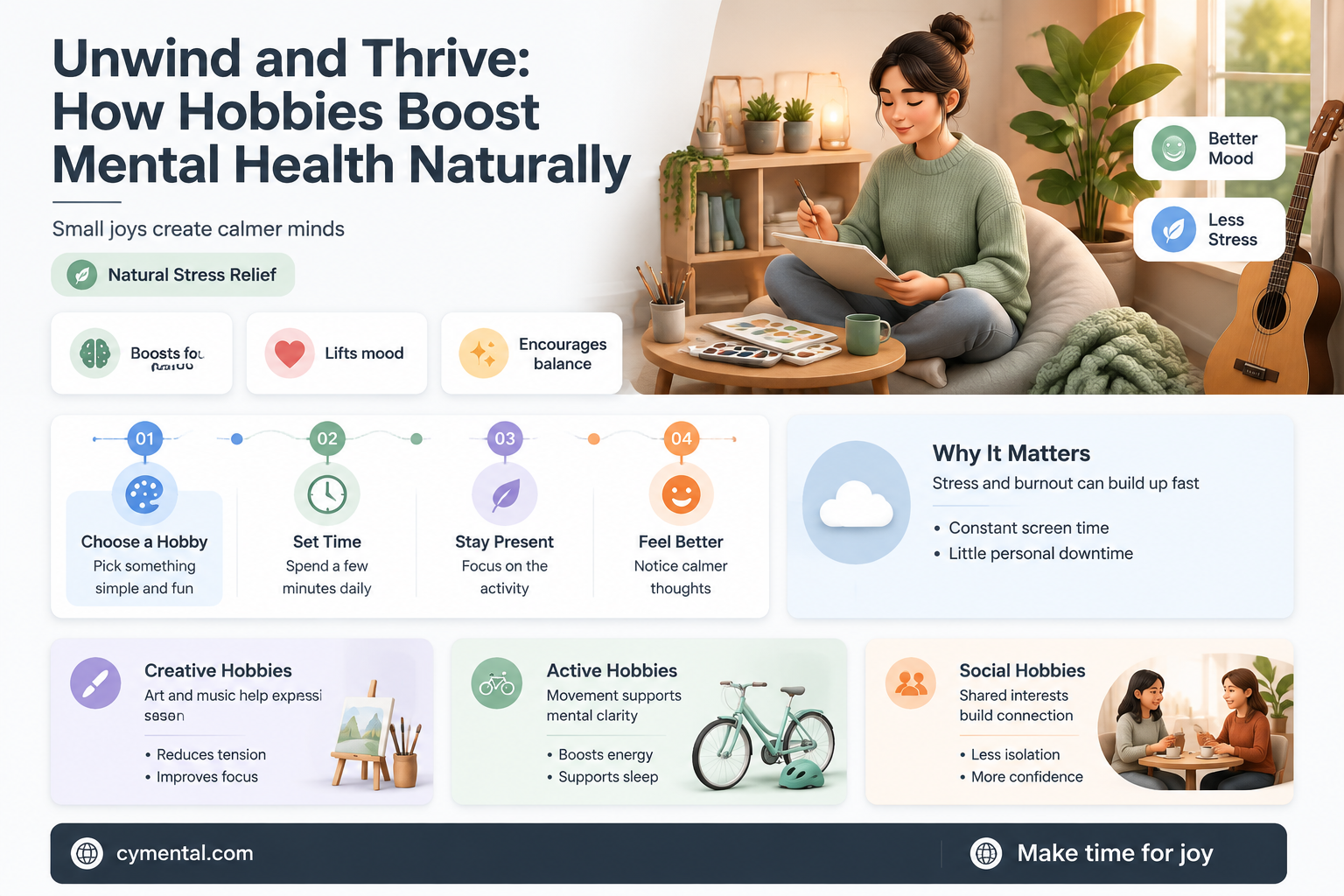
Engaging in hobbies can significantly benefit mental health by providing a sense of purpose, reducing stress, and fostering creativity. Whether it’s painting, gardening, playing an instrument, or hiking, hobbies offer a break from daily pressures, allowing individuals to focus on activities they enjoy. This shift in attention can lower anxiety and depression symptoms, as it promotes mindfulness and relaxation. Additionally, hobbies often involve learning new skills, which boosts self-esteem and confidence. Social hobbies, like joining a book club or sports team, can combat loneliness by building connections with like-minded people. Overall, hobbies serve as a healthy outlet for emotions, enhance emotional well-being, and contribute to a more balanced and fulfilling life.
| Characteristics | Values |
|---|---|
| Stress Reduction | Engaging in hobbies activates the parasympathetic nervous system, reducing cortisol levels and promoting relaxation. |
| Improved Mood | Hobbies stimulate the release of neurotransmitters like dopamine and serotonin, enhancing feelings of happiness and well-being. |
| Enhanced Self-Esteem | Mastering skills or completing projects in a hobby boosts confidence and provides a sense of accomplishment. |
| Social Connection | Group hobbies or shared interests foster social interaction, reducing feelings of loneliness and isolation. |
| Mindfulness and Focus | Hobbies often require concentration, promoting mindfulness and helping to distract from negative thoughts. |
| Cognitive Function | Activities like puzzles, learning instruments, or crafting improve memory, problem-solving skills, and brain plasticity. |
| Emotional Outlet | Creative hobbies (e.g., painting, writing) provide a healthy way to express and process emotions. |
| Sense of Purpose | Hobbies offer structure and goals, contributing to a feeling of meaning and direction in life. |
| Physical Health Benefits | Active hobbies (e.g., hiking, dancing) improve cardiovascular health, reduce stress, and boost overall fitness. |
| Resilience Building | Hobbies teach patience, persistence, and adaptability, which can help cope with life's challenges. |
| Work-Life Balance | Engaging in hobbies outside of work reduces burnout and promotes mental and emotional recovery. |
| Personal Growth | Hobbies encourage learning new skills, fostering self-discovery and continuous development. |
Explore related products


What You'll Learn
- Stress Relief: Engaging in hobbies reduces stress by shifting focus and promoting relaxation
- Emotional Outlet: Hobbies provide a healthy way to express and process emotions effectively
- Sense of Purpose: Pursuing hobbies fosters accomplishment, boosting self-esteem and life satisfaction
- Social Connection: Group hobbies combat loneliness by building relationships and community support
- Mindfulness Practice: Creative hobbies enhance mindfulness, grounding individuals in the present moment

Stress Relief: Engaging in hobbies reduces stress by shifting focus and promoting relaxation
Stress is an inevitable part of life, but its management is where hobbies step in as unsung heroes. When you immerse yourself in an activity you love, your brain undergoes a subtle yet powerful shift. Neurological studies show that engaging in hobbies activates the parasympathetic nervous system, which counteracts the body's stress response. For instance, knitting or playing an instrument can lower cortisol levels, the hormone associated with stress, by up to 20% within 30 minutes of focused activity. This isn’t just anecdotal—it’s science-backed proof that hobbies act as a natural stress reliever.
Consider the act of shifting focus as a mental reset button. When you’re absorbed in painting, gardening, or even solving a puzzle, your mind temporarily escapes the cycle of worry. This cognitive distraction is particularly effective for individuals aged 18–45, who often juggle work, relationships, and personal responsibilities. A study published in the *Journal of Occupational Health Psychology* found that employees who engaged in hobbies during their downtime reported a 35% reduction in stress-related symptoms compared to those who passively scrolled through social media. The key lies in choosing an activity that demands your full attention, effectively breaking the loop of stressful thoughts.
Not all hobbies are created equal when it comes to stress relief. Activities that combine creativity and mindfulness, such as journaling or pottery, offer dual benefits. They not only divert your focus but also encourage a state of flow—a mental zone where you’re fully immersed and time seems to disappear. For maximum impact, aim for at least 20–30 minutes of uninterrupted hobby time daily. If consistency is a challenge, start small: dedicate 10 minutes during your lunch break or before bed. Over time, this practice can rewire your brain to better handle stress, fostering resilience in the face of life’s pressures.
Practicality is key to making hobbies a stress-relief tool. For those with busy schedules, portable hobbies like sketching or listening to audiobooks can be integrated into daily routines. Parents can involve children in activities like baking or board games, turning stress relief into a family affair. The goal isn’t perfection but participation. Even if your painting doesn’t turn out as planned or your guitar chords sound off, the act of engaging is what matters. Remember, the purpose is relaxation, not achievement—a mindset shift that can transform how you approach both hobbies and stress.
Supporting Mental Health: Practical Ways to Help Someone in Need
You may want to see also
Explore related products


Emotional Outlet: Hobbies provide a healthy way to express and process emotions effectively
Emotions, when bottled up, can fester into anxiety, depression, or even physical ailments. Hobbies act as a release valve, offering a constructive channel for these pent-up feelings. Consider the act of painting: the brushstrokes, the blending of colors, the creation of something tangible from raw emotion. This process isn't just artistic; it's therapeutic. Studies show that engaging in creative activities like painting or sculpting can reduce cortisol levels, the body's primary stress hormone, by as much as 75% in just 45 minutes of focused activity. This isn’t merely anecdotal—it’s backed by research from the *Journal of the American Art Therapy Association*.
Now, let’s break this down into actionable steps. First, identify an emotion you’re struggling with—anger, sadness, or even overwhelming joy. Next, choose a hobby that aligns with that emotion. For instance, if you’re feeling restless, try a physical activity like rock climbing or dancing. These hobbies not only burn off excess energy but also release endorphins, the brain’s natural mood lifters. If you’re dealing with sadness, journaling or playing a musical instrument can help you process those feelings in a structured way. The key is consistency: aim for at least 30 minutes a day, five days a week, to see noticeable improvements in emotional regulation.
Contrast this with less healthy coping mechanisms, like binge-watching TV or scrolling through social media. While these activities may provide temporary distraction, they don’t address the root of the emotion. Hobbies, on the other hand, engage both the mind and body, fostering a sense of accomplishment and clarity. For example, woodworking requires focus and precision, leaving little room for rumination. Similarly, gardening connects you with nature, grounding you in the present moment and reducing feelings of anxiety. These activities aren’t just distractions—they’re tools for emotional transformation.
Finally, consider the long-term benefits. Regularly engaging in hobbies that serve as emotional outlets can improve overall mental resilience. A study published in *Frontiers in Psychology* found that individuals who consistently practiced emotional expression through hobbies reported higher levels of life satisfaction and lower rates of burnout. Practical tip: keep a “hobby journal” to track how different activities affect your mood. Over time, you’ll identify patterns and tailor your hobbies to your emotional needs. Remember, the goal isn’t to eliminate emotions but to process them in a way that enriches, rather than depletes, your mental health.
Church and Mental Health: Exploring the Impact of Faith Communities
You may want to see also
Explore related products


Sense of Purpose: Pursuing hobbies fosters accomplishment, boosting self-esteem and life satisfaction
Engaging in hobbies isn’t just a way to pass time—it’s a deliberate act of self-care that rewires the brain for accomplishment. When you dedicate yourself to mastering a skill, whether it’s painting, gardening, or coding, your brain releases dopamine, the neurotransmitter linked to reward and motivation. This chemical response creates a feedback loop: progress fuels satisfaction, and satisfaction drives further engagement. For instance, a study published in *Journal of Occupational Science* found that individuals who spent just 30 minutes daily on a hobby reported higher levels of perceived achievement compared to those who didn’t. The key here is consistency—small, regular efforts compound into tangible results, transforming hobbies into a measurable source of pride.
Consider the act of learning to play a musical instrument. Initially, the challenge of coordinating fingers and reading sheet music can feel overwhelming. But as you practice, even for 15 minutes a day, you begin to notice improvements. The first time you play a song from start to finish without mistakes, the sense of accomplishment is undeniable. This achievement doesn’t just boost self-esteem in the moment—it reshapes your self-perception. You start seeing yourself as someone capable of growth, resilience, and success. This mindset shift is particularly powerful for individuals over 40, who often face societal pressures to "settle" rather than explore new passions. Hobbies remind them—and everyone—that personal growth is ageless.
Critics might argue that hobbies are a luxury, reserved for those with ample free time. However, reframing hobbies as a necessity for mental health changes the narrative. For example, a working parent might feel guilty spending an hour knitting after a long day. Yet, that hour isn’t stolen from responsibilities—it’s an investment in mental clarity and emotional resilience. The sense of purpose derived from completing a scarf or blanket translates into a renewed ability to tackle daily challenges. Practical tip: start with micro-hobbies, like sketching for 10 minutes or journaling three sentences daily. These bite-sized activities still provide a sense of accomplishment without requiring hours of commitment.
Comparing hobbies to traditional productivity reveals their unique value. Work or chores often come with external rewards (a paycheck, a clean house), but hobbies offer intrinsic satisfaction. Take woodworking, for instance. The process of sanding, carving, and assembling isn’t just about the final product—it’s about the focus, creativity, and problem-solving involved. This internal validation is particularly vital for those struggling with self-worth, as it decouples accomplishment from external approval. A 2021 study in *Frontiers in Psychology* highlighted that individuals who pursued hobbies for intrinsic reasons reported higher life satisfaction than those motivated by external factors like social recognition.
Ultimately, hobbies serve as a reminder that life isn’t just about surviving—it’s about thriving. By fostering a sense of purpose, they provide a counterbalance to the monotony or stress of daily life. For teenagers grappling with identity, retirees adjusting to a new pace, or anyone in between, hobbies offer a structured yet enjoyable way to grow. The takeaway? Choose activities that align with your interests, start small, and celebrate every milestone. Whether it’s baking a perfect loaf of bread or running your first mile, these achievements accumulate into a richer, more fulfilling life. After all, the goal isn’t perfection—it’s progress, and progress is purpose in motion.
Exploring the Link Between Sexual Fetishes and Mental Health Diagnosis
You may want to see also
Explore related products

$16.7 $19.95


$9.79 $17.99


Social Connection: Group hobbies combat loneliness by building relationships and community support
Loneliness is a silent epidemic, affecting people of all ages and backgrounds, with studies showing it can be as harmful to health as smoking 15 cigarettes a day. Group hobbies offer a powerful antidote by creating natural opportunities for social interaction and shared experiences. Consider the rise of community gardens, where individuals of all ages come together to cultivate plants and friendships simultaneously. These spaces not only foster a sense of belonging but also provide a structured environment where conversations flow as easily as water from a garden hose. The act of working towards a common goal, whether it’s growing vegetables or maintaining a flower bed, strengthens social bonds and creates a support network that extends beyond the garden gates.
To maximize the mental health benefits of group hobbies, consistency is key. Aim to participate in group activities at least twice a week, as research suggests regular social engagement can significantly reduce feelings of isolation. For older adults, joining a local book club or knitting circle can be particularly effective, as these activities combine cognitive stimulation with social interaction. Younger individuals might find team sports or group fitness classes more appealing, where the physical activity releases endorphins while the group dynamic fosters camaraderie. The key is to choose an activity that aligns with personal interests, making it easier to commit and connect with like-minded individuals.
One often-overlooked aspect of group hobbies is their ability to provide a sense of purpose and identity. For instance, amateur theater groups not only offer a creative outlet but also assign roles that make each member feel valued and integral to the production. This shared responsibility creates a unique form of social glue, where individuals rely on one another to achieve a common goal. Similarly, volunteer-based hobbies, such as community clean-up initiatives or animal rescue groups, instill a sense of contribution to society, further enhancing emotional well-being. These activities prove that social connection isn’t just about being around people—it’s about being part of something bigger.
While the benefits are clear, it’s important to approach group hobbies with realistic expectations. Not every group will be the perfect fit, and it may take time to find a community that feels like home. Start by attending a few sessions without pressure to commit long-term. Be open to trying different activities, as what works for one person may not work for another. For those with social anxiety, beginning with smaller, more intimate groups can make the experience less overwhelming. Remember, the goal isn’t to become the most active member but to build meaningful connections that enrich your life. Over time, these relationships can become a vital source of support, turning a simple hobby into a cornerstone of mental health.
Finding Mental Health Support in Bridgeville, DE: You’re Not Alone
You may want to see also
Explore related products


Mindfulness Practice: Creative hobbies enhance mindfulness, grounding individuals in the present moment
Engaging in creative hobbies like painting, knitting, or playing a musical instrument isn't just about producing something tangible—it’s a gateway to mindfulness. These activities demand focus, pulling your attention away from distractions and anchoring you in the present moment. For instance, when you’re blending colors on a canvas or following a knitting pattern, your mind naturally tunes out racing thoughts, fostering a state of flow. This immersion reduces mental clutter, offering a respite from stress and anxiety. Studies show that even 20 minutes of focused creative activity can lower cortisol levels, the hormone associated with stress, by up to 25%.
Consider the act of journaling or sculpting as a form of meditation in motion. Unlike traditional mindfulness practices that require stillness, creative hobbies allow you to be active while achieving a similar mental state. For example, shaping clay requires tactile engagement and visual attention, leaving little room for worries about the past or future. This dynamic mindfulness is particularly accessible for those who find sitting meditation challenging. A 2019 study published in *Art Therapy* found that participants who engaged in creative tasks reported a 30% increase in feelings of calm and presence compared to those who practiced static mindfulness techniques.
To harness this benefit, start small and be intentional. Dedicate 15–30 minutes daily to a creative hobby, treating it as a mental health ritual rather than a productivity task. Choose an activity that aligns with your interests—whether it’s doodling, woodworking, or playing the guitar—and focus on the process, not the outcome. For instance, if you’re sketching, pay attention to the pressure of the pencil, the texture of the paper, and the shapes forming under your hand. This sensory engagement deepens mindfulness, making the practice more effective.
However, it’s crucial to avoid turning your hobby into another source of stress. Perfectionism can undermine the mindfulness benefits, so set realistic expectations. If you’re new to an activity, start with beginner-friendly projects and allow yourself to make mistakes. For example, if you’re learning calligraphy, practice basic strokes without worrying about creating a masterpiece. Similarly, avoid multitasking—if you’re painting, don’t listen to podcasts or watch TV simultaneously, as this dilutes the grounding effect.
Incorporating creative hobbies into your routine isn’t just about self-expression; it’s a practical tool for mental wellness. By fostering mindfulness, these activities help regulate emotions, improve focus, and cultivate a sense of accomplishment. For those struggling with anxiety or ADHD, creative tasks can provide structure and a healthy outlet for restless energy. Over time, this practice can rewire your brain to default to a more present, calm state, even outside of hobby time. Think of it as training your mind to find peace in the process, not just the product.
Boxing's Impact: Boosting Mental Health and Emotional Resilience
You may want to see also
Frequently asked questions
Hobbies provide a sense of purpose, relaxation, and enjoyment, which can reduce stress, anxiety, and depression. Engaging in activities you love releases endorphins, boosts mood, and promotes a positive mindset.
Yes, hobbies act as a healthy distraction from stressors and allow you to focus on the present moment. Activities like painting, gardening, or playing music can calm the mind and lower cortisol levels, reducing anxiety.
Absolutely. Mastering a hobby or seeing progress in a skill can boost self-esteem and confidence. Accomplishments, no matter how small, reinforce a sense of competence and self-worth.
Many hobbies, like team sports, book clubs, or group classes, provide opportunities to meet like-minded people. Social interaction through shared interests can reduce feelings of isolation and build a supportive community.