Caleb Wright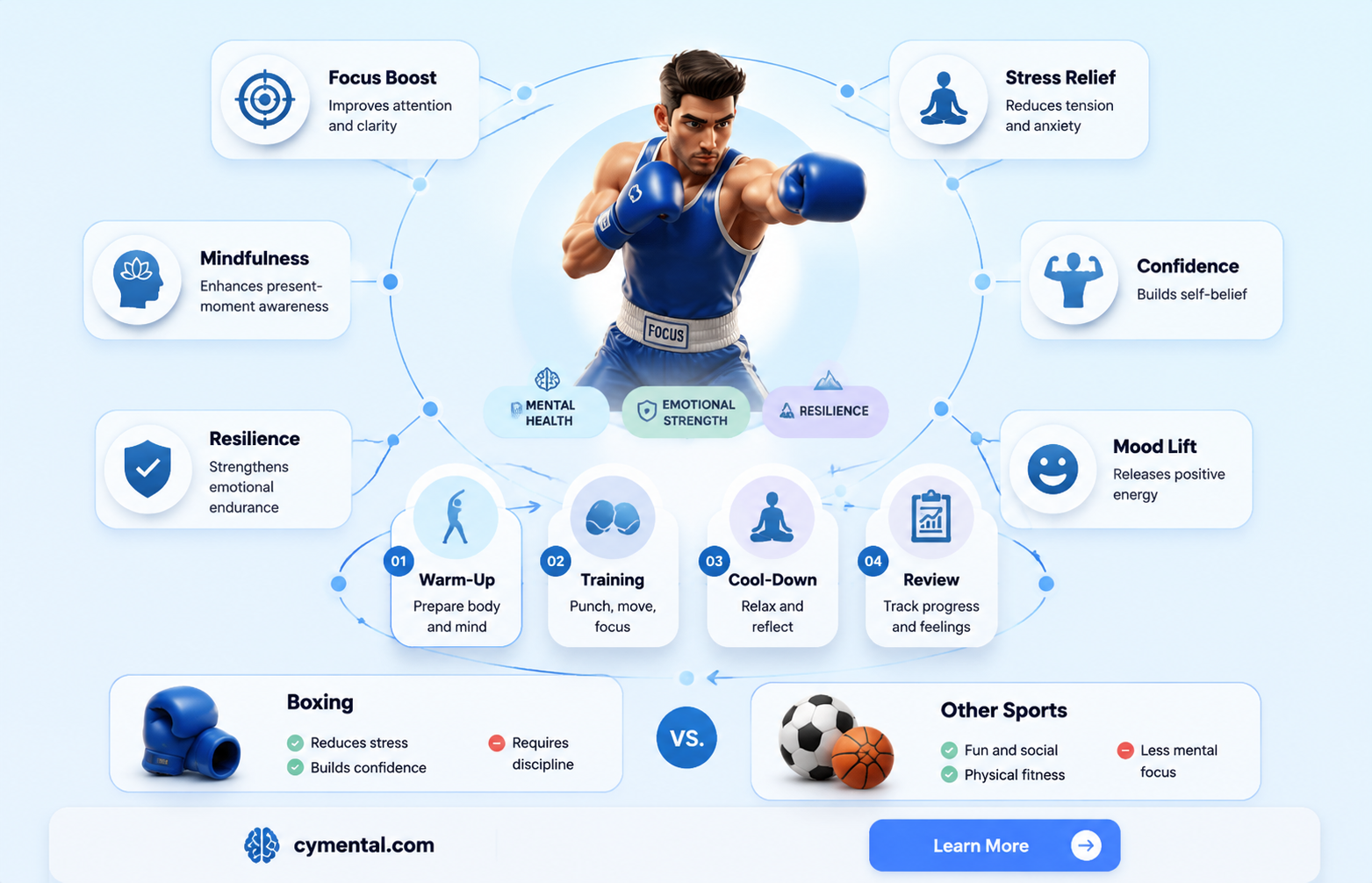
Boxing has emerged as a powerful tool for improving mental health, offering both physical and psychological benefits to those who engage in the sport. Beyond its reputation as a physically demanding discipline, boxing provides an outlet for stress relief, emotional expression, and mental clarity. The structured nature of training, combined with the release of endorphins during exercise, can reduce symptoms of anxiety and depression. Additionally, the focus required in boxing helps individuals stay present, fostering mindfulness and resilience. For many, the sense of accomplishment and empowerment gained from mastering skills in the ring translates into increased confidence and self-esteem in daily life, making boxing a valuable practice for mental well-being.
| Characteristics | Values |
|---|---|
| Stress Reduction | Boxing releases endorphins, which act as natural stress relievers, reducing anxiety and improving mood. |
| Improved Mental Clarity | Physical activity in boxing enhances cognitive function, focus, and mental sharpness. |
| Emotional Outlet | Boxing provides a healthy way to channel anger, frustration, and other negative emotions. |
| Boosts Confidence | Mastering boxing skills and achieving fitness goals can significantly increase self-esteem and self-worth. |
| Mindfulness and Discipline | The structured nature of boxing training promotes mindfulness, discipline, and mental resilience. |
| Social Interaction | Group boxing classes or training sessions can reduce feelings of loneliness and foster a sense of community. |
| Reduces Symptoms of Depression | Regular boxing workouts have been shown to alleviate symptoms of depression by increasing serotonin levels. |
| Enhances Sleep Quality | Physical exertion from boxing can improve sleep patterns, which is crucial for mental health. |
| Coping Mechanism | Boxing can serve as a constructive coping mechanism for individuals dealing with trauma or PTSD. |
| Increased Self-Control | The discipline required in boxing translates to better emotional regulation and impulse control in daily life. |
Explore related products


What You'll Learn

Stress Relief Through Boxing
Boxing isn’t just about physical combat; it’s a powerful tool for mental release. The rhythmic pounding of gloves against a heavy bag or the strategic dance in the ring demands focus, leaving little room for intrusive thoughts. This physical intensity triggers the release of endorphins, the body’s natural stress fighters, creating a sense of calm and accomplishment. Studies show that even 30 minutes of moderate-intensity boxing training can significantly reduce cortisol levels, the hormone associated with stress.
To harness boxing’s stress-relieving benefits, start with consistency. Aim for 2–3 sessions per week, each lasting 45–60 minutes. Beginners should focus on mastering basic punches (jab, cross, hook, uppercut) and footwork. Incorporate shadowboxing to improve coordination and heavy bag work to build power. For a more structured approach, consider joining a boxing class or working with a trainer who can tailor workouts to your fitness level. Remember, the goal isn’t to become a professional fighter but to channel stress into productive movement.
While boxing’s physical demands are undeniable, its mental benefits are equally transformative. The sport requires split-second decision-making, fostering mindfulness and presence. Unlike passive stress-relief methods like scrolling through social media, boxing actively engages both body and mind, providing a sense of control and agency. For those dealing with anxiety or overwhelm, the structured nature of a boxing routine can offer a much-needed anchor in chaotic times.
However, boxing isn’t a one-size-fits-all solution. High-intensity workouts may not suit everyone, particularly individuals with certain health conditions or those new to exercise. Start slowly, listen to your body, and consult a healthcare professional if needed. Additionally, while boxing can alleviate stress, it shouldn’t replace therapy or other mental health treatments. Instead, think of it as a complementary practice that strengthens both your body and your resilience to stress.
Incorporating boxing into your stress-relief toolkit can yield profound results. Whether you’re punching a bag in your garage or sparring in a gym, the act of boxing forces you to confront challenges head-on, both physically and mentally. Over time, this practice can build mental toughness, improve emotional regulation, and provide a healthy outlet for pent-up tension. So, lace up your gloves, step into the ring, and let boxing be your ally in the fight against stress.
Exercise and Mental Health: Unlocking the Mind-Body Connection for Wellness
You may want to see also
Explore related products



Boxing and Anxiety Reduction
Anxiety disorders affect over 40 million adults in the United States alone, making it the most common mental health issue. Boxing, a sport often associated with physical aggression, has emerged as a surprising yet effective tool for anxiety reduction. The rhythmic nature of punching, combined with the intense focus required, creates a meditative state that can quiet the mind’s incessant chatter. Unlike traditional meditation, which may feel inaccessible to some, boxing offers a tangible, action-oriented approach to calming the nervous system.
Consider the physiological response: during a boxing session, the body releases endorphins, often referred to as "feel-good" hormones, which counteract stress hormones like cortisol. A study published in the *Journal of Sports Science & Medicine* found that participants who engaged in high-intensity interval training (HIIT), similar to boxing workouts, experienced a 26% reduction in anxiety symptoms after just four weeks. For optimal results, aim for 3–4 sessions per week, each lasting 45–60 minutes, to maintain consistent endorphin release and build mental resilience.
Boxing also provides a unique outlet for emotional release. The act of punching a bag or pads allows individuals to physically manifest and expel pent-up tension, a concept rooted in somatic psychology. For instance, a 2019 case study highlighted a 32-year-old woman with generalized anxiety disorder who reported a 50% decrease in anxiety levels after incorporating boxing into her routine twice weekly for three months. To maximize this benefit, focus on intentional movements—imagine transferring worry into each strike, rather than mindlessly throwing punches.
However, it’s crucial to approach boxing with mindfulness. Overexertion or improper technique can lead to physical injury, which may exacerbate stress. Beginners should start with light sessions, focusing on form and breathing. Pairing boxing with grounding techniques, such as deep inhales during rests, can enhance its anxiety-reducing effects. Additionally, group classes can foster a sense of community, addressing the social isolation often linked to anxiety disorders.
In conclusion, boxing is more than a physical workout—it’s a holistic practice that targets anxiety at its core. By combining physiological benefits, emotional release, and mindful engagement, it offers a powerful alternative or complement to traditional therapies. Whether you’re a seasoned athlete or a novice, stepping into the ring could be the first step toward reclaiming mental clarity.
Multivitamins and Mental Health: Unlocking the Potential Benefits
You may want to see also
Explore related products


Boosting Self-Confidence in Boxing
Boxing demands precision, discipline, and physical prowess, but its impact on self-confidence often goes unnoticed. Every jab thrown, every combination mastered, reinforces a sense of capability. This sport doesn’t just build muscle—it sculpts the mind, fostering a belief in one’s ability to overcome challenges. For those struggling with self-doubt, the structured nature of boxing training provides measurable progress, whether it’s landing a punch with greater force or enduring a longer round. This tangible improvement translates into a deeper conviction in one’s potential, both inside and outside the ring.
Consider the ritualistic nature of boxing training: wrapping hands, shadowboxing, hitting the heavy bag. Each step is a deliberate act of preparation, a physical manifestation of mental focus. This process teaches individuals to approach obstacles methodically, breaking them down into manageable parts. For instance, a beginner might initially struggle with footwork, but consistent practice turns awkward shuffles into graceful pivots. This mastery of technique becomes a metaphor for tackling real-life problems, proving that persistence yields results. Over time, the confidence gained from conquering these small battles accumulates, creating a resilient mindset.
A study published in the *Journal of Sports Science & Medicine* found that participants in combat sports, including boxing, reported higher levels of self-efficacy compared to non-combat athletes. This is no coincidence. Boxing forces individuals to confront their limits, both physical and mental, in a controlled environment. Sparring, for example, is a high-pressure situation where split-second decisions determine success. Emerging unscathed from these exchanges instills a sense of competence that extends beyond the gym. It’s not just about winning—it’s about proving to oneself that fear and doubt can be overcome.
For maximum benefit, incorporate boxing into a routine at least three times a week, focusing on a mix of technique drills, strength training, and sparring. Beginners should start with 20-minute sessions, gradually increasing duration and intensity. Pair this with mindfulness practices, such as visualizing successful outcomes before training, to amplify mental gains. Remember, boxing is as much about the mind as the body. By embracing its challenges, individuals can transform self-doubt into unshakable confidence, one punch at a time.
Therapy's Impact: My Journey with Mental Illness and Healing
You may want to see also
Explore related products

$8.49 $11.99


Boxing’s Impact on Depression
Depression often manifests as a heavy, immobilizing fog, clouding motivation and distorting self-perception. Boxing, with its rhythmic intensity and physical demands, offers a unique counterbalance. The sport requires focus on the present moment—each jab, hook, and defensive maneuver demands attention, temporarily silencing the mental noise associated with depressive rumination. This forced mindfulness, coupled with the release of endorphins from physical exertion, creates a biochemical shift that can alleviate symptoms of depression, even if momentarily.
Consider the structure of a boxing session: warm-up, drills, sparring, cool-down. This predictable routine provides a sense of control and accomplishment, elements often lacking in the lives of those battling depression. The act of mastering a new combination or enduring a challenging round fosters a tangible sense of progress. For individuals who struggle with abstract goals or long-term motivation, these small, measurable achievements can rebuild self-efficacy, a critical factor in combating depressive hopelessness.
However, boxing’s impact on depression isn’t solely physiological or structural—it’s also relational. Many boxing gyms foster a community of shared struggle and resilience. Unlike solitary forms of exercise, boxing often involves partnering with others, whether in pad work or sparring. This camaraderie can counteract the isolating effects of depression, providing a sense of belonging and mutual support. For some, the gym becomes a sanctuary, a place where vulnerability is accepted and strength is redefined.
Yet, it’s essential to approach boxing as a complementary tool, not a cure-all. While the sport can significantly improve mood and energy levels, it should be integrated into a broader mental health strategy. For instance, combining boxing with therapy or medication can enhance its benefits. Beginners should start with 2–3 sessions per week, gradually increasing intensity as stamina and confidence grow. Consistency is key—the cumulative effect of regular training often yields the most profound results.
Finally, boxing’s metaphorical resonance cannot be overlooked. Depression often feels like an invisible opponent, relentless and overwhelming. Boxing teaches the art of facing adversity head-on, of absorbing blows without being knocked down permanently. This mindset shift—from victim to fighter—can be transformative. It’s not about aggression, but about reclaiming agency, one punch at a time. For those grappling with depression, this symbolic struggle can be as powerful as the physical one.
Abacus Training: Unlocking Mental Math Skills and Cognitive Benefits
You may want to see also
Explore related products


Mental Focus and Discipline in Boxing
Boxing demands a level of mental focus and discipline that few other activities can match. Every punch, every dodge, every split-second decision requires complete concentration. This intense focus isn't just about winning a fight; it's about training the mind to stay present, to block out distractions, and to execute under pressure.
Boxing's repetitive drills, like hitting the heavy bag or practicing footwork, become meditative. The rhythmic nature of these exercises, combined with the physical exertion, creates a unique mental state where the mind quiets and the focus narrows. This mental clarity, often described as "being in the zone," is a powerful byproduct of boxing training.
Developing this kind of focus isn't instantaneous. It's a gradual process, built through consistent practice and a structured approach. Beginners often struggle with maintaining concentration for extended periods. Start with short, focused sessions, gradually increasing duration as mental endurance improves. Incorporate mindfulness techniques like deep breathing before and after training to enhance focus and promote mental clarity.
Visualize successful execution of techniques to reinforce neural pathways and build confidence.
The discipline cultivated in boxing extends far beyond the ring. The rigorous training schedule, the commitment to technique, the adherence to a fighter's diet – all demand self-control and dedication. This discipline translates into other areas of life, improving time management, goal-setting, and the ability to persevere through challenges. The mental toughness forged in the gym becomes a valuable asset in facing life's obstacles.
The structured nature of boxing training provides a sense of control and predictability, which can be particularly beneficial for individuals struggling with anxiety or stress. The physical demands of the sport release endorphins, natural mood boosters that combat feelings of depression and promote a sense of well-being.
While boxing offers significant mental health benefits, it's crucial to approach it with caution. The physical intensity can be demanding, and the competitive aspect may not suit everyone. Start slowly and listen to your body. Consult with a doctor before beginning any new exercise program, especially if you have any underlying health conditions. Seek out qualified instructors who prioritize safety and proper technique. Remember, the goal is not to become a professional fighter, but to harness the mental focus and discipline that boxing cultivates for a healthier, more resilient you.
Amy Bouzaglo's Mental Health Journey: Did She Seek Professional Help?
You may want to see also
Frequently asked questions
Yes, boxing is an effective way to reduce stress and anxiety. The physical activity releases endorphins, which are natural mood lifters, while the focus required during training helps clear the mind and reduce anxious thoughts.
Absolutely. Boxing demands concentration and strategic thinking, which can enhance mental clarity and cognitive function. Regular practice can also improve discipline and attention to detail in daily life.
Yes, boxing can be beneficial for managing depression. The intense physical activity boosts serotonin and dopamine levels, which are linked to improved mood. Additionally, the sense of accomplishment from mastering skills can boost self-esteem.
Yes, boxing offers a healthy outlet for emotional release. Hitting a punching bag or engaging in sparring can help individuals process and release pent-up frustration, anger, or sadness in a controlled environment.
Definitely. Learning and mastering boxing techniques can foster a sense of achievement and empowerment. The physical and mental challenges overcome in training often translate to increased confidence in other areas of life.