Madison Cole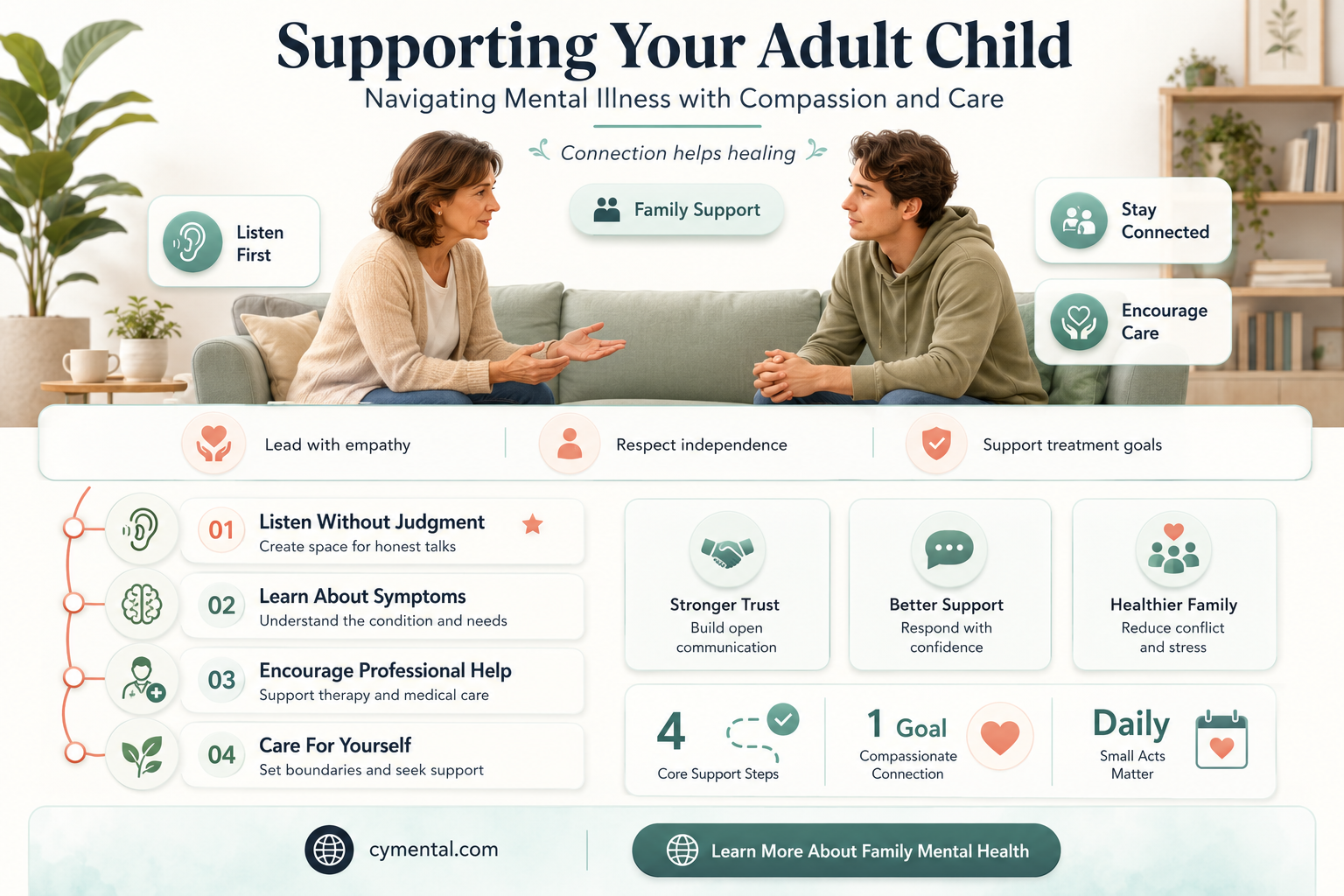
Supporting an adult child with mental illness can be challenging yet profoundly meaningful. As a parent, your role evolves from direct caregiving to offering emotional support, practical assistance, and encouragement for their independence. Start by educating yourself about their specific condition to better understand their experiences and needs. Foster open communication by creating a non-judgmental space where they feel safe to share their struggles. Encourage professional help, such as therapy or medication, while respecting their autonomy in decision-making. Help them build coping skills and routines, but also empower them to take responsibility for their own well-being. Finally, prioritize self-care to avoid burnout, as your emotional resilience is crucial for both you and your child’s long-term health.
Explore related products


What You'll Learn
- Educate Yourself: Learn about their diagnosis, symptoms, and effective coping strategies to better understand their experience
- Encourage Treatment: Support therapy, medication, and professional care while respecting their autonomy and decisions
- Set Boundaries: Establish clear, healthy limits to protect your well-being while offering consistent support
- Promote Independence: Help them build life skills and confidence without enabling dependency or over-involvement
- Practice Self-Care: Prioritize your mental health to avoid burnout and maintain your ability to support them

Educate Yourself: Learn about their diagnosis, symptoms, and effective coping strategies to better understand their experience
Understanding your adult child's mental illness begins with a deep dive into their specific diagnosis. Mental health conditions are as diverse as they are complex, each with its own set of symptoms, triggers, and treatment pathways. For instance, schizophrenia often manifests in early adulthood, with symptoms like hallucinations and disorganized thinking, while bipolar disorder typically emerges in late adolescence or early adulthood, characterized by extreme mood swings. Knowing the nuances of their condition is the first step toward meaningful support. This isn’t about becoming an expert overnight but about building a foundation of knowledge that fosters empathy and informed decision-making.
Once you grasp the diagnosis, focus on recognizing the symptoms your child experiences. Mental illnesses often present differently from person to person, and what you read in textbooks may not fully capture their lived reality. For example, depression in adults can manifest as irritability rather than sadness, or anxiety might show up as physical symptoms like headaches or insomnia. Keep an open dialogue with your child to understand their unique symptoms, and observe patterns over time. This awareness allows you to respond appropriately, whether it’s offering a quiet space during a panic attack or encouraging them to engage in activities that lift their mood.
Equally important is learning effective coping strategies tailored to their condition. For instance, if your child has PTSD, grounding techniques like the 5-4-3-2-1 method (naming five things you see, four you can touch, etc.) can help during flashbacks. For someone with OCD, exposure and response prevention (ERP) therapy, often guided by a professional, can be transformative. As a parent, you can support these strategies by creating a low-stress environment or gently reminding them of tools they’ve learned in therapy. However, avoid forcing techniques—what works for one person may not work for another, and respect for their autonomy is key.
A cautionary note: while educating yourself is crucial, be mindful of the sources you rely on. Not all information online is evidence-based, and misinformation can lead to misguided actions. Stick to reputable sources like the National Alliance on Mental Illness (NAMI), the American Psychiatric Association, or peer-reviewed studies. Additionally, avoid self-diagnosing or second-guessing their treatment plan—your role is to support, not to replace their healthcare team. Finally, remember that education is an ongoing process. Mental health research evolves, and your child’s needs may change over time. Stay curious, stay informed, and let your learning deepen your connection with them.
Nature's Healing Power: Can Outdoor Therapy Ease Mental Illness?
You may want to see also
Explore related products




Encourage Treatment: Support therapy, medication, and professional care while respecting their autonomy and decisions
One of the most effective ways to support an adult child with mental illness is to actively encourage their engagement with professional treatment options. This involves a delicate balance between advocating for their well-being and respecting their independence. Start by expressing your willingness to help them explore therapy, medication, or other evidence-based interventions. For instance, research shows that cognitive-behavioral therapy (CBT) and selective serotonin reuptake inhibitors (SSRIs) are often first-line treatments for depression and anxiety, with SSRIs typically starting at a low dose (e.g., 10–20 mg of fluoxetine daily) and adjusted based on response and side effects. Offering to help schedule appointments or accompany them to their first session can reduce barriers to accessing care.
However, encouragement must be paired with respect for their autonomy. Avoid ultimatums or guilt-tripping, as these can alienate your child and undermine trust. Instead, frame your support as collaborative. For example, you might say, "I’ve noticed you’ve been struggling, and I’d like to help you find a therapist who feels like a good fit. Would that be okay with you?" If they express reluctance, acknowledge their concerns without dismissing them. For instance, if they worry about medication side effects, suggest they discuss these fears with a psychiatrist who can tailor treatment to their needs. Remember, the goal is to empower them to make informed decisions, not to control their choices.
A practical strategy is to educate yourself about their condition and treatment options, but avoid playing the role of an expert. Share resources like reputable websites (e.g., NAMI or the APA) or books written by mental health professionals, but let them take the lead in deciding what feels right for them. If they’re open to medication, offer to help them track symptoms and side effects in a journal, which can provide valuable data for their doctor. For therapy, suggest they try a few sessions before deciding if it’s a good fit, as building rapport with a therapist can take time.
Finally, be patient and consistent in your support. Recovery is rarely linear, and setbacks are common. Celebrate small victories, like attending a therapy session or refilling a prescription, but avoid pressuring them to "get better" on a timeline. Your role is to provide a safety net, not to fix their struggles. By fostering an environment of trust and collaboration, you can help your adult child navigate treatment in a way that honors their autonomy and promotes long-term healing.
Erickson's Theory: A Powerful Tool for Mental Health Recovery
You may want to see also
Explore related products


Set Boundaries: Establish clear, healthy limits to protect your well-being while offering consistent support
Supporting an adult child with mental illness often blurs the line between caregiving and self-sacrifice. Without clear boundaries, you risk burnout, resentment, or enabling behaviors that hinder their growth. Establishing limits isn’t selfish—it’s essential for creating a sustainable support system. For instance, define specific times for emotional check-ins (e.g., 30 minutes daily) to prevent constant availability, which can reinforce dependency. Similarly, avoid financial rescues that shield them from consequences; instead, offer a structured budget plan with clear expectations for their contribution.
Consider the analogy of an airplane oxygen mask: you must secure yours before assisting others. Boundaries act as your mask, ensuring you remain emotionally and physically capable of providing meaningful support. Start by identifying your non-negotiables—areas like sleep, personal time, or financial stability—and communicate them firmly but compassionately. For example, if late-night crisis calls disrupt your sleep, set a boundary: “I’m here for you, but after 9 PM, I’ll respond in the morning unless it’s an emergency.” This clarity prevents guilt while reinforcing your commitment to their well-being.
A common pitfall is confusing boundary-setting with emotional detachment. Healthy limits don’t diminish love; they redefine its expression. For instance, instead of solving their problems, offer tools for self-management. If your child struggles with anxiety, suggest a shared therapy session to learn coping strategies together, then step back to let them practice independently. This approach fosters autonomy while maintaining your role as a supportive guide, not a crutch.
Finally, boundaries require enforcement, which can feel uncomfortable but is crucial for long-term success. If your child repeatedly violates a limit—say, ignoring agreed-upon house rules—follow through with pre-established consequences, such as temporarily withdrawing privileges or seeking external mediation. Consistency builds trust and demonstrates respect for both their needs and yours. Remember, boundaries aren’t walls; they’re frameworks that allow love and support to thrive without suffocating either party.
In practice, boundary-setting is an ongoing dialogue, not a one-time conversation. Regularly reassess what works and adjust as your child’s needs evolve. For example, as they gain stability, you might shift from daily check-ins to weekly touchpoints, signaling confidence in their progress. By prioritizing your well-being and theirs equally, you model a balanced approach to caregiving—one that sustains both of you through the challenges of mental illness.
Supporting Through Crisis: Texting Tips for Mental Breakdown Assistance
You may want to see also
Explore related products


Promote Independence: Help them build life skills and confidence without enabling dependency or over-involvement
Supporting an adult child with mental illness requires a delicate balance between offering assistance and fostering self-reliance. One effective strategy is to break down complex tasks into manageable steps, allowing them to gradually take ownership of their responsibilities. For instance, if your child struggles with managing finances, start by teaching them how to create a simple budget. Begin with categorizing monthly expenses into essentials (rent, utilities) and discretionary spending (entertainment, dining out). Provide a template or app to track spending, and review it together weekly for the first month. As they become more comfortable, reduce your involvement, letting them handle the process independently while remaining available for guidance.
A common pitfall is over-involvement, which can inadvertently reinforce dependency. To avoid this, set clear boundaries and encourage problem-solving. For example, if your child faces a challenge at work, resist the urge to intervene directly. Instead, ask open-ended questions like, "What do you think might help resolve this situation?" or "What steps have you considered taking?" This approach not only empowers them to think critically but also builds confidence in their ability to navigate difficulties. Remember, the goal is to equip them with tools, not to solve problems for them.
Comparing this process to learning to ride a bike can be illuminating. Initially, training wheels provide stability, much like your active support during the early stages of skill-building. Over time, the training wheels come off, and your role shifts to one of encouragement from the sidelines. Similarly, as your child masters a skill, gradually reduce your assistance, allowing them to experience both success and failure—essential components of growth. For instance, if they’re learning to cook, start with simple recipes and let them handle grocery shopping independently after a few supervised attempts.
Practical tips can further enhance this process. Establish a routine for practicing new skills, such as dedicating 30 minutes daily to organizational tasks or financial planning. Use positive reinforcement to acknowledge progress, but avoid excessive praise, which can sometimes undermine intrinsic motivation. Additionally, consider involving professionals, such as occupational therapists or life coaches, who specialize in teaching life skills to adults with mental health challenges. These experts can provide structured programs tailored to your child’s needs, ensuring consistent progress without over-reliance on familial support.
Ultimately, promoting independence is about nurturing resilience and self-efficacy. It requires patience, consistency, and a willingness to let go incrementally. By focusing on skill-building, setting boundaries, and providing measured support, you can help your adult child develop the confidence to manage their life effectively, even in the face of mental health challenges. The key is to strike a balance between being a safety net and allowing them to spread their wings.
Family Therapy: A Powerful Tool for Healing Mental Illnesses
You may want to see also
Explore related products





Practice Self-Care: Prioritize your mental health to avoid burnout and maintain your ability to support them
Supporting an adult child with mental illness can be emotionally taxing, often blurring the lines between caregiving and personal well-being. While your instinct may be to pour all your energy into their recovery, neglecting your own mental health can lead to burnout, diminishing your ability to provide effective support. Prioritizing self-care isn’t selfish—it’s essential. Think of it as securing your own oxygen mask before assisting others on a plane. Without it, both you and your child risk suffering the consequences.
Start by carving out dedicated time for yourself, even if it’s just 15–30 minutes daily. Engage in activities that recharge you, whether it’s meditation, exercise, reading, or a hobby. For instance, mindfulness practices like deep breathing exercises or guided meditation apps (e.g., Headspace or Calm) can reduce stress and improve emotional resilience. Physical activity, such as a 20-minute walk or yoga session, releases endorphins, which combat anxiety and depression. Consistency is key—schedule these activities as non-negotiables in your routine, just as you would a doctor’s appointment.
Boundaries are another critical aspect of self-care. While it’s natural to want to be available 24/7, this can lead to emotional exhaustion. Establish clear limits on when and how you’ll engage with your child’s struggles. For example, designate specific times for discussions about their mental health and communicate that other times are reserved for your own needs. This doesn’t mean you’re withdrawing support; rather, it ensures you remain a stable, reliable presence rather than a depleted one.
Seeking your own support system is equally vital. Join a caregiver support group, either in-person or online, to connect with others who understand your challenges. Therapy can also provide a safe space to process your emotions and develop coping strategies. If time or cost is a barrier, consider apps like BetterHelp or Talkspace for accessible mental health resources. Remember, you’re not alone, and asking for help is a sign of strength, not weakness.
Finally, monitor your physical health, as it’s intrinsically linked to mental well-being. Ensure you’re getting 7–9 hours of sleep per night, eating balanced meals, and staying hydrated. Avoid self-medicating with alcohol or caffeine, as these can exacerbate stress and fatigue. Small, consistent efforts in these areas will fortify your resilience, enabling you to support your child from a place of strength rather than depletion. Self-care isn’t a luxury—it’s the foundation of sustainable caregiving.
Black Music's Healing Power: Boosting Mental Health and Well-being
You may want to see also
Frequently asked questions
Approach the conversation with empathy and understanding, expressing concern without judgment. Offer to help them find a therapist or psychiatrist, and emphasize that seeking help is a sign of strength. Be patient, as it may take time for them to feel ready.
Set clear boundaries and encourage independence while offering emotional support. Focus on empowering them to manage their own care, such as attending appointments or taking medication, rather than taking over responsibilities for them.
Prioritize self-care by seeking support from friends, family, or a therapist. Join a support group for caregivers, maintain your own hobbies and interests, and ensure you have time to rest and recharge.
Avoid forcing the issue, as this can create resistance. Instead, let them know you’re there to support them when they’re ready. Focus on building trust and maintaining a positive relationship, and consider seeking guidance from a mental health professional on how to approach the situation.