Madison Cole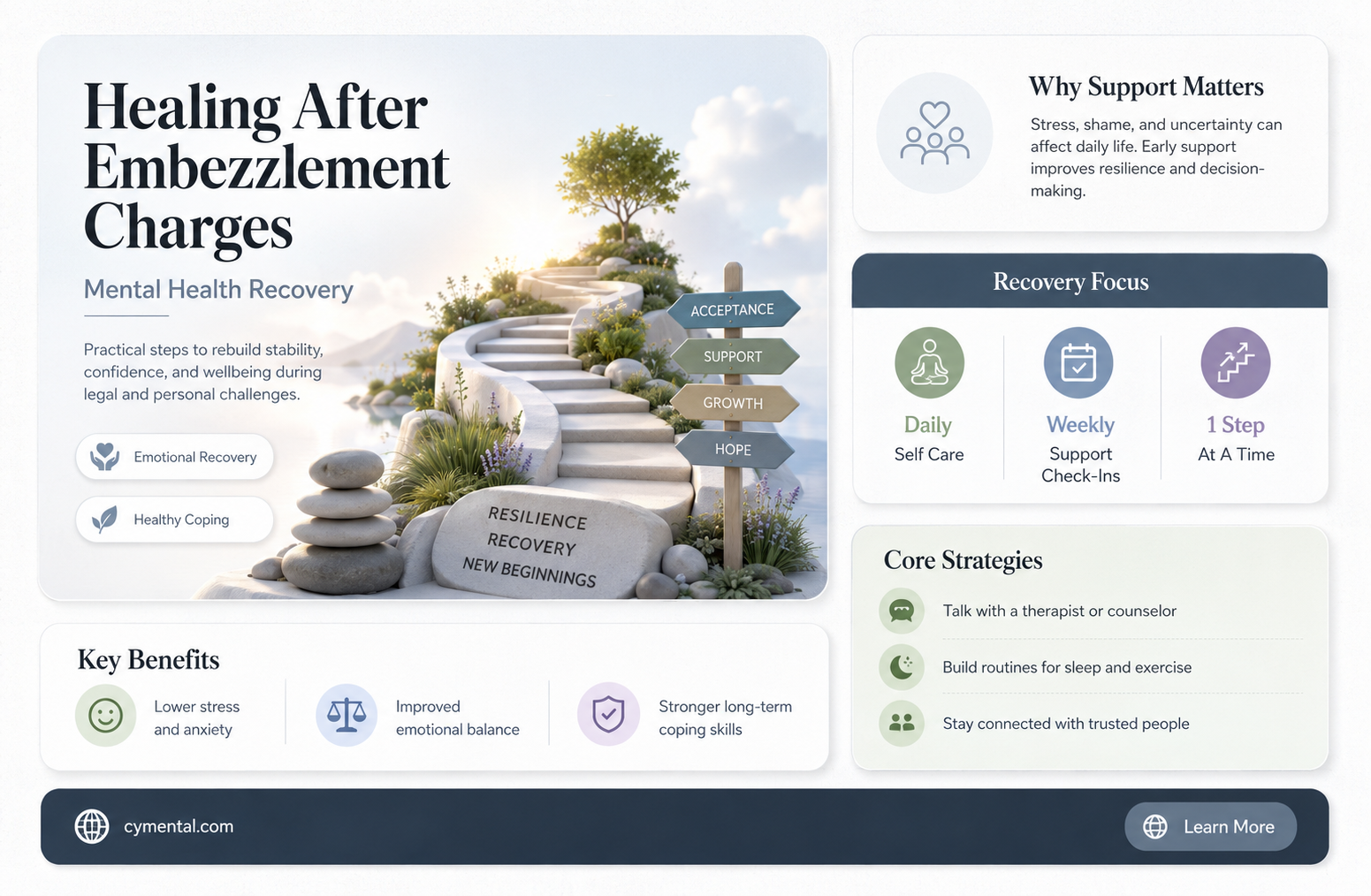
Facing embezzlement charges can be an overwhelming and traumatic experience, often leading to significant mental and emotional distress. The stigma, legal consequences, and personal guilt associated with such allegations can trigger anxiety, depression, and feelings of isolation. Seeking professional mental health support, such as therapy or counseling, is crucial to navigate these challenges. Additionally, leaning on a trusted support network of friends, family, or support groups can provide comfort and perspective. Addressing the emotional fallout openly and honestly, while also focusing on self-care and rebuilding self-worth, is essential for healing and moving forward.
Explore related products


What You'll Learn
- Seeking Therapy: Find a therapist specializing in trauma and legal stress for emotional support
- Legal Support: Hire an attorney to navigate charges and reduce anxiety about the process
- Self-Care Practices: Prioritize sleep, exercise, and mindfulness to manage stress and improve mental health
- Support Networks: Lean on trusted friends, family, or support groups for encouragement and understanding
- Rebuilding Identity: Focus on personal growth and new goals to regain self-worth and purpose

Seeking Therapy: Find a therapist specializing in trauma and legal stress for emotional support
Facing embezzlement charges can unleash a torrent of emotions: shame, anxiety, fear, and even despair. The legal process itself is a crucible, amplifying stress and leaving you feeling isolated. While navigating the legal system is crucial, prioritizing your mental health is equally vital. This is where therapy, specifically with a professional specializing in trauma and legal stress, becomes a lifeline.
Imagine carrying a heavy backpack filled with guilt, worry, and uncertainty. A therapist specializing in this area acts as a skilled guide, helping you unpack that backpack, examine its contents, and learn to carry it with greater ease. They understand the unique psychological toll of legal battles, the stigma associated with financial crimes, and the complex emotions that arise from facing potential consequences.
Finding the right therapist is key. Look for someone with experience in trauma-informed care, familiar with the legal system, and adept at addressing issues like shame, anxiety, and rebuilding self-worth. Consider therapists who utilize evidence-based approaches like Cognitive Behavioral Therapy (CBT) to challenge negative thought patterns, or Eye Movement Desensitization and Reprocessing (EMDR) to process traumatic memories associated with the charges. Don't be afraid to interview several therapists before finding the one who feels like a good fit – someone you feel comfortable opening up to and who inspires trust.
Regular sessions, typically weekly or biweekly, provide a safe and confidential space to process your emotions, develop coping mechanisms, and rebuild a sense of control. Therapy won't erase the charges, but it can equip you with the tools to navigate this challenging time with greater resilience and emotional clarity. Remember, seeking help is a sign of strength, not weakness. It's an investment in your well-being during a period that demands it most.
Iowa Mental Health Laws: Can You Force Someone to Get Help?
You may want to see also
Explore related products




Legal Support: Hire an attorney to navigate charges and reduce anxiety about the process
Facing embezzlement charges can feel like being thrust into a labyrinth, with legal complexities and uncertainties looming at every turn. Hiring an attorney isn’t just a procedural step—it’s a lifeline. A skilled lawyer acts as your guide, deciphering the legal jargon, outlining potential outcomes, and crafting a strategy tailored to your case. This clarity alone can significantly reduce the overwhelming anxiety that accompanies such charges, replacing it with a sense of control and direction.
Consider the process as a high-stakes game where the rules are written in a language you don’t fully understand. An attorney translates those rules, ensuring you know what’s at stake and how to play your hand. For instance, they can negotiate plea deals, challenge evidence, or highlight mitigating circumstances that might reduce penalties. Their expertise isn’t just about avoiding the worst-case scenario—it’s about navigating the system efficiently, minimizing stress, and focusing on what’s within your power to influence.
However, not all attorneys are created equal. When selecting one, prioritize experience in white-collar crime and a track record of handling embezzlement cases. During consultations, ask specific questions: *How many embezzlement cases have you handled? What outcomes did you achieve? How will you communicate updates throughout the process?* Transparency and trust are critical, as your attorney will be your primary advocate and confidant during this challenging time.
Beyond legal strategy, a good attorney also serves as a buffer between you and the emotional toll of the process. They handle court filings, deadlines, and interactions with prosecutors, freeing you to focus on mental and emotional recovery. This division of labor is practical—while they manage the legal front, you can invest in therapy, support groups, or self-care practices to rebuild your mental resilience.
Finally, hiring an attorney is an investment in both your legal and mental well-being. While the cost may seem daunting, consider it a trade-off: paying for expertise now can prevent long-term financial, emotional, and reputational damage later. Think of it as hiring a mental health safeguard, ensuring you’re not facing the system—or its psychological weight—alone. With the right legal support, you’re not just defending a case; you’re reclaiming your peace of mind.
School Shooters and Mental Health: Addressing the Crisis and Seeking Solutions
You may want to see also
Explore related products


Self-Care Practices: Prioritize sleep, exercise, and mindfulness to manage stress and improve mental health
Facing embezzlement charges can upend your life, leaving you grappling with stress, anxiety, and a sense of isolation. Amidst legal battles and public scrutiny, your mental health often takes a backseat. Yet, neglecting it can exacerbate the emotional toll. Self-care isn’t a luxury in this context—it’s a necessity. Prioritizing sleep, exercise, and mindfulness can serve as a foundation to rebuild your mental resilience and navigate this challenging period with greater clarity and stability.
Sleep is your brain’s reset button, yet stress often disrupts it. Aim for 7–9 hours of uninterrupted sleep nightly, as this is the window when the brain consolidates memories, regulates emotions, and repairs itself. To improve sleep quality, establish a bedtime routine: dim lights an hour before bed, avoid screens, and incorporate calming activities like reading or gentle stretching. If racing thoughts keep you awake, try journaling to offload worries before sleep. For persistent insomnia, consult a healthcare provider; short-term sleep aids may be necessary, but always under professional guidance.
Exercise isn’t just about physical health—it’s a potent stress reliever. Studies show that 30 minutes of moderate-intensity exercise, such as brisk walking or cycling, five days a week, can reduce anxiety and depression symptoms. Endorphins released during physical activity act as natural mood lifters. If structured workouts feel daunting, start small: take a 10-minute walk daily, gradually increasing duration. Incorporate strength training twice a week to boost serotonin levels, which play a key role in mood regulation. Remember, consistency matters more than intensity.
Mindfulness practices, like meditation and deep breathing, anchor you in the present, breaking the cycle of rumination. Dedicate 10–15 minutes daily to mindfulness meditation, focusing on your breath. Apps like Headspace or Calm offer guided sessions tailored to stress reduction. For immediate relief, practice the 4-7-8 breathing technique: inhale for 4 seconds, hold for 7, exhale for 8. This activates the parasympathetic nervous system, calming the body’s stress response. Over time, mindfulness rewires the brain, fostering emotional resilience and reducing reactivity to stressors.
Integrating these practices requires intentionality. Start by scheduling them into your day as non-negotiables, just like legal appointments. Track progress in a journal to stay motivated and adjust as needed. While self-care alone won’t resolve legal challenges, it equips you with the mental fortitude to face them. By nurturing your body and mind, you reclaim a sense of control, proving that even in the aftermath of embezzlement charges, healing and stability are within reach.
Can Faith and Divine Intervention Aid Mental Health Struggles?
You may want to see also
Explore related products


$12.14 $19.99




Support Networks: Lean on trusted friends, family, or support groups for encouragement and understanding
Facing embezzlement charges can leave you feeling isolated, ashamed, and overwhelmed. In this storm, your support network becomes your lifeline.
Consider this: humans are inherently social creatures. We thrive on connection, and in times of crisis, those bonds become even more critical. Trusted friends, understanding family members, or specialized support groups can offer a safe space to process emotions, challenge self-judgment, and rebuild a sense of belonging.
Think of it like this: imagine carrying a heavy backpack filled with guilt, fear, and uncertainty. Sharing that weight with others doesn't make it disappear, but it makes the journey more bearable. Their encouragement becomes a map, their understanding a resting place, and their presence a reminder that you're not walking alone.
Building this network requires vulnerability. Be honest about your struggles, even if it feels uncomfortable. Start small – confide in one person you deeply trust. Join a support group specifically for individuals facing legal challenges or white-collar crime. Online forums can offer anonymity and connection, but prioritize in-person interactions whenever possible. The human touch, a listening ear, and a shared laugh hold immense healing power.
Remember, seeking support isn't a sign of weakness; it's a testament to your strength and desire to heal.
Seeking Mental Health Support: Navigating Relationship Challenges with Your Girlfriend
You may want to see also
Explore related products


Rebuilding Identity: Focus on personal growth and new goals to regain self-worth and purpose
Facing embezzlement charges can shatter your sense of self, leaving you grappling with shame, guilt, and a profound loss of identity. Rebuilding who you are requires more than just legal resolution; it demands a deliberate focus on personal growth and the pursuit of new goals to reclaim your self-worth and purpose. This process isn’t about erasing the past but about redefining your future through intentional action and self-compassion.
One powerful starting point is to reframe your narrative. Instead of viewing yourself solely through the lens of your mistakes, acknowledge the lessons learned and the resilience you’ve developed. For instance, journaling can be a transformative tool. Dedicate 15 minutes daily to write about your experiences, focusing on what you’ve gained rather than what you’ve lost. Research shows that expressive writing can reduce stress and foster emotional clarity, helping you process complex emotions and identify areas for growth. Pair this practice with setting small, achievable goals—like volunteering weekly or learning a new skill—to gradually rebuild your sense of accomplishment.
However, personal growth isn’t linear, and setbacks are inevitable. It’s crucial to approach this journey with patience and self-compassion. Cognitive-behavioral techniques, such as challenging negative self-talk, can help you break free from self-defeating patterns. For example, if you find yourself thinking, “I’ll never be trustworthy again,” counter with evidence of your efforts to change, like completing a financial ethics course or rebuilding relationships through transparency. Studies indicate that reframing negative thoughts can significantly improve mental well-being, particularly in individuals recovering from significant life setbacks.
Another key aspect of rebuilding identity is aligning your goals with your values. After embezzlement charges, it’s common to feel disconnected from your former aspirations. Take time to reassess what truly matters to you—whether it’s family, creativity, or community service—and set goals that reflect these priorities. For instance, if you value integrity, commit to becoming a mentor for at-risk youth or join a support group focused on ethical decision-making. By anchoring your goals in your core values, you create a sense of purpose that transcends past mistakes.
Finally, seek accountability and support. Personal growth thrives in community. Consider joining a therapy group or finding an accountability partner who can provide encouragement and constructive feedback. Research highlights that social support is a critical factor in recovery from legal and personal crises. Additionally, celebrate milestones along the way—whether it’s completing a certification or repairing a relationship—to reinforce your progress and sustain motivation. Rebuilding identity is a marathon, not a sprint, but with focus, compassion, and strategic action, you can emerge with a stronger sense of self and a renewed purpose.
Dance Therapy: Unlocking Mental Wellness Through Movement and Expression
You may want to see also
Frequently asked questions
Seek professional help from a therapist or counselor experienced in trauma or legal stress. Establish a routine to regain a sense of control, practice self-compassion, and avoid isolating yourself by connecting with trusted friends or family.
Acknowledge your emotions without judgment and focus on self-forgiveness. Engage in journaling or mindfulness practices to process your feelings, and consider joining a support group for individuals facing similar legal challenges.
Many communities offer free or low-cost counseling services, crisis hotlines, and legal aid organizations that provide emotional support. Online therapy platforms and support groups for individuals facing legal issues can also be helpful.
Set small, achievable goals to rebuild confidence, explore new hobbies or interests, and focus on personal growth. Volunteering or helping others can also restore a sense of purpose and positivity.