Noah Parker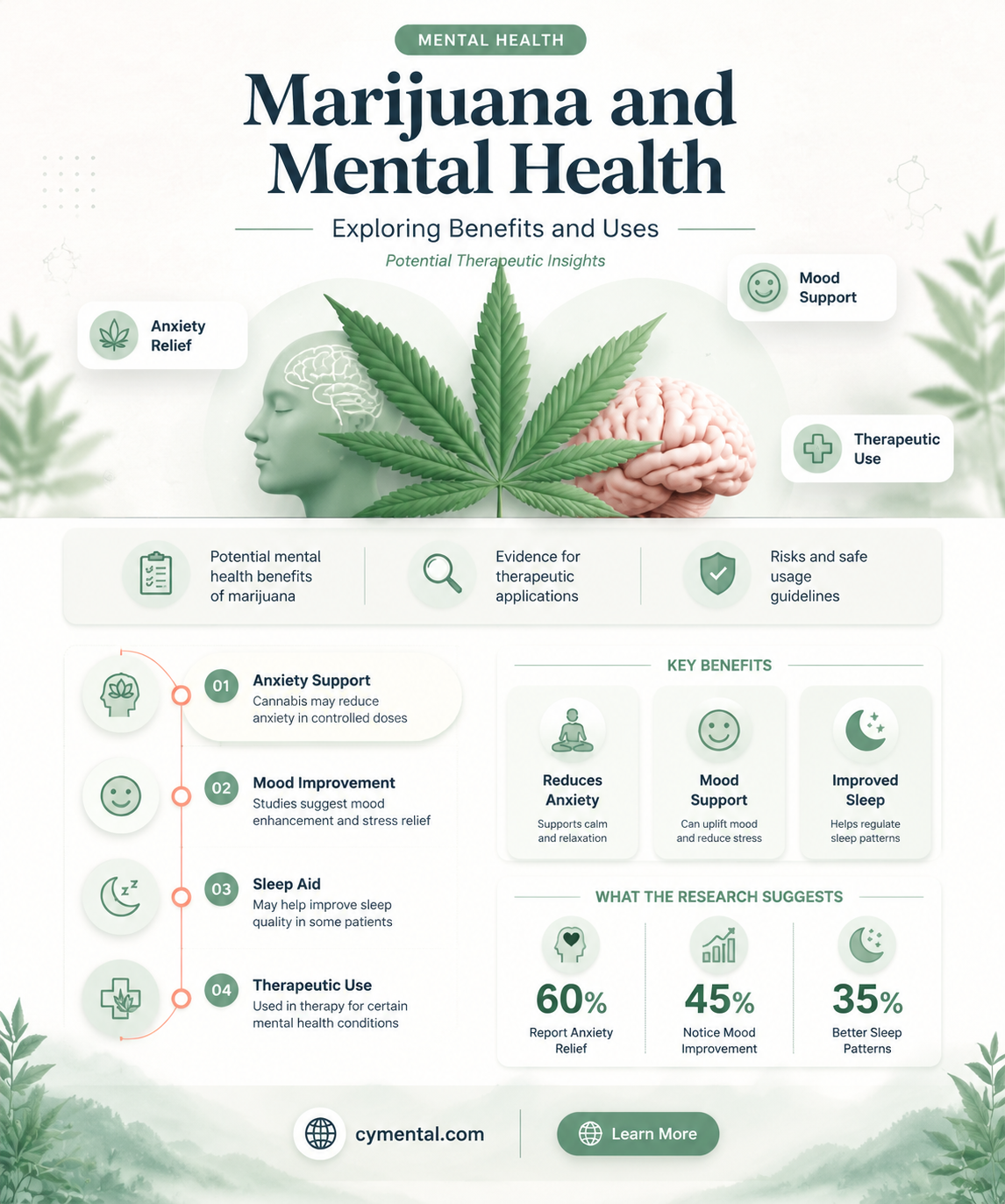
Marijuana has gained significant attention for its potential therapeutic benefits in addressing various mental health conditions. Research suggests that certain compounds in cannabis, such as CBD and THC, may help alleviate symptoms of anxiety, depression, PTSD, and insomnia by interacting with the body’s endocannabinoid system, which regulates mood, stress, and emotional responses. While evidence is still emerging, many users report reduced anxiety, improved sleep, and enhanced emotional well-being when using marijuana responsibly. However, it’s crucial to approach its use cautiously, as individual responses vary, and improper use may exacerbate certain mental health issues. Consulting with a healthcare professional is essential to determine if marijuana could be a suitable option for managing specific mental health challenges.
Explore related products


What You'll Learn
- Reducing Anxiety Symptoms: Marijuana’s cannabinoids may alleviate anxiety by interacting with brain receptors to promote calmness
- Managing PTSD: THC and CBD can reduce flashbacks and improve sleep in PTSD patients
- Alleviating Depression: Some strains may boost mood by regulating serotonin and dopamine levels
- Easing ADHD Symptoms: Marijuana can improve focus and reduce hyperactivity in certain ADHD cases
- Relieving Chronic Stress: Cannabinoids may lower cortisol levels, helping to mitigate stress responses

Reducing Anxiety Symptoms: Marijuana’s cannabinoids may alleviate anxiety by interacting with brain receptors to promote calmness
Marijuana’s cannabinoids, particularly THC and CBD, interact with the brain’s endocannabinoid system, a network of receptors that regulate mood, stress, and fear responses. When these compounds bind to CB1 receptors in the amygdala—the brain’s anxiety hub—they can modulate overactivity, creating a sense of calm. For instance, a 2019 study in *The Permanente Journal* found that 79% of participants experienced reduced anxiety after using CBD-dominant cannabis. However, the effect is dose-dependent: low to moderate THC doses (2.5–7.5 mg) may soothe, while higher doses (>20 mg) can exacerbate anxiety. This highlights the importance of precision in cannabinoid use for anxiety relief.
To harness marijuana’s anxiolytic potential, start with a low dose and titrate gradually. For CBD, 10–30 mg daily is a common starting point, while THC should begin at 2.5–5 mg, especially for novice users. Combine strains with a 1:1 THC-to-CBD ratio to balance psychoactivity and relaxation. For example, ACDC or Harlequin strains are ideal for anxiety due to their high CBD content. Consume via inhalation for immediate effects (onset in 5–15 minutes) or edibles for prolonged relief (onset in 30–90 minutes). Avoid high-THC strains like Sour Diesel, which may trigger paranoia in sensitive individuals.
While marijuana shows promise, it’s not a one-size-fits-all solution. Factors like age, metabolism, and pre-existing conditions influence efficacy. Younger users (under 25) should exercise caution, as the developing brain is more susceptible to THC’s potential negative effects. Additionally, those with a history of psychosis or substance use disorders should consult a healthcare provider before use. Pairing cannabis with mindfulness practices, such as deep breathing or meditation, can enhance its calming effects without relying solely on the substance.
A comparative analysis reveals that marijuana’s anxiety-reducing effects differ from traditional pharmaceuticals like benzodiazepines. While benzodiazepines act quickly, they carry risks of dependence and cognitive impairment. Marijuana, particularly CBD, offers a lower risk profile but requires careful dosing and strain selection. For example, a 2020 study in *Frontiers in Psychiatry* noted that CBD’s anxiolytic effects were comparable to those of 600 mg of pharmaceutical CBD, with fewer side effects. This positions cannabis as a viable alternative for those seeking natural, non-addictive options.
In practice, integrating marijuana into an anxiety management plan involves experimentation and monitoring. Keep a journal to track doses, strains, and effects, noting patterns over time. For instance, a user might find that 10 mg of CBD oil in the morning reduces baseline anxiety, while a 5 mg THC vape pen at night aids relaxation without impairing sleep. Always prioritize quality: choose lab-tested products from reputable dispensaries to avoid contaminants. With informed use, marijuana’s cannabinoids can be a valuable tool in alleviating anxiety symptoms, offering a nuanced approach to mental health care.
Therapy's Transformative Power: How Therapists Support Mental Health Healing
You may want to see also
Explore related products


Managing PTSD: THC and CBD can reduce flashbacks and improve sleep in PTSD patients
Post-traumatic stress disorder (PTSD) often traps individuals in a cycle of reliving traumatic events, disrupting sleep, and impairing daily function. Emerging research suggests that THC and CBD, two primary compounds in marijuana, may offer relief by targeting these core symptoms. THC, known for its psychoactive effects, has been shown to dampen the amygdala’s response to fear, potentially reducing the frequency and intensity of flashbacks. CBD, on the other hand, modulates stress responses and promotes relaxation without intoxication, making it a viable option for those sensitive to THC’s mind-altering properties. Together, these cannabinoids may provide a dual-action approach to managing PTSD symptoms.
Consider a 35-year-old veteran experiencing nightly flashbacks and insomnia. A low-dose THC tincture (2.5–5 mg) taken 30 minutes before bed could help suppress intrusive memories, while a 20–40 mg CBD capsule in the evening might improve sleep quality by reducing anxiety. It’s crucial to start with minimal doses and titrate upward under medical supervision, as individual responses vary. For instance, some patients find that a 1:1 THC-to-CBD ratio in an oil or vape form offers balanced relief without overwhelming psychoactivity. However, those with a history of substance misuse or psychosis should approach THC cautiously, as it can exacerbate these conditions.
The science behind this approach lies in the endocannabinoid system (ECS), which regulates stress, memory, and sleep. PTSD is often associated with ECS dysfunction, particularly in the CB1 receptors that THC activates. By stimulating these receptors, THC may overwrite traumatic memories, a process known as memory reconsolidation. CBD, meanwhile, enhances ECS signaling indirectly, reducing hyperarousal and promoting emotional stability. A 2021 study in the *Journal of Alternative and Complementary Medicine* found that PTSD patients using cannabis reported a 75% reduction in flashbacks and a 40% improvement in sleep within a month.
Practical tips for integrating THC and CBD into a PTSD management plan include keeping a symptom journal to track dosage effectiveness, opting for strains high in myrcene (a terpene with sedative effects), and avoiding high-THC products during the day to prevent daytime impairment. Edibles and tinctures offer longer-lasting effects compared to smoking or vaping, which may be preferable for nighttime use. For those hesitant to try THC, CBD-dominant products like broad-spectrum oils or topicals can still address anxiety and sleep disturbances without psychoactive risks.
While promising, this approach is not without caveats. Long-term cannabis use may lead to tolerance or dependency, and its legal status varies by region. Patients should consult a healthcare provider to ensure it complements existing treatments like therapy or medication. For PTSD sufferers seeking alternative relief, THC and CBD present a compelling option—one that, when used thoughtfully, may restore peace to disrupted lives.
School Psychologists: Essential Mental Health Support in Education
You may want to see also
Explore related products


Alleviating Depression: Some strains may boost mood by regulating serotonin and dopamine levels
Marijuana's potential to alleviate depression hinges on its interaction with the brain's chemical messengers, particularly serotonin and dopamine. These neurotransmitters play a pivotal role in mood regulation, and certain cannabis strains may influence their production and balance. For individuals grappling with depression, this interaction could offer a glimmer of hope, providing a natural alternative or complement to traditional antidepressants.
Consider the case of a 32-year-old woman who, after years of struggling with treatment-resistant depression, found relief through a carefully selected cannabis strain. Her regimen, prescribed by a knowledgeable physician, involved microdosing (2.5–5 mg of THC) in the morning and evening, paired with a CBD-dominant strain to mitigate potential anxiety. This approach, tailored to her specific needs, highlights the importance of precision in cannabis therapy. The strain’s terpene profile, rich in limonene and pinene, likely contributed to its mood-enhancing effects, as these compounds are known to promote serotonin synthesis.
However, not all strains are created equal. High-THC varieties, while potent, can exacerbate anxiety or paranoia in some users, particularly those with a history of mental health issues. For depression, strains with a balanced THC-to-CBD ratio (1:1 or 2:1) are often recommended, as CBD’s anxiolytic properties can counteract THC’s psychoactivity. Strains like Harlequin, ACDC, or Pennywise are popular choices due to their ability to uplift without overwhelming. Dosage is equally critical; starting with 2–5 mg of THC and gradually increasing allows users to gauge their tolerance and response.
The science behind this approach lies in cannabis’s interaction with the endocannabinoid system (ECS), which modulates neurotransmitter release. THC, for instance, can temporarily boost dopamine levels, providing a short-term mood lift, while CBD enhances serotonin receptor signaling by inhibiting its reuptake. This dual action mimics the mechanism of some antidepressants but with a faster onset of effects. However, long-term efficacy and safety require further research, as chronic THC use may downregulate cannabinoid receptors, potentially diminishing its benefits over time.
For those considering this approach, consultation with a healthcare professional is paramount. Factors like age, medical history, and concurrent medications must be evaluated. For instance, individuals under 25, whose brains are still developing, may face heightened risks of cognitive impairment with THC use. Additionally, combining cannabis with SSRIs or MAOIs could lead to serotonin syndrome, a potentially life-threatening condition. Practical tips include keeping a mood journal to track effects, opting for vaporization or sublingual tinctures for precise dosing, and prioritizing strains tested for potency and contaminants. While not a panacea, cannabis, when used thoughtfully, may offer a valuable tool in the battle against depression.
Kombucha and Mental Health: Exploring the Potential Benefits and Science
You may want to see also
Explore related products


Easing ADHD Symptoms: Marijuana can improve focus and reduce hyperactivity in certain ADHD cases
Marijuana’s potential to ease ADHD symptoms hinges on its interaction with the endocannabinoid system, which regulates attention, mood, and impulsivity. For some individuals with ADHD, traditional stimulants like Adderall or Ritalin may cause anxiety, insomnia, or appetite suppression. Here, cannabis emerges as a complementary or alternative option. THC, the psychoactive compound, can enhance focus by increasing dopamine levels in the brain, while CBD, its non-psychoactive counterpart, may reduce hyperactivity and improve emotional regulation. However, the effectiveness varies widely, and not all ADHD cases respond favorably.
Consider a 28-year-old diagnosed with ADHD who finds that microdosing THC (2.5–5 mg) in the morning improves concentration without the jittery side effects of stimulants. Pairing this with a low dose of CBD (10–20 mg) can mitigate potential anxiety from THC while amplifying its calming effects. For younger adults or those new to cannabis, starting with a 1:1 THC-to-CBD ratio product is advisable, as it balances psychoactivity with therapeutic benefits. Always consult a healthcare provider, especially if combining with existing medications.
The science behind this approach is still evolving, but anecdotal evidence and preliminary studies suggest that cannabis can modulate ADHD symptoms by addressing underlying neurotransmitter imbalances. For instance, a 2021 study in the *Journal of Cannabis Research* found that 25% of ADHD patients reported improved concentration and reduced hyperactivity with cannabis use. However, long-term effects remain unclear, and overconsumption of THC can exacerbate symptoms like distractibility or paranoia. Thus, precision in dosing and strain selection is critical.
Practical tips for using marijuana to manage ADHD include choosing sativa-dominant strains like Harlequin or Sour Diesel for daytime focus, while indica-dominant strains like Northern Lights may aid evening relaxation. Edibles or tinctures provide longer-lasting effects compared to smoking, but their onset is slower (30–90 minutes). Keep a symptom journal to track how different doses and strains affect focus, hyperactivity, and mood. Avoid high-THC products if anxiety is a concern, and prioritize lab-tested products to ensure consistency and safety.
In conclusion, while marijuana isn’t a one-size-fits-all solution for ADHD, its tailored use can offer relief for some individuals. The key lies in informed experimentation, professional guidance, and mindful consumption. As research progresses, cannabis may become a more standardized tool in the ADHD management toolkit, but for now, it remains a nuanced and personalized option.
Apple Cider Vinegar and Mental Health: Fact or Fiction?
You may want to see also
Explore related products


Relieving Chronic Stress: Cannabinoids may lower cortisol levels, helping to mitigate stress responses
Chronic stress, often marked by persistently elevated cortisol levels, can wreak havoc on both physical and mental health. Research suggests that cannabinoids, the active compounds in marijuana, may offer a novel approach to managing this pervasive issue. Studies have shown that THC and CBD, two primary cannabinoids, interact with the body’s endocannabinoid system to modulate stress responses. For instance, a 2017 study published in *Drug and Alcohol Dependence* found that low doses of THC (around 7.5 mg) reduced stress in participants, while higher doses (12.5 mg) had the opposite effect, highlighting the importance of precise dosing.
To harness this potential, consider starting with a low dose of THC-dominant products, such as a 5–10 mg edible or a single inhalation from a vaporizer. Pairing THC with CBD can enhance its stress-relieving effects while mitigating anxiety, as CBD has been shown to counteract THC’s psychoactive properties. For example, a 1:1 THC-to-CBD tincture (5 mg of each) taken sublingually may provide balanced relief. Consistency is key; regular, controlled use may help stabilize cortisol levels over time, but avoid daily high-dose consumption, which can lead to tolerance or dependency.
While cannabinoids show promise, they are not a one-size-fits-all solution. Individuals with a history of anxiety disorders or those taking medications that affect cortisol (e.g., corticosteroids) should consult a healthcare provider before use. Additionally, lifestyle factors like exercise, mindfulness, and adequate sleep should complement cannabinoid use for comprehensive stress management. For instance, combining a nightly 10 mg CBD capsule with a 20-minute meditation practice could amplify stress reduction benefits.
The takeaway is clear: cannabinoids, when used thoughtfully and in moderation, may serve as a valuable tool in the fight against chronic stress. By lowering cortisol levels, they address a root cause of stress-related mental health issues, offering a potential alternative or adjunct to traditional therapies. However, success hinges on informed, mindful use—tailoring dosage, delivery method, and frequency to individual needs. As research evolves, this natural approach may become an increasingly mainstream strategy for reclaiming mental well-being.
Organize Your Life: Boost Mental Clarity and Reduce Stress
You may want to see also
Frequently asked questions
Marijuana may provide temporary relief for some individuals with anxiety and depression due to its interaction with the endocannabinoid system, which regulates mood. However, effects vary widely, and long-term use may worsen symptoms in some cases. It’s important to consult a healthcare professional before using marijuana for mental health.
Some studies suggest that marijuana, particularly strains high in CBD, may help alleviate PTSD symptoms like nightmares, hyperarousal, and anxiety. THC, however, can sometimes exacerbate anxiety or paranoia in certain individuals. Research is ongoing, and personalized treatment plans are recommended.
Some users report that marijuana helps improve focus and reduce restlessness associated with ADHD, possibly due to its effects on dopamine levels. However, scientific evidence is limited, and marijuana use may impair cognitive function in some individuals. It should not replace prescribed ADHD medications without medical guidance.