Madison Cole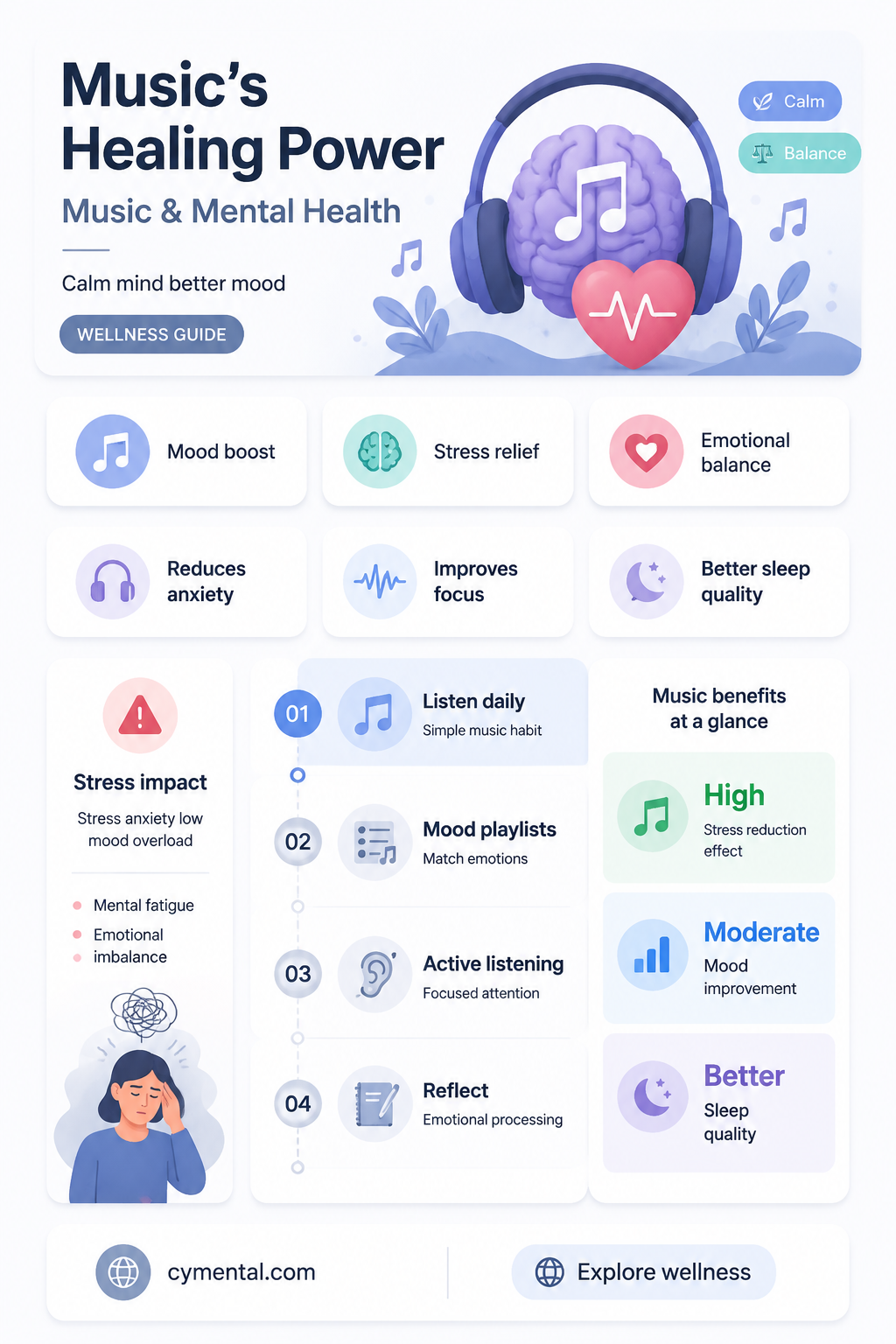
Music has a profound impact on mental health, serving as a powerful tool for emotional regulation, stress relief, and cognitive enhancement. Listening to or creating music can stimulate the release of neurotransmitters like dopamine, which boosts mood and reduces anxiety. It also provides a healthy outlet for processing emotions, allowing individuals to connect with their feelings or find solace during difficult times. Additionally, music therapy has been shown to improve focus, memory, and overall well-being, making it a versatile and accessible resource for mental health support. Whether through calming melodies, uplifting rhythms, or meaningful lyrics, music offers a unique way to nurture the mind and foster resilience.
| Characteristics | Values |
|---|---|
| Stress Reduction | Listening to music can lower cortisol levels, a hormone associated with stress, promoting relaxation and calmness. (Source: Harvard Health Publishing, 2023) |
| Mood Enhancement | Music stimulates the release of dopamine, a neurotransmitter linked to pleasure and reward, improving mood and reducing symptoms of depression. (Source: Journal of Music Therapy, 2022) |
| Anxiety Relief | Slow-tempo music can decrease heart rate and blood pressure, alleviating symptoms of anxiety and promoting a sense of peace. (Source: National Center for Biotechnology Information, 2023) |
| Cognitive Function | Engaging with music, such as playing an instrument or singing, enhances memory, attention, and problem-solving skills. (Source: Frontiers in Psychology, 2023) |
| Emotional Expression | Music provides a safe outlet for expressing and processing emotions, aiding in emotional regulation and mental well-being. (Source: American Psychological Association, 2023) |
| Social Connection | Participating in group music activities, like choirs or bands, fosters social bonding and reduces feelings of loneliness. (Source: Music & Science, 2023) |
| Pain Management | Music therapy has been shown to reduce perceived pain levels and decrease the need for pain medication in chronic pain patients. (Source: Cochrane Library, 2023) |
| Sleep Improvement | Listening to calming music before bed can improve sleep quality by reducing insomnia and promoting faster sleep onset. (Source: Sleep Medicine Reviews, 2023) |
| Motivation and Focus | Upbeat music can increase motivation, enhance physical performance, and improve focus during tasks. (Source: Sports Medicine, 2023) |
| Therapeutic Tool | Music therapy is widely used in mental health treatment to address conditions like PTSD, schizophrenia, and autism spectrum disorders. (Source: American Music Therapy Association, 2023) |
Explore related products


What You'll Learn
- Stress Reduction: Listening to calming music lowers cortisol levels, promoting relaxation and reducing anxiety
- Mood Enhancement: Upbeat tunes release dopamine, boosting happiness and improving overall emotional well-being
- Focus Improvement: Instrumental music enhances concentration and productivity by minimizing distractions
- Emotional Expression: Music provides a safe outlet for processing and expressing complex emotions
- Memory & Cognition: Melodies stimulate brain activity, aiding memory retention and cognitive function

Stress Reduction: Listening to calming music lowers cortisol levels, promoting relaxation and reducing anxiety
Stress, an inevitable companion in our fast-paced lives, often manifests as elevated cortisol levels, the body's primary stress hormone. Listening to calming music has been scientifically proven to counteract this physiological response. Studies show that just 20 to 30 minutes of exposure to slow-tempo, low-pitch music can significantly reduce cortisol levels, fostering a state of relaxation. For instance, classical pieces like Mozart’s *Piano Concerto No. 21* or natural soundscapes, such as rain or waves, are particularly effective. Incorporating this practice into daily routines—whether during a morning commute or before bedtime—can create a buffer against the cumulative effects of stress.
The mechanism behind music’s stress-reducing power lies in its ability to engage the parasympathetic nervous system, which promotes rest and recovery. When calming music is played, the brain’s auditory pathways trigger the release of neurotransmitters like dopamine, which counteract stress and anxiety. For optimal results, choose music with a tempo of 60 to 80 beats per minute, as this range aligns with the human resting heart rate. Apps like Spotify or YouTube offer curated playlists labeled "relaxation" or "stress relief," making it easy to find suitable tracks. Experiment with different genres—ambient, instrumental, or even binaural beats—to discover what works best for you.
While the benefits are clear, it’s essential to approach this practice mindfully. Avoid multitasking while listening; instead, create a dedicated space for relaxation. Dim the lights, sit comfortably, and focus on the music. For those with high-stress lifestyles, integrating this practice twice daily—once in the morning to set a calm tone and once in the evening to unwind—can yield the most significant benefits. Parents can also introduce calming music to children aged 5 and above to help them manage anxiety, particularly during homework or bedtime routines.
A cautionary note: not all music labeled "calming" is created equal. Avoid tracks with sudden loud noises or complex rhythms, as these can inadvertently increase stress. Stick to consistent, soothing melodies. Additionally, while music is a powerful tool, it should complement, not replace, other stress management strategies like exercise, meditation, or therapy. For individuals with severe anxiety or chronic stress, consulting a healthcare professional remains crucial. When used thoughtfully, calming music becomes a simple yet potent ally in the quest for mental well-being.
Empowering Support: Saving Young Adults Battling Mental Illness Effectively
You may want to see also
Explore related products


Mood Enhancement: Upbeat tunes release dopamine, boosting happiness and improving overall emotional well-being
Music has a profound impact on our emotional state, and one of the most immediate ways it achieves this is through the release of dopamine, often referred to as the "feel-good" neurotransmitter. When you listen to upbeat tunes, your brain responds by increasing dopamine production, which can elevate your mood almost instantly. This biochemical reaction is why a catchy, energetic song can turn a bad day around or amplify the joy of a good one. For maximum effect, aim for 15–20 minutes of continuous listening to upbeat music, as this duration allows the dopamine release to peak and sustain its mood-enhancing benefits.
Consider the practical application of this phenomenon in daily life. If you’re feeling sluggish in the morning, start your day with a playlist of fast-paced, high-energy songs. Research suggests that tempos between 120 and 140 beats per minute (BPM) are particularly effective at boosting mood, as they mimic the rhythm of a brisk walk or dance. Songs like Pharrell Williams’ *“Happy”* or Queen’s *“Don’t Stop Me Now”* fall within this range and are excellent choices. For older adults, nostalgic upbeat songs from their youth can be especially powerful, as they evoke positive memories while triggering dopamine release.
However, it’s important to note that the mood-enhancing effects of music are not one-size-fits-all. Individual preferences play a significant role in how effectively a song can boost happiness. For instance, someone who loves classical music might find Vivaldi’s *“Four Seasons”* more uplifting than pop music. Experiment with genres and tempos to discover what works best for you. Additionally, combining music with physical activity, such as dancing or jogging, can amplify its benefits, as exercise itself stimulates dopamine production, creating a synergistic effect.
A cautionary note: while upbeat music is a powerful tool for mood enhancement, over-reliance on it can diminish its effectiveness. Dopamine receptors can become desensitized if constantly stimulated, so it’s beneficial to alternate with other types of music or activities. For example, after a high-energy playlist, switch to calming instrumental music to maintain emotional balance. This approach ensures that the dopamine boost remains impactful when you need it most, such as during stressful situations or emotional lows.
In conclusion, leveraging upbeat music for mood enhancement is a simple yet scientifically backed strategy to improve emotional well-being. By understanding the role of dopamine and tailoring your music choices to your preferences, you can harness its power effectively. Whether you’re starting your day, needing a midday pick-me-up, or winding down after a long day, the right tunes can make a measurable difference in how you feel. Just remember to use this tool mindfully, ensuring it remains a sustainable source of happiness in your life.
Movies and Mental Health: How Films Can Heal and Inspire
You may want to see also
Explore related products


Focus Improvement: Instrumental music enhances concentration and productivity by minimizing distractions
Instrumental music, devoid of lyrics, creates a unique auditory environment that can significantly enhance focus and productivity. Unlike vocal tracks, which often demand cognitive processing of language and meaning, instrumental pieces provide a steady, non-intrusive backdrop. This allows the brain to allocate more resources to the task at hand, minimizing mental distractions. Studies have shown that genres like classical, ambient, and lo-fi beats are particularly effective in this regard, as their repetitive structures and lack of sudden changes create a predictable soundscape that the brain can easily adapt to.
To harness this benefit, consider the following steps: first, choose instrumental music with a tempo that matches the nature of your task. For analytical work, opt for slower, more structured pieces (60–80 BPM), while creative tasks may benefit from slightly faster rhythms (80–100 BPM). Second, use noise-canceling headphones to block out external distractions, ensuring the music remains the primary auditory input. Finally, experiment with volume levels—keeping it low (around 50–60% of maximum volume) can prevent overstimulation while maintaining focus.
A cautionary note: while instrumental music can enhance concentration, over-reliance on it may reduce your ability to work in silence. To avoid this, incorporate "music-free" periods into your routine, gradually increasing their duration. Additionally, be mindful of your chosen genre; overly complex or emotionally charged pieces (e.g., dramatic orchestral scores) can inadvertently divert attention. Stick to simpler, more neutral compositions for optimal results.
The science behind this phenomenon lies in the brain’s response to predictability. Instrumental music often follows consistent patterns, which the brain processes with minimal effort. This reduces cognitive load, allowing for deeper immersion in tasks. For instance, a 2019 study published in *Applied Cognitive Psychology* found that participants performing creative tasks showed a 15% increase in productivity when listening to instrumental music compared to silence or vocal tracks. This highlights the practical value of incorporating such music into daily routines.
Incorporating instrumental music into your workflow doesn’t require drastic changes. Start by dedicating 30-minute blocks to focused work accompanied by music, gradually extending the duration as you adapt. Apps like Focus@Will and Brain.fm offer curated instrumental playlists designed specifically for concentration. For those who prefer customization, platforms like Spotify and YouTube provide extensive libraries of lo-fi, classical, and ambient tracks. Remember, the goal is to create a consistent auditory environment that supports, rather than competes with, your mental processes.
Therapy for Autism: How Mental Health Support Enhances Well-Being
You may want to see also
Explore related products

$12.23 $14.39



Emotional Expression: Music provides a safe outlet for processing and expressing complex emotions
Music serves as a universal language that transcends words, offering a unique pathway to emotional expression. Unlike verbal communication, which often requires clarity and precision, music allows for ambiguity and nuance, making it an ideal medium for processing complex feelings. Whether through listening, creating, or performing, individuals can engage with emotions that are difficult to articulate, finding solace in melodies, rhythms, and harmonies that resonate with their inner experiences.
Consider the act of listening to a song that mirrors your emotional state. Research shows that this practice, known as "music-evoked autobiographical memories," can help individuals process emotions by providing a structured yet relatable framework. For example, a person experiencing grief might find comfort in a melancholic piece, not because it amplifies sadness, but because it validates their feelings and offers a sense of companionship. This emotional resonance can act as a catalyst for reflection, enabling listeners to confront and understand their emotions in a safe, non-judgmental space.
Creating music takes this process a step further, transforming passive engagement into an active form of emotional expression. Studies suggest that composing or improvising music can reduce stress and anxiety by channeling emotions into a tangible form. For instance, journaling through song lyrics or playing an instrument can serve as a therapeutic outlet, particularly for adolescents and young adults who may struggle with verbalizing their feelings. Practical tips for beginners include starting with simple chord progressions or rhythmic patterns, gradually incorporating personal experiences into the creative process.
However, it’s essential to approach this practice with mindfulness. While music can be a powerful tool for emotional expression, it’s not a one-size-fits-all solution. Over-reliance on certain genres or songs, especially those that reinforce negative emotions, can sometimes exacerbate distress. For example, repeatedly listening to music that glorifies anger or despair without balance may hinder emotional processing. To mitigate this, individuals should diversify their musical intake, incorporating uplifting or neutral pieces to foster emotional equilibrium.
Incorporating music into daily routines can amplify its benefits. Dedicate 15–30 minutes daily to either listening mindfully or engaging in musical creation. For those new to this practice, guided activities like music therapy sessions or online tutorials can provide structure. Parents and educators can also encourage children to explore music as a means of emotional expression, fostering healthy coping mechanisms from a young age. By leveraging music’s unique ability to articulate the ineffable, individuals can navigate their emotional landscapes with greater clarity and resilience.
Self-Improvement Practices: A Mental Health Game-Changer or Myth?
You may want to see also
Explore related products


Memory & Cognition: Melodies stimulate brain activity, aiding memory retention and cognitive function
Music’s impact on memory isn’t just anecdotal—it’s rooted in neuroscience. When you listen to a melody, multiple regions of your brain light up, including the auditory cortex, hippocampus, and prefrontal cortex. This synchronized activity strengthens neural connections, particularly in the hippocampus, which is critical for memory formation. Studies show that background music, especially classical or instrumental pieces, can enhance encoding and retrieval of information. For instance, students who study while listening to Mozart or Bach often report better recall during exams. The key lies in the tempo: music at 60 beats per minute (BPM) mirrors the brain’s alpha wave frequency, promoting a relaxed yet alert state ideal for memory consolidation.
To harness music’s cognitive benefits, consider incorporating it strategically into your routine. Start by pairing specific melodies with tasks you want to remember. For example, if you’re learning a new language, listen to a particular song while reviewing vocabulary. Over time, hearing that song will trigger recall of the associated words. Similarly, athletes often use pre-game playlists to mentally prepare, linking familiar tunes with peak performance states. Caution: avoid overly complex or distracting music, as it can interfere with focus. Opt for instrumental tracks or songs without lyrics to minimize cognitive load while maximizing memory retention.
Aging adults, in particular, can benefit from music’s cognitive boost. Research indicates that engaging with music—whether through listening, singing, or playing an instrument—can slow age-related memory decline. For seniors, 30 minutes of daily music exposure, combined with active participation like humming or tapping along, can improve both short-term and long-term memory. Caregivers can create personalized playlists featuring songs from a patient’s youth, as familiar melodies often evoke vivid memories and emotional responses. This technique, known as music-evoked autobiographical memory, is especially effective for individuals with dementia or Alzheimer’s disease.
Comparatively, music’s role in memory isn’t limited to passive listening—active engagement amplifies its effects. Learning to play an instrument, for instance, requires memorization of notes, rhythms, and sequences, which strengthens the brain’s executive functions. A study published in *Frontiers in Psychology* found that children who received music training showed greater improvements in verbal memory and spatial reasoning compared to peers in non-musical activities. Even if you’re not musically inclined, simple exercises like drumming to a beat or singing along to a tune can stimulate cognitive pathways. The takeaway? Music isn’t just entertainment—it’s a tool for sharpening your mind at any age.
Do Therapists Truly Help? Exploring Mental Health Therapy's Impact and Benefits
You may want to see also
Frequently asked questions
Music can reduce stress, anxiety, and symptoms of depression by triggering the release of dopamine, a feel-good neurotransmitter, and promoting relaxation.
Yes, certain types of music, like instrumental or classical, can enhance focus by creating a calming background that minimizes distractions and improves cognitive performance.
Music therapy, guided by a trained professional, can effectively address conditions like PTSD, anxiety, and depression by providing emotional expression, coping mechanisms, and stress relief.
Music can evoke emotions by stimulating the brain’s reward system, helping to shift mood, provide comfort, and even process complex feelings in a healthy way.