Noah Parker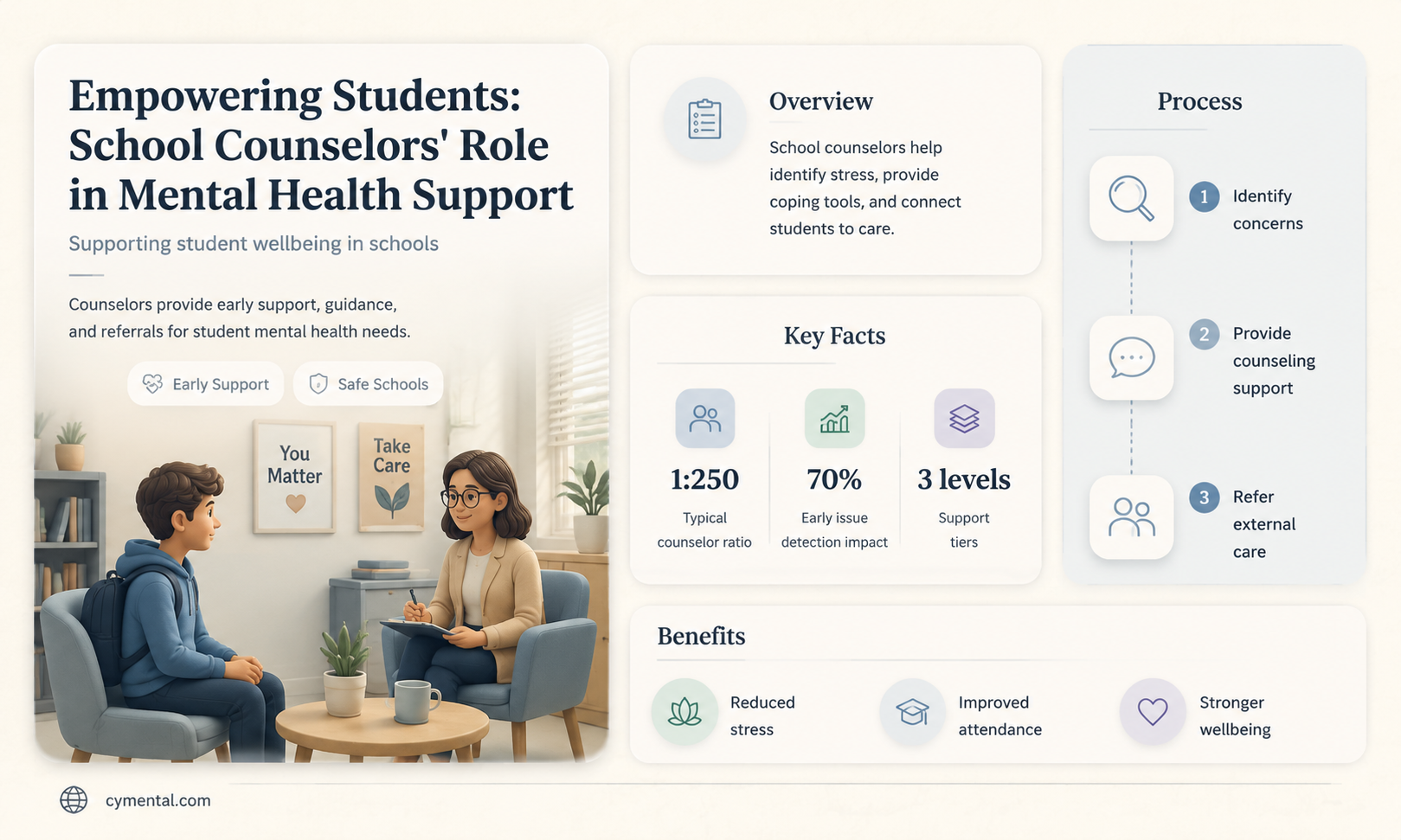
School counselors play a crucial role in supporting students' mental health by providing a safe and confidential environment where students can express their feelings and concerns. They are trained to identify signs of mental health issues, such as anxiety, depression, or stress, and offer evidence-based interventions tailored to individual needs. Through one-on-one counseling sessions, group therapy, and psychoeducational workshops, counselors help students develop coping strategies, build resilience, and improve emotional regulation. They also collaborate with teachers, parents, and external mental health professionals to ensure a holistic support system. By fostering a culture of awareness and empathy, school counselors not only address immediate mental health challenges but also empower students with lifelong skills to navigate future emotional and psychological obstacles.
Explore related products


What You'll Learn
- Early intervention strategies for identifying and addressing student mental health concerns in schools
- Building trust and rapport to create safe spaces for students to share struggles
- Collaborating with teachers, parents, and professionals for comprehensive student support systems
- Teaching coping skills and resilience through individual and group counseling sessions
- Advocating for mental health resources and policy changes within the school environment

Early intervention strategies for identifying and addressing student mental health concerns in schools
School counselors play a pivotal role in identifying and addressing mental health concerns early, often serving as the first line of defense for students in distress. By implementing targeted intervention strategies, they can mitigate the escalation of issues and foster a supportive environment conducive to learning and growth. One effective approach is the integration of universal screenings, which involve periodic assessments of all students to detect early signs of mental health challenges. These screenings can include brief, validated tools such as the Strengths and Difficulties Questionnaire (SDQ) or the Behavioral and Emotional Screening System (BESS), administered annually or biannually to students aged 6–18. Such tools provide counselors with data-driven insights, enabling them to identify at-risk students before symptoms become severe.
Once potential concerns are flagged, counselors must employ evidence-based strategies to address them promptly. Tiered intervention models, such as the Multi-Tiered System of Supports (MTSS), offer a structured framework for this purpose. Tier 1 interventions focus on universal supports, such as classroom-based social-emotional learning (SEL) programs like Second Step or PATHS, which teach students emotional regulation, empathy, and problem-solving skills. For students requiring additional support, Tier 2 interventions, such as small-group counseling sessions or check-ins, can be implemented. These sessions might focus on specific issues like anxiety or peer conflict, with a recommended frequency of 30–45 minutes weekly for 6–8 weeks. For students with more severe needs, Tier 3 interventions, such as individual counseling or referrals to external mental health professionals, are essential.
A critical component of early intervention is fostering a culture of openness and trust within the school community. Counselors can achieve this by training teachers and staff to recognize warning signs, such as sudden changes in behavior, academic decline, or social withdrawal. For instance, a teacher noticing a student consistently avoiding group activities might alert the counselor, who can then initiate a private conversation with the student. Additionally, counselors should establish safe spaces for students to express their feelings, such as open-door policies or anonymous submission boxes for concerns. These measures ensure that students feel heard and supported, reducing the stigma surrounding mental health.
While implementing these strategies, counselors must navigate potential challenges, such as limited resources or resistance from stakeholders. To address resource constraints, counselors can leverage community partnerships with local mental health organizations or utilize telehealth services for remote consultations. Overcoming resistance often requires education and advocacy, such as presenting research on the long-term benefits of early intervention or sharing success stories from other schools. For example, a study by the American School Counselor Association found that schools with robust early intervention programs saw a 25% reduction in disciplinary incidents and a 15% improvement in academic performance among participating students.
In conclusion, early intervention strategies are not just beneficial—they are essential for addressing student mental health concerns effectively. By combining universal screenings, tiered supports, and a proactive school culture, counselors can create a safety net that catches students before they fall. The key lies in consistency, collaboration, and a commitment to prioritizing mental health as a cornerstone of education. With these strategies in place, schools can become environments where students not only learn but also thrive emotionally and socially.
Mental Health Support: A Key to Stable Housing Solutions
You may want to see also
Explore related products


Building trust and rapport to create safe spaces for students to share struggles
Trust is the cornerstone of any effective counseling relationship, especially when addressing mental health issues in students. Without it, even the most well-intentioned interventions fall flat. Building trust requires consistency, empathy, and a genuine commitment to understanding the student’s perspective. For school counselors, this means showing up reliably—whether through scheduled check-ins or informal hallway conversations—and actively listening without judgment. Students need to know that their struggles are met with compassion, not criticism. For example, a counselor who remembers a student’s interest in art and incorporates it into sessions (e.g., using drawing as a therapeutic tool) demonstrates attentiveness and care, fostering a sense of safety.
Creating a safe space goes beyond physical comfort; it involves establishing clear boundaries and confidentiality. Students must understand that their disclosures are protected, with exceptions explained transparently (e.g., mandatory reporting of harm to self or others). A practical tip is to use age-appropriate language: for younger students, explain confidentiality as a "special promise," while for older teens, discuss it as a professional ethic. Additionally, counselors should model vulnerability by sharing appropriate personal anecdotes or admitting when they don’t have all the answers. This humanizes the counselor and encourages students to lower their guard.
One effective strategy for building rapport is to meet students where they are—literally and figuratively. For instance, a counselor might sit on the floor with a middle schooler who feels more comfortable at eye level or engage a high schooler in a conversation about their favorite video game. These small gestures signal respect for the student’s autonomy and interests. Another tactic is to use open-ended questions that invite reflection rather than yes/no responses. For example, instead of asking, "Are you feeling better?" try, "What’s been on your mind lately?" This approach validates the student’s experiences and encourages deeper sharing.
However, building trust isn’t without challenges. Counselors must navigate power dynamics, cultural differences, and students’ past experiences with authority figures. A cautionary note: avoid overpromising or making assumptions about a student’s needs. For instance, a counselor might assume a quiet student is withdrawn, only to discover they prefer journaling to verbal communication. To mitigate this, counselors should regularly check in with students about what’s working and what isn’t, adjusting their approach as needed. Cultural humility—acknowledging one’s limitations and actively learning about a student’s background—is also essential for creating an inclusive safe space.
In conclusion, building trust and rapport is both an art and a science. It requires intentionality, flexibility, and a deep respect for the student’s unique journey. By prioritizing consistency, transparency, and cultural sensitivity, counselors can create environments where students feel seen, heard, and supported. This foundation not only facilitates open dialogue about mental health struggles but also empowers students to take active steps toward healing and growth. After all, a safe space isn’t just a place—it’s a relationship built on trust.
After School Programs: Boosting Mental Health and Well-Being in Youth
You may want to see also
Explore related products



Collaborating with teachers, parents, and professionals for comprehensive student support systems
School counselors are often the first line of defense in identifying and addressing mental health issues among students, but their impact is magnified when they collaborate with teachers, parents, and external professionals. This multi-faceted approach ensures that students receive holistic support tailored to their unique needs. For instance, a counselor might notice a student’s declining academic performance and increased irritability, but without input from teachers and parents, the root cause—such as anxiety or family stress—could remain obscured. By fostering open communication channels, counselors can piece together a comprehensive understanding of the student’s challenges, enabling more effective interventions.
Consider the role of teachers in this collaborative system. Teachers spend significant time with students daily and often observe behavioral changes that counselors might miss. A counselor can train teachers to recognize early warning signs of mental health issues, such as withdrawal, sudden aggression, or persistent sadness. For example, a middle school teacher might report that a student has stopped participating in class discussions and frequently visits the nurse’s office. Armed with this information, the counselor can initiate a private conversation with the student, conduct a mental health screening, and involve parents in the next steps. This proactive approach can prevent minor issues from escalating into crises.
Parents are another critical piece of the puzzle. They provide insights into a student’s home environment, which can significantly influence mental health. Counselors should establish regular check-ins with parents, especially when a student is undergoing counseling or receiving external support. For younger students (ages 6–12), parental involvement is particularly crucial, as children in this age group often struggle to articulate their emotions. Counselors can equip parents with strategies to support their child’s mental health at home, such as creating a structured routine, encouraging open dialogue, and monitoring screen time. For adolescents (ages 13–18), counselors can guide parents on balancing support with autonomy, fostering trust while respecting the teen’s need for independence.
Collaboration with external professionals—such as psychologists, social workers, and pediatricians—further strengthens the support system. Counselors can facilitate referrals to these specialists when a student’s needs exceed the scope of school-based services. For example, a student diagnosed with severe depression might require medication management from a psychiatrist, which a counselor can coordinate alongside ongoing therapy sessions. Additionally, counselors can organize workshops or training sessions for teachers and parents, led by mental health professionals, to enhance their understanding of topics like trauma-informed care or mindfulness techniques.
However, effective collaboration requires careful navigation of potential challenges. Privacy concerns, differing perspectives, and logistical barriers can hinder teamwork. Counselors must adhere to confidentiality guidelines while sharing only necessary information with stakeholders. They should also act as mediators when teachers, parents, or professionals have conflicting views on a student’s needs. For instance, a teacher might advocate for academic accommodations, while a parent may resist labeling their child with a mental health condition. In such cases, counselors can facilitate constructive dialogue, emphasizing shared goals and evidence-based solutions.
In conclusion, collaboration among teachers, parents, and professionals transforms school counselors into orchestrators of a robust support network. By leveraging the unique perspectives and expertise of each stakeholder, counselors can address mental health issues more comprehensively and proactively. This integrated approach not only benefits individual students but also fosters a school culture that prioritizes mental well-being. Practical steps, such as regular communication, targeted training, and strategic referrals, can turn this collaborative vision into a tangible reality.
Organize Your Life: Boost Mental Clarity and Reduce Stress
You may want to see also
Explore related products


Teaching coping skills and resilience through individual and group counseling sessions
School counselors play a pivotal role in equipping students with the tools to navigate life’s challenges, particularly through teaching coping skills and resilience in individual and group counseling sessions. These sessions are not one-size-fits-all; they are tailored to meet the unique needs of students, whether they are dealing with stress, anxiety, grief, or other mental health issues. By fostering a safe and supportive environment, counselors can help students develop strategies to manage their emotions, build resilience, and thrive academically and personally.
In individual counseling sessions, the focus is on personalized guidance. Counselors often use evidence-based techniques such as cognitive-behavioral therapy (CBT) to help students identify negative thought patterns and replace them with healthier ones. For instance, a high school student struggling with test anxiety might learn deep-breathing exercises to calm their nerves before an exam. Counselors may also introduce mindfulness practices, such as guided meditation, to help students stay present and reduce stress. These sessions typically occur weekly for 30 to 50 minutes, depending on the student’s needs, and progress is monitored through regular check-ins and goal-setting.
Group counseling sessions, on the other hand, leverage peer support to teach coping skills and resilience. These sessions often focus on themes like emotional regulation, problem-solving, or social skills. For example, a middle school group might engage in role-playing activities to practice conflict resolution, while a high school group could explore journaling as a way to process emotions. Group sessions usually involve 6 to 10 students and meet weekly for 45 to 60 minutes. The collective nature of these sessions not only normalizes struggles but also allows students to learn from one another’s experiences, fostering a sense of community and shared resilience.
A critical aspect of teaching coping skills is ensuring they are age-appropriate and culturally sensitive. For younger students, counselors might use creative methods like storytelling or art therapy to help them express their feelings. For older students, more structured approaches, such as goal-setting worksheets or stress management apps, can be effective. Counselors must also be mindful of cultural differences in how emotions are expressed and addressed, adapting their strategies to honor each student’s background.
Ultimately, the goal of these counseling sessions is to empower students with lifelong skills. By teaching coping mechanisms and resilience, counselors not only help students manage current challenges but also prepare them to face future obstacles with confidence. Practical tips, such as maintaining a gratitude journal or creating a “coping toolkit” of personalized strategies, can reinforce these skills outside of sessions. With consistent support and practice, students can transform their mental health struggles into opportunities for growth and self-discovery.
Empowering Mental Health: The Role of Social Workers in Healing
You may want to see also
Explore related products


Advocating for mental health resources and policy changes within the school environment
School counselors are uniquely positioned to identify gaps in mental health support within their institutions, making them essential advocates for systemic change. By conducting needs assessments—surveying students, consulting teachers, and analyzing existing resources—counselors can pinpoint deficiencies such as insufficient funding, lack of trained staff, or outdated policies. For instance, a counselor might discover that only 30% of students feel comfortable accessing the school’s mental health services due to stigma or limited availability. Armed with this data, counselors can present compelling evidence to administrators and school boards, framing the issue not just as a health concern but as a barrier to academic success and overall well-being.
Advocacy for policy changes often requires strategic collaboration and communication. Counselors can lead or join committees focused on student wellness, partnering with parents, educators, and community organizations to amplify their message. For example, a counselor might propose amending the school’s disciplinary policies to prioritize restorative practices over punitive measures, reducing the mental health strain on students. When presenting such proposals, counselors should emphasize cost-effective solutions, such as integrating mental health education into the curriculum or training staff in crisis intervention techniques. Highlighting success stories from other schools can also strengthen the case for change, demonstrating tangible benefits like improved attendance rates or decreased behavioral incidents.
One practical step counselors can take is to push for the allocation of dedicated funding for mental health initiatives. This could include hiring additional counselors, purchasing evidence-based screening tools, or subsidizing external therapy services for students in need. For instance, a school might allocate $50,000 annually to partner with local mental health providers, ensuring students receive timely support without financial barriers. Counselors should also advocate for policies that protect student privacy while fostering a culture of openness, such as confidential reporting systems for mental health concerns. By framing these investments as preventative measures, counselors can help administrators see the long-term value in prioritizing mental health.
Finally, counselors must remain vigilant in addressing resistance or inertia within the system. Common obstacles include budget constraints, administrative skepticism, or cultural stigma surrounding mental health. To overcome these, counselors can employ persuasive tactics such as sharing anonymized student testimonials, presenting research on the ROI of mental health interventions, or organizing awareness campaigns to shift school culture. For example, a counselor might launch a “Mental Health Matters” week featuring workshops, guest speakers, and peer-led activities to normalize conversations about emotional well-being. By persistently advocating for resources and policy changes, counselors not only support individual students but also foster a school environment that prioritizes mental health as a cornerstone of education.
Helping Reluctant Loved Ones Access Mental Health Care in Texas
You may want to see also
Frequently asked questions
School counselors can identify students by observing changes in behavior, academic performance, or social interactions. They may also use screenings, teacher referrals, or direct student outreach to assess concerns and offer support.
School counselors provide direct counseling, crisis intervention, and referrals to external resources. They also collaborate with teachers, parents, and mental health professionals to create a supportive environment for students.
School counselors can promote mental health awareness through educational programs, workshops, and open conversations. They model empathy and normalize seeking help, fostering a culture of acceptance and understanding.
School counselors develop individualized plans, teach coping skills, and provide ongoing check-ins. They also coordinate with families and external providers to ensure consistent care and advocate for accommodations as needed.