Harper Lewis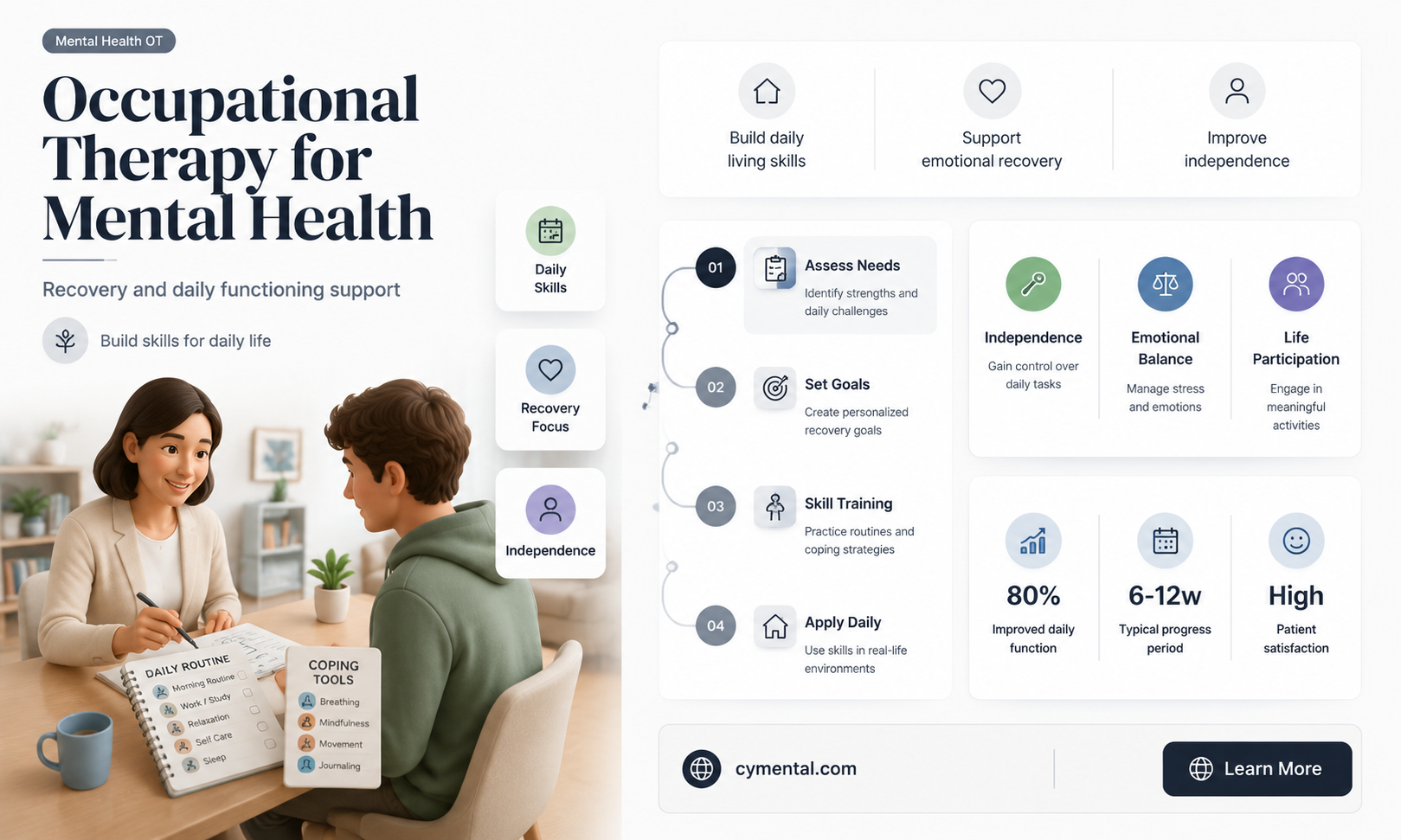
Occupational therapy (OT) plays a vital role in supporting individuals with mental illness by focusing on improving daily functioning and quality of life. Unlike traditional therapies that primarily address symptoms, OT helps individuals engage in meaningful activities, such as work, self-care, and leisure, which are often disrupted by mental health challenges. Through personalized interventions, occupational therapists assist clients in developing coping strategies, managing stress, and building routines that foster independence and resilience. By addressing the practical and emotional barriers to participation, OT empowers individuals to regain control over their lives, enhance social connections, and achieve personal goals, ultimately contributing to long-term mental health recovery.
| Characteristics | Values |
|---|---|
| Improves Daily Functioning | Occupational therapy helps individuals with mental illness develop skills to manage daily tasks like personal care, household chores, and work-related activities, enhancing independence and self-efficacy. |
| Enhances Social Participation | Therapists work on social skills, communication, and community engagement to reduce isolation and improve relationships, fostering a sense of belonging. |
| Promotes Routine and Structure | Establishing consistent routines helps stabilize mood, reduce anxiety, and provide a sense of predictability, which is crucial for mental health recovery. |
| Focuses on Meaningful Activities | Engaging in purposeful activities (e.g., hobbies, volunteering) boosts self-esteem, motivation, and overall well-being. |
| Addresses Sensory Processing | For conditions like autism or PTSD, sensory integration techniques help manage sensory sensitivities, reducing stress and improving focus. |
| Cognitive Rehabilitation | Therapists use strategies to improve memory, problem-solving, and executive functioning, aiding recovery from conditions like schizophrenia or traumatic brain injury. |
| Stress Management | Techniques such as mindfulness, relaxation, and time management are taught to cope with stress and prevent relapse. |
| Vocational Rehabilitation | Occupational therapy assists in job readiness, workplace accommodations, and career exploration, supporting employment and financial stability. |
| Holistic Approach | Considers physical, emotional, and environmental factors to create personalized treatment plans for comprehensive mental health care. |
| Empowers Self-Management | Teaches individuals to recognize triggers, manage symptoms, and use coping strategies, fostering autonomy in mental health management. |
| Supports Transition and Adaptation | Helps individuals navigate life changes (e.g., returning to work, moving) by building resilience and adaptive skills. |
| Collaborates with Multidisciplinary Teams | Works alongside psychologists, psychiatrists, and other professionals to provide integrated care for better outcomes. |
Explore related products


$93.99 $83.99


What You'll Learn
- Improving Daily Functioning: Enhances skills for self-care, work, and leisure activities to boost independence and confidence
- Stress Management Techniques: Teaches coping strategies like mindfulness, relaxation, and time management to reduce anxiety
- Social Skills Development: Focuses on communication, boundaries, and interaction to improve relationships and social engagement
- Routine Building: Establishes structured daily routines to provide stability and reduce symptoms of mental illness
- Sensory Integration: Addresses sensory sensitivities to manage overwhelm and improve emotional regulation

Improving Daily Functioning: Enhances skills for self-care, work, and leisure activities to boost independence and confidence
Occupational therapy (OT) is uniquely positioned to address the daily functioning challenges that often accompany mental illness. Unlike traditional talk therapy, OT focuses on actionable, goal-oriented strategies to rebuild skills in self-care, work, and leisure. For instance, a person with depression might struggle with basic hygiene or meal preparation. An occupational therapist would break these tasks into manageable steps, such as setting a timer for 5 minutes of showering or pre-planning simple, nutritious meals. This structured approach not only restores independence but also fosters a sense of accomplishment, counteracting the helplessness often felt in mental health struggles.
Consider the workplace, where mental illness can disrupt concentration, time management, and social interactions. OT practitioners employ task analysis to identify specific barriers—like difficulty prioritizing emails or anxiety during meetings—and then introduce adaptive strategies. For example, a client might learn to use color-coded calendars for task organization or practice grounding techniques to manage anxiety in real-time. A 2019 study in the *Journal of Occupational Therapy, Mental Health, and Well-Being* found that such interventions increased work retention rates by 30% among participants with anxiety disorders. These methods not only improve job performance but also rebuild confidence in professional settings.
Leisure activities, often overlooked in mental health treatment, are critical for emotional regulation and identity. OT encourages engagement in meaningful hobbies, tailored to individual interests and energy levels. For a young adult with schizophrenia who feels isolated, an OT might suggest joining a local art class or gardening group, starting with 30-minute sessions to avoid overwhelm. Over time, these activities provide structure, social connection, and a sense of purpose. Research in *The American Journal of Occupational Therapy* highlights that consistent participation in leisure activities reduces symptoms of depression by 25% in adults aged 18–45.
However, success in OT depends on collaboration and realistic goal-setting. Therapists must assess clients’ current abilities without judgment, ensuring goals are specific, measurable, and achievable. For instance, instead of “improve social skills,” a goal might be “attend one community event per week for 4 weeks.” Clients should also be taught to track progress, using journals or apps to log completed tasks and emotional responses. This data-driven approach not only motivates but also allows for adjustments as needed.
In practice, integrating OT into mental health care requires interdisciplinary coordination. Psychiatrists, psychologists, and OTs must communicate regularly to align treatment plans. For example, if medication side effects impact motor skills, the OT can modify self-care routines accordingly. Families and caregivers can support this process by reinforcing OT strategies at home, such as using visual schedules for children with ADHD or creating calm spaces for individuals with PTSD. By addressing daily functioning holistically, occupational therapy becomes a powerful tool for reclaiming autonomy and rebuilding lives disrupted by mental illness.
VA Hospital Mental Health Support: Effective Care for Veterans' Well-being?
You may want to see also
Explore related products


Stress Management Techniques: Teaches coping strategies like mindfulness, relaxation, and time management to reduce anxiety
Stress is an inevitable part of life, but chronic stress can exacerbate mental health conditions like anxiety, depression, and burnout. Occupational therapy (OT) steps in as a practical ally, offering stress management techniques that go beyond temporary relief. By teaching coping strategies such as mindfulness, relaxation, and time management, OT empowers individuals to regain control over their mental well-being. These techniques are not one-size-fits-all; they are tailored to each person’s unique needs, lifestyle, and challenges, ensuring sustainable results.
Consider mindfulness, a cornerstone of stress reduction in OT. Unlike passive activities like scrolling through social media, mindfulness actively engages the mind in the present moment. Techniques like deep breathing exercises, body scans, or guided meditation can be practiced for as little as 5–10 minutes daily. For instance, a 2019 study published in *JAMA Internal Medicine* found that mindfulness meditation significantly reduced anxiety symptoms in adults when practiced consistently. OT practitioners often integrate these practices into daily routines, such as mindful eating during meals or mindful walking during breaks, making them accessible and habitual.
Relaxation techniques, another OT staple, target the physical symptoms of stress, such as muscle tension and elevated heart rate. Progressive muscle relaxation (PMR) is a popular method where individuals tense and then release different muscle groups in sequence, often paired with deep breathing. For example, a person might start by clenching their fists for 5 seconds, then releasing them while exhaling slowly. This practice, when done for 15–20 minutes daily, can reduce overall stress levels and improve sleep quality. OT therapists may also introduce sensory-based relaxation tools, like weighted blankets or aromatherapy, to enhance the calming effect.
Time management, often overlooked in stress management, is a critical skill OT addresses. Poor time management can lead to feelings of overwhelm and procrastination, fueling anxiety. OT practitioners teach strategies like the Pomodoro Technique, which involves working in focused 25-minute intervals followed by 5-minute breaks. For individuals with ADHD or executive functioning challenges, OT might introduce visual schedules or task prioritization tools to break down overwhelming responsibilities into manageable steps. By structuring time effectively, individuals can reduce stress and increase productivity without burnout.
The beauty of these OT-driven techniques lies in their adaptability. A teenager struggling with exam anxiety might benefit from mindfulness apps like Headspace, while a working parent could find relief in time-blocking their calendar to balance work and family demands. The key is consistency and personalization. OT therapists work collaboratively with clients to identify stressors, experiment with techniques, and track progress, ensuring the strategies become second nature. By embedding these practices into daily life, individuals not only manage stress but also build resilience against future challenges.
Accepting Compliments: A Simple Tool for Mental Health Recovery
You may want to see also
Explore related products


Social Skills Development: Focuses on communication, boundaries, and interaction to improve relationships and social engagement
Social interactions are often a minefield for individuals with mental health challenges, where missteps can lead to isolation or conflict. Occupational therapy steps in as a practical guide, offering structured strategies to navigate this terrain. Through role-playing scenarios, therapists simulate real-life situations—like declining an invitation or asserting personal limits—allowing clients to practice responses in a safe environment. For instance, a therapist might act as a coworker overstepping boundaries, prompting the client to rehearse firm yet respectful replies such as, "I appreciate your input, but I’d prefer to handle this on my own." These exercises build confidence and muscle memory for handling similar situations outside therapy.
Communication breakdowns often stem from unspoken rules of social engagement, which can feel intuitive to some but perplexing to others. Occupational therapists break these rules into digestible components, teaching clients how to interpret body language, tone, and context. For example, a therapist might use video clips to analyze facial expressions during a conversation, pausing to discuss what a furrowed brow or crossed arms might signify. This analytical approach demystifies social cues, empowering clients to respond appropriately rather than feeling overwhelmed or misjudging intentions. Such exercises are particularly beneficial for individuals with conditions like autism or social anxiety, where subtleties in interaction can be easily missed.
Boundaries are the scaffolding of healthy relationships, yet many struggle to establish or maintain them, especially when mental health issues cloud judgment. Occupational therapy employs concrete tools to address this, such as creating visual boundary maps that categorize interactions as "open," "limited," or "private." Clients might label topics like personal finances as private, while marking casual hobbies as open for discussion. This exercise not only clarifies personal limits but also provides a reference point during moments of uncertainty. Therapists may also assign homework, such as practicing saying "no" to one request per week, to reinforce boundary-setting in real-time scenarios.
The ultimate goal of social skills development in occupational therapy is not just to improve interactions but to foster meaningful, sustainable relationships. Therapists often incorporate group activities—like board games or collaborative art projects—to encourage teamwork and communication in a low-stakes setting. For instance, during a group session, participants might be tasked with planning a mock event, requiring negotiation, compromise, and shared decision-making. These activities highlight the value of diverse perspectives and the importance of active listening. By gradually increasing the complexity of these tasks, therapists help clients build resilience and adaptability, skills that translate into richer, more fulfilling social lives beyond the therapy room.
Showering for Mental Health: How Daily Rinses Boost Well-Being
You may want to see also
Explore related products




Routine Building: Establishes structured daily routines to provide stability and reduce symptoms of mental illness
Structured daily routines are a cornerstone of occupational therapy for mental health, offering a predictable framework that can significantly reduce anxiety and improve emotional regulation. For individuals with conditions like depression, anxiety, or bipolar disorder, the unpredictability of daily life can exacerbate symptoms. A routine acts as a psychological anchor, providing a sense of control and reducing the mental burden of decision-making. For example, a morning routine that includes waking up at the same time, followed by light exercise and a healthy breakfast, can set a positive tone for the day. Research shows that consistency in daily activities can lower cortisol levels, the hormone associated with stress, by up to 20%.
Building a routine requires intentionality and personalization. Start by identifying key areas of daily life that need structure, such as sleep, meals, work or study, and leisure. For instance, a person with insomnia might benefit from a bedtime routine that includes dimming lights, reading, and avoiding screens an hour before sleep. Occupational therapists often recommend breaking routines into manageable chunks, like 30-minute blocks, to avoid overwhelm. For children and adolescents, visual aids like charts or timers can make routines more engaging and easier to follow. The goal is not rigidity but consistency, allowing for flexibility when needed without derailing progress.
One of the most impactful aspects of routine building is its ability to re-engage individuals in meaningful activities, a core principle of occupational therapy. For someone experiencing depression, even small tasks like showering or cooking a meal can feel insurmountable. A structured routine can reintroduce these activities gradually, fostering a sense of accomplishment. For example, a routine might include setting aside 15 minutes daily for a hobby or creative outlet, which has been shown to improve mood and reduce symptoms of depression. Over time, these activities become habits, reinforcing a sense of purpose and self-efficacy.
However, routine building is not without challenges. Resistance to change, fatigue, or external disruptions can hinder progress. Occupational therapists often employ motivational interviewing techniques to address these barriers, helping clients identify their values and align routines with personal goals. For instance, a client who values family time might prioritize a nightly dinner routine, even if it means adjusting other activities. Additionally, technology can be a useful tool; apps like Habitica gamify routine building, making it more engaging. The key is to view routines as dynamic, evolving frameworks rather than fixed schedules, allowing them to adapt to life’s inevitable changes.
In conclusion, routine building in occupational therapy is a powerful tool for managing mental illness, offering stability, reducing symptoms, and fostering engagement in meaningful activities. By personalizing routines, addressing challenges, and leveraging tools like visual aids or technology, individuals can create sustainable structures that enhance their mental well-being. The process requires patience and adaptability, but the long-term benefits—reduced stress, improved mood, and a greater sense of control—make it a worthwhile investment.
Positive Reinforcement: A Powerful Tool to Combat Mental Illness?
You may want to see also
Explore related products


Sensory Integration: Addresses sensory sensitivities to manage overwhelm and improve emotional regulation
Sensory integration therapy is a powerful tool for individuals grappling with mental health challenges, particularly those who experience sensory sensitivities that contribute to emotional overwhelm. For many, everyday stimuli—bright lights, loud noises, certain textures—can trigger anxiety, irritability, or even dissociative episodes. Occupational therapists use sensory integration techniques to recalibrate the nervous system, helping clients process sensory information more effectively. This approach is grounded in the neuroscience of sensory processing, which recognizes that dysregulation in this area often underlies emotional and behavioral difficulties.
Consider a 25-year-old with generalized anxiety disorder who finds crowded spaces unbearable due to the cacophony of sounds and smells. An occupational therapist might introduce a "sensory diet"—a structured routine of activities tailored to their needs. For instance, deep pressure input through weighted blankets or firm hugs can provide grounding, while controlled exposure to specific sensory stimuli (e.g., 10 minutes of background music at a gradually increasing volume) helps desensitize the individual over time. The goal is not to eliminate sensitivities but to build tolerance and equip the client with strategies to self-regulate when overwhelmed.
One of the most compelling aspects of sensory integration therapy is its adaptability across age groups. For children with ADHD or autism, sensory integration might involve proprioceptive activities like jumping on a trampoline or carrying heavy objects to enhance body awareness and reduce impulsivity. In contrast, adults with PTSD may benefit from sensory modulation techniques such as using noise-canceling headphones or fidget tools during stressful tasks. Research suggests that consistent application of these strategies can lead to measurable improvements in emotional regulation, focus, and overall quality of life.
However, sensory integration is not a one-size-fits-all solution. Therapists must carefully assess each client’s unique sensory profile to avoid overstimulation or unintended stress. For example, while deep pressure is calming for some, others may find it restrictive. Similarly, visual schedules or timers can help individuals with executive dysfunction, but they might overwhelm those with hypersensitivity to visual stimuli. Collaboration between the therapist and client is essential to fine-tune interventions and ensure they align with the individual’s goals and preferences.
In practice, sensory integration therapy often complements other mental health treatments, such as cognitive-behavioral therapy or medication. By addressing the root cause of sensory-driven emotional dysregulation, it empowers individuals to engage more fully in their daily lives. For instance, a teenager with social anxiety might use sensory strategies—like chewing gum for oral input or wearing noise-reducing earbuds—to navigate school environments with greater ease. Over time, these small victories can build confidence and reduce reliance on avoidance behaviors, fostering long-term resilience.
Empowering Mental Wellness: Innovative Apps Transforming Mental Health Support
You may want to see also
Frequently asked questions
Occupational therapy helps individuals with depression by identifying and engaging in meaningful activities that promote a sense of accomplishment and purpose. Therapists work on establishing routines, improving sleep hygiene, and addressing barriers to participation in daily tasks, which can reduce symptoms of depression and enhance overall well-being.
Yes, occupational therapy can assist in managing anxiety disorders by teaching coping strategies, such as mindfulness, grounding techniques, and gradual exposure to anxiety-provoking situations. Therapists also focus on creating structured environments and promoting self-regulation skills to help individuals regain control and reduce anxiety.
Occupational therapy supports individuals with schizophrenia by addressing challenges in daily living, social interaction, and vocational skills. Therapists work on improving cognitive functioning, teaching compensatory strategies for symptoms like hallucinations or delusions, and fostering independence in activities like self-care, work, and community participation.