Noah Parker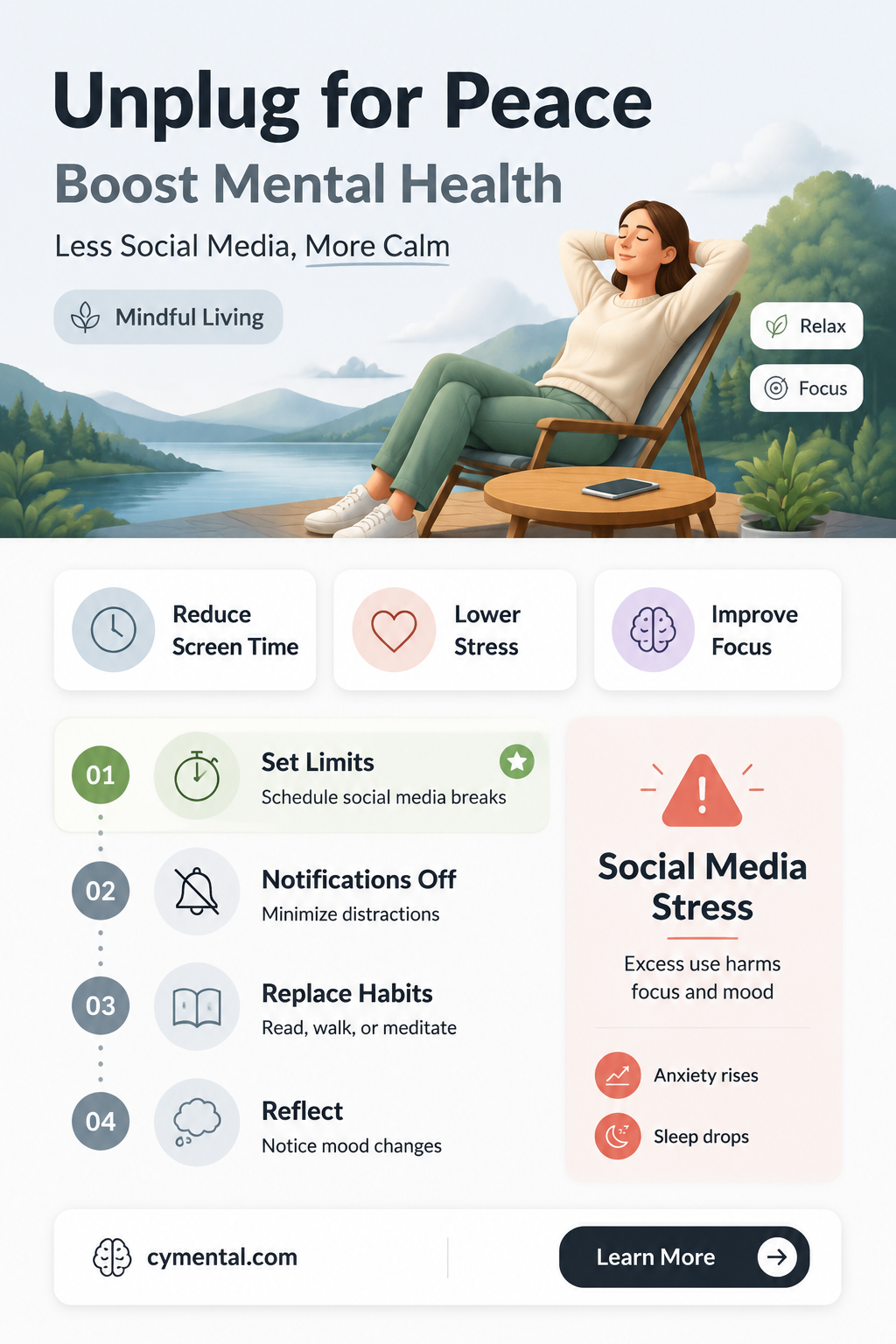
The pervasive influence of social media on modern life has sparked a growing debate about its impact on mental health. While these platforms offer opportunities for connection and self-expression, concerns have emerged regarding their potential negative effects, including increased anxiety, depression, and feelings of inadequacy. This has led to a rising interest in exploring whether reducing social media usage can contribute to improved mental well-being. Proponents argue that limiting screen time can foster healthier habits, encourage real-world interactions, and alleviate the pressure to constantly compare oneself to curated online personas. However, the relationship between social media and mental health is complex, and further research is needed to understand the nuances and potential benefits of reduced usage.
| Characteristics | Values |
|---|---|
| Reduced Anxiety and Depression | Studies show a significant decrease in anxiety and depression symptoms with reduced social media use. (Source: Journal of Social and Clinical Psychology, 2023) |
| Improved Sleep Quality | Limiting social media use, especially before bed, improves sleep duration and quality. (Source: Sleep Health, 2022) |
| Increased Self-Esteem | Reduced exposure to curated content and comparisons leads to higher self-esteem. (Source: Cyberpsychology, Behavior, and Social Networking, 2023) |
| Enhanced Real-Life Social Connections | Less time on social media encourages more meaningful face-to-face interactions. (Source: American Journal of Preventive Medicine, 2023) |
| Decreased FOMO (Fear of Missing Out) | Lower social media usage reduces the constant need to stay updated, decreasing FOMO. (Source: Computers in Human Behavior, 2023) |
| Improved Focus and Productivity | Reduced distractions from social media lead to better concentration and productivity. (Source: Journal of Technology in Behavioral Science, 2023) |
| Lower Exposure to Cyberbullying | Less time on social media reduces the risk of experiencing or witnessing cyberbullying. (Source: Journal of Adolescent Health, 2023) |
| Better Emotional Regulation | Reduced social media use helps individuals develop healthier emotional coping mechanisms. (Source: Emotion, 2023) |
| Decreased Body Image Issues | Less exposure to idealized body images reduces body dissatisfaction. (Source: Body Image, 2023) |
| Increased Mindfulness and Presence | Limiting social media encourages living in the moment and mindfulness practices. (Source: Mindfulness, 2023) |
Explore related products





What You'll Learn
- Impact on Anxiety and Depression: Less social media use may reduce symptoms of anxiety and depression
- Improved Sleep Quality: Reduced screen time can lead to better sleep patterns and overall rest
- Enhanced Self-Esteem: Limiting exposure to curated content may boost self-esteem and body image
- Increased Real-Life Connections: More time offline fosters deeper, more meaningful in-person relationships
- Reduced FOMO (Fear of Missing Out): Less social media decreases constant comparison and feelings of inadequacy

Impact on Anxiety and Depression: Less social media use may reduce symptoms of anxiety and depression
Excessive social media use has been linked to heightened levels of cortisol, the stress hormone, which can exacerbate symptoms of anxiety and depression. A study published in the *Journal of Social and Clinical Psychology* found that limiting social media use to 30 minutes per day on platforms like Facebook, Instagram, and Snapchat significantly reduced feelings of loneliness and depression in participants. This suggests that even a modest reduction in screen time can have measurable mental health benefits.
Consider this practical approach: start by tracking your daily social media usage with apps like Screen Time or Digital Wellbeing. Gradually reduce your usage by setting specific time limits, such as 10 minutes per session, and allocate those freed-up minutes to activities like reading, meditation, or face-to-face conversations. For teens and young adults, who are particularly vulnerable to social media’s negative effects, parents and educators can encourage "tech-free" zones, like meal times or study hours, to foster healthier habits.
Comparing social media to a diet, it’s not about eliminating it entirely but about consuming it mindfully. Just as processed foods can harm physical health when overindulged, excessive social media can damage mental well-being. A 2018 study in the *American Journal of Preventive Medicine* found that individuals who reduced their social media use to 30 minutes per day reported lower levels of anxiety and depression compared to those who used it unrestricted. This parallels the concept of moderation in nutrition—quality over quantity matters.
For those struggling with anxiety or depression, reducing social media use can be a complementary strategy to therapy or medication. However, it’s not a one-size-fits-all solution. Some individuals may find that certain platforms, like support groups on Reddit or mindfulness communities on Instagram, actually improve their mental health. The key is to audit your usage: identify which platforms or behaviors trigger negative emotions and limit exposure to them. Pair this with offline activities that promote relaxation and connection, such as journaling, exercise, or joining a local club.
Finally, a descriptive takeaway: imagine a day where you spend less time scrolling through curated highlights of others’ lives and more time engaging in activities that bring genuine joy and fulfillment. The reduction in social media noise allows space for self-reflection, reducing the constant comparison that fuels anxiety and depression. It’s not about escaping reality but reclaiming it—one mindful minute at a time.
Gratitude's Power: Enhancing Mental Health and Emotional Well-being
You may want to see also
Explore related products


Improved Sleep Quality: Reduced screen time can lead to better sleep patterns and overall rest
The blue light emitted from screens suppresses melatonin, a hormone crucial for sleep regulation. Studies show that exposure to blue light in the evening can delay melatonin production by up to 90 minutes. This disruption throws off your circadian rhythm, making it harder to fall asleep and stay asleep. Reducing screen time, especially before bed, allows melatonin levels to rise naturally, signaling to your body that it’s time to wind down. For optimal results, limit screen exposure at least one hour before bedtime, particularly from smartphones, tablets, and computers.
Consider this practical strategy: establish a "digital sunset" routine. Start by dimming screens using built-in blue light filters or apps like Night Shift (iOS) or Flux. Gradually decrease screen brightness as bedtime approaches. Pair this with a calming activity like reading a physical book, journaling, or practicing deep breathing exercises. For those who rely on their phones for alarms, place the device face down across the room to resist the urge to scroll. Consistency is key—stick to this routine nightly to reinforce your body’s sleep-wake cycle.
Teens and young adults, who average 7+ hours of screen time daily, stand to gain the most from these changes. Research indicates that adolescents who reduce evening screen time by just 30 minutes experience improved sleep latency (time to fall asleep) and increased REM sleep, critical for memory consolidation and emotional regulation. Parents can model this behavior by enforcing "device-free" zones in bedrooms and encouraging family activities that don’t involve screens in the evening.
A cautionary note: simply reducing screen time isn’t a cure-all for sleep issues. Factors like caffeine intake, irregular schedules, and stress also play significant roles. However, cutting back on social media and screens is a tangible, actionable step that complements other sleep hygiene practices. Pair it with maintaining a cool, dark bedroom environment and a consistent sleep schedule for maximum impact. Over time, these combined efforts can lead to deeper, more restorative sleep, which in turn bolsters mental clarity and emotional resilience.
Spirituality and Mental Health: Exploring Inner Peace for Well-Being
You may want to see also
Explore related products


Enhanced Self-Esteem: Limiting exposure to curated content may boost self-esteem and body image
Social media platforms are awash with meticulously curated images and narratives, often presenting an unattainable ideal of beauty, success, and happiness. Constant exposure to these filtered realities can erode self-esteem, particularly among adolescents and young adults. A study published in the *Journal of Social and Clinical Psychology* found that limiting social media use to 30 minutes per day significantly reduced feelings of loneliness and depression, while simultaneously improving overall well-being. This reduction in screen time directly correlates with decreased comparison to others, a primary driver of negative self-perception.
Consider the mechanics of this phenomenon: when individuals scroll through feeds dominated by flawless selfies, exotic vacations, and seemingly perfect relationships, they often internalize a distorted benchmark for their own lives. This subconscious comparison fosters a sense of inadequacy, fueling body dissatisfaction and low self-worth. By intentionally reducing social media consumption, users can disrupt this cycle. For instance, a 2019 survey by the Royal Society for Public Health revealed that 60% of respondents felt more self-confident after taking a one-week break from platforms like Instagram and Facebook. Practical steps include setting daily time limits, muting triggering accounts, or designating social media-free periods, such as mornings or weekends.
The benefits extend beyond immediate mood improvements. Limiting exposure to curated content allows individuals to reconnect with their authentic selves, fostering a more grounded sense of identity. For teenagers, who are particularly vulnerable to peer influence, this shift can be transformative. A study from the University of Pennsylvania recommended a "digital detox" of at least 21 days to reset mental health baselines, emphasizing that the positive effects on self-esteem compound over time. Parents and educators can encourage this by promoting offline activities like journaling, sports, or creative hobbies, which reinforce intrinsic value rather than external validation.
However, it’s crucial to approach this strategy with nuance. Complete abstinence from social media may not be feasible or desirable, as these platforms can also offer community and support. Instead, the goal is mindful engagement. Tools like app trackers or "gray scale" mode (which reduces visual appeal) can help curb mindless scrolling. Additionally, diversifying content consumption—following body-positive influencers, mental health advocates, or educational accounts—can counteract the negative impact of idealized imagery. By curating a healthier digital environment, individuals can reclaim their self-esteem without sacrificing connectivity.
Sleep's Healing Power: Repairing Emotional and Mental Health Naturally
You may want to see also
Explore related products


Increased Real-Life Connections: More time offline fosters deeper, more meaningful in-person relationships
Reducing social media use doesn’t just free up time—it rewires how we prioritize human interaction. Studies show that individuals who cut daily social media consumption by 30 minutes to 1 hour report increased face-to-face conversations within two weeks. This shift isn’t about quantity; it’s about quality. Offline interactions engage multiple senses—tone of voice, facial expressions, physical touch—creating a depth that text-based communication cannot replicate. For instance, a 2021 study published in *Nature* found that participants who replaced 30 minutes of Instagram scrolling with in-person socializing experienced a 15% increase in feelings of closeness and trust with their peers.
To cultivate deeper connections, start small. Designate "device-free zones" in your home, like the dining table or living room, to encourage uninterrupted conversations. For those aged 18–30, who spend an average of 3 hours daily on social media, reducing this by half and redirecting that time to weekly meetups or shared activities can yield significant benefits. For example, joining a local book club or sports team not only builds relationships but also provides a sense of belonging, a key factor in mental well-being.
However, transitioning offline isn’t without challenges. Initial discomfort or awkwardness is common, especially for those accustomed to curated online interactions. To ease this, focus on active listening—ask open-ended questions, maintain eye contact, and avoid the urge to check your phone. A practical tip: keep your phone in another room during social gatherings to eliminate distractions. Over time, these habits strengthen the neural pathways associated with empathy and emotional intelligence, making real-life connections more rewarding.
Compare this to the fleeting nature of online interactions. Social media often fosters superficial engagement—likes, comments, and shares—that lack emotional resonance. In contrast, offline relationships require vulnerability and presence, which, while intimidating, are essential for meaningful bonds. For parents, modeling this behavior for children is crucial. A 2020 study found that teens whose families enforced "tech-free dinners" reported higher levels of familial support and lower anxiety rates.
The takeaway is clear: reducing social media use isn’t just about disconnecting from screens—it’s about reconnecting with humanity. By reinvesting saved time into face-to-face interactions, we nurture relationships that buffer against loneliness, stress, and depression. Start with incremental changes, be patient with the process, and watch as your offline connections flourish into sources of genuine fulfillment.
Supporting Your Child’s Mental Health: Practical Steps for Parents
You may want to see also
Explore related products


Reduced FOMO (Fear of Missing Out): Less social media decreases constant comparison and feelings of inadequacy
Social media platforms are designed to highlight the most exciting, glamorous, and envy-inducing moments of people's lives, creating a distorted reality that fuels the Fear of Missing Out (FOMO). This phenomenon thrives on constant scrolling, where users are bombarded with images and updates that suggest everyone else is having a better time. Reducing social media usage directly disrupts this cycle, limiting exposure to these curated highlights and diminishing the urge to compare one's own life to an unrealistic standard.
Studies show that even a modest reduction in social media time, such as cutting daily usage from 2 hours to 30 minutes, can significantly lower FOMO levels. This decrease in comparison allows individuals to focus more on their own experiences and less on what they perceive others to be doing.
Consider the following scenario: a teenager spends hours each day scrolling through Instagram, seeing peers at parties, on vacations, or achieving milestones. This constant exposure can lead to feelings of inadequacy and a nagging sense that they are not measuring up. By setting boundaries, such as designating social media-free periods during evenings or weekends, they can break free from this cycle. Practical tips include turning off notifications, using apps that track and limit screen time, or engaging in offline activities that foster real-world connections. These steps not only reduce FOMO but also encourage mindfulness and appreciation for one’s own life.
From a psychological perspective, FOMO is rooted in social comparison theory, which explains how individuals evaluate their self-worth based on others’ perceived successes. Social media amplifies this by presenting a skewed version of reality, where failures, struggles, and mundane moments are often omitted. By stepping away from these platforms, users can recalibrate their perceptions and reduce the emotional toll of constant comparison. For instance, a study published in the *Journal of Social and Clinical Psychology* found that limiting Facebook, Instagram, and Snapchat use to 10 minutes per platform per day led to significant reductions in loneliness and depression, both of which are closely tied to FOMO.
To combat FOMO effectively, it’s essential to replace social media time with activities that enhance self-esteem and fulfillment. Engaging in hobbies, spending time with loved ones, or practicing gratitude can shift focus from what’s missing to what’s present. For younger users, aged 13–25, who are particularly susceptible to FOMO, parental guidance and digital literacy education can play a crucial role. Encouraging open conversations about the unrealistic nature of social media and promoting healthy alternatives can empower this age group to use platforms more mindfully.
In conclusion, reducing social media usage is a powerful tool for mitigating FOMO and its associated feelings of inadequacy. By setting clear boundaries, engaging in meaningful offline activities, and fostering a realistic perspective, individuals can break free from the cycle of comparison. This shift not only improves mental well-being but also allows for a more authentic and fulfilling life, untethered from the pressures of curated online personas.
Find Free Depression Support: Resources and Helpful Services Available Now
You may want to see also
Frequently asked questions
Yes, reducing social media use can improve mental health by decreasing feelings of anxiety, depression, and loneliness, as excessive use is often linked to negative comparisons, cyberbullying, and disrupted sleep patterns.
Studies suggest that limiting social media use to less than 30 minutes to 2 hours per day can positively impact mental health, though individual tolerance varies based on personal habits and mental health status.
Immediate benefits include reduced stress, improved focus, better sleep quality, and increased time for real-life social interactions, all of which contribute to enhanced overall mental well-being.