Harper Lewis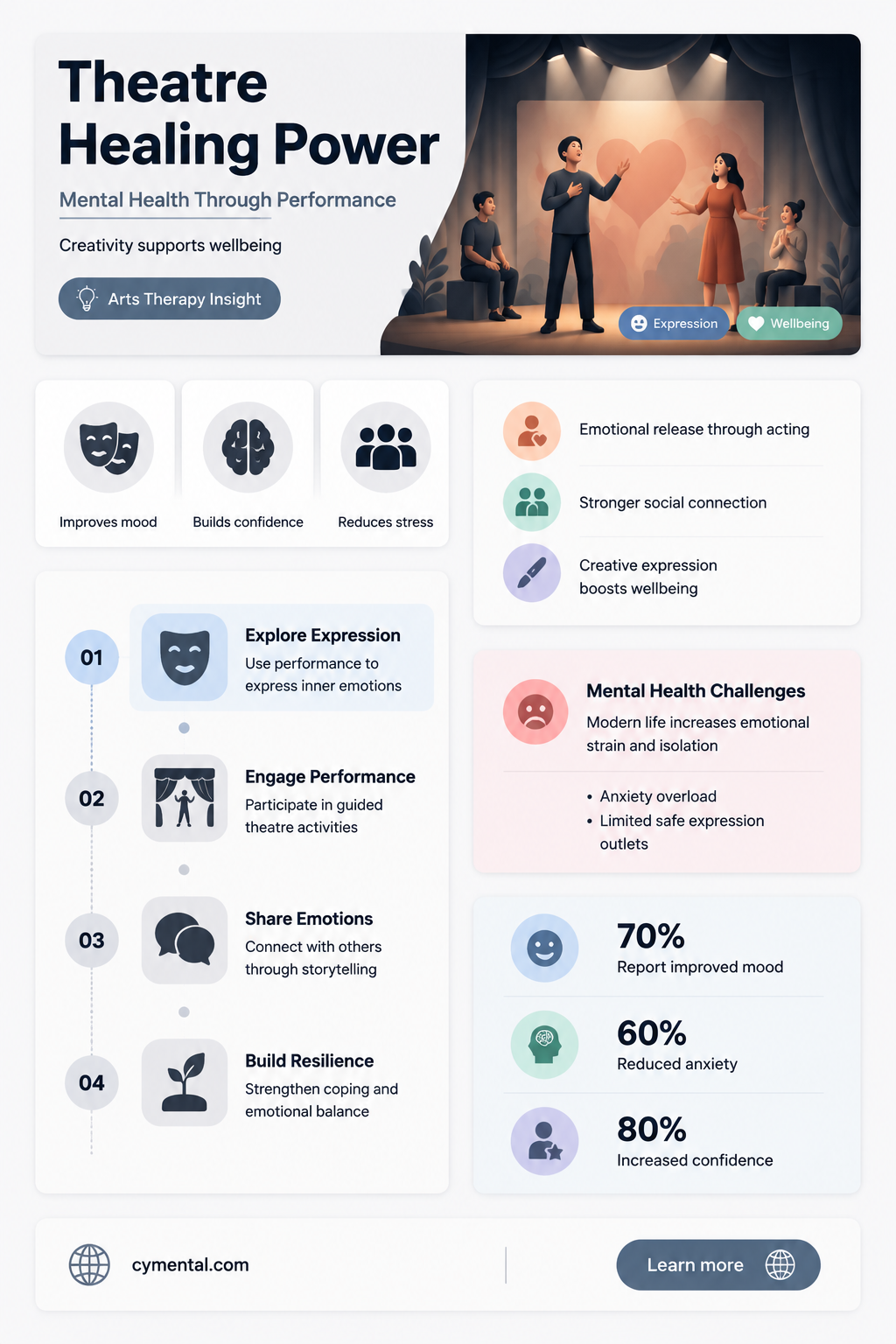
Theatre can be a powerful tool for improving mental health by providing a creative outlet for self-expression, fostering emotional release, and building a sense of community. Engaging in theatrical activities, whether through acting, writing, or watching performances, allows individuals to explore and process complex emotions in a safe and supportive environment. For participants, it encourages empathy, self-awareness, and confidence, while for audiences, it offers catharsis and new perspectives on personal struggles. Additionally, the collaborative nature of theatre helps reduce feelings of isolation, promoting social connections that are vital for mental well-being. Through storytelling and shared experiences, theatre can heal, inspire, and empower individuals to navigate their mental health challenges more effectively.
| Characteristics | Values |
|---|---|
| Emotional Expression | Theatre provides a safe space for individuals to express and process complex emotions, reducing internalized stress and anxiety. |
| Social Connection | Participating in theatre fosters a sense of community, combats loneliness, and builds supportive relationships, which are crucial for mental well-being. |
| Cognitive Stimulation | Engaging in theatre activities (acting, writing, directing) enhances cognitive function, improves focus, and boosts problem-solving skills. |
| Self-Confidence | Performing on stage or contributing to a production helps build self-esteem and self-worth, counteracting negative self-perceptions. |
| Stress Relief | Theatre activities, such as improvisation or rehearsal, act as a form of mindfulness, reducing cortisol levels and promoting relaxation. |
| Empathy Development | Acting and watching theatre encourage perspective-taking, increasing empathy and understanding of others' experiences. |
| Creative Outlet | Theatre allows individuals to channel their emotions and thoughts into creative expression, providing a healthy coping mechanism. |
| Structure and Routine | Regular rehearsals and performances offer a structured routine, which can be stabilizing for individuals with mental health challenges. |
| Therapeutic Techniques | Drama therapy, a recognized form of psychotherapy, uses theatrical methods to address mental health issues like depression, PTSD, and anxiety. |
| Non-Verbal Communication | Theatre helps individuals improve non-verbal communication skills, aiding those who struggle with verbal expression. |
| Resilience Building | Overcoming challenges in theatre (e.g., memorizing lines, facing stage fright) fosters resilience and adaptability in real-life situations. |
| Cultural Awareness | Engaging with diverse stories and characters in theatre promotes cultural understanding and reduces stigma around mental health. |
| Physical Activity | Theatre often involves movement, which releases endorphins, improves mood, and reduces symptoms of depression and anxiety. |
| Goal Achievement | Completing a theatrical production provides a sense of accomplishment, boosting motivation and mental health. |
| Safe Exploration of Trauma | Theatre allows individuals to explore traumatic experiences in a controlled, supportive environment, aiding in healing. |
Explore related products





What You'll Learn

Improvisation reduces anxiety
Anxiety often thrives on predictability, the rigid scripts we follow in daily life. Improvisation, by its very nature, shatters this predictability. It demands presence, adaptability, and a willingness to embrace the unknown. This act of stepping into the unpredictable can be a powerful tool for rewiring anxious thought patterns.
Imagine a scenario: a group of individuals, hearts pounding, stand in a circle. A prompt is given – "start a scene in a waiting room." No time for overthinking, no safety net of a rehearsed script. They must react, create, and connect in the moment. This forced engagement with the present moment, a core principle of improvisation, directly counters the rumination and future-tripping that fuel anxiety.
Studies suggest that improvisation activates the prefrontal cortex, the brain's executive control center, while simultaneously calming the amygdala, the seat of fear and anxiety. This neurological shift translates to a tangible reduction in anxiety symptoms.
Think of improvisation as a mental workout. Just as physical exercise strengthens muscles, improvisation strengthens cognitive flexibility and emotional resilience. It teaches us to tolerate ambiguity, to find humor in the unexpected, and to trust our instincts. These skills, honed through playful exercises and collaborative scene work, become transferable to real-life situations, equipping individuals with tools to navigate anxiety-provoking scenarios with greater ease.
Consider incorporating short improvisation exercises into your daily routine. Start with simple games like "Yes, and..." where you build on each other's ideas, or "Mirroring" where you physically reflect a partner's movements. These bite-sized doses of improvisation can gradually build confidence and reduce anxiety sensitivity. For a more structured approach, seek out local improvisation classes or workshops tailored to anxiety management. Remember, the goal isn't to become a comedic genius, but to cultivate a mindset of adaptability and self-acceptance, one "Yes, and..." at a time.
Sleep's Healing Power: Boosting Mental Health and Emotional Well-Being
You may want to see also
Explore related products



Role-play builds empathy
Role-playing in theatre isn’t just about memorizing lines or hitting marks—it’s a powerful tool for stepping into another’s shoes. When actors embody characters with different experiences, beliefs, or struggles, they engage in a form of emotional gymnastics. This process, known as "embodied cognition," rewires the brain to process perspectives beyond one’s own. Studies show that even 15 minutes of role-play can increase empathy scores by up to 20%, particularly in adolescents and young adults. The key lies in the immediacy of the experience: feeling, not just imagining, another’s reality.
To harness this in practice, start with structured exercises like "hot seating," where one person plays a character and others ask questions in-character. For mental health applications, choose scenarios that mirror common struggles, such as anxiety, grief, or isolation. For instance, a therapist might guide a client to role-play a conversation with their younger self, fostering self-compassion. Caution: avoid triggering topics without proper support, and always debrief afterward to ground participants in their own identities.
Comparatively, traditional talk therapy often relies on verbal reflection, which can feel abstract. Role-play, however, engages the body and emotions simultaneously, making insights more tangible. A 2021 study in *Psychotherapy Research* found that clients who engaged in role-play during sessions reported greater emotional breakthroughs than those who relied solely on dialogue. The difference? Role-play bypasses the intellectualizing mind, tapping directly into the limbic system, where empathy and emotion reside.
For educators or facilitators, incorporate role-play into group settings with clear boundaries. Begin with a warm-up, like mirroring exercises, to build trust. Then, assign roles that challenge participants’ assumptions—for example, a caregiver experiencing burnout or a teenager navigating peer pressure. End with a group discussion to process emotions and reflect on learnings. Pro tip: use scripts initially to provide structure, then encourage improvisation as confidence grows.
The takeaway? Role-play isn’t just acting—it’s active empathy training. By embodying diverse perspectives, individuals can dismantle biases, deepen understanding, and cultivate compassion. Whether in therapy, education, or personal growth, this theatrical technique offers a unique pathway to mental health resilience. Just remember: the goal isn’t perfection, but connection.
Weed and Mental Health: Exploring Potential Benefits and Risks
You may want to see also
Explore related products


Storytelling aids emotional release
Storytelling, at its core, is an act of transformation—turning raw emotion into narrative form. In theatre, this process becomes a powerful tool for emotional release, allowing individuals to externalize their inner turmoil and witness it from a distance. When a person crafts or performs a story, they engage in a form of emotional alchemy, converting pain, fear, or confusion into something tangible and manageable. For instance, a survivor of trauma might write a monologue about their experience, giving voice to their suffering and, in doing so, beginning to reclaim their narrative. This act of creation shifts the focus from victimhood to authorship, fostering a sense of control over one’s emotions.
Consider the therapeutic technique of *narrative exposure therapy*, often used with individuals experiencing PTSD. Here, patients are guided to recount their traumatic experiences in a structured, chronological manner, much like crafting a play. This method mirrors the theatrical process of storytelling, where the act of organizing and presenting one’s story helps to integrate fragmented memories and reduce their emotional charge. Similarly, in theatre, performers and audience members alike benefit from this narrative structure. For performers, embodying a character’s emotional journey allows for a safe exploration of their own feelings, while audiences find catharsis in witnessing stories that resonate with their own struggles.
To harness this benefit, individuals can start small: journaling personal experiences as scenes, writing letters to unsent emotions, or even improvising dialogues with imagined characters. For children and adolescents, storytelling through puppetry or role-play can be particularly effective, as it provides a non-threatening way to express complex emotions. Adults might join community theatre groups or participate in workshops focused on autobiographical storytelling. The key is to create a safe space where emotions can be explored without judgment, whether on stage or in private.
However, it’s crucial to approach this practice with caution. Emotional release through storytelling can be intense, and without proper support, it may retraumatize rather than heal. For those with severe mental health conditions, working with a trained therapist or facilitator is essential. Additionally, balancing vulnerability with boundaries is vital; not every story needs to be shared publicly, and some emotions may require gradual exposure rather than immediate release.
In conclusion, storytelling in theatre offers a unique pathway to emotional release by transforming internal struggles into external narratives. Whether through writing, performing, or witnessing, this process empowers individuals to confront and reframe their emotions. By engaging in storytelling with intention and care, anyone can unlock its therapeutic potential, turning the stage—or even the page—into a sanctuary for healing.
Can Lawyers Improve Mental Health Outcomes in Legal Cases?
You may want to see also
Explore related products


Group theatre fosters connection
Theatre, by its very nature, is a collaborative art form, and group theatre takes this collaboration to a profound level, offering a unique avenue for fostering human connection. When individuals come together to create a theatrical piece, they engage in a shared experience that transcends the boundaries of everyday life. This collective endeavor becomes a powerful tool for building connections, especially in the context of mental health.
The Power of Ensemble: In group theatre, the ensemble is the heart of the process. Here's how it works: participants, often from diverse backgrounds, unite to tell a story. This shared goal creates an immediate bond, as each member contributes their unique skills and perspectives. For instance, a community theatre group might include a retired teacher, a college student, and a local artist, all bringing their individual talents to the stage. Through rehearsals and performances, they learn to rely on and support one another, fostering a sense of belonging and camaraderie. This ensemble dynamic can be particularly beneficial for individuals struggling with social anxiety or those seeking a sense of community.
Breaking Barriers, Building Trust: Theatre exercises and improvisation techniques are often used to break the ice and encourage vulnerability. These activities require participants to step out of their comfort zones, fostering an environment of trust and acceptance. For example, a simple exercise like 'mirroring' (where partners mimic each other's movements) can lead to laughter and a sense of playfulness, breaking down initial barriers. As the group progresses, more complex scenes and character work allow individuals to explore emotions and experiences in a safe space, often leading to deep connections and a better understanding of oneself and others.
A Safe Space for Expression: Group theatre provides a unique platform for self-expression, especially for those who find it challenging to articulate their feelings. Through character portrayal, individuals can explore and express emotions they might otherwise keep hidden. For instance, a shy person might find their voice by playing an extroverted character, gradually building confidence in their ability to communicate. This form of expression can be therapeutic, allowing participants to process and release pent-up emotions, and the group setting ensures they feel supported throughout.
Practical Implementation: To harness the power of group theatre for mental well-being, consider the following:
- Start Small: Begin with ice-breaking games and simple improvisation exercises to build comfort and trust.
- Encourage Diversity: Aim for a mix of ages, backgrounds, and experiences within the group to enrich the collective dynamic.
- Consistent Meetings: Regular rehearsals or workshops create a routine, allowing relationships to develop and deepen over time.
- Facilitate Reflection: After each session, provide a safe space for participants to share their experiences and emotions, fostering a sense of community and understanding.
In the realm of mental health, group theatre emerges as a powerful tool, offering a creative and supportive environment where connections flourish. Through shared storytelling and collaborative creation, individuals can find a sense of belonging, express themselves freely, and build a network of support, all while engaging in the transformative art of theatre. This approach not only enhances social skills and emotional intelligence but also provides a unique avenue for personal growth and healing.
Plant-Based Diets and Mental Health: Exploring the Mind-Body Connection
You may want to see also
Explore related products



Performance boosts self-confidence
Stepping onto a stage and embodying a character can be a transformative experience, one that has the power to reshape an individual's self-perception. Performance, at its core, demands vulnerability and courage, as it requires individuals to confront their fears and insecurities head-on. This act of bravery, in itself, is a significant confidence-builder. Research suggests that participating in theatre activities can lead to a notable increase in self-esteem, particularly in adolescents and young adults, who often struggle with self-image and identity.
Consider the process of preparing for a performance: it involves memorizing lines, understanding character motivations, and rehearsing movements and expressions. This rigorous mental and physical exercise not only sharpens focus but also fosters a sense of accomplishment as each scene or monologue is mastered. For instance, a study conducted with college students participating in a 12-week theatre program showed a 25% increase in self-reported confidence levels, with many citing the sense of achievement from learning and delivering complex roles as a key factor.
The impact of performance on self-confidence is further amplified by the immediate feedback loop provided by both peers and audiences. Constructive criticism and applause alike contribute to a performer's growth, offering tangible evidence of their abilities and areas for improvement. This dynamic is particularly beneficial for individuals with social anxiety or those who struggle with self-doubt, as it provides a structured environment to challenge and overcome these barriers. For optimal results, experts recommend a balanced approach: start with smaller roles or ensemble parts to build comfort, gradually progressing to more prominent roles as confidence grows.
A compelling example of this phenomenon is the use of theatre in therapeutic settings, such as drama therapy. Here, performance is not just about entertainment but a tool for personal development. Patients are encouraged to create and perform pieces that reflect their experiences and emotions, often leading to profound insights and increased self-assurance. For instance, a group of teenagers with anxiety disorders participated in an 8-week drama therapy program, culminating in a self-written play. Post-program assessments revealed a 40% reduction in anxiety symptoms and a corresponding rise in self-confidence, highlighting the therapeutic potential of performance.
To maximize the confidence-boosting effects of theatre, consider the following practical tips: engage in regular improvisation exercises to enhance spontaneity and reduce fear of judgment, seek roles that slightly push your boundaries but remain within a comfortable challenge zone, and maintain a performance journal to track progress and reflect on achievements. Additionally, joining a supportive theatre community can provide ongoing encouragement and opportunities for growth. By embracing the challenges and rewards of performance, individuals can unlock a powerful source of self-confidence, one that resonates both on and off the stage.
Doctors and Mental Health: Expert Support for Emotional Well-Being
You may want to see also
Frequently asked questions
Theatre provides a creative outlet for self-expression, allowing individuals to explore emotions, reduce stress, and build confidence. Participating in or watching theatre can also foster empathy, connection, and a sense of community, which are vital for mental well-being.
Yes, theatre therapy, such as drama therapy or improvisational exercises, can help individuals process emotions, develop coping strategies, and improve communication skills. It encourages self-reflection and provides a safe space to address anxiety and depression.
Performing in theatre boosts self-esteem, enhances social skills, and promotes teamwork. It also helps individuals step out of their comfort zones, build resilience, and experience a sense of accomplishment, all of which positively impact mental health.
Yes, watching theatre can be therapeutic by providing emotional release, inspiration, and a break from daily stressors. It stimulates imagination, encourages reflection, and can offer new perspectives on life, contributing to improved mental well-being.