Ava Ramirez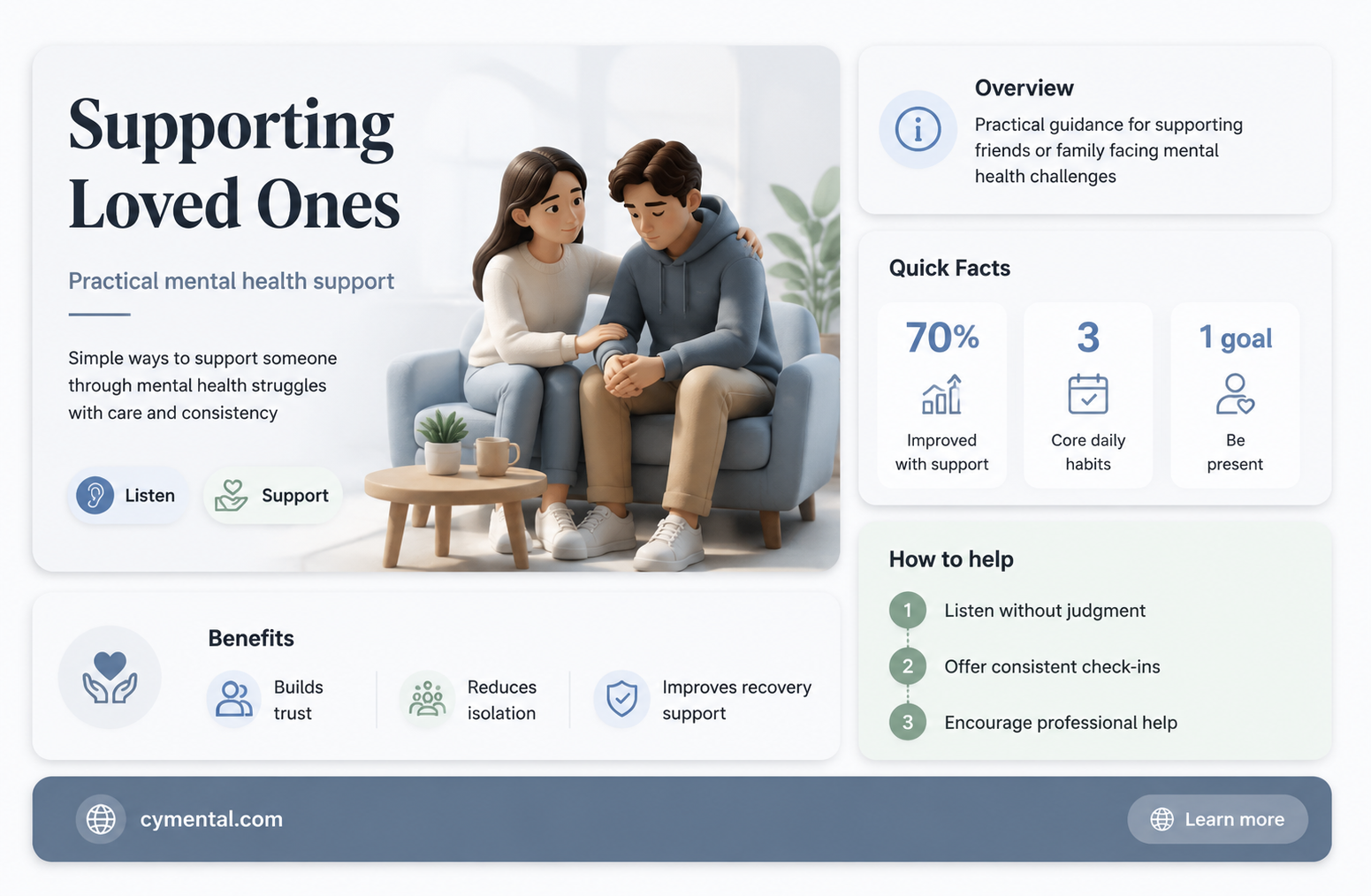
Supporting someone with mental health issues requires empathy, patience, and understanding. Start by creating a safe, non-judgmental space where they feel comfortable sharing their feelings. Listen actively without offering unsolicited advice, and validate their emotions to show you care. Encourage professional help, such as therapy or counseling, while also being a consistent presence in their life. Small gestures, like checking in regularly or engaging in activities they enjoy, can make a significant difference. Educate yourself about their specific struggles to better understand their experience, and avoid minimizing their feelings or pressuring them to get better. Above all, remind them they are not alone and that recovery is possible with time and support.
Explore related products


What You'll Learn
- Listen Actively: Show empathy, avoid judgment, and give undivided attention to their feelings and concerns
- Encourage Professional Help: Suggest therapy, counseling, or support groups for expert guidance and treatment
- Promote Self-Care: Support healthy habits like exercise, sleep, nutrition, and stress-reducing activities
- Stay Connected: Maintain regular contact, invite them to activities, and ensure they feel valued
- Educate Yourself: Learn about their condition to better understand and support their needs

Listen Actively: Show empathy, avoid judgment, and give undivided attention to their feelings and concerns
Active listening is a cornerstone of supporting someone with mental health issues, yet it’s often misunderstood as mere silence or nodding. True active listening requires intentional engagement, where you mirror back emotions, ask clarifying questions, and validate their experiences without inserting your own agenda. For instance, instead of saying, “At least you have a job,” respond with, “It sounds like you’re feeling overwhelmed by the pressure at work.” This approach acknowledges their reality rather than dismissing it, fostering trust and safety in the conversation.
Empathy, the ability to share another’s feelings, is not about solving problems but about being present. Research shows that empathetic responses activate the parasympathetic nervous system, reducing stress in both the speaker and listener. To practice empathy, use phrases like, “I can imagine how hard that must be” or “That sounds really painful.” Avoid the urge to compare their struggles to your own or others’, as this can minimize their experience. Instead, focus on reflecting their emotions: “You seem frustrated because your efforts aren’t being recognized.”
Judgment, even subtle, can shut down communication faster than anger. Phrases like “You should just…” or “Why didn’t you…?” imply criticism and create defensiveness. Replace judgment with curiosity. For example, instead of asking, “Why haven’t you tried therapy yet?” try, “What’s your experience been with seeking support so far?” This shift encourages openness and allows the person to lead the conversation at their own pace. Remember, your role is not to fix but to understand.
Undivided attention is a rare gift in a distracted world. Put away your phone, maintain eye contact (if culturally appropriate), and use nonverbal cues like nodding or leaning in to show you’re fully present. Studies indicate that even brief interruptions can derail a person’s train of thought, especially when they’re emotionally vulnerable. If you’re in a noisy environment, suggest moving to a quieter space. For virtual conversations, mute notifications and use video to enhance connection.
Finally, active listening is a skill that improves with practice. Start small: set aside 10 minutes daily to listen without interrupting. Gradually, you’ll notice patterns in your responses—do you jump to advice? Interrupt?—and can work to adjust. For deeper learning, consider courses on motivational interviewing or empathy training. The takeaway? Active listening isn’t passive; it’s an act of service that communicates, “You matter, and I’m here for you.”
Embracing Authenticity: How Being Trans Enhances Mental Well-Being
You may want to see also
Explore related products


Encourage Professional Help: Suggest therapy, counseling, or support groups for expert guidance and treatment
Professional help is often the cornerstone of recovery for someone struggling with mental health issues. While your support as a friend or family member is invaluable, it’s not a substitute for the expertise of trained professionals. Therapists, counselors, and support groups offer specialized tools, strategies, and environments that can address the root causes of mental health challenges, not just the symptoms. Encouraging someone to seek this help isn’t about delegating your responsibility—it’s about empowering them to access the most effective resources available.
Consider the analogy of a broken bone: you wouldn’t hesitate to urge a friend to see a doctor for a fracture. Mental health issues, though less visible, are equally deserving of professional intervention. Therapy, for instance, comes in various forms—cognitive-behavioral therapy (CBT) for restructuring negative thought patterns, dialectical behavior therapy (DBT) for emotional regulation, or psychodynamic therapy for exploring past experiences. Counseling, on the other hand, often focuses on immediate concerns, providing practical strategies for managing stress, anxiety, or depression. Support groups, such as those offered by organizations like the National Alliance on Mental Illness (NAMI), create a sense of community and shared understanding, reducing feelings of isolation.
When suggesting professional help, approach the conversation with sensitivity and empathy. Avoid phrases like “You need help” or “You should see someone,” which can feel judgmental. Instead, frame it as a collaborative decision: “I’ve noticed you’ve been struggling, and I think talking to a professional could give you some new tools to feel better.” Offer to help research therapists, accompany them to the first appointment, or simply listen without pressure. For younger individuals (teens or young adults), involve parents or guardians in the conversation, ensuring they feel supported rather than singled out.
Practical barriers often deter people from seeking help—cost, accessibility, or stigma. Address these proactively. Many therapists offer sliding-scale fees or accept insurance, and online platforms like BetterHelp or Talkspace provide affordable alternatives. For those hesitant due to stigma, share statistics: 1 in 5 adults in the U.S. experiences mental illness each year, and seeking help is a sign of strength, not weakness. If they’re unsure where to start, suggest a primary care physician, who can provide referrals or rule out underlying physical health issues.
Finally, remember that encouraging professional help is a process, not a one-time conversation. Be patient, consistent, and non-judgmental. Celebrate small steps, like scheduling an appointment or attending a support group meeting. Your role isn’t to fix their mental health—it’s to be a steady presence while they navigate the path to recovery with expert guidance. By advocating for professional intervention, you’re helping them build a foundation for long-term healing, not just temporary relief.
Blue Light Therapy: Enhancing Mental Well-Being Through Calming Illumination
You may want to see also
Explore related products





Promote Self-Care: Support healthy habits like exercise, sleep, nutrition, and stress-reducing activities
Self-care isn’t just a buzzword—it’s a cornerstone of mental health recovery. When someone is struggling, their basic needs often fall by the wayside. Encouraging and supporting healthy habits like exercise, sleep, nutrition, and stress-reducing activities can create a foundation for healing. For instance, just 30 minutes of moderate exercise, such as brisk walking or yoga, three to five times a week, has been shown to reduce symptoms of depression and anxiety. This isn’t about pushing someone into a rigorous routine but rather helping them rediscover small, manageable ways to care for their body and mind.
Sleep deprivation can exacerbate mental health issues, turning a difficult day into an insurmountable one. Adults need 7–9 hours of sleep per night, yet stress and anxiety often disrupt this. Help by suggesting a consistent bedtime routine: dimming lights an hour before bed, avoiding screens, and incorporating calming activities like reading or meditation. For those with insomnia, cognitive-behavioral therapy for insomnia (CBT-I) is a proven method to reset sleep patterns without medication. Even small improvements in sleep quality can significantly impact mood and resilience.
Nutrition plays a silent but powerful role in mental health. A diet rich in whole foods—fruits, vegetables, lean proteins, and healthy fats—supports brain function and stabilizes mood. Encourage simple swaps: replacing sugary snacks with nuts or fruit, or adding omega-3-rich foods like salmon or flaxseeds. For someone overwhelmed by cooking, meal prepping or even shared grocery shopping can make healthier eating more accessible. Avoid framing this as a restrictive diet; instead, focus on nourishing the body as an act of self-compassion.
Stress-reducing activities are not one-size-fits-all. What works for one person—like journaling or painting—might feel forced for another. Experimentation is key. Mindfulness practices, such as deep breathing exercises or guided meditation apps, can be done in as little as 5 minutes a day. For those who prefer movement, tai chi or dancing offers both physical and mental benefits. The goal is to find activities that feel enjoyable and sustainable, not like another chore. Even laughter, whether from a comedy show or time with friends, is a powerful stress reliever.
Supporting self-care isn’t about taking control but empowering someone to reclaim their own well-being. Offer gentle reminders, not pressure, and celebrate small victories. For example, if they manage a 10-minute walk after weeks of inactivity, acknowledge the effort. Over time, these habits can rebuild a sense of agency and hope. Remember, self-care isn’t selfish—it’s essential, both for the person struggling and for those who care about them.
Encouraging Mental Health Support: Ethical Approaches to Intervention
You may want to see also
Explore related products

$18.01 $29.99


Stay Connected: Maintain regular contact, invite them to activities, and ensure they feel valued
Social isolation can exacerbate mental health struggles, creating a vicious cycle of withdrawal and worsening symptoms. Staying connected isn't just about being physically present; it's about fostering a sense of belonging and reminding the individual they are valued.
Consider this: a study published in the *Journal of Affective Disorders* found that individuals with depression who reported higher levels of social support experienced significantly faster recovery times. Regular contact, even brief check-ins, can act as a lifeline, breaking through the isolating fog of mental illness.
Text messages, phone calls, or video chats – choose the method most comfortable for the person. Consistency is key; aim for at least once a week, but daily contact, even if brief, can be incredibly impactful.
Inviting someone struggling with mental health to activities requires sensitivity. Avoid overwhelming them with large gatherings or high-energy events. Opt for low-pressure, familiar activities they previously enjoyed, like a walk in the park, a movie night at home, or a quiet coffee date. Be understanding if they decline; respect their boundaries while gently encouraging future participation.
Remember, the goal isn't to "fix" them but to show you care and provide a safe space for connection.
Feeling valued is crucial for anyone, but especially for those battling mental health issues. Small gestures can make a big difference: acknowledge their strengths, express gratitude for their presence in your life, and celebrate their achievements, no matter how small. Avoid minimizing their struggles with phrases like "just cheer up" or "it could be worse." Instead, validate their feelings and let them know you're there to listen without judgment.
Staying connected isn't always easy. It requires patience, understanding, and a willingness to adapt. But by making a conscious effort to maintain regular contact, extend invitations, and express genuine care, you can offer a vital source of support and hope to someone navigating the challenges of mental health issues.
Are Mental Institutions Truly Helpful? Exploring Their Impact and Effectiveness
You may want to see also
Explore related products





Educate Yourself: Learn about their condition to better understand and support their needs
Understanding the specific mental health condition your loved one is facing is the cornerstone of effective support. Imagine trying to navigate a foreign city without a map; you’d likely feel lost and ineffective. Similarly, without knowledge of their condition, your attempts to help may be misguided or even counterproductive. Educating yourself bridges this gap, transforming well-intentioned but clumsy gestures into informed, impactful actions.
Research the diagnostic criteria, common symptoms, and typical triggers associated with their condition. Reputable sources like the National Alliance on Mental Illness (NAMI) or the World Health Organization (WHO) offer reliable information. Understanding the biological, psychological, and social factors at play provides context for their experiences. For instance, learning that depression often involves physical symptoms like fatigue and changes in appetite can help you recognize subtle signs they might not vocalize.
This knowledge isn’t about becoming an armchair psychologist; it’s about fostering empathy and tailoring your support. For example, knowing that anxiety disorders often involve intrusive thoughts can help you avoid minimizing their fears with phrases like “just relax.” Instead, you might offer grounding techniques you’ve learned, such as deep breathing exercises or sensory distractions. Similarly, understanding the cyclical nature of bipolar disorder can prepare you for mood shifts, allowing you to respond with patience rather than frustration.
However, education alone isn’t enough. Be mindful of the language you use. Avoid labels like “schizophrenic” or “depressed person” that reduce them to their diagnosis. Instead, use person-first language, such as “someone living with schizophrenia” or “a person experiencing depression.” This small shift reinforces their identity beyond their condition. Additionally, respect their boundaries. Not everyone wants their condition dissected or analyzed. Ask how they prefer to discuss their experiences and what kind of support they find most helpful.
Finally, remember that mental health conditions are complex and often evolve. What works today might not work tomorrow. Stay curious, keep learning, and be open to adjusting your approach. Your commitment to understanding their world demonstrates a profound level of care, offering them not just support, but a sense of being truly seen and valued.
Can Semen Improve Women's Mental Health? Exploring the Science and Myths
You may want to see also
Frequently asked questions
Look for signs such as persistent sadness, withdrawal from social activities, changes in sleep or appetite, irritability, or difficulty concentrating. Trust your instincts and approach them with empathy if you notice these behaviors.
Listen without judgment, encourage professional help, offer to accompany them to appointments, and help them maintain a routine. Be patient, as recovery takes time, and avoid pressuring them to "just feel better."
Set boundaries, seek your own support system, and prioritize self-care. Remember, you cannot fix their issues alone, and it’s important to maintain your own mental and emotional well-being.