Madison Cole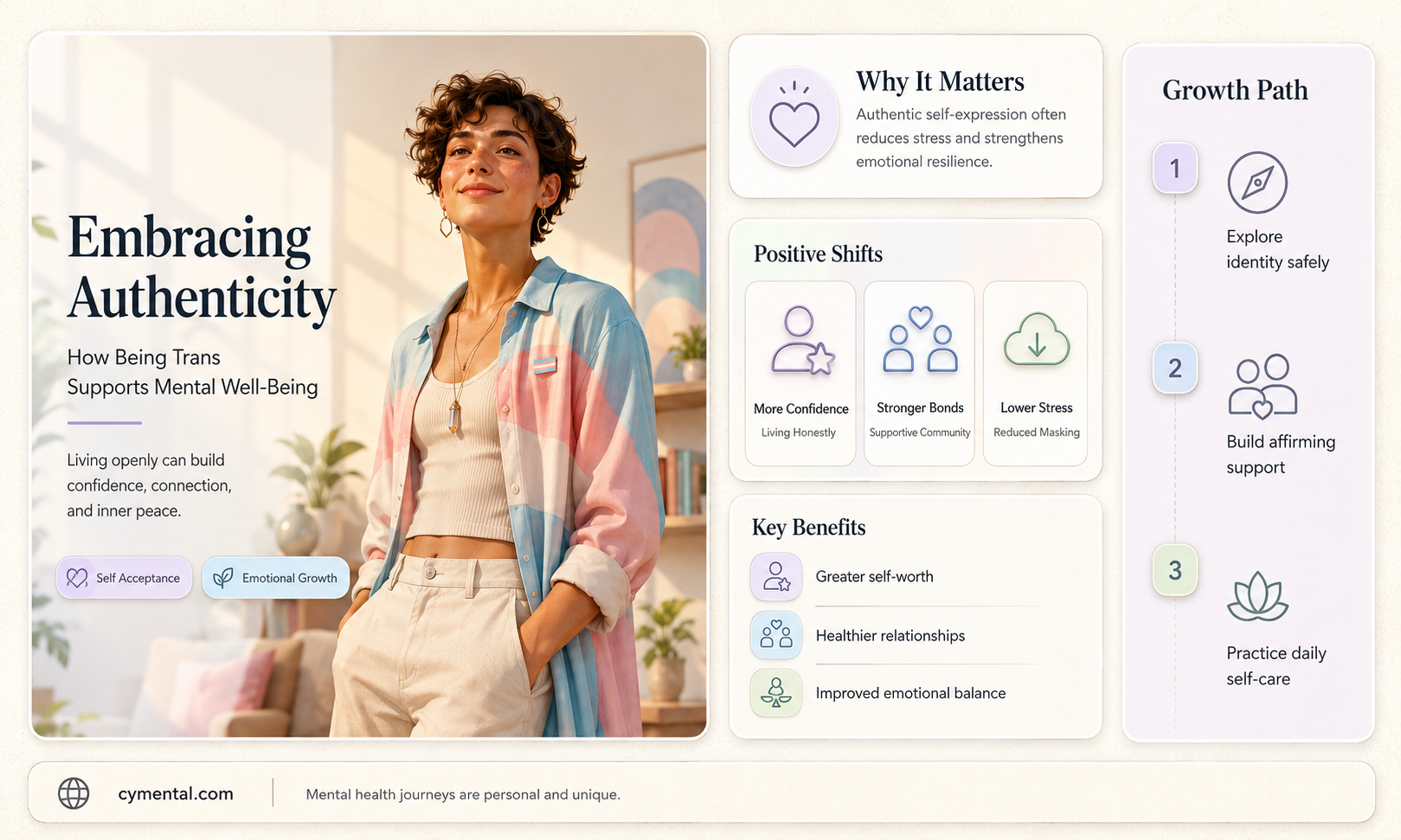
Being transgender often involves a journey of self-discovery and alignment with one's true identity, which can significantly improve mental health. When individuals are able to live authentically, they often experience reduced anxiety, depression, and dysphoria, as they are no longer at odds with their internal sense of self. Affirming one's gender identity through social, medical, or legal transitions can foster a sense of empowerment and self-acceptance, leading to increased self-esteem and overall well-being. Additionally, supportive environments and access to affirming healthcare play a crucial role in mitigating mental health challenges, highlighting the importance of societal acceptance and resources in promoting positive outcomes for transgender individuals.
Explore related products


What You'll Learn
- Gender Affirmation: Living authentically reduces dysphoria, boosts self-esteem, and fosters a positive self-image
- Community Support: Trans-inclusive spaces provide belonging, understanding, and emotional resilience against isolation
- Reduced Anxiety: Transitioning aligns identity with appearance, easing social discomfort and stress
- Improved Relationships: Authenticity strengthens connections, reducing conflict and enhancing emotional intimacy
- Empowerment: Overcoming challenges builds resilience, confidence, and a sense of personal growth

Gender Affirmation: Living authentically reduces dysphoria, boosts self-esteem, and fosters a positive self-image
Living authentically as one’s affirmed gender is a transformative process that directly addresses the root of gender dysphoria—the distress arising from a mismatch between one’s gender identity and assigned sex at birth. Studies consistently show that gender affirmation, whether through social transition, medical interventions, or both, significantly reduces dysphoria symptoms. For instance, a 2021 study published in *JAMA Pediatrics* found that transgender youth who received gender-affirming care experienced a 60% decrease in depression and a 73% decrease in suicidality within one year. These findings underscore the profound impact of aligning external presentation with internal identity, creating a foundation for mental well-being.
To embark on this journey, individuals must first identify and embrace their authentic selves, a process that often begins with self-reflection and exploration. Practical steps include experimenting with pronouns, clothing, and names in safe spaces, such as with trusted friends or online communities. For those considering medical interventions, hormone therapy is a common starting point. Dosage varies by individual, but typical regimens for transgender women include estradiol (2-6 mg/day orally or via patch) combined with anti-androgens, while transgender men often receive testosterone (50-100 mg/week intramuscularly). It’s crucial to consult healthcare providers specializing in transgender care to tailor treatments to individual needs and monitor progress.
The psychological benefits of gender affirmation extend beyond dysphoria reduction. Living authentically fosters a positive self-image, as individuals no longer feel compelled to hide or suppress their true selves. This authenticity boosts self-esteem, enabling individuals to engage more confidently in personal and professional relationships. For example, a 2019 study in *LGBT Health* revealed that transgender individuals who socially transitioned reported higher levels of life satisfaction and lower anxiety compared to those who did not. These improvements highlight the interconnectedness of gender affirmation and mental health, demonstrating that authenticity is not just a personal choice but a mental health necessity.
However, the path to gender affirmation is not without challenges. Societal stigma, lack of access to care, and financial barriers can impede progress. To navigate these obstacles, individuals can seek support from transgender advocacy groups, such as the National Center for Transgender Equality, which offers resources on legal rights, healthcare access, and community networks. Additionally, therapy with a gender-affirming counselor can provide emotional support and strategies for coping with external pressures. By combining personal courage with practical resources, individuals can overcome barriers and reap the mental health benefits of living authentically.
In conclusion, gender affirmation is a powerful tool for improving mental health among transgender individuals. By reducing dysphoria, boosting self-esteem, and fostering a positive self-image, living authentically addresses core psychological needs. While challenges exist, the transformative potential of gender affirmation makes it a vital component of transgender well-being. With the right support and resources, individuals can navigate this journey and achieve a more fulfilling, authentic life.
Planned Parenthood's Role in Supporting Mental Health: What You Need to Know
You may want to see also
Explore related products


Community Support: Trans-inclusive spaces provide belonging, understanding, and emotional resilience against isolation
Trans-inclusive spaces act as lifelines, countering the isolating effects of societal stigma and misunderstanding. Imagine navigating a world where your identity is constantly questioned or erased. For transgender individuals, this is often the reality. Trans-inclusive communities offer a sanctuary where one’s gender identity is not only accepted but celebrated. These spaces—whether physical, like LGBTQ+ centers, or virtual, like online forums—provide a sense of belonging that is otherwise hard to find. Research shows that social connectedness significantly reduces feelings of loneliness and depression, making these communities vital for mental well-being.
Consider the practical steps to engage with such spaces. Start by seeking local LGBTQ+ organizations or support groups, many of which offer age-specific programs (e.g., youth groups for teens or peer support for adults). Online platforms like Reddit’s r/transgender or Facebook groups can provide 24/7 access to understanding peers. Attending events like pride marches or trans-specific workshops fosters face-to-face connections, which studies suggest are particularly impactful for emotional resilience. A caution: not all spaces are equally inclusive, so prioritize those with clear trans-affirming policies and active moderation to ensure safety.
The power of these communities lies in their ability to validate experiences that are often dismissed elsewhere. For instance, sharing transition stories or discussing gender dysphoria in a supportive environment can normalize struggles and foster collective coping strategies. A study published in the *Journal of Homosexuality* found that trans individuals who participated in community groups reported higher self-esteem and lower anxiety levels compared to those who did not. This underscores the therapeutic value of being seen and understood by others who share similar journeys.
Finally, trans-inclusive spaces serve as a buffer against systemic discrimination, which is a known risk factor for mental health issues like depression and suicidal ideation. By providing a network of allies and resources, these communities empower individuals to navigate challenges with greater confidence. For example, many groups offer peer-led workshops on topics like hormone therapy, legal name changes, or workplace advocacy, equipping members with practical tools to assert their identities. The takeaway is clear: community support is not just comforting—it’s transformative, turning isolation into resilience and invisibility into pride.
Supporting Mental Health: Practical Ways to Make a Positive Impact
You may want to see also
Explore related products


Reduced Anxiety: Transitioning aligns identity with appearance, easing social discomfort and stress
Transitioning can significantly reduce anxiety by aligning one's physical appearance with their gender identity, a process that directly addresses the root of much social discomfort. For transgender individuals, the dissonance between their internal sense of self and their outward presentation often leads to chronic stress, heightened self-consciousness, and fear of judgment. When this alignment occurs, whether through social transition, hormone therapy, or surgical interventions, the mental burden of hiding or suppressing one’s identity lessens. Studies show that transgender individuals who transition report lower levels of anxiety, as the constant worry about being "found out" or misgendered diminishes. This psychological relief is not just anecdotal; it’s supported by research indicating improved mental health outcomes post-transition.
Consider the practical steps involved in this alignment. Social transition, such as changing pronouns, names, and clothing, is often the first step and can yield immediate benefits. For instance, a 2019 study published in the *Journal of Adolescent Health* found that transgender youth who used their preferred name at school and home reported 29% lower odds of suicidal ideation and 65% lower odds of depressive symptoms. Hormone therapy, another critical component, typically begins with low doses (e.g., 25–50 mg of spironolactone daily for trans women or 50–100 mg of testosterone weekly for trans men) and is gradually adjusted under medical supervision. These changes, though incremental, signal to the individual that their body is becoming a reflection of their true self, reducing the cognitive dissonance that fuels anxiety.
However, the process is not without challenges. Transitioning requires navigating social, medical, and financial barriers, which can temporarily increase stress. For example, fear of discrimination or lack of access to affirming healthcare may delay or complicate the process. It’s crucial to approach transition with a support system in place—therapists, peer groups, or family members who understand the significance of this journey. Additionally, setting realistic expectations is key. Transitioning is not a quick fix but a gradual process, and anxiety may not disappear overnight. Yet, even small steps toward alignment can provide tangible relief, as the individual begins to feel more authentically themselves in daily interactions.
The takeaway is clear: aligning identity with appearance is a powerful tool for reducing anxiety in transgender individuals. It transforms social interactions from sources of dread into opportunities for authenticity. For instance, a trans man who begins testosterone therapy often reports feeling more at ease in public spaces as his physical appearance aligns with his gender identity, reducing the likelihood of misgendering or harassment. Similarly, a trans woman who socially transitions may find that using her chosen name and pronouns alleviates the constant tension of living in stealth. These changes, while personal, have broader implications for mental health, fostering a sense of belonging and reducing the isolation often experienced by transgender individuals.
In conclusion, the reduction of anxiety through transitioning is both a psychological and a practical achievement. It requires intentional steps, from social changes to medical interventions, but the rewards are profound. By addressing the core issue of identity misalignment, transitioning offers a pathway to greater mental well-being, proving that living authentically is not just a personal victory but a therapeutic necessity. For those considering this journey, remember: progress, no matter how small, is progress. Each step toward alignment is a step toward peace.
Gaming's Surprising Benefits: Boosting Mental Health and Well-Being
You may want to see also
Explore related products


Improved Relationships: Authenticity strengthens connections, reducing conflict and enhancing emotional intimacy
Authenticity in gender identity fosters deeper, more meaningful relationships by aligning one’s external presentation with internal truth. When transgender individuals live openly, they eliminate the cognitive dissonance of hiding their true selves, which often creates barriers in communication. For example, a study published in the *Journal of Counseling Psychology* found that trans individuals who socially transitioned reported significant improvements in relationship quality, as partners and friends no longer felt deceived or confused by mismatched behaviors. This transparency reduces misunderstandings and lays the groundwork for trust, a cornerstone of healthy connections.
Consider the practical steps to nurture these strengthened relationships. First, encourage open dialogue about boundaries and expectations. For instance, a trans person might explain to a partner how certain pronouns or terms of endearment impact their emotional well-being. Second, prioritize active listening. A cisgender partner, for example, could attend workshops on transgender experiences to better understand their loved one’s journey. Third, celebrate milestones together—whether it’s a name change, hormone therapy anniversary, or gender-affirming surgery—to reinforce mutual support. These actions not only deepen emotional intimacy but also create a shared narrative of growth and acceptance.
Critics might argue that authenticity could strain relationships, particularly with unsupportive family members or friends. However, research in *LGBT Health* suggests that while initial reactions may be challenging, relationships often improve over time as loved ones adjust. For instance, a trans man who came out to his parents initially faced resistance but found that consistent, honest communication led to greater understanding within a year. The key is persistence and patience, coupled with setting firm boundaries to protect mental health during the adjustment period.
Finally, the emotional intimacy gained through authenticity has measurable mental health benefits. A study in *Transgender Health* linked authentic living to reduced symptoms of depression and anxiety, partly due to improved relationship satisfaction. For example, a trans woman who began using her chosen name at work reported feeling more respected by colleagues, which translated into reduced stress and increased productivity. This ripple effect highlights how authenticity not only strengthens individual relationships but also enhances overall well-being, proving that living truthfully is both a personal and relational victory.
Fake Plants and Mental Health: Uncovering the Surprising Benefits
You may want to see also
Explore related products





Empowerment: Overcoming challenges builds resilience, confidence, and a sense of personal growth
Transitioning is an act of courage that inherently demands confronting societal stigma, personal doubts, and systemic barriers. Each step—whether social, medical, or legal—requires navigating uncertainty and adversity. This process, though daunting, becomes a crucible for resilience. Research shows that individuals who actively address challenges, rather than avoid them, develop stronger psychological coping mechanisms. For transgender individuals, the very act of asserting their authentic selves in a world that often resists this authenticity fosters a unique form of mental fortitude. Every obstacle overcome—whether correcting a misgendered name or advocating for healthcare access—reinforces the ability to withstand future stressors, transforming vulnerability into strength.
Consider the process of coming out, a pivotal moment in many transgender lives. This act is not merely a declaration but a deliberate choice to face potential rejection, discrimination, or estrangement. Yet, for those who emerge on the other side, the experience often becomes a cornerstone of self-confidence. Psychologists note that self-efficacy—the belief in one’s ability to succeed—grows exponentially when individuals prove to themselves they can survive and thrive despite adversity. For transgender individuals, this confidence is not just about surviving; it’s about reclaiming agency over their narrative. Each time they assert their identity, they rewrite the script of self-doubt imposed by societal norms, replacing it with a story of self-worth.
The journey of transition is also a masterclass in personal growth. Unlike linear progressions, growth here is iterative, marked by setbacks and breakthroughs. For instance, a transgender person might initially struggle with dysphoria, only to find relief through gender-affirming care, which studies show significantly reduces anxiety and depression. This relief is not just physical or emotional but symbolic—it represents a tangible victory over internal and external barriers. Over time, these victories accumulate, creating a mosaic of growth that extends beyond gender identity. Skills like boundary-setting, self-advocacy, and emotional regulation, honed during transition, become tools applicable to all areas of life, from career to relationships.
However, empowerment through transition is not without its cautions. The pressure to frame every challenge as an opportunity for growth can lead to toxic positivity, dismissing valid pain or exhaustion. It’s crucial to acknowledge that resilience does not mean invulnerability. Transgender individuals must be encouraged to seek support—therapy, community, or medical intervention—when the weight of challenges feels overwhelming. Practical tips include setting small, achievable goals (e.g., correcting one’s name on a single document) to build momentum, and celebrating these milestones as acts of defiance and self-love. Additionally, engaging with transgender-led organizations can provide both inspiration and tangible resources, reminding individuals they are not alone in their struggles.
In conclusion, the empowerment gained through overcoming transition-related challenges is a transformative force. It is not merely about enduring hardship but about emerging with a deepened understanding of oneself and one’s capabilities. This resilience, confidence, and growth are not byproducts of transition but its essence—a testament to the human capacity to flourish even in the face of adversity. For transgender individuals, this journey is not just about becoming who they are; it’s about discovering the strength they always had.
Biotin's Role in Mental Health: Potential Benefits and Limitations Explored
You may want to see also
Frequently asked questions
Being trans can positively impact mental health by allowing individuals to live authentically, reducing gender dysphoria, and fostering self-acceptance. When trans individuals receive support and access to gender-affirming care, they often experience improved self-esteem, reduced anxiety, and a greater sense of well-being.
Yes, transitioning often improves mental health for trans individuals. Studies show that gender-affirming treatments, such as hormone therapy and surgeries, are associated with significant reductions in depression, anxiety, and suicidal ideation. Transitioning helps align one’s physical appearance with their gender identity, leading to a more fulfilling life.
Social support plays a critical role in the mental health of trans individuals. Acceptance from family, friends, and communities can reduce feelings of isolation and increase resilience. Conversely, rejection or discrimination can exacerbate mental health challenges. Supportive environments are essential for trans people to thrive emotionally and psychologically.