Caleb Wright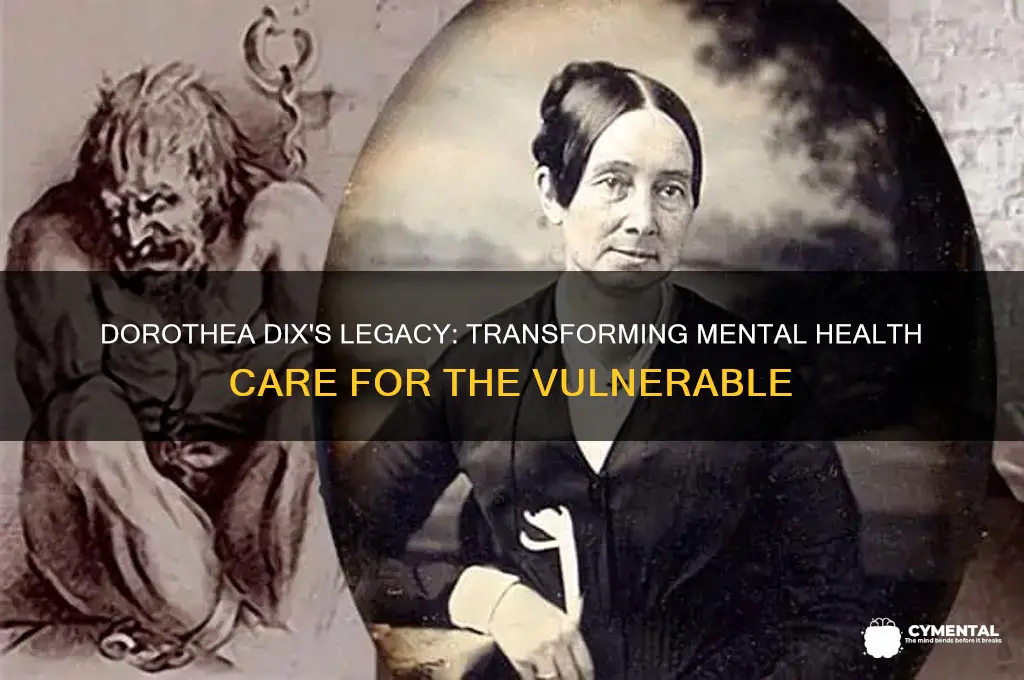
Dorothea Dix was a pioneering advocate for the humane treatment of the mentally ill in the 19th century. Appalled by the harsh conditions and neglect she witnessed in jails, almshouses, and poorhouses, where individuals with mental illnesses were often confined alongside criminals, Dix dedicated her life to reforming mental health care. Through extensive investigations and compelling reports to state legislatures, she exposed the widespread abuse and advocated for the establishment of specialized hospitals. Her tireless efforts led to the creation of numerous mental asylums across the United States and abroad, significantly improving the lives of those suffering from mental illness. Dix's work not only transformed public perception of mental health but also laid the foundation for modern psychiatric care, emphasizing compassion, dignity, and proper treatment for vulnerable populations.
| Characteristics | Values |
|---|---|
| Advocacy & Reform | Campaigned tirelessly for better treatment of the mentally ill, exposing horrific conditions in jails, almshouses, and asylums. |
| Legislation | Successfully lobbied for the passage of laws establishing and funding state mental hospitals, ensuring dedicated facilities for care. |
| Investigations | Conducted extensive investigations into the treatment of the mentally ill, documenting abuse, neglect, and inhumane conditions. |
| Public Awareness | Raised public awareness about mental illness, challenging stigma and promoting understanding through lectures, writings, and testimony. |
| Improved Conditions | Her efforts led to improved living conditions, medical care, and treatment methods within mental institutions. |
| Education & Training | Advocated for the education and training of staff working with the mentally ill, promoting a more compassionate and professional approach. |
| Humanitarianism | Dedicated her life to the welfare of the mentally ill, driven by a deep sense of compassion and social justice. |
Explore related products


What You'll Learn
- Advocated for humane treatment in asylums, exposing horrific conditions and neglect of mentally ill individuals
- Pushed for legislative reforms to fund and improve mental health institutions across the United States
- Established mental health facilities dedicated to care, rehabilitation, and dignity for the mentally ill
- Educated the public to reduce stigma and promote understanding of mental illness as a medical condition
- Secured government support for mental health care during the Civil War, aiding soldiers' psychological needs

Advocated for humane treatment in asylums, exposing horrific conditions and neglect of mentally ill individuals
In the mid-19th century, asylums were often places of horror rather than healing, where the mentally ill were subjected to neglect, abuse, and inhumane conditions. Dorothea Dix, a pioneering reformer, took it upon herself to expose these atrocities and advocate for systemic change. Her investigations revealed patients chained to walls, left in filth, and deprived of basic necessities like food and warmth. Dix’s relentless efforts led to legislative reforms in multiple states, establishing or improving asylums that prioritized care over confinement. Her work laid the foundation for modern mental health advocacy, proving that one person’s courage could transform a broken system.
To understand Dix’s impact, consider her methodical approach. She visited prisons, poorhouses, and asylums across the United States and Europe, documenting conditions with meticulous detail. Her reports to state legislatures were not just exposés but calls to action, backed by irrefutable evidence. For instance, in Massachusetts, she testified about a woman with mental illness left naked in a dark, unheated cell for years. Such vivid accounts forced lawmakers to confront the reality of neglect. Dix’s strategy was simple yet powerful: shine a light on the darkness, and demand humanity in its place.
Advocating for humane treatment wasn’t just about exposing cruelty—it was about redefining care. Dix argued that the mentally ill deserved medical attention, compassionate staff, and environments conducive to recovery. She pushed for asylums to be places of therapy, not punishment, advocating for activities like gardening, crafts, and social interaction. Her vision included age-appropriate care, separating children and adults to address their unique needs. While her ideas weren’t always fully realized, they set a precedent for ethical treatment that still resonates today.
A practical takeaway from Dix’s legacy is the importance of oversight and accountability in mental health institutions. Her work underscores the need for regular inspections, transparent reporting, and community involvement to prevent neglect. For modern advocates, this means pushing for policies that mandate humane conditions, funding mental health services adequately, and amplifying the voices of those in care. Dix’s example teaches us that change begins with seeing the humanity in others and refusing to look away from their suffering.
Community Support: A Powerful Ally for Mental Health and Well-Being
You may want to see also
Explore related products


$27.45 $48.95


Pushed for legislative reforms to fund and improve mental health institutions across the United States
Dorothea Dix's advocacy for legislative reforms was a cornerstone of her mission to improve the lives of the mentally ill in the United States. By the 1840s, she had witnessed firsthand the appalling conditions in which many individuals with mental illnesses were confined—often in jails, almshouses, or basements, chained, neglected, and abused. Armed with detailed reports and a relentless determination, Dix embarked on a state-by-state campaign to persuade lawmakers to allocate funds for the creation and maintenance of humane mental health institutions. Her approach was methodical: she gathered evidence, presented it to legislators, and argued passionately for systemic change. This strategy not only exposed the dire need for reform but also laid the groundwork for a more compassionate and structured approach to mental health care.
To achieve her goals, Dix employed a combination of investigative research and persuasive rhetoric. She traveled extensively, visiting prisons, poorhouses, and asylums to document the conditions of the mentally ill. Her reports were meticulous, often including shocking details such as the number of individuals confined in inhumane settings and the lack of medical care or basic necessities. Armed with this evidence, she petitioned state legislatures, arguing that the government had a moral and social obligation to provide proper care for its most vulnerable citizens. For example, in Massachusetts, her efforts led to the establishment of the Worcester State Hospital in 1833, a facility designed to offer treatment rather than punishment. This model became a blueprint for similar institutions across the country.
One of the key challenges Dix faced was overcoming societal indifference and stigma. Mental illness was often misunderstood, and many viewed those affected as dangerous or beyond help. To counter this, Dix framed her advocacy in terms of fiscal responsibility and public safety. She argued that proper care for the mentally ill would reduce crime, alleviate the burden on local communities, and ultimately save taxpayer money. Her pragmatic approach resonated with lawmakers, who began to see the value in investing in mental health institutions. By 1881, largely due to her efforts, 32 states had established or expanded asylums, reflecting a significant shift in public policy and attitudes toward mental health care.
However, Dix's reforms were not without criticism. Some argued that her focus on institutionalization perpetuated a system that could be isolating and dehumanizing. While her intentions were undoubtedly compassionate, the asylums she championed were not always the utopian solutions she envisioned. Overcrowding, inadequate staffing, and a lack of effective treatments often marred these institutions. Despite these limitations, her legislative victories marked a turning point in the history of mental health care, establishing the principle that the state had a responsibility to provide for the mentally ill. Her legacy endures in the ongoing struggle for equitable and humane mental health services.
In practical terms, Dix's advocacy offers a blueprint for modern reformers. Her success underscores the importance of evidence-based arguments, persistence, and strategic framing in pushing for policy change. For those working to improve mental health care today, her example highlights the need to address both the moral and practical dimensions of the issue. By documenting conditions, engaging with policymakers, and building public support, advocates can follow in her footsteps to drive meaningful legislative reforms. While the challenges of mental health care remain complex, Dix's work reminds us that systemic change is possible through dedication and strategic action.
Supporting Your Boyfriend's Mental Health Through Nutrition and Diet
You may want to see also
Explore related products


Established mental health facilities dedicated to care, rehabilitation, and dignity for the mentally ill
Dorothea Dix's advocacy led to the establishment of mental health facilities that prioritized care, rehabilitation, and dignity for the mentally ill, marking a significant shift from punitive to therapeutic approaches. Before her efforts, individuals with mental illnesses were often confined in jails, almshouses, or poorhouses, subjected to neglect and abuse. Dix's investigations exposed these deplorable conditions, compelling her to lobby for state-funded asylums designed specifically for their needs. These institutions were envisioned as sanctuaries where patients could receive medical attention, humane treatment, and opportunities for recovery. By securing legislative support in states like Massachusetts, New Jersey, and Illinois, Dix laid the groundwork for a system that recognized the humanity of the mentally ill.
The design and operation of these facilities reflected Dix's commitment to dignity and rehabilitation. She advocated for spacious, well-ventilated buildings surrounded by nature, believing that a calm environment aided healing. Patients were provided with structured daily routines, including work therapy, education, and recreational activities, to foster a sense of purpose and normalcy. For instance, in the Trenton State Hospital in New Jersey, patients engaged in gardening, crafts, and light labor, which not only occupied their time but also contributed to their self-esteem. Dix emphasized the importance of trained staff, ensuring that caregivers were compassionate and knowledgeable about mental health. This holistic approach contrasted sharply with the harsh, custodial methods of the past.
However, establishing these facilities was not without challenges. Funding was a persistent issue, as state legislatures often balked at the costs. Dix's relentless lobbying and detailed reports, which documented the suffering of the mentally ill, were instrumental in securing financial commitments. She also faced resistance from those who viewed mental illness as a moral failing rather than a medical condition. To counter this, Dix framed her cause in moral and religious terms, appealing to the public's sense of duty and compassion. Her efforts resulted in the creation of over 30 mental health institutions across the United States and abroad, setting a precedent for modern psychiatric care.
Despite her successes, Dix's vision was not without flaws. Overcrowding became a problem as demand for asylum beds outpaced capacity, leading to conditions that sometimes undermined her ideals. Additionally, the medical understanding of mental illness at the time was limited, and treatments were often ineffective or even harmful. Yet, her legacy lies in her insistence that the mentally ill deserved respect, care, and a chance at recovery. Her work not only improved the lives of countless individuals but also reshaped societal attitudes toward mental health, paving the way for future advancements in the field.
Today, Dix's contributions serve as a reminder of the importance of humane and dignified care in mental health treatment. While modern facilities have evolved significantly, incorporating evidence-based therapies and medications, her core principles remain relevant. Mental health advocates continue to draw inspiration from her tireless efforts, emphasizing the need for compassionate, patient-centered care. For those involved in mental health policy or practice, Dix's story underscores the impact of advocacy and the enduring value of treating all individuals with respect and empathy. Her legacy challenges us to continually strive for a system that prioritizes healing, rehabilitation, and dignity for those struggling with mental illness.
Mental Health Support: A Key to Stable Housing Solutions
You may want to see also
Explore related products


Educated the public to reduce stigma and promote understanding of mental illness as a medical condition
Dorothea Dix's efforts to educate the public about mental illness were groundbreaking, challenging the prevailing notion that mental disorders were a result of personal failings or moral weaknesses. She embarked on a mission to shift public perception, armed with a wealth of knowledge and a determination to dispel ignorance. Through her extensive research and firsthand experiences in asylums, Dix gathered compelling evidence to support her claim that mental illness was, in fact, a medical condition requiring treatment and compassion.
Unveiling the Truth: A Strategic Approach
Dix's strategy was twofold: first, she meticulously documented the appalling conditions in which the mentally ill were confined, often in prisons, almshouses, or makeshift shelters. Her detailed reports painted a grim picture of neglect, abuse, and inhumane treatment. By presenting these findings to the public and legislators, she aimed to shock and galvanize people into action. For instance, her investigations revealed that in one facility, over 20 individuals were chained in a single room, receiving no medical care or proper nourishment. This evidence became a powerful tool to illustrate the urgent need for reform.
The Power of Storytelling: Humanizing Mental Illness
In her public lectures and writings, Dix employed a narrative style, sharing stories of individuals she had encountered. She gave a voice to the voiceless, describing their struggles, fears, and hopes. By personalizing mental illness, she aimed to evoke empathy and challenge the stigma associated with it. For example, she recounted the story of a young woman, Sarah, who, after experiencing a traumatic event, became withdrawn and delusional. Dix explained how, with proper care and treatment, Sarah's condition improved, allowing her to regain a sense of self and reintegrate into society. These narratives served as powerful tools to educate and inspire, offering a glimpse into the lives of the mentally ill and the potential for recovery.
A Call to Action: Engaging the Community
Dix's educational efforts extended beyond mere awareness; she actively involved the public in her reform movement. She organized community meetings, encouraging open discussions about mental health and the role of society in providing support. By engaging local leaders, clergy, and educators, she fostered a sense of collective responsibility. Dix provided practical guidance, suggesting ways to identify early signs of mental distress and offering advice on how to approach and assist those in need. This community-centric approach not only reduced stigma but also empowered individuals to become agents of change, ensuring that the mentally ill received the understanding and care they deserved.
Long-Term Impact: Shaping Public Policy
The educational campaigns led by Dorothea Dix had a profound and lasting impact on public policy. Her relentless advocacy contributed to the establishment of numerous mental health institutions across the United States, designed to provide humane and medical care. Dix's work influenced legislation, leading to the allocation of resources for mental health research and treatment. By educating the public, she not only changed individual perceptions but also shaped societal attitudes, ensuring that future generations would view mental illness through a lens of compassion and medical understanding. This shift in public consciousness remains a cornerstone of modern mental health advocacy.
Supporting Your Spouse Through Mental Illness: Practical Ways to Help
You may want to see also
Explore related products


Secured government support for mental health care during the Civil War, aiding soldiers' psychological needs
During the Civil War, Dorothea Dix played a pivotal role in securing government support for mental health care, specifically addressing the psychological needs of soldiers. Recognizing the unprecedented trauma and stress faced by combatants, Dix advocated for the establishment of dedicated hospital wards and the appointment of trained nurses to provide care. Her efforts led to the creation of the Army Nurses Corps, which became a lifeline for soldiers suffering from what we now recognize as PTSD, depression, and anxiety. By leveraging her influence and persistence, Dix ensured that mental health was not overlooked in the chaos of war, setting a precedent for future military mental health initiatives.
To achieve this, Dix employed a strategic approach, combining data-driven arguments with moral persuasion. She compiled detailed reports on the mental health conditions of soldiers, highlighting the alarming rates of psychological distress and the lack of adequate care. These reports were presented to Congress and military leaders, forcing them to confront the issue. Dix also personally visited battlefields and hospitals, witnessing firsthand the suffering of soldiers and using these experiences to strengthen her case. Her ability to bridge the gap between policy and practice was instrumental in securing funding and resources for mental health care during the war.
One of the most impactful outcomes of Dix’s efforts was the integration of psychological care into the broader medical framework of the Union Army. She advocated for the inclusion of mental health assessments in routine medical examinations and pushed for the development of specialized treatment protocols. For instance, soldiers exhibiting signs of severe trauma were placed in quieter, more therapeutic environments rather than being left in overcrowded and chaotic general wards. Dix also ensured that nurses received training in psychological first aid, equipping them with the skills to provide emotional support and basic counseling. These measures not only improved the immediate well-being of soldiers but also laid the groundwork for long-term mental health care in military settings.
Despite her successes, Dix’s work during the Civil War was not without challenges. Resistance from military officials who prioritized physical injuries over psychological wounds was a constant hurdle. Additionally, the sheer scale of the conflict meant that resources were often stretched thin, limiting the scope of her initiatives. However, Dix’s unwavering commitment to the cause ensured that mental health care remained a priority. Her legacy is evident in the continued emphasis on psychological support for veterans and active-duty personnel, a direct result of her pioneering efforts during one of the nation’s darkest chapters.
In practical terms, Dix’s approach offers valuable lessons for modern mental health advocacy. Her method of combining empirical evidence with emotional appeals can be replicated in contemporary campaigns to secure funding and policy changes. For organizations or individuals working in mental health, her story underscores the importance of persistence and adaptability in the face of institutional resistance. By studying her strategies, advocates can develop more effective ways to address the psychological needs of vulnerable populations, whether in times of war or peace. Dix’s work during the Civil War remains a testament to the power of one individual to effect systemic change in mental health care.
Seeking Support: A Guide to Finding Mental Health Assistance
You may want to see also
Frequently asked questions
Dorothea Dix advocated for the mentally ill by conducting extensive investigations into the conditions of asylums and jails, exposing the inhumane treatment of individuals with mental illnesses. She used her findings to lobby state legislatures and Congress for reforms and funding to improve care.
Dorothea Dix successfully campaigned for the establishment of state-funded mental hospitals that provided humane and therapeutic care. She helped pass legislation in several states, including Massachusetts and New Jersey, and her efforts led to the creation of over 30 mental health institutions across the U.S. and abroad.
Dorothea Dix's work revolutionized mental health care in the 19th century by shifting public perception and policy toward compassionate treatment of the mentally ill. Her advocacy led to the separation of mentally ill individuals from prisons, improved living conditions in asylums, and the recognition of mental illness as a medical condition requiring specialized care.