Noah Parker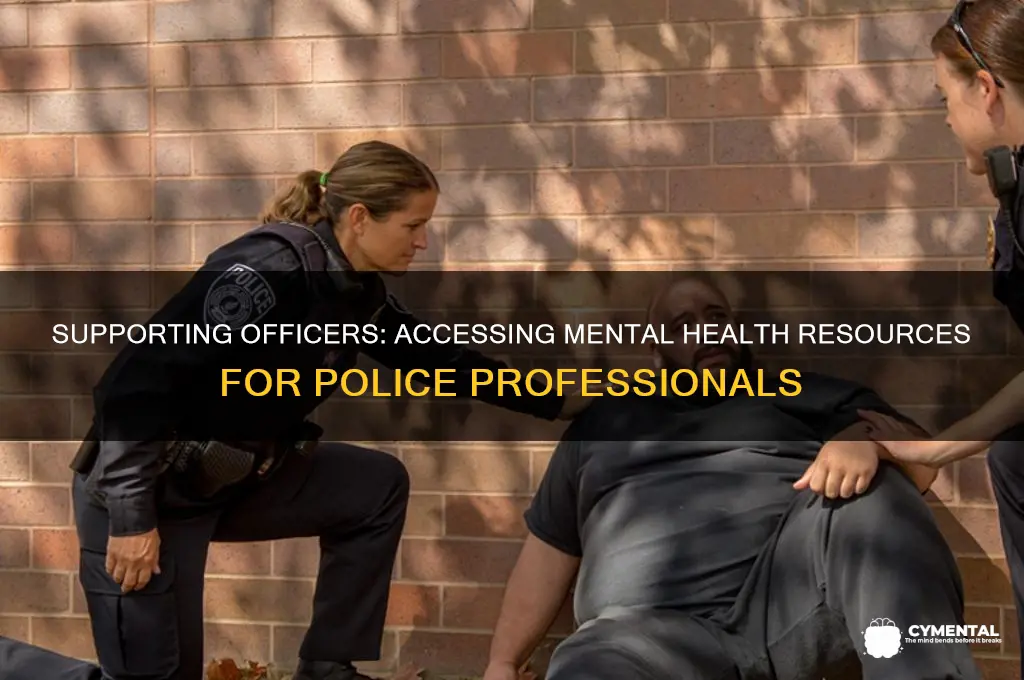
Police officers often face high-stress situations and traumatic events in their line of duty, which can take a significant toll on their mental health. Recognizing the importance of addressing these challenges, many law enforcement agencies have implemented programs and resources to support officers’ well-being. These initiatives include access to counseling services, peer support groups, and specialized training to help officers recognize and manage stress, anxiety, and other mental health issues. Additionally, partnerships with mental health professionals and organizations provide officers with confidential assistance tailored to their unique experiences. By prioritizing mental health, police departments aim to foster resilience, reduce stigma, and ensure that officers can perform their duties effectively while maintaining their own psychological health.
| Characteristics | Values |
|---|---|
| Access to Mental Health Professionals | Many police departments have partnerships with mental health providers or in-house counselors. |
| Crisis Intervention Teams (CIT) | Specialized units trained to handle mental health crises, available in many jurisdictions. |
| Peer Support Programs | Officers can seek help from fellow officers trained in peer support for mental health issues. |
| Employee Assistance Programs (EAPs) | Confidential counseling and support services provided by employers. |
| Telehealth Services | Remote mental health support via phone or video for officers in remote areas. |
| Mandatory Mental Health Screenings | Some departments require periodic mental health assessments for officers. |
| Confidentiality Policies | Strict policies to protect officers' privacy when seeking mental health help. |
| Training in Mental Health Awareness | Officers receive training to recognize signs of mental health issues in themselves and others. |
| Critical Incident Stress Management (CISM) | Structured interventions after traumatic events to support officers' mental health. |
| Collaboration with Local Resources | Partnerships with local mental health organizations for additional support. |
| Stigma Reduction Initiatives | Programs to reduce stigma around seeking mental health help within police culture. |
| 24/7 Hotlines | Access to emergency mental health hotlines specifically for law enforcement. |
| Resilience and Wellness Programs | Programs focused on overall wellness, including mental health, fitness, and stress management. |
| Family Support Services | Support extended to officers' families to address mental health concerns. |
| Research and Data Collection | Ongoing research to improve mental health support strategies for police. |
Explore related products


$12.94 $17.99


What You'll Learn
- Training Programs: Specialized courses to equip officers with mental health crisis intervention skills
- Peer Support Systems: Officer-led networks providing emotional support and resources for colleagues
- Access to Therapists: Partnerships with mental health professionals for confidential counseling services
- Critical Incident Debriefing: Structured sessions to help officers process traumatic events
- Wellness Initiatives: Programs promoting physical and mental health through fitness, mindfulness, and education

Training Programs: Specialized courses to equip officers with mental health crisis intervention skills
Police officers are increasingly encountering individuals in mental health crises, yet many lack the specialized skills to de-escalate these situations effectively. This gap has led to the development of targeted training programs designed to equip officers with the necessary tools. One prominent example is Crisis Intervention Team (CIT) training, a 40-hour course that pairs officers with mental health professionals to simulate real-world scenarios. During these sessions, officers learn to recognize signs of mental illness, communicate empathetically, and connect individuals to appropriate resources. Studies show that CIT-trained officers are more likely to resolve crises without resorting to force, highlighting the program’s effectiveness.
While CIT is widely recognized, other programs like Mental Health First Aid (MHFA) for Public Safety offer a more condensed, 8-hour curriculum tailored to law enforcement. This training focuses on a four-step action plan: assess for risk of suicide or harm, listen nonjudgmentally, give reassurance and information, and encourage appropriate professional help. MHFA is particularly valuable for departments with limited resources, as it provides foundational skills without requiring extensive time commitments. However, its brevity may limit its depth compared to longer programs like CIT.
A critical aspect of these training programs is their emphasis on scenario-based learning. Officers practice de-escalation techniques in role-playing exercises, often with actors portraying individuals in crisis. For instance, a scenario might involve a person experiencing a psychotic episode, allowing officers to apply communication strategies in a safe, controlled environment. This hands-on approach bridges the gap between theory and practice, ensuring officers feel confident when faced with similar situations in the field.
Despite their benefits, these programs are not without challenges. Consistency in implementation varies across departments, with some officers receiving training while others do not. Additionally, the lack of standardized curricula means the quality of training can differ significantly. To address this, organizations like the International Association of Chiefs of Police (IACP) advocate for national certification standards for mental health crisis intervention training. Such standards would ensure all officers receive a baseline level of education, regardless of their department’s size or location.
Ultimately, specialized training programs are a vital step toward improving police responses to mental health crises. By equipping officers with the skills to de-escalate situations and connect individuals to care, these courses not only enhance public safety but also foster trust between law enforcement and the communities they serve. Departments should prioritize investing in such programs, recognizing that the benefits far outweigh the costs in both human and financial terms.
Iowa Mental Health Laws: Can You Force Someone to Get Help?
You may want to see also
Explore related products


Peer Support Systems: Officer-led networks providing emotional support and resources for colleagues
Police officers face unique stressors that can take a significant toll on their mental health, from high-stakes decision-making to exposure to trauma. While professional counseling and therapy are vital, peer support systems offer a distinct advantage: understanding from those who’ve walked the same beat. Officer-led networks provide a safe, non-judgmental space where colleagues can share experiences, coping strategies, and resources without fear of stigma or career repercussions. These systems are not just about venting; they’re about building resilience through shared strength.
Consider the structure of a successful peer support network. First, identify and train volunteer officers who demonstrate empathy, active listening, and confidentiality. These peers act as first responders for emotional distress, guiding colleagues to professional help when needed. Second, establish clear boundaries and protocols to ensure conversations remain supportive, not intrusive. For instance, a peer might say, “I’ve noticed you’ve been quieter lately. How are you holding up?” rather than prying into personal details. Third, integrate the network into the department’s culture, ensuring it’s seen as a sign of strength, not weakness. Departments like the New York Police Department (NYPD) have implemented such programs, reporting increased officer engagement and reduced stigma around seeking help.
One of the most compelling aspects of peer support systems is their ability to address the unique challenges of police work. Unlike civilian mental health resources, these networks understand the weight of split-second decisions, the isolation of night shifts, and the cumulative impact of witnessing human suffering. For example, after a critical incident, a peer supporter might organize a debriefing session where officers can process their emotions together, normalizing reactions that might otherwise feel isolating. This shared experience fosters a sense of camaraderie and reduces the risk of long-term psychological harm.
However, peer support systems are not without challenges. Without proper oversight, they can become cliques or fail to connect officers with professional care when needed. To mitigate this, departments should provide ongoing training for peer supporters, emphasizing the importance of referring colleagues to therapists or psychologists when issues exceed their scope. Additionally, anonymity must be prioritized to encourage participation. For instance, some departments use anonymous hotlines or apps where officers can connect with peers without revealing their identity, ensuring privacy while fostering trust.
In conclusion, peer support systems are a powerful tool in addressing police mental health, but their success hinges on thoughtful implementation. By combining empathy, structure, and confidentiality, these officer-led networks can create a culture where seeking help is not just accepted but encouraged. Departments that invest in such programs not only support their officers’ well-being but also enhance overall job performance and community trust. After all, officers who feel supported are better equipped to serve and protect.
Empowering Minds: How Mental Health Professionals Foster Healing and Resilience
You may want to see also
Explore related products


Access to Therapists: Partnerships with mental health professionals for confidential counseling services
Police officers face unique stressors that can take a significant toll on their mental health, from witnessing trauma to making split-second life-or-death decisions. One effective way to address these challenges is through partnerships with mental health professionals, providing officers with confidential counseling services. These collaborations ensure that officers have access to therapists who understand the specific demands of their profession, fostering a safe space for healing and resilience.
Consider the model adopted by the Los Angeles Police Department (LAPD), which has integrated licensed therapists into its wellness program. Officers can schedule sessions with these professionals without fear of stigma or departmental repercussions. The therapists are trained to address issues like PTSD, anxiety, and burnout, using evidence-based approaches such as cognitive-behavioral therapy (CBT) and eye movement desensitization and reprocessing (EMDR). This partnership not only improves individual officer well-being but also enhances overall department morale and performance.
Implementing such a program requires careful planning. First, identify mental health professionals experienced in working with first responders or trauma survivors. Second, establish clear protocols for confidentiality, ensuring officers’ personal information remains protected. Third, provide training for therapists on police culture and the unique stressors officers face. For example, a therapist might learn about the cumulative effects of critical incidents or the challenges of shift work on mental health. Finally, promote the program through department-wide communications, emphasizing its accessibility and benefits.
A key takeaway is that these partnerships must be built on trust and understanding. Therapists should avoid judgment and focus on creating a non-threatening environment. For instance, offering flexible session times—early mornings, late evenings, or weekends—can accommodate officers’ unpredictable schedules. Additionally, incorporating peer support groups alongside individual therapy can foster a sense of community and shared experience. By addressing both individual and collective needs, these partnerships can become a cornerstone of police mental health support.
In conclusion, access to therapists through strategic partnerships is a powerful tool for supporting police mental health. When designed thoughtfully, these programs provide officers with the confidential, specialized care they need to thrive in their demanding roles. Departments that invest in such initiatives not only prioritize their officers’ well-being but also strengthen their ability to serve the public effectively.
Daily Exercise: A Powerful Tool to Prevent Mental Illness?
You may want to see also
Explore related products




Critical Incident Debriefing: Structured sessions to help officers process traumatic events
Police officers routinely face traumatic events—shootings, fatalities, and extreme violence—that can lead to acute stress reactions, PTSD, or moral injury. Critical Incident Debriefing (CID) is a structured, time-sensitive intervention designed to mitigate these psychological impacts. Typically conducted within 24–72 hours after an event, CID sessions are facilitated by trained peers or mental health professionals in a group setting. The process follows a phased approach: introduction, fact phase (describing the event), thought phase (sharing reactions), reaction phase (emotional responses), and symptom phase (identifying stress indicators). This framework helps officers normalize their experiences, reduce isolation, and develop coping strategies.
While CID is widely adopted, its effectiveness hinges on timing, facilitator skill, and voluntary participation. Research indicates that when implemented correctly, it can reduce the severity of stress symptoms and foster resilience. However, it is not a one-size-fits-all solution; some officers may prefer individual counseling or alternative interventions like Cognitive Behavioral Therapy (CBT). Departments must ensure facilitators are trained in trauma-informed practices to avoid retraumatization. For instance, a study in the *Journal of Police and Criminal Psychology* found that officers who participated in CID led by certified professionals reported higher satisfaction and better outcomes compared to sessions led by untrained peers.
A practical tip for departments implementing CID is to integrate it into existing protocols, such as post-incident reviews. Officers should be briefed on the purpose of CID beforehand to dispel misconceptions, such as it being mandatory or a sign of weakness. Additionally, follow-up sessions should be offered to monitor long-term psychological effects. For example, the Los Angeles Police Department pairs CID with a 30-day check-in system, which has shown to improve officer engagement and mental health outcomes.
Critics argue that CID’s group format may deter officers from fully expressing vulnerability, particularly in hyper-masculine cultures. To address this, departments can offer hybrid models combining group debriefing with optional individual sessions. Another caution is the risk of over-reliance on CID as the sole mental health resource. It should complement, not replace, comprehensive wellness programs, including access to therapists, peer support networks, and stress management training. When used judiciously, CID serves as a critical tool in helping officers process trauma and maintain operational readiness.
Empowering Support: Practical Ways to Assist Mentally Challenged Individuals
You may want to see also
Explore related products


Wellness Initiatives: Programs promoting physical and mental health through fitness, mindfulness, and education
Police departments are increasingly recognizing the critical link between physical fitness, mental resilience, and job performance. Wellness initiatives that integrate fitness, mindfulness, and education are emerging as powerful tools to address the unique stressors officers face. These programs go beyond traditional employee assistance plans, offering proactive strategies to build mental toughness and prevent burnout.
For instance, the One Mind Campaign advocates for comprehensive officer wellness programs, emphasizing the need for physical training regimens that not only improve cardiovascular health but also simulate the demands of high-stress situations. Departments implementing such programs report increased officer stamina, improved decision-making under pressure, and a greater sense of overall well-being.
Mindfulness practices, once viewed with skepticism in law enforcement, are now gaining traction as essential components of officer wellness. Programs incorporating mindfulness-based stress reduction (MBSR) techniques, such as guided meditation and breathing exercises, have shown promising results in reducing anxiety, improving sleep quality, and enhancing emotional regulation. A study published in the *Journal of Police and Criminal Psychology* found that officers who participated in an 8-week MBSR program experienced significant decreases in perceived stress levels and increased job satisfaction.
Integrating mindfulness training into academy curricula and providing ongoing access to guided meditation apps or in-house instructors can make these practices more accessible and sustainable for officers.
Education plays a pivotal role in destigmatizing mental health issues within police culture. Wellness initiatives should include comprehensive training on stress management, recognizing signs of burnout, and understanding the psychological impact of trauma exposure. Peer support programs, facilitated by specially trained officers, provide a safe space for colleagues to share experiences and offer mutual support. Additionally, partnerships with mental health professionals specializing in law enforcement can ensure officers have access to evidence-based therapies and confidential counseling services.
Successful wellness initiatives require a multi-faceted approach, addressing physical, mental, and emotional well-being. By investing in fitness programs, mindfulness training, and educational resources, police departments can empower officers to thrive in a demanding profession, ultimately leading to a healthier, more resilient workforce and improved community relations.
Texas State Services for Mentally Disabled Individuals: Available Resources and Support
You may want to see also
Frequently asked questions
Police officers can access mental health services through department-provided resources, such as employee assistance programs (EAPs), peer support groups, or partnerships with mental health professionals. Many departments also offer confidential counseling services tailored to law enforcement.
After traumatic incidents, officers often have access to critical incident stress management (CISM) programs, which provide immediate support and debriefing. Departments may also offer therapy sessions, crisis hotlines, or referrals to specialized trauma counselors.
Many departments have policies in place to ensure confidentiality and protect officers who seek mental health help. However, concerns about stigma or career impact still exist, so officers should verify their department’s policies or seek external resources if needed.
Yes, there are programs like the Police Officer Support Program (POSP) and organizations like the Code 9 Project that offer mental health resources tailored to the unique challenges faced by police officers, including stress, trauma, and burnout.
Family members can encourage officers to seek help, provide emotional support, and assist in finding appropriate resources. They can also advocate for mental health awareness within the department and connect officers with external support networks.