Caleb Wright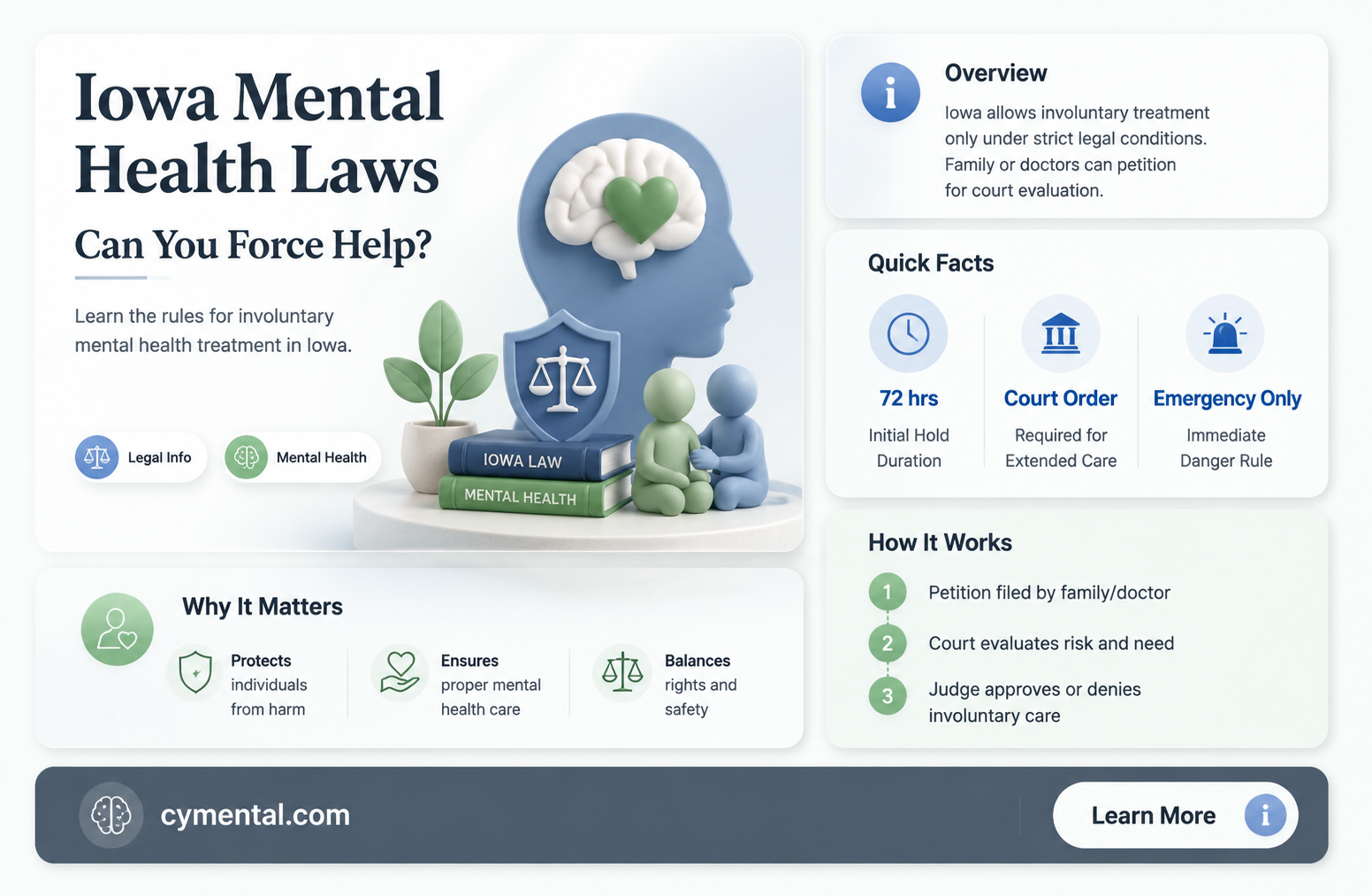
In Iowa, the process of compelling someone to receive mental health treatment is governed by specific legal procedures designed to balance individual rights with public safety. Under Iowa Code Chapter 229, individuals may be involuntarily committed for mental health evaluation and treatment if they pose a danger to themselves or others due to a mental illness. This process typically begins with a petition filed by a concerned party, such as a family member, healthcare provider, or law enforcement officer, followed by a court hearing where evidence is presented to determine the necessity of intervention. While the goal is to provide essential care, the system emphasizes due process and ensures that involuntary commitment is a last resort, reserved for situations where voluntary treatment is not feasible or sufficient. Understanding these legal frameworks is crucial for anyone seeking to help a loved one in crisis while navigating the complexities of Iowa’s mental health system.
| Characteristics | Values |
|---|---|
| Legal Framework | Iowa Code Chapter 229 (Mental Health Commitment) |
| Involuntary Commitment Criteria | Individual is mentally ill, poses a danger to self or others, or is unable to provide for basic needs due to mental illness |
| Who Can Petition | Any interested person, including family members, law enforcement, or healthcare professionals |
| Emergency Detention | Up to 72 hours for evaluation in a designated mental health facility |
| Court Hearing | Required within 72 hours of detention; individual has the right to legal representation |
| Commitment Duration | Initial commitment up to 60 days; may be extended by court order |
| Treatment Options | Inpatient or outpatient treatment, depending on court decision |
| Patient Rights | Right to appeal, right to refuse medication (unless court-ordered), right to confidentiality |
| Less Restrictive Alternatives | Courts must consider alternatives to hospitalization if feasible |
| Reevaluation | Periodic reviews to assess need for continued commitment |
| Guardian Ad Litem | May be appointed to represent the individual’s interests in court proceedings |
| Confidentiality | Mental health records are protected under state and federal laws |
| Community Services | Iowa offers crisis intervention and community-based mental health services as alternatives |
| Recent Updates | As of latest data, no significant changes to Chapter 229 in 2023 |
Explore related products


What You'll Learn

Legal Criteria for Involuntary Commitment
In Iowa, involuntary commitment for mental health treatment is governed by strict legal criteria designed to balance individual rights with public safety. The process begins with a petition filed by a concerned party, such as a family member, healthcare provider, or law enforcement officer. This petition must allege that the individual is mentally ill, poses a danger to themselves or others, or is unable to provide for their basic needs due to their condition. The petitioner must provide specific examples of behavior that meet these criteria, such as recent threats of self-harm, violent outbursts, or severe neglect of personal hygiene and nutrition. Without concrete evidence, the petition is unlikely to proceed.
Once a petition is filed, a judge must determine whether the individual meets the legal threshold for involuntary commitment. Iowa Code Section 229.6 outlines the standards: the person must be evaluated by a mental health professional who confirms the diagnosis of mental illness and the associated risks. The evaluation must occur within 24 hours of the individual being taken into custody, ensuring a prompt assessment of their condition. If the judge finds sufficient evidence, a hearing is scheduled, typically within 72 hours, to decide whether the individual should be committed for treatment. This process emphasizes due process, allowing the individual to present their case and challenge the allegations.
The duration and nature of involuntary commitment vary based on the individual’s needs. Short-term commitments, known as emergency hospitalizations, can last up to 72 hours and are used to stabilize acute crises. Longer-term commitments require additional hearings and evidence of ongoing risk. For example, a person may be committed for up to 30 days if they continue to meet the criteria, with extensions possible upon further review. Treatment plans often include medication, therapy, and skill-building programs tailored to the individual’s condition. Compliance with these plans is monitored, and the individual may petition for release if they demonstrate improvement.
Critics argue that Iowa’s involuntary commitment process can be overly burdensome for families and individuals in crisis. The requirement for concrete evidence and multiple hearings can delay treatment, potentially worsening outcomes. However, proponents emphasize the importance of protecting civil liberties and ensuring that commitment is a last resort. Practical tips for navigating this system include documenting specific incidents of concerning behavior, consulting with mental health professionals early in the process, and seeking legal advice to understand the individual’s rights and the petitioner’s obligations.
In conclusion, Iowa’s legal criteria for involuntary commitment are designed to safeguard both the individual and the community. While the process is rigorous, it provides a structured framework for addressing severe mental health crises. Understanding these criteria and the steps involved can empower families and advocates to act effectively when intervention is necessary. Balancing compassion with legal precision remains the cornerstone of this critical system.
Protein Shakes and Mental Health: Unlocking the Mind-Body Connection
You may want to see also
Explore related products


$11.69 $17


Emergency Mental Health Holds Process
In Iowa, initiating an emergency mental health hold, formally known as a "pickup order," is a critical intervention for individuals experiencing acute psychiatric crises. This process, governed by Iowa Code Chapter 229, allows law enforcement or designated professionals to detain a person for evaluation if they pose a danger to themselves or others due to mental illness. The first step involves contacting local law enforcement or a crisis response team, who will assess the situation based on observable behaviors and statements. If criteria are met, they can transport the individual to a designated emergency room or mental health facility for further evaluation.
The evaluation phase is time-sensitive and structured. A licensed mental health professional must complete an assessment within 24 hours of the individual’s arrival. If the evaluator determines the person meets the criteria for involuntary hospitalization, a court hearing is scheduled within 72 hours to review the case. During this period, the individual is held in a secure facility, often a psychiatric unit, where they receive immediate care. It’s crucial for family members or advocates to provide relevant medical history or context to the evaluator, as this can influence the outcome.
One common misconception is that this process is punitive or restrictive without cause. In reality, Iowa’s system prioritizes both public safety and the individual’s well-being. For instance, the law requires that less restrictive alternatives, such as outpatient treatment, be considered before hospitalization. Additionally, the individual has the right to legal representation during the court hearing, ensuring due process. This balance reflects Iowa’s commitment to ethical mental health intervention.
Practical tips for navigating this process include keeping a detailed record of the individual’s behavior leading up to the crisis, as this can support the case for intervention. Familiarizing oneself with local crisis resources, such as the Your Life Iowa helpline (1-855-581-8111), can also streamline the initial steps. For minors, parental consent is typically required unless the situation is life-threatening, so guardians should be prepared to participate actively.
In conclusion, Iowa’s emergency mental health hold process is a structured yet compassionate mechanism for addressing severe mental health crises. While it involves legal and medical protocols, its core purpose is to provide timely, effective care to those in dire need. Understanding the steps, rights, and resources involved empowers families and communities to act decisively when every moment counts.
Supporting Loved Ones: Practical Ways to Help with Anxiety and Depression
You may want to see also
Explore related products

$57.74 $99.95

$38.88 $62.99


Role of Family in Seeking Help
In Iowa, family members often serve as the first line of defense in recognizing and addressing mental health issues. Their role is pivotal, yet complex, as they navigate the delicate balance between support and intervention. According to Iowa’s mental health laws, while individuals have autonomy over their care, families can play a critical role in encouraging and facilitating access to treatment. For instance, under Iowa Code Chapter 229, a family member can petition the court for an involuntary commitment if a loved one poses a danger to themselves or others due to severe mental illness. However, this is a last resort, and the process requires substantial evidence and legal oversight.
Families can also leverage less drastic measures to encourage mental health treatment. One effective strategy is staging a supportive intervention, where loved ones express concern and provide resources for professional help. For example, a family might compile a list of local therapists, such as those affiliated with Iowa’s Community Mental Health Centers, and offer to accompany the individual to the first appointment. Practical steps like scheduling appointments, arranging transportation, or even covering initial costs can reduce barriers to care. It’s essential to approach these conversations with empathy, avoiding blame or judgment, as resistance often stems from fear or stigma.
The role of family extends beyond initial encouragement into ongoing support. Research shows that individuals with strong family involvement in their mental health treatment tend to have better outcomes. Families can participate in therapy sessions, if appropriate, to improve communication and understanding. For adolescents, Iowa’s Children’s Mental Health System offers family-centered programs that involve parents in treatment planning. For adults, families can help monitor medication adherence, such as ensuring daily doses of prescribed antidepressants or antipsychotics, and watch for signs of relapse. However, it’s crucial to respect boundaries and avoid overstepping, as excessive involvement can lead to resentment or dependency.
A comparative analysis reveals that Iowa’s family-focused approach aligns with national trends emphasizing collaborative care. Unlike states with stricter involuntary commitment laws, Iowa prioritizes voluntary treatment and family engagement. For example, Iowa’s Mental Health and Disability Services (MHDS) regions provide family education programs to empower caregivers with knowledge about mental illness and coping strategies. These programs often include workshops on de-escalation techniques, which can be particularly useful for families dealing with loved ones experiencing acute episodes of conditions like bipolar disorder or schizophrenia. By equipping families with tools and resources, Iowa fosters a proactive rather than reactive approach to mental health.
In conclusion, the role of family in seeking mental health help in Iowa is multifaceted, blending encouragement, practical assistance, and ongoing support. While legal options like involuntary commitment exist, they are rarely the first step. Instead, families are encouraged to act as advocates, educators, and partners in care. By understanding Iowa’s resources and adopting a compassionate, informed approach, families can make a significant difference in helping their loved ones access the treatment they need.
College and Mental Health: A Path to Wellness or Stress?
You may want to see also
Explore related products


Iowa’s Mental Health Court System
In Iowa, the Mental Health Court System serves as a specialized judicial framework designed to address the needs of individuals with mental health issues who become entangled in the criminal justice system. Unlike traditional courts, these courts focus on treatment rather than punishment, aiming to divert eligible participants from incarceration into community-based mental health services. Established under Iowa Code Chapter 602.1105, Mental Health Courts operate in several counties, including Polk, Scott, and Linn, each tailoring their programs to local resources and needs. This system reflects a growing recognition that untreated mental illness often underlies criminal behavior, making therapeutic intervention a more effective solution than detention.
Participation in Iowa’s Mental Health Court System is voluntary and requires meeting specific eligibility criteria. Individuals must have a diagnosed mental health condition, face non-violent criminal charges, and demonstrate a willingness to engage in treatment. Once enrolled, participants undergo a structured program that typically lasts 12 to 18 months, involving regular court appearances, mental health treatment, medication management, and case management services. Success in the program can lead to reduced charges or dismissal, while failure to comply may result in reentry into the traditional criminal justice system. This approach not only benefits participants by addressing their mental health needs but also reduces recidivism rates and alleviates the burden on jails and prisons.
One of the key strengths of Iowa’s Mental Health Court System lies in its collaborative nature. Judges, prosecutors, defense attorneys, mental health professionals, and community service providers work together to create individualized treatment plans. For instance, participants may be connected with outpatient therapy, housing assistance, or vocational training, depending on their needs. This multidisciplinary approach ensures that participants receive comprehensive support, increasing their chances of long-term stability. However, the system is not without challenges. Limited funding, shortages of mental health professionals, and varying levels of community support across counties can hinder its effectiveness.
For families or individuals seeking to help someone access mental health treatment through this system, understanding the process is crucial. While you cannot force someone into Mental Health Court without their consent, you can encourage them to consult with a defense attorney who can petition for eligibility. If the individual is already facing criminal charges, early intervention is key. Contacting local mental health advocates or court liaisons can provide guidance on navigating the system. Additionally, Iowa’s Crisis and Access Line (1-855-581-8111) offers resources for individuals in need of immediate mental health assistance, which can be a stepping stone toward court-mandated treatment.
In conclusion, Iowa’s Mental Health Court System represents a progressive step toward addressing the intersection of mental health and criminal justice. By prioritizing treatment over incarceration, it offers a pathway to recovery for individuals who might otherwise cycle in and out of the justice system. While challenges remain, the system’s collaborative and individualized approach provides a model for other states to emulate. For those seeking to help a loved one, understanding the eligibility criteria and available resources is essential to leveraging this system effectively.
Prisoner Mental Health Support: Accessing Care Behind Bars
You may want to see also
Explore related products


Resources for Reporting Mental Health Crises
In Iowa, recognizing and reporting a mental health crisis can be a critical step in ensuring someone receives the help they need. The state offers several resources designed to assist individuals, families, and communities in navigating these challenging situations. Understanding how to access and utilize these resources is essential for timely intervention.
Identifying the Need for Intervention
A mental health crisis often manifests as severe distress, suicidal thoughts, self-harm, or an inability to function daily. In Iowa, if someone poses an immediate danger to themselves or others, you can contact local law enforcement or dial 911. For less urgent but still concerning situations, the Iowa Crisis Line (1-844-469-2747) provides 24/7 support, offering guidance on next steps and connecting individuals to appropriate services. Recognizing these signs early can prevent escalation and ensure the person receives professional care.
Legal Framework for Involuntary Commitment
Iowa’s legal system allows for involuntary commitment if an individual is deemed a threat to themselves or others due to mental illness. This process begins with filing an application for involuntary hospitalization with a county magistrate or district court. A mental health professional must evaluate the individual to determine the necessity of commitment. While this measure is reserved for extreme cases, it underscores the state’s commitment to protecting vulnerable individuals.
Community-Based Resources
Beyond crisis hotlines and legal interventions, Iowa offers community-based resources to support individuals in distress. Local mental health and disability services (MHDS) regions provide case management, therapy, and crisis stabilization services. For example, the Your Life Iowa program (1-855-581-8111) offers free, confidential support for mental health, substance use, and gambling concerns. These resources emphasize early intervention and ongoing support to prevent crises from worsening.
Educational and Preventive Measures
Prevention plays a vital role in addressing mental health crises. Iowa has initiatives like Mental Health First Aid, a training program that teaches individuals how to identify and respond to mental health issues. Schools, workplaces, and community organizations can participate in these programs to foster a supportive environment. By equipping more people with the skills to recognize and address mental health concerns, Iowa aims to reduce the stigma surrounding mental illness and encourage proactive intervention.
Practical Steps for Reporting a Crisis
If you’re concerned about someone’s mental health, start by encouraging them to seek help voluntarily. If they refuse and their condition is severe, contact the Iowa Crisis Line or local MHDS for guidance. In emergencies, call 911 and request a Crisis Intervention Team (CIT) trained officer if available. Document specific behaviors or incidents that indicate a crisis, as this information can assist professionals in their assessment. Remember, acting promptly can make a significant difference in the outcome.
Supporting Veterans: Strategies to Address Mental Health Challenges Effectively
You may want to see also
Frequently asked questions
In Iowa, you cannot force someone to seek mental health treatment unless they meet the criteria for involuntary commitment, such as being a danger to themselves or others, and a court order is obtained.
You can contact local mental health crisis services, law enforcement, or file a petition for involuntary commitment with the court, providing evidence that the person meets the legal criteria for intervention.
Any responsible person, such as a family member, friend, or mental health professional, can initiate the process by filing a petition with the district court and providing evidence of the individual’s condition.
Initially, a person can be held for up to 72 hours for evaluation. If the court approves further treatment, it can be extended, but periodic reviews are required to ensure the need for continued care.

![Help![Blu-ray]](https://m.media-amazon.com/images/I/6155cLsT0HL._AC_UY218_.jpg)


![Help! [LP]](https://m.media-amazon.com/images/I/71Lo3XMoSlL._AC_UY218_.jpg)