Harper Lewis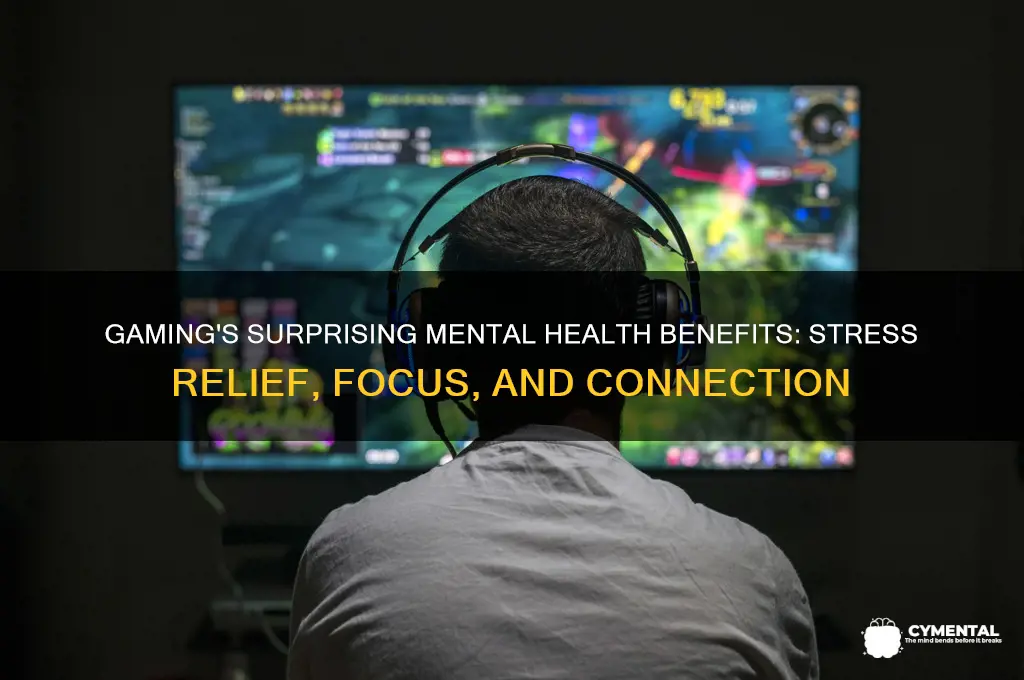
Gaming can significantly benefit mental health by providing a structured and engaging outlet for stress relief, emotional expression, and cognitive stimulation. Many games offer immersive experiences that allow players to escape from daily pressures, fostering relaxation and reducing anxiety. Additionally, multiplayer games promote social interaction, helping combat feelings of loneliness and isolation by building connections with others. Gaming also enhances problem-solving skills, improves focus, and boosts self-esteem through achievement and mastery, contributing to a sense of accomplishment. Furthermore, certain games designed for therapeutic purposes can address specific mental health challenges, such as depression or PTSD, by encouraging mindfulness and emotional regulation. Overall, when balanced with other activities, gaming can be a valuable tool for improving mental well-being.
| Characteristics | Values |
|---|---|
| Stress Relief | Gaming can reduce stress by providing an immersive distraction from daily worries, triggering the release of dopamine, and promoting relaxation. |
| Cognitive Improvement | Enhances problem-solving, decision-making, memory, and spatial reasoning skills through complex gameplay and strategic thinking. |
| Social Connection | Multiplayer games foster social interaction, teamwork, and community building, reducing feelings of loneliness and isolation. |
| Emotional Regulation | Games can help players manage emotions by providing a safe space to experience and process feelings like frustration, achievement, and empathy. |
| Mood Enhancement | Engaging in gaming can boost mood by providing a sense of accomplishment, fun, and escapism from negative emotions. |
| Coping Mechanism | Acts as a healthy coping strategy for individuals dealing with anxiety, depression, or trauma by offering structure and control. |
| Mindfulness and Focus | Certain games promote mindfulness and improve attention span by requiring concentration and presence in the moment. |
| Self-Esteem Boost | Achieving in-game goals and mastering skills can increase self-confidence and self-worth. |
| Therapeutic Tool | Used in therapeutic settings (e.g., gamified therapy) to address mental health issues like PTSD, ADHD, and anxiety disorders. |
| Physical Activity | Active gaming (e.g., VR or motion-controlled games) encourages physical movement, benefiting both mental and physical health. |
| Creativity and Expression | Games like sandbox or role-playing titles allow players to express creativity and explore new identities or scenarios. |
| Structured Routine | Provides a sense of routine and purpose, which is beneficial for individuals struggling with mental health challenges. |
Explore related products


What You'll Learn
- Stress Relief: Gaming reduces stress by providing immersive experiences that distract from daily pressures
- Cognitive Skills: Enhances problem-solving, memory, and decision-making through challenging gameplay mechanics
- Social Connection: Multiplayer games foster friendships and community, combating loneliness and isolation
- Emotional Regulation: Games offer safe spaces to process emotions and practice resilience
- Achievement Boost: Completing in-game goals boosts self-esteem and provides a sense of accomplishment

Stress Relief: Gaming reduces stress by providing immersive experiences that distract from daily pressures
Modern life bombards us with stressors—work deadlines, financial worries, relationship tensions—that can leave us feeling overwhelmed. Gaming offers a unique escape hatch. By plunging players into immersive worlds, it hijacks our attention, temporarily silencing the mental chatter of daily pressures. This isn't mere distraction; it's a form of psychological respite. Studies show that even 30 minutes of gameplay can significantly lower cortisol levels, the body's primary stress hormone. Think of it as a mental vacation, where the only deadline is defeating the next boss or solving the next puzzle.
Consider the design elements that make this possible. Open-world games like *The Legend of Zelda: Breath of the Wild* or *Red Dead Redemption 2* offer vast, explorable landscapes that encourage aimless wandering—a digital equivalent of a nature walk. Rhythm games like *Beat Saber* synchronize physical movement with music, creating a meditative flow state. Even competitive multiplayer games, when approached mindfully, can provide structure and focus, channeling stress into strategic thinking rather than rumination. The key is choosing games that align with your stress relief needs: fast-paced action for release, puzzles for mental engagement, or serene simulations for calm.
However, not all gaming experiences are created equal. To maximize stress relief, set boundaries. Limit sessions to 45–60 minutes to avoid mental fatigue, and avoid gaming as a coping mechanism for chronic stress without addressing underlying issues. Pair gaming with other stress-reduction techniques, such as deep breathing or stretching, to enhance its benefits. For younger players (ages 13–18), parental guidance can ensure gaming remains a healthy outlet rather than a source of additional pressure.
The takeaway? Gaming isn’t just entertainment—it’s a tool for mental recalibration. By leveraging its immersive nature, you can create a buffer between yourself and life’s stressors. Choose games thoughtfully, play intentionally, and remember: the goal isn’t to escape reality permanently, but to return to it with a clearer mind and renewed energy.
Mental Health Week: Awareness Boost or Superficial Support?
You may want to see also
Explore related products


Cognitive Skills: Enhances problem-solving, memory, and decision-making through challenging gameplay mechanics
Gaming, particularly through challenging gameplay mechanics, serves as a dynamic workout for the brain, sharpening cognitive skills in ways that everyday activities often cannot. Consider puzzle games like *Portal* or strategy games like *Civilization VI*, which require players to navigate complex problems under time pressure. These scenarios force the brain to adapt, enhancing problem-solving abilities by encouraging creative thinking and logical reasoning. Studies show that regular engagement in such games can improve spatial reasoning by up to 20%, a skill critical not only in gaming but also in real-world tasks like navigation and engineering.
Memory, another cognitive pillar, benefits significantly from gaming. Games like *The Legend of Zelda* series or *Dark Souls* demand players recall intricate details—maps, item locations, or enemy patterns—to progress. This constant retrieval and application of information strengthen both short-term and long-term memory. Research from the University of California found that action video game players exhibit better visual short-term memory, retaining up to 10% more details than non-gamers. To maximize this benefit, allocate 30–60 minutes daily to games requiring memorization, ensuring the challenge remains engaging but not overwhelming.
Decision-making, a skill intertwined with problem-solving and memory, is refined through the rapid, high-stakes choices gaming often demands. In games like *XCOM* or *Frostpunk*, players must weigh risks, rewards, and consequences in seconds, mirroring real-life decision-making under pressure. This practice improves cognitive flexibility, enabling individuals to adapt strategies swiftly. A study published in *Nature* revealed that gamers make decisions 25% faster than non-gamers without sacrificing accuracy. For optimal results, incorporate games with branching narratives or resource management into your routine, as these amplify the decision-making component.
However, balance is key. While gaming enhances cognitive skills, excessive play—defined as more than 3 hours daily—can lead to diminishing returns or even negative effects like fatigue. Pair gaming with physical activity and social interaction to ensure holistic cognitive development. For younger players (ages 10–18), parental guidance in selecting age-appropriate, cognitively stimulating games is crucial. By integrating gaming thoughtfully, individuals can harness its potential to elevate problem-solving, memory, and decision-making in measurable, impactful ways.
Mental Hospitals: Effective Support for Suicidal Thoughts and Recovery?
You may want to see also
Explore related products


Social Connection: Multiplayer games foster friendships and community, combating loneliness and isolation
Human beings are inherently social creatures, and meaningful connections are vital for our mental well-being. Loneliness and social isolation can have detrimental effects on mental health, increasing the risk of depression, anxiety, and even cognitive decline. Multiplayer games, often dismissed as solitary activities, have emerged as surprising allies in fostering social connections and combating these issues.
Unlike traditional social interactions, multiplayer games offer a unique platform for connection. They transcend geographical boundaries, allowing individuals to connect with others who share similar interests, regardless of physical distance. This is particularly beneficial for those who struggle with social anxiety or live in isolated areas, providing a safe and controlled environment to interact and build relationships.
Imagine a teenager struggling with social anxiety, finding it difficult to initiate conversations in real-life settings. In an online multiplayer game, they can join a guild or team, communicate through text or voice chat, and gradually build trust and camaraderie with fellow players. This virtual social interaction can act as a stepping stone, boosting their confidence and potentially translating into improved social skills in the real world.
The social benefits of multiplayer games extend beyond individual connections. These games often foster a sense of community, with players collaborating towards common goals, sharing strategies, and celebrating victories together. This sense of belonging and shared purpose can be incredibly powerful, especially for individuals who feel disconnected or marginalized in their offline lives.
Consider the example of massively multiplayer online role-playing games (MMORPGs). These virtual worlds often have complex economies, social hierarchies, and governance systems, mirroring real-life societies. Players form guilds, alliances, and friendships, engaging in collaborative activities like raiding dungeons or participating in player-run events. This level of social interaction and cooperation can provide a profound sense of belonging and purpose, combating feelings of loneliness and isolation.
However, it's crucial to approach multiplayer gaming with a mindful approach. Excessive gaming can lead to neglect of real-life relationships and responsibilities. Setting clear boundaries, prioritizing offline interactions, and maintaining a healthy balance between virtual and real-world connections are essential. Parents and caregivers should guide younger players, ensuring they understand the importance of online safety and responsible gaming habits.
In conclusion, multiplayer games offer a unique and powerful tool for fostering social connections and combating loneliness. By providing a platform for meaningful interactions, collaboration, and community building, these games can significantly contribute to improved mental well-being. However, responsible gaming practices and a balanced approach are key to reaping the full benefits of this digital social landscape.
Giving Space: A Powerful Tool for Mental Health Healing?
You may want to see also
Explore related products




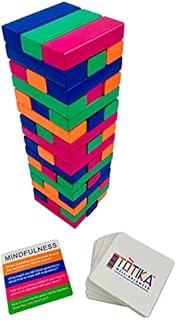
Emotional Regulation: Games offer safe spaces to process emotions and practice resilience
Games, by design, present players with challenges, setbacks, and triumphs—a microcosm of life's emotional rollercoaster. This structured environment becomes a training ground for emotional regulation, allowing individuals to experience and manage a range of feelings in a controlled setting. For instance, a player might feel frustration after repeatedly failing a level in a platformer, only to experience elation upon finally succeeding. This cycle of emotion mirrors real-life struggles and victories, providing a safe space to practice resilience without immediate, real-world consequences.
Consider the role-playing game (RPG) genre, where players often make decisions that impact the story and their character’s fate. These choices can evoke guilt, pride, or regret, emotions that are processed within the game’s narrative framework. A study published in *Computers in Human Behavior* found that players who engaged in emotionally complex games reported improved mood regulation skills, as the games allowed them to explore and confront emotions in a non-threatening context. For adolescents aged 13–18, this can be particularly beneficial, as their brains are still developing emotional regulation capabilities.
To maximize this benefit, incorporate games that require problem-solving, decision-making, or teamwork. Cooperative multiplayer games, like *Overcooked* or *Among Us*, encourage communication and emotional management under pressure. Solo players might benefit from narrative-driven games like *Life is Strange*, which explicitly deals with emotional themes and consequences. Aim for 30–60 minutes of gameplay daily, balancing it with other activities to avoid overstimulation. Parents and caregivers should co-play with younger gamers to help them articulate and process emotions triggered during play.
However, not all games are created equal in this regard. Fast-paced, competitive games like first-person shooters may heighten stress rather than regulate it, especially in individuals prone to anxiety. The key is to choose games that align with the player’s emotional needs and maturity level. For example, a child struggling with anger might benefit from a calming puzzle game like *Stardew Valley*, while a teenager dealing with peer pressure could find solace in a story-rich RPG like *The Witcher 3*.
In conclusion, games serve as emotional laboratories, offering a unique blend of challenge and safety. By selecting the right type of game and setting appropriate boundaries, individuals can harness this medium to build resilience and emotional intelligence. Whether through a failed quest or a hard-won victory, gaming provides a space to feel, reflect, and grow—one level at a time.
CBD and Mental Health: Uncovering the Science Behind Its Benefits
You may want to see also
Explore related products


Achievement Boost: Completing in-game goals boosts self-esteem and provides a sense of accomplishment
Games, by design, are structured around achievable goals. Whether it’s defeating a boss, leveling up a character, or solving a puzzle, these objectives provide clear milestones that players can strive for and ultimately conquer. Each completed task triggers a release of dopamine, the brain’s "feel-good" neurotransmitter, creating a tangible sense of accomplishment. This mechanism mirrors real-life achievements but often with more immediate and predictable rewards, making it particularly effective for boosting self-esteem. For individuals who struggle with setting or achieving goals in their daily lives, games offer a low-stakes environment to experience success repeatedly.
Consider the case of *Animal Crossing: New Horizons*, where players gradually build and customize their island. Each completed project, from planting flowers to constructing buildings, contributes to a larger sense of progress. Studies show that such incremental achievements can improve mood and motivation, especially for younger players (ages 13–25) who are still developing their sense of self-efficacy. The game’s open-ended nature allows players to set their own pace, ensuring that the sense of accomplishment is tied to personal effort rather than external competition.
However, the key to maximizing this benefit lies in balance. Spending 1–2 hours daily on goal-oriented gameplay can enhance self-esteem without overwhelming the player. Excessive play, particularly in highly competitive environments, may lead to burnout or frustration, negating the positive effects. Parents and players should also ensure that in-game achievements complement, rather than replace, real-life goals. For example, a teenager who completes a challenging quest in *The Legend of Zelda* might feel empowered to tackle a school project with renewed confidence.
To harness this achievement boost effectively, start by choosing games with clear, achievable objectives. *Minecraft*, for instance, encourages creativity through structured building challenges, while *Stardew Valley* rewards players for completing daily farming tasks. Pair gameplay with reflective practices, such as journaling about what made a particular achievement satisfying. This bridges the gap between virtual success and real-world application, reinforcing the idea that accomplishment is a skill that transcends platforms. By treating in-game goals as stepping stones to personal growth, players can transform gaming from a pastime into a tool for mental well-being.
Can Painkillers Alleviate Mental Pain? Exploring the Mind-Body Connection
You may want to see also
Frequently asked questions
Gaming provides an immersive experience that distracts from daily stressors, allowing players to focus on the game rather than their worries. Many games also encourage relaxation through calming music, peaceful environments, or repetitive tasks that promote mindfulness.
Yes, gaming often requires problem-solving, strategic thinking, and quick decision-making, which can enhance cognitive abilities like memory, attention, and spatial reasoning. Games that challenge the mind keep it sharp and engaged.
Absolutely. Multiplayer games foster social connections by allowing players to collaborate, communicate, and build communities. For those who struggle with in-person interactions, gaming can provide a safe and comfortable way to socialize.
Gaming can evoke positive emotions through achievement, storytelling, and creativity. Completing challenges or progressing in a game boosts self-esteem and provides a sense of accomplishment, which can positively impact overall mood and emotional resilience.