Noah Parker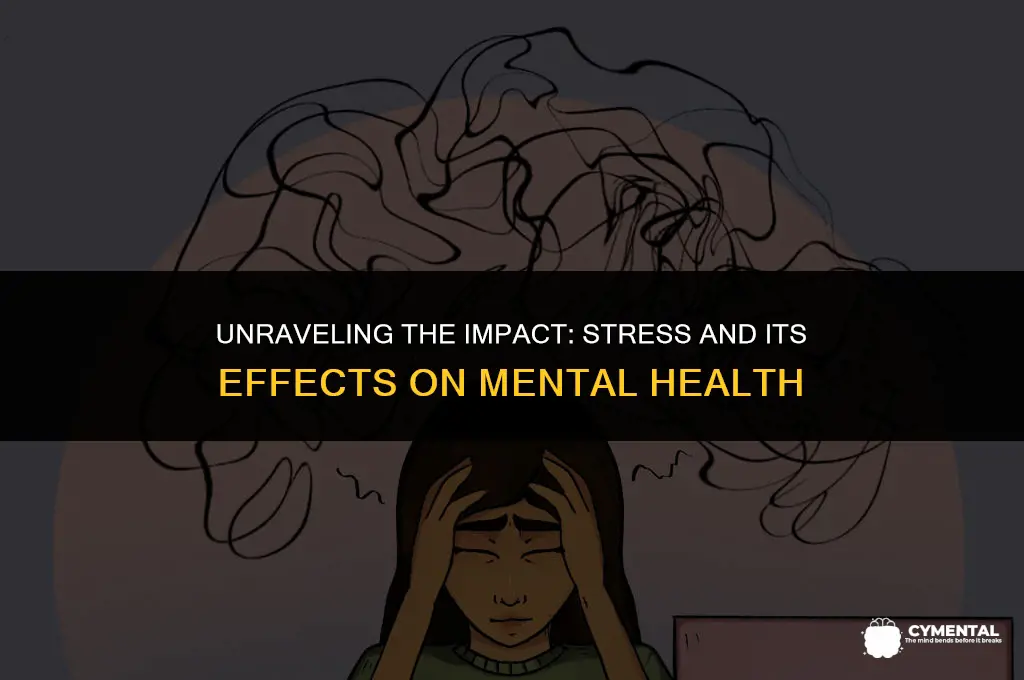
Stress is a pervasive and often underestimated factor that can significantly impact mental health. Chronic exposure to stress can lead to a range of mental health issues, including anxiety, depression, and even more severe conditions like post-traumatic stress disorder (PTSD). The body's natural response to stress, the fight-or-flight reaction, is designed to be a short-term survival mechanism. However, when this response becomes prolonged due to persistent stressors, it can disrupt normal brain function and lead to changes in mood, behavior, and overall well-being. Understanding the intricate relationship between stress and mental health is crucial for developing effective coping strategies and interventions to mitigate its harmful effects.
Explore related products


$9.79 $17.99


What You'll Learn
- Anxiety and Depression: Chronic stress can lead to increased anxiety and depression symptoms
- Cognitive Impairment: High stress levels may impair cognitive functions like memory and decision-making
- Emotional Regulation: Stress can make it difficult to regulate emotions, leading to mood swings
- Social Withdrawal: Individuals under stress might withdraw from social interactions, exacerbating feelings of loneliness
- Physical Symptoms: Stress can manifest physically, causing headaches, digestive issues, and sleep disturbances

Anxiety and Depression: Chronic stress can lead to increased anxiety and depression symptoms
Chronic stress has a profound impact on mental health, significantly increasing the risk of anxiety and depression. When the body is under constant stress, it remains in a heightened state of alertness, which can lead to a range of psychological issues. The persistent activation of the body's stress response system can disrupt the delicate balance of neurotransmitters in the brain, such as serotonin and dopamine, which are crucial for regulating mood.
One of the primary ways chronic stress contributes to anxiety is by creating a cycle of worry and fear. As stress levels rise, individuals may find themselves becoming increasingly preoccupied with potential threats or negative outcomes, leading to a state of hypervigilance. This constant state of worry can be debilitating, making it difficult for individuals to focus on their daily tasks or enjoy their usual activities. Over time, this can lead to the development of anxiety disorders, such as generalized anxiety disorder or panic disorder.
Depression can also be exacerbated by chronic stress. When individuals are under constant stress, they may experience feelings of hopelessness and helplessness, which can contribute to the development of depressive symptoms. Chronic stress can also lead to changes in appetite, sleep patterns, and energy levels, all of which can further contribute to the development of depression. Additionally, individuals who are already struggling with depression may find that their symptoms worsen when they are under stress.
It is important to note that the relationship between chronic stress and anxiety and depression is complex and multifaceted. While chronic stress can certainly contribute to the development of these mental health issues, it is not the sole cause. Other factors, such as genetics, environment, and life experiences, can also play a role. However, by understanding the impact of chronic stress on mental health, individuals can take steps to manage their stress levels and reduce their risk of developing anxiety and depression.
Some practical tips for managing chronic stress include engaging in regular physical activity, practicing relaxation techniques such as meditation or deep breathing, and seeking support from friends, family, or mental health professionals. By taking a proactive approach to stress management, individuals can help protect their mental health and improve their overall well-being.
Boost Your Mood: The Power of Physical Activity on Mental Health
You may want to see also
Explore related products


Cognitive Impairment: High stress levels may impair cognitive functions like memory and decision-making
Chronic stress has a profound impact on cognitive functions, particularly memory and decision-making. When the body is under constant stress, the hippocampus, a critical region for memory formation, is significantly affected. This can lead to difficulties in forming new memories and retrieving old ones, a condition known as cognitive impairment.
One of the primary mechanisms by which stress affects memory is through the release of cortisol, a hormone that, while necessary for the body's fight-or-flight response, can be detrimental to the brain in high levels. Cortisol can damage the cells in the hippocampus, leading to a decrease in the brain's ability to store and recall information. This can manifest in everyday life as forgetfulness, difficulty concentrating, and an inability to make quick decisions.
Decision-making is also heavily influenced by stress levels. Under stress, the prefrontal cortex, the part of the brain responsible for executive functions such as decision-making, is impaired. This can lead to impulsive decisions, poor judgment, and an inability to weigh the pros and cons of different options. In a high-stress environment, individuals may find themselves making rash decisions that they later regret, or struggling to make any decision at all.
Furthermore, stress can lead to a state of mental fatigue, where the brain is so overwhelmed that it becomes difficult to process information effectively. This can result in a decrease in productivity, as individuals struggle to complete tasks that require sustained attention and cognitive effort. In extreme cases, prolonged stress can even lead to conditions such as burnout, where the individual is no longer able to function effectively in their personal or professional life.
To mitigate the effects of stress on cognitive functions, it is essential to practice stress management techniques. This can include activities such as meditation, exercise, and deep breathing exercises, which can help to reduce cortisol levels and improve brain function. Additionally, seeking support from friends, family, or a mental health professional can provide valuable resources for coping with stress and protecting cognitive health.
In conclusion, high stress levels can have a significant impact on cognitive functions, particularly memory and decision-making. By understanding the mechanisms by which stress affects the brain and implementing effective stress management strategies, individuals can take steps to protect their cognitive health and improve their overall well-being.
Unraveling the Impact: Trauma's Profound Influence on Mental Health
You may want to see also
Explore related products


Emotional Regulation: Stress can make it difficult to regulate emotions, leading to mood swings
Stress has a profound impact on emotional regulation, often leading to unpredictable mood swings. This occurs because stress triggers the body's fight-or-flight response, which can cause an imbalance in the brain's neurotransmitters, such as serotonin and dopamine. These chemical imbalances can result in heightened emotional reactivity, making it challenging for individuals to manage their feelings effectively.
One of the key ways stress affects emotional regulation is by impairing the prefrontal cortex's function, the brain region responsible for executive control, including emotional management. When under stress, the prefrontal cortex can become overwhelmed, leading to a decrease in its ability to regulate emotions. This can manifest as sudden shifts in mood, where an individual may quickly transition from calm to irritable or anxious.
Moreover, chronic stress can lead to long-term changes in the brain's structure and function, further exacerbating emotional dysregulation. Prolonged exposure to stress hormones like cortisol can damage the hippocampus, a region crucial for memory and emotional processing. This damage can result in difficulties with emotional modulation, making it harder for individuals to bounce back from negative emotional states.
To mitigate these effects, it's essential to develop effective stress management strategies. Techniques such as mindfulness meditation, deep breathing exercises, and physical activity can help reduce stress levels and improve emotional regulation. Additionally, seeking support from mental health professionals can provide individuals with tailored strategies to manage stress and its impact on emotional well-being.
In conclusion, stress significantly impacts emotional regulation by altering brain chemistry and function, leading to mood swings and emotional reactivity. Addressing stress through various management techniques can help restore emotional balance and improve overall mental health.
Exploring the Impact of Culture on Mental Health: A Comprehensive Guide
You may want to see also
Explore related products



Social Withdrawal: Individuals under stress might withdraw from social interactions, exacerbating feelings of loneliness
Social withdrawal is a common response to stress, where individuals may find themselves increasingly isolated from friends, family, and social activities. This can be a maladaptive coping mechanism, as it often exacerbates feelings of loneliness and can lead to a downward spiral of mental health issues. When people are stressed, they may feel overwhelmed by social obligations and perceive interactions as additional stressors rather than sources of support and comfort.
One of the key reasons why social withdrawal can be detrimental to mental health is that it deprives individuals of the social support that is crucial for emotional well-being. Social connections provide a sense of belonging, validation, and security, which can help mitigate the negative effects of stress. By withdrawing from social interactions, individuals may miss out on opportunities to share their feelings, receive advice, and engage in activities that bring joy and relaxation.
Moreover, social withdrawal can lead to a lack of physical activity and exposure to natural environments, both of which are known to have positive effects on mental health. When people isolate themselves, they may spend more time indoors, engage in sedentary activities, and neglect their physical health. This can result in a decline in overall well-being, further exacerbating feelings of stress and loneliness.
It is also important to note that social withdrawal can be a symptom of underlying mental health conditions, such as depression or anxiety disorders. In such cases, it is crucial to seek professional help to address the root causes of social withdrawal and develop strategies for improving mental health. Cognitive-behavioral therapy, for example, can be an effective treatment for social anxiety and depression, helping individuals to challenge negative thought patterns and gradually rebuild social connections.
In conclusion, social withdrawal is a complex issue that can have significant implications for mental health. By understanding the reasons behind social withdrawal and its effects on well-being, individuals can take steps to address this issue and improve their overall mental health. Seeking social support, engaging in physical activity, and addressing underlying mental health conditions are all important strategies for combating social withdrawal and promoting emotional well-being.
The Silent Struggle: Loneliness and Its Impact on Mental Health
You may want to see also
Explore related products


$13.93 $14.95


Physical Symptoms: Stress can manifest physically, causing headaches, digestive issues, and sleep disturbances
Chronic stress can lead to a myriad of physical symptoms that significantly impact an individual's overall well-being. One of the most common physical manifestations of stress is headaches. These can range from mild tension headaches to severe migraines, often occurring frequently and without warning. The exact mechanism behind stress-induced headaches is complex, involving the release of stress hormones like cortisol and adrenaline, which can cause muscle tension and blood vessel constriction in the head.
Digestive issues are another prevalent physical symptom of stress. Stress can disrupt the normal functioning of the digestive system, leading to problems such as irritable bowel syndrome (IBS), acid reflux, and stomach ulcers. The gut-brain axis plays a crucial role here, as stress signals from the brain can alter the gut microbiome and impair digestive processes. This can result in symptoms like abdominal pain, bloating, diarrhea, or constipation, which can further exacerbate stress levels due to the discomfort and inconvenience they cause.
Sleep disturbances are also a common physical consequence of stress. High stress levels can interfere with the body's ability to fall asleep and maintain restful sleep, leading to insomnia or poor sleep quality. This can create a vicious cycle, as lack of sleep can increase stress levels, making it even more difficult to achieve adequate rest. Over time, chronic sleep deprivation can contribute to a range of health problems, including weakened immune function, weight gain, and increased risk of developing mental health disorders like depression and anxiety.
In addition to these primary physical symptoms, stress can also manifest in other ways, such as muscle tension, fatigue, and changes in appetite. It is essential to recognize these physical signs of stress and address them proactively, as they can have a significant impact on both mental and physical health. Strategies for managing stress-related physical symptoms include regular exercise, mindfulness practices, and seeking support from healthcare professionals when necessary. By taking steps to mitigate the physical effects of stress, individuals can improve their overall well-being and reduce the risk of developing more severe health issues.
The Silent Menace: Noise Pollution's Impact on Mental and Physical Health
You may want to see also
Frequently asked questions
Common signs include anxiety, irritability, difficulty concentrating, mood swings, and changes in sleep patterns.
Chronic stress can lead to conditions such as depression, anxiety disorders, and even physical health problems like heart disease and weakened immune function.
Effective strategies include exercise, mindfulness practices, setting boundaries, seeking social support, and engaging in hobbies or activities that bring joy and relaxation.