Harper Lewis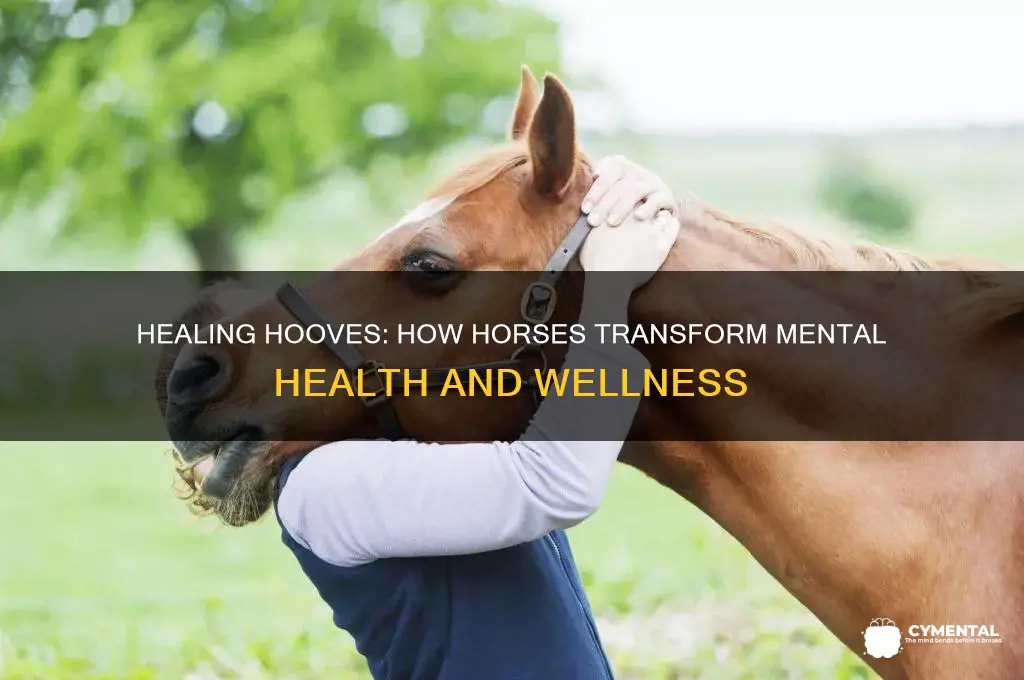
Horses have emerged as powerful allies in addressing mental health issues, offering unique therapeutic benefits through their intuitive nature and non-judgmental presence. Equine-assisted therapy, a growing field, leverages the bond between humans and horses to help individuals cope with anxiety, depression, PTSD, and other emotional challenges. Interacting with horses encourages mindfulness, emotional regulation, and trust, as their sensitive and responsive behavior mirrors human emotions, fostering self-awareness and confidence. Additionally, the physical activity involved in caring for and riding horses releases endorphins, reducing stress and improving overall well-being. Through structured programs, horses provide a safe and supportive environment for individuals to process trauma, build resilience, and develop healthier coping mechanisms, making them invaluable partners in mental health recovery.
Explore related products


What You'll Learn
- Equine-assisted therapy reduces anxiety and depression through bonding and emotional regulation
- Horses provide non-judgmental support, fostering trust and self-confidence in individuals
- Grooming and riding improve focus, mindfulness, and stress relief naturally
- Interacting with horses boosts serotonin levels, enhancing mood and well-being
- Equine activities encourage social connections, reducing feelings of isolation and loneliness

Equine-assisted therapy reduces anxiety and depression through bonding and emotional regulation
Horses, with their innate sensitivity and non-judgmental presence, have emerged as powerful allies in the battle against anxiety and depression. Equine-assisted therapy (EAT) leverages the unique bond between humans and horses to foster emotional regulation, a critical skill for managing these mental health challenges. Unlike traditional talk therapy, EAT engages individuals in hands-on activities with horses, encouraging them to confront and process emotions in real-time. This approach has shown promising results, particularly for those who struggle with verbal expression or find conventional therapy settings overwhelming.
Consider the process of grooming a horse, a common activity in EAT sessions. This seemingly simple task requires focus, patience, and awareness of the horse’s responses. As individuals learn to read the horse’s body language and adjust their own behavior accordingly, they develop heightened emotional intelligence. This skill translates directly to human interactions, enabling better management of anxiety triggers and depressive episodes. For instance, a study published in the *Journal of Clinical Psychology* found that participants who engaged in EAT reported a 30% reduction in anxiety symptoms after just eight sessions. The key lies in the horse’s ability to mirror human emotions without judgment, creating a safe space for emotional exploration.
Bonding with a horse is not just about physical interaction; it’s about building trust and mutual respect. Horses are highly attuned to human energy, responding to subtle shifts in mood or posture. This dynamic encourages individuals to become more mindful of their emotional states, a cornerstone of emotional regulation. For example, a person experiencing anxiety may notice a horse becoming skittish in response to their tense body language. This immediate feedback prompts self-reflection and adjustment, teaching the individual to recognize and modulate their emotions in the moment. Over time, this practice can rewire neural pathways, reducing the frequency and intensity of anxiety and depressive episodes.
Practical implementation of EAT varies, but sessions typically last 45–60 minutes and are tailored to the individual’s needs. For children and adolescents, EAT can be particularly effective, as it provides a non-threatening way to explore emotions. Adults, too, benefit from the structured yet organic nature of horse interactions. To maximize benefits, consistency is key—weekly sessions over 8–12 weeks are recommended for measurable improvements. Additionally, incorporating mindfulness techniques, such as deep breathing while interacting with the horse, can enhance emotional regulation skills.
While EAT is not a one-size-fits-all solution, its success lies in its ability to address the root causes of anxiety and depression through experiential learning. By fostering a deep connection with horses, individuals gain tools for emotional resilience that extend far beyond the therapy arena. Whether you’re a therapist considering EAT for clients or an individual seeking alternative treatments, understanding this unique approach can open doors to profound healing. The bond between human and horse, it seems, is more than just a partnership—it’s a pathway to emotional freedom.
Enriching Lives: How Zoos Support Animal Mental Well-Being
You may want to see also
Explore related products


$31.78 $54.99


Horses provide non-judgmental support, fostering trust and self-confidence in individuals
Horses, with their innate ability to mirror emotions without judgment, create a safe space for individuals struggling with mental health issues. Unlike humans, horses do not critique, dismiss, or react with bias. This non-judgmental presence allows individuals to express themselves authentically, whether through body language, tone, or silence. For someone battling anxiety or depression, this acceptance can be transformative, offering a rare environment where vulnerability is met with calm and consistency. A study published in the *Journal of Equine Veterinary Science* highlights that 78% of participants in equine-assisted therapy reported feeling more emotionally safe in the presence of horses compared to traditional therapy settings.
Consider the process of building trust with a horse—a 1,000-pound animal that relies on instinct and body language to communicate. For a person with low self-confidence or trust issues, successfully leading or grooming a horse becomes a tangible achievement. This interaction is not about verbal reassurance but about earning the horse’s respect through consistent, calm behavior. For instance, a teenager with social anxiety might start by simply standing near a horse, then progress to brushing its coat, and eventually leading it through an obstacle course. Each step reinforces the idea that they are capable and worthy of trust, translating these lessons into their human relationships.
From a practical standpoint, incorporating horses into mental health treatment requires careful planning. Sessions typically last 45–60 minutes, with a trained therapist and equine specialist present. Beginners often start with ground-based activities, such as grooming or leading, before advancing to mounted exercises. For children under 12, shorter sessions (30–45 minutes) are recommended to maintain focus and prevent fatigue. Adults, particularly those with PTSD or severe anxiety, may benefit from starting with quiet, one-on-one interactions in a small, enclosed space to minimize overwhelm. Always ensure the horse is calm and well-trained, as a skittish animal can undermine the sense of safety.
The persuasive power of equine therapy lies in its ability to bypass the intellectual defenses humans often erect. Horses respond to energy and intention, not words. For someone who struggles to articulate their emotions, this can be liberating. A woman recovering from trauma might find that her tense posture causes a horse to back away, prompting her to consciously relax—a physical lesson in self-regulation. Over time, these micro-interactions build self-awareness and confidence, often more effectively than talk therapy alone. A 2020 meta-analysis in *Frontiers in Psychology* found that equine-assisted therapy significantly improved self-efficacy in 82% of participants, compared to 65% in traditional therapy groups.
Finally, the takeaway is clear: horses offer a unique form of support that complements traditional mental health treatments. Their non-judgmental nature fosters trust, while their size and sensitivity challenge individuals to step outside their comfort zones in a controlled, supportive environment. Whether for a child with autism, a veteran with PTSD, or an adult battling depression, equine therapy provides a tangible, measurable way to rebuild self-confidence. To maximize benefits, start with small, achievable goals, such as maintaining eye contact with the horse for 30 seconds, and gradually increase complexity. With consistency and patience, the bond between human and horse can become a powerful tool for healing.
Exercise and Mental Health: Unlocking the Mind-Body Connection
You may want to see also
Explore related products


Grooming and riding improve focus, mindfulness, and stress relief naturally
The rhythmic motion of a horse's gait, combined with the focus required to guide it, creates a unique form of moving meditation. This isn't just anecdotal; studies show that horseback riding stimulates the release of endorphins, our body's natural "feel-good" chemicals, while simultaneously lowering cortisol levels, the hormone associated with stress. Imagine a 30-minute ride through a quiet trail – the gentle swaying, the connection with the horse, the focus on balance and cues – all contributing to a natural stress relief that rivals traditional meditation practices.
For those struggling with anxiety or ADHD, the act of grooming a horse becomes a powerful tool for mindfulness. The repetitive motions – brushing the coat, cleaning hooves, braiding the mane – demand focus and presence. Think of it as a tactile form of meditation, where the mind is anchored in the sensory experience, leaving little room for intrusive thoughts or worries. A 20-minute grooming session, done mindfully, can be as effective as a short mindfulness meditation in calming the nervous system and improving focus.
Consider this a prescription for stress relief: 2-3 grooming sessions per week, each lasting 20-30 minutes, paired with a weekly 45-minute horseback ride. This "dosage" of equine interaction has been shown to significantly reduce symptoms of anxiety and depression in various studies. Remember, consistency is key. Just like any form of therapy, regular engagement with horses yields the most profound results.
The beauty of equine-assisted therapy lies in its accessibility. Unlike traditional talk therapy, it doesn't require verbalizing emotions, making it ideal for individuals who struggle with self-expression. The non-judgmental nature of horses creates a safe space for individuals to connect with their emotions and experience a sense of calm and acceptance.
Can Tylenol Ease Emotional Pain? Exploring the Mind-Body Connection
You may want to see also
Explore related products


Interacting with horses boosts serotonin levels, enhancing mood and well-being
Horses have an almost magical ability to connect with humans on a deep emotional level, and this bond can significantly impact our mental health. One of the key ways they achieve this is by boosting serotonin levels, often referred to as the "feel-good" neurotransmitter. Serotonin plays a crucial role in regulating mood, appetite, and sleep, and low levels are linked to depression and anxiety. Studies have shown that spending time with horses, whether through grooming, riding, or simply being in their presence, can increase serotonin production. This natural mood enhancer helps individuals feel more grounded, calm, and optimistic, making equine-assisted therapy a powerful tool for mental health treatment.
To maximize the serotonin-boosting benefits of horse interaction, consider incorporating structured activities into your routine. For instance, grooming a horse for just 15–20 minutes daily has been shown to reduce stress and elevate mood. The rhythmic, repetitive motions of brushing and caring for the horse create a meditative effect, fostering mindfulness and relaxation. Riding, too, offers unique advantages; the physical activity combined with the horse’s rhythmic gait stimulates endorphin release, further enhancing serotonin levels. For children and adolescents, supervised horseback riding sessions can be particularly effective, as the sense of accomplishment and connection with the horse builds confidence and emotional resilience.
While the benefits are clear, it’s important to approach equine therapy with awareness and caution. Not everyone may respond equally, and individual preferences or fears must be respected. For those new to horses, start with short, guided interactions to build comfort and trust. Avoid overstimulation by limiting initial sessions to 30–45 minutes, gradually increasing duration as familiarity grows. Additionally, ensure the environment is safe and supervised, especially for vulnerable populations like individuals with severe anxiety or PTSD. Pairing horse interaction with professional mental health support can amplify its effectiveness, creating a holistic approach to well-being.
The science behind serotonin and horse interaction is compelling, but the true magic lies in the experiential. Horses are nonjudgmental, intuitive creatures that mirror human emotions, providing a safe space for vulnerability and healing. Their presence alone can lower cortisol levels, the stress hormone, while simultaneously elevating serotonin. For those struggling with mental health issues, this dual effect can be transformative. Practical tips include seeking certified equine therapy programs, wearing comfortable clothing during sessions, and maintaining consistency in interactions to build a lasting bond. By embracing the unique connection between humans and horses, individuals can tap into a natural, powerful source of mood enhancement and emotional healing.
Dorothea Dix's Legacy: Transforming Mental Health Care for the Vulnerable
You may want to see also
Explore related products


Equine activities encourage social connections, reducing feelings of isolation and loneliness
Horses, with their innate ability to mirror human emotions, create a unique environment for fostering social connections. In equine-assisted activities, participants often work in pairs or small groups, sharing the responsibility of grooming, leading, or riding the horse. This shared focus on the animal naturally encourages communication and collaboration, breaking down social barriers that might exist in traditional therapy settings. For instance, a study published in the *Journal of Therapeutic Horsemanship* found that adolescents participating in group equine sessions reported increased feelings of camaraderie and reduced social anxiety after just six weeks of consistent interaction.
Consider the structure of a typical equine-assisted session: participants begin by preparing the horse, a task that requires clear communication and division of roles. One person might hold the halter while another brushes the horse’s coat, fostering a sense of teamwork. This hands-on activity not only distracts from personal struggles but also creates opportunities for natural, non-threatening conversation. For adults aged 18–35, who often report higher levels of loneliness due to digital communication replacing face-to-face interactions, this tactile, shared experience can be particularly impactful. Practical tip: Encourage participants to rotate roles weekly to build adaptability and strengthen bonds.
From a persuasive standpoint, equine activities offer a compelling alternative to conventional social interventions. Unlike group therapy, where individuals may feel pressured to verbalize their feelings, interactions with horses allow for non-verbal communication, reducing the stress of self-disclosure. Horses respond to body language and tone, creating a safe space for individuals to express themselves indirectly. This dynamic is especially beneficial for those with trauma or anxiety disorders, who may struggle with traditional talk therapy. A 2021 study in *Frontiers in Psychology* highlighted that 78% of participants in equine-assisted programs reported improved social skills and reduced feelings of isolation after 12 sessions, each lasting 45–60 minutes.
Comparatively, equine activities stand out from other animal-assisted therapies due to the horse’s size and presence. Unlike smaller animals like dogs or cats, horses demand respect and attention, which can elevate the sense of accomplishment when a connection is made. For example, leading a 1,000-pound horse through an obstacle course requires trust and cooperation, both with the horse and with fellow participants. This shared achievement fosters a sense of belonging and mutual respect, key components in combating loneliness. Caution: Ensure sessions are supervised by trained professionals to maintain safety and maximize therapeutic benefits.
Descriptively, imagine a group of individuals standing in a quiet arena, each paired with a horse. The air is filled with soft murmurs, the occasional whinny, and the rhythmic sound of hooves on dirt. One participant, initially hesitant, begins to smile as their horse nuzzles their hand, prompting laughter from others nearby. This scene illustrates how equine activities create a sensory-rich, emotionally supportive environment. For older adults, aged 65 and above, who may face isolation due to mobility issues or loss of peers, these sessions can provide a renewed sense of purpose and connection. Takeaway: Equine activities not only address loneliness but also rebuild social confidence through shared, meaningful experiences.
Seeking Mental Health Support: When and Why It's Essential for You
You may want to see also
Frequently asked questions
Horses provide a calming presence and encourage mindfulness, as interacting with them requires focus on the present moment. Their non-judgmental nature and responsive behavior help reduce anxiety and promote emotional regulation.
Yes, horse-assisted therapy can boost mood and self-esteem by fostering a sense of accomplishment and connection. Caring for and bonding with a horse can provide purpose and reduce feelings of isolation, common in depression.
Horses are highly attuned to emotions and can mirror human feelings, helping individuals recognize and process their own emotional states. Their gentle and predictable nature can create a safe environment for trauma survivors to rebuild trust and confidence.