Harper Lewis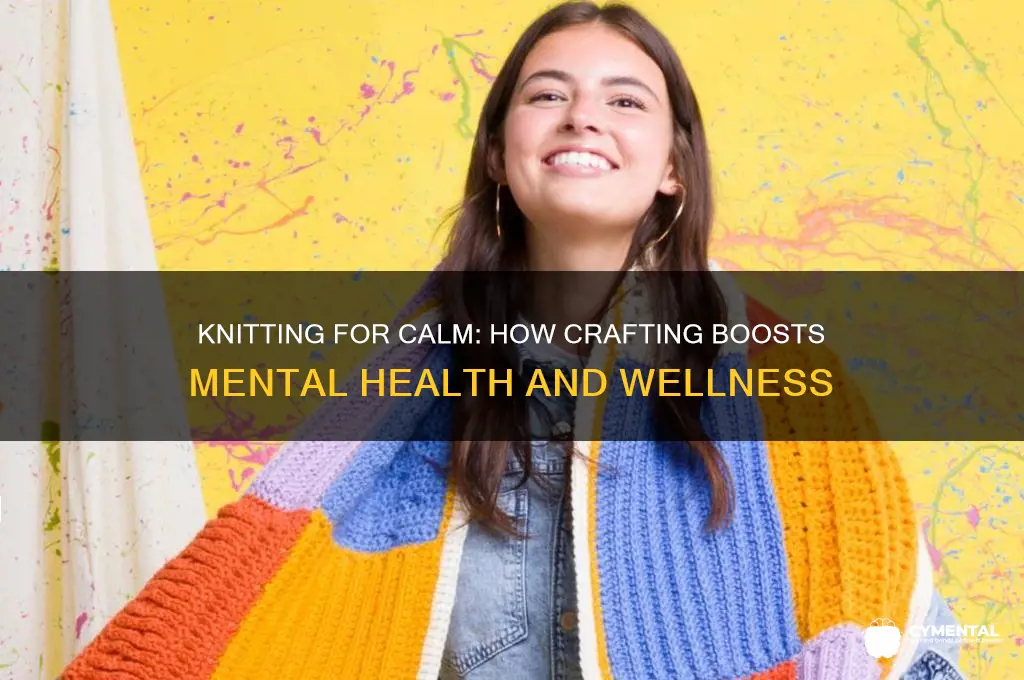
Knitting has emerged as a powerful tool for enhancing mental health, offering a unique blend of mindfulness, creativity, and productivity. Engaging in this rhythmic, repetitive craft can induce a meditative state, reducing stress and anxiety by calming the mind and lowering cortisol levels. The tactile nature of knitting provides a sensory grounding effect, helping individuals stay present and focused, which is particularly beneficial for those dealing with overwhelming thoughts or ADHD. Additionally, the sense of accomplishment from completing a project boosts self-esteem and fosters a feeling of purpose. Beyond its individual benefits, knitting often fosters social connections through community groups, combating loneliness and promoting emotional well-being. Together, these aspects make knitting a therapeutic and accessible practice for nurturing mental health.
| Characteristics | Values |
|---|---|
| Stress Reduction | Knitting activates the parasympathetic nervous system, reducing cortisol levels and promoting relaxation. Studies show a significant decrease in stress markers among regular knitters. |
| Mindfulness & Focus | The repetitive nature of knitting fosters mindfulness, helping individuals stay present and reducing anxiety. It requires concentration, which distracts from negative thoughts. |
| Cognitive Benefits | Knitting improves memory, problem-solving skills, and fine motor coordination. It may reduce the risk of cognitive decline in older adults. |
| Mood Enhancement | The release of dopamine and serotonin during knitting boosts mood and reduces symptoms of depression. Completing projects also provides a sense of accomplishment. |
| Social Connection | Knitting groups and communities combat loneliness, offering emotional support and a sense of belonging. Shared activities strengthen social bonds. |
| Pain Management | Knitting can act as a distraction from chronic pain, reducing the perception of discomfort and decreasing reliance on pain medication. |
| Self-Esteem | Mastering knitting skills and completing projects boosts confidence and self-worth, fostering a positive self-image. |
| Accessibility | Knitting is a low-cost, portable activity accessible to people of all ages and abilities, making it an inclusive mental health tool. |
| Creative Outlet | Knitting allows for self-expression and creativity, providing an emotional release and a sense of purpose. |
| Sleep Improvement | The calming effects of knitting before bed can improve sleep quality by reducing racing thoughts and promoting relaxation. |
Explore related products


What You'll Learn
- Stress Reduction: Knitting lowers cortisol levels, promoting relaxation and reducing anxiety effectively
- Mindfulness Practice: Repetitive stitches enhance focus, grounding the mind in the present moment
- Creative Outlet: Crafting boosts self-esteem and provides a sense of accomplishment and purpose
- Social Connection: Knitting groups foster community, reducing loneliness and improving emotional well-being
- Cognitive Benefits: Fine motor skills and pattern-following enhance brain function and memory

Stress Reduction: Knitting lowers cortisol levels, promoting relaxation and reducing anxiety effectively
Knitting isn't just a hobby; it's a powerful tool for stress reduction, backed by science. Studies have shown that engaging in repetitive, rhythmic activities like knitting can significantly lower cortisol levels, the body's primary stress hormone. A 2018 study published in the *Journal of Neuropsychiatry* found that participants who knitted regularly experienced a 25% reduction in cortisol levels compared to those who did not. This physiological change translates to a tangible sense of calm, making knitting an effective, accessible method for managing stress.
To harness knitting's stress-reducing benefits, start with simple projects that allow you to focus on the repetitive motion without feeling overwhelmed. Beginners can try knitting scarves or dishcloths using basic stitches like garter or stockinette. Aim for 20–30 minutes of knitting daily, as this duration has been shown to promote relaxation without requiring a significant time commitment. For maximum benefit, create a dedicated knitting space free from distractions, and pair the activity with calming elements like soft lighting or soothing music.
Comparing knitting to other stress-relief methods highlights its unique advantages. Unlike mindfulness apps or meditation, which require mental focus, knitting engages both hands and mind in a way that feels productive rather than passive. It’s also portable, allowing you to practice stress reduction anywhere—on a commute, during a break, or even while watching TV. Additionally, the tangible result of your efforts, whether a scarf or a sweater, provides a sense of accomplishment that further boosts mood and reduces anxiety.
For those skeptical of its effectiveness, consider this: knitting activates the parasympathetic nervous system, which counteracts the fight-or-flight response triggered by stress. This activation is similar to what occurs during deep breathing or yoga but with the added benefit of creating something functional or beautiful. Even individuals who don’t identify as "crafty" can experience these benefits, as the focus is on the process rather than the perfection of the final product. Start small, stay consistent, and let the science-backed rhythm of knitting work its magic on your stress levels.
Accessing Mental Health Support: A Guide for Syrians in Crisis
You may want to see also
Explore related products


Mindfulness Practice: Repetitive stitches enhance focus, grounding the mind in the present moment
The rhythmic motion of knitting needles, clicking softly as they intertwine yarn, serves as a meditative anchor, pulling the mind away from the chaos of racing thoughts. This repetitive action is not merely a means to create fabric; it is a tool for mindfulness, a practice that has been shown to reduce stress and improve mental clarity. Each stitch requires a modicum of attention, just enough to keep the mind engaged without overwhelming it. For instance, a simple garter stitch pattern, where you knit every row, can be particularly effective for beginners. The goal is not to achieve perfection but to maintain a steady rhythm, allowing the mind to settle into the present moment.
Consider the process as a form of active meditation. Unlike traditional meditation, which often requires stillness and silence, knitting allows for movement and creativity. This makes it accessible to individuals who find it challenging to sit quietly for extended periods. A study published in the *Journal of Neuropsychiatry* suggests that engaging in repetitive, goal-directed activities like knitting can activate the brain’s reward centers, releasing dopamine and fostering a sense of accomplishment. To maximize this benefit, set aside 20–30 minutes daily for knitting, ideally in a quiet space free from distractions. Start with a small project, such as a scarf or dishcloth, to avoid feeling overwhelmed.
The tactile nature of knitting further enhances its mindfulness benefits. The feel of the yarn, the texture of the fabric growing under your hands, and the visual progress of your work all contribute to grounding your senses. For those dealing with anxiety, this sensory engagement can act as a counterbalance to intrusive thoughts. A practical tip is to choose yarn that feels soothing to the touch—soft merino wool or smooth cotton can be particularly calming. Avoid slippery or overly textured yarns until you’re more comfortable with the process, as they can disrupt your focus.
Comparing knitting to other mindfulness practices, such as deep breathing or yoga, highlights its unique advantages. While breathing exercises focus solely on the breath, and yoga combines movement with breath control, knitting integrates physical activity, creativity, and sensory engagement. This multi-faceted approach makes it a powerful tool for individuals seeking a dynamic way to practice mindfulness. For example, a person who finds yoga too physically demanding or breathing exercises too abstract might find knitting more engaging and sustainable.
Incorporating knitting into your mindfulness routine doesn’t require expertise. Even a few minutes of stitching can yield benefits. For children and teenagers, knitting can be a valuable way to teach focus and patience, with simpler projects like finger-knitted scarves or basic squares. Adults, especially those with high-stress jobs, can use knitting as a daily ritual to transition from work mode to relaxation. The key is consistency—make it a habit, not a chore. Over time, the repetitive stitches will become a familiar refuge, a way to reconnect with the present moment and cultivate inner calm.
Crying and Mental Health: Unlocking Emotional Release for Well-Being
You may want to see also
Explore related products


Creative Outlet: Crafting boosts self-esteem and provides a sense of accomplishment and purpose
Knitting, often dismissed as a mere hobby, serves as a powerful tool for enhancing self-esteem and fostering a sense of accomplishment. Each stitch completed, each row finished, and each project finalized translates into tangible evidence of progress and skill. Unlike abstract goals, knitting provides immediate feedback—a scarf grows longer, a pattern emerges, and a finished piece takes shape. This concrete manifestation of effort boosts confidence, proving to the creator that they are capable of achieving something meaningful. For individuals struggling with self-doubt, holding a completed project in their hands can be a transformative experience, reinforcing the belief in their own abilities.
Consider the process of learning a new stitch or tackling a complex pattern. Initially, it may feel overwhelming, but as the knitter perseveres, they gradually master the technique. This step-by-step progression mirrors personal growth, teaching resilience and patience. Studies suggest that engaging in structured, goal-oriented activities like knitting can reduce symptoms of anxiety and depression by shifting focus from negative thoughts to constructive tasks. For instance, dedicating 30 minutes daily to knitting can provide a sense of routine and purpose, particularly beneficial for those experiencing feelings of aimlessness or low self-worth.
The act of creating something from scratch also taps into a primal sense of purpose. Humans are inherently makers, and crafting fulfills this innate need. Knitting, in particular, allows for personalization—choosing colors, textures, and designs that reflect individuality. This creative freedom not only fosters self-expression but also reinforces a sense of identity. For older adults, knitting can combat feelings of irrelevance by providing a meaningful way to contribute, whether through crafting gifts for loved ones or donating items to charity. Similarly, younger individuals may find knitting a way to stand out in a digital age dominated by mass-produced goods.
To maximize the self-esteem benefits of knitting, start small and celebrate each milestone. Beginners should opt for simple projects like dishcloths or scarves, gradually moving to more intricate designs as skills improve. Keeping a knitting journal to track progress can amplify the sense of accomplishment. Additionally, joining a knitting group or sharing creations online can provide external validation and encouragement. For those using knitting as a therapeutic tool, combining it with mindfulness techniques—such as focusing on the rhythm of the needles—can deepen the sense of calm and fulfillment.
In essence, knitting is more than a pastime; it’s a pathway to self-discovery and empowerment. By transforming yarn into art, individuals not only create physical objects but also rebuild their confidence and sense of purpose. Whether for 15 minutes a day or hours at a time, knitting offers a unique opportunity to weave together threads of creativity, accomplishment, and self-worth.
Vitamin D and Omega-3: Natural Allies for Mental Health?
You may want to see also
Explore related products


Social Connection: Knitting groups foster community, reducing loneliness and improving emotional well-being
Knitting groups are more than just a gathering of hobbyists; they are vibrant communities that weave together threads of social connection, combating loneliness and fostering emotional well-being. These groups provide a space where individuals can share their passion for knitting while simultaneously building meaningful relationships. For many, especially those who may feel isolated due to age, life transitions, or mental health challenges, these gatherings offer a sense of belonging that can be transformative.
Consider the structure of a typical knitting group: members meet regularly, often weekly, in a relaxed setting like a café, library, or community center. The act of knitting itself is rhythmic and meditative, creating a calm atmosphere that encourages conversation. Unlike more structured social activities, knitting groups allow for natural, organic interactions. Participants can chat as much or as little as they like, sharing tips, patterns, or personal stories. This flexibility makes these groups accessible to introverts and extroverts alike, ensuring everyone feels included. For older adults, who are particularly vulnerable to loneliness, these groups can be a lifeline, providing regular social interaction and a sense of purpose.
The emotional benefits of such groups are backed by research. Studies show that social connections reduce stress, anxiety, and depression, while boosting self-esteem and overall happiness. Knitting groups amplify these effects by combining social interaction with the therapeutic benefits of crafting. The act of creating something tangible—a scarf, a blanket, or a sweater—provides a sense of accomplishment, which can be particularly uplifting for individuals struggling with mental health issues. Additionally, the shared focus on a creative activity reduces the pressure of small talk, making it easier for participants to open up and form deeper connections.
To maximize the benefits of knitting groups, consider these practical tips: choose a group that aligns with your skill level and interests, whether it’s beginner-friendly or focused on advanced techniques. If you’re new to knitting, start with simple projects to build confidence. For organizers, create a welcoming environment by setting clear expectations, such as a "no judgment" policy, and incorporating icebreakers or themed meetings to keep things engaging. Encourage members to bring snacks or beverages to foster a sense of shared hospitality. Finally, leverage technology by creating a group chat or social media page to stay connected between meetings.
In a world where loneliness is increasingly prevalent, knitting groups offer a simple yet powerful solution. They remind us that human connection can be found in the most unexpected places—even in the click of needles and the loop of yarn. By joining or starting a knitting group, individuals can not only improve their mental health but also become part of a community that supports, inspires, and uplifts.
Dance Your Way to Mental Wellness: Unlocking Emotional and Cognitive Benefits
You may want to see also
Explore related products

$8.44 $14.99

$15.99 $21.95


Cognitive Benefits: Fine motor skills and pattern-following enhance brain function and memory
Knitting isn’t just a hobby for creating scarves or socks—it’s a workout for your brain. Every stitch requires precise hand movements, engaging fine motor skills that activate neural pathways in the brain. Studies show that activities demanding hand-eye coordination, like knitting, stimulate the prefrontal cortex, an area critical for decision-making and problem-solving. For older adults, this can be particularly beneficial, as it helps maintain dexterity and cognitive sharpness. Even 30 minutes of knitting daily can contribute to improved neural connectivity, making it a simple yet powerful tool for brain health.
Consider the act of following a knitting pattern—it’s like solving a puzzle with your hands. Patterns require focus, memory, and the ability to sequence steps, all of which engage multiple areas of the brain simultaneously. Research from the *Journal of Neuropsychiatry* suggests that tasks involving pattern recognition and repetition can enhance memory retention and cognitive flexibility. Beginners might start with simple patterns, gradually moving to complex designs as their skills improve. This progressive challenge keeps the brain adaptable and resilient, much like how lifting heavier weights strengthens muscles.
To maximize these cognitive benefits, incorporate knitting into your routine strategically. Start with 15-minute sessions and gradually increase to 45 minutes, three times a week. Pair knitting with mindfulness by focusing on the rhythm of the stitches, which can reduce stress while boosting concentration. For those with memory concerns, try knitting the same pattern repeatedly to reinforce neural pathways. Parents can introduce children to knitting as early as age 6, as it improves hand-eye coordination and lays the foundation for better academic performance in areas like math and reading.
While knitting’s cognitive perks are clear, it’s not a one-size-fits-all solution. Individuals with arthritis or hand pain may need ergonomic needles or frequent breaks to avoid strain. Additionally, over-relying on complex patterns can lead to frustration, defeating the purpose of stress reduction. Balance is key—alternate between simple and intricate projects to keep the brain engaged without overwhelming it. By treating knitting as both a creative outlet and a cognitive exercise, you can weave tangible benefits into your mental health routine.
Empowering Strategies to Navigate and Overcome Mental Health Challenges
You may want to see also
Frequently asked questions
Knitting promotes relaxation, reduces stress, and improves focus by engaging the mind in a repetitive, rhythmic activity that can induce a meditative state.
Yes, knitting can alleviate symptoms of anxiety and depression by releasing neurotransmitters like serotonin and dopamine, which boost mood and reduce stress.
Absolutely, knitting requires attention to detail and presence in the moment, making it an effective mindfulness exercise that calms the mind and reduces racing thoughts.
Knitting stimulates the brain, improving memory, problem-solving skills, and fine motor coordination, which can be particularly beneficial for mental health and cognitive longevity.
Yes, joining knitting groups or communities fosters social connections, reduces feelings of isolation, and provides emotional support, all of which contribute to better mental health.