Noah Parker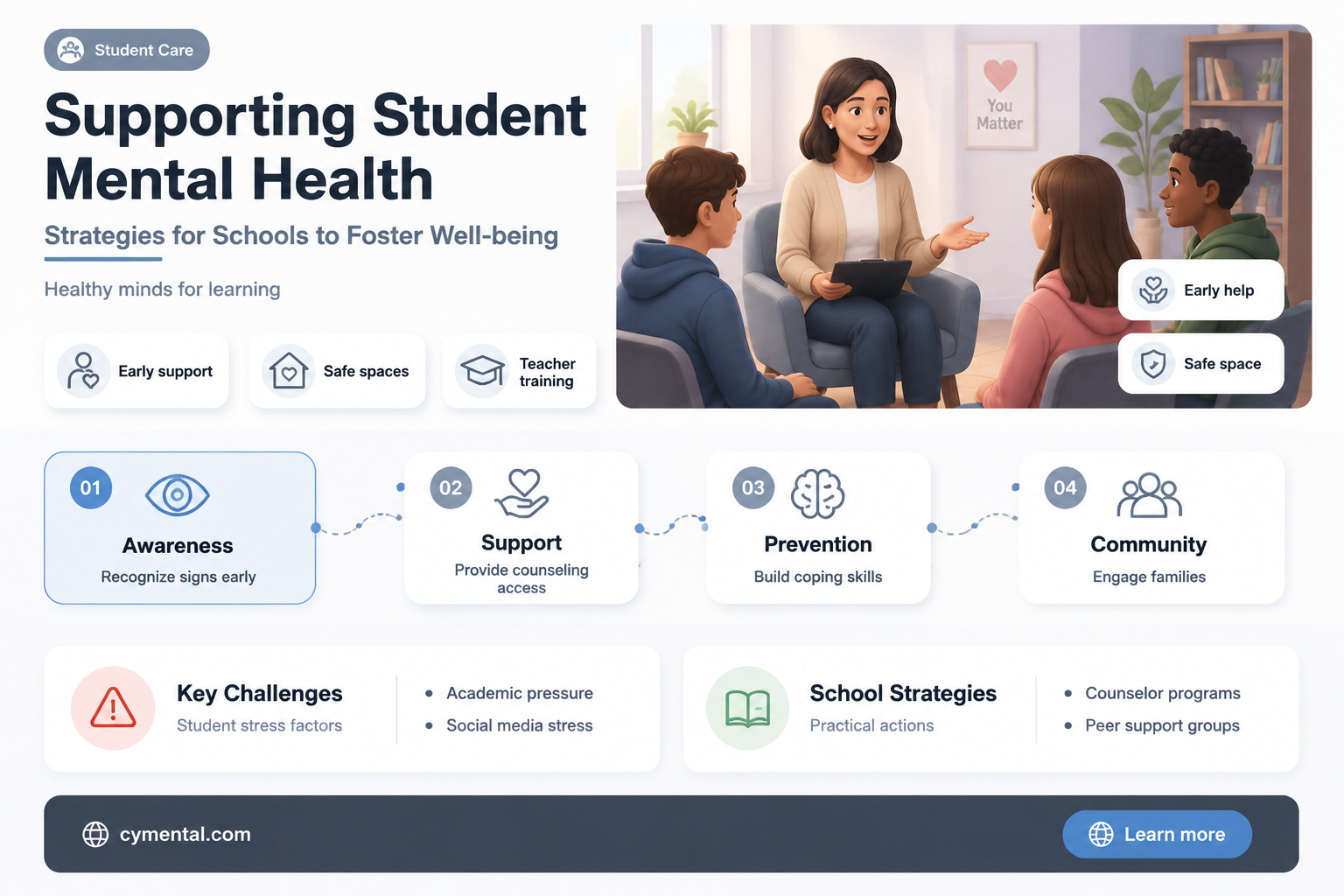
Schools play a crucial role in supporting students with mental illness by creating a safe, inclusive, and nurturing environment. By implementing comprehensive mental health programs, schools can raise awareness, reduce stigma, and provide early intervention through trained counselors, psychologists, and accessible resources. Integrating mental health education into curricula, fostering open communication, and collaborating with families and healthcare professionals can empower students to seek help and develop coping strategies. Additionally, schools can promote a culture of empathy and resilience by offering flexible academic accommodations, peer support systems, and stress-management tools, ensuring that students feel supported in their journey toward mental well-being.
Explore related products





What You'll Learn
- Early Detection: Train staff to recognize signs of mental illness and intervene promptly
- Access to Counselors: Ensure students have regular access to qualified mental health professionals on campus
- Inclusive Curriculum: Integrate mental health education into the curriculum to reduce stigma and promote awareness
- Support Groups: Create peer-led or facilitated support groups for students facing similar challenges
- Flexible Policies: Implement flexible attendance and academic policies to accommodate students’ mental health needs

Early Detection: Train staff to recognize signs of mental illness and intervene promptly
Mental health issues often manifest subtly, especially in adolescents, making early detection a critical yet challenging task. Schools, as primary environments for youth development, are uniquely positioned to identify these signs before they escalate. However, this requires staff who are not only observant but also trained to recognize the nuanced indicators of mental illness. For instance, a student’s sudden drop in academic performance, increased irritability, or withdrawal from social activities could signal underlying issues like depression or anxiety. Without proper training, these signs might be dismissed as typical teenage behavior, delaying necessary intervention.
Training programs for school staff should focus on both awareness and action. A structured curriculum could include modules on common mental health disorders in adolescents, such as generalized anxiety disorder, major depressive disorder, and ADHD. Staff should learn to differentiate between transient mood fluctuations and persistent patterns that warrant concern. For example, a teacher might notice a student who consistently avoids eye contact, fidgets excessively, or submits assignments late—behaviors that, when combined, could indicate anxiety. Practical exercises, like role-playing scenarios, can help staff practice identifying these signs and initiating conversations with students in a non-confrontational manner.
Intervention strategies must be prompt but sensitive. Once a staff member identifies a potential issue, they should follow a clear protocol, such as notifying the school counselor or mental health liaison. Schools should establish partnerships with local mental health providers to ensure students receive timely support. For younger students (ages 10–14), interventions might include group therapy sessions or peer support programs, while older teens (ages 15–18) may benefit from one-on-one counseling or referrals to specialized services. Staff should also be trained to document observations objectively, avoiding assumptions or labels that could stigmatize the student.
A cautionary note: training must emphasize confidentiality and empathy to build trust with students. Staff should avoid discussing concerns in public spaces or with unauthorized individuals. Additionally, schools should allocate resources for ongoing professional development, as mental health awareness is an evolving field. For instance, annual workshops could update staff on new research, such as the impact of social media on adolescent mental health or the latest therapeutic techniques. By fostering a culture of vigilance and compassion, schools can transform into proactive hubs for mental health support, ensuring students receive help before their struggles become crises.
Nurturing Your Mind: Practical Strategies for Better Mental Health
You may want to see also
Explore related products


Access to Counselors: Ensure students have regular access to qualified mental health professionals on campus
Students spend a significant portion of their waking hours in school, making it a critical setting for identifying and addressing mental health concerns. Yet, many schools lack sufficient mental health resources, leaving students without the support they need. Ensuring regular access to qualified counselors on campus is a proactive step toward fostering a healthier, more resilient student body.
Consider the logistics: schools should aim for a counselor-to-student ratio that allows for meaningful interaction. The American School Counselor Association recommends a ratio of 1:250, but for schools with higher needs, a more ambitious target of 1:150 could be transformative. These professionals should be licensed mental health counselors or social workers, equipped to provide individual and group counseling, crisis intervention, and referrals to external services. Regular office hours, drop-in availability, and scheduled check-ins can ensure students have multiple pathways to access support.
A common barrier to utilization is stigma. Schools can combat this by normalizing counseling services through integration into the school culture. For instance, counselors could lead classroom workshops on stress management or host wellness fairs, making mental health care feel approachable rather than punitive. Additionally, training teachers and staff to recognize signs of distress and refer students to counselors can create a seamless support network.
Contrast this with the current reality in many schools, where overburdened counselors juggle academic advising, college prep, and sporadic mental health interventions. By dedicating resources specifically to mental health counseling, schools can ensure these professionals focus on their core expertise. This specialization not only improves the quality of care but also allows counselors to build trust and rapport with students over time, fostering a safe environment for ongoing support.
Finally, schools must address the practicalities of implementation. Funding can be sourced through grants, partnerships with local mental health organizations, or reallocation of existing budgets. Schools in rural or underserved areas might explore telecounseling options to bridge the gap. The investment is justified: studies show that early mental health intervention improves academic performance, reduces absenteeism, and lowers the risk of long-term mental health issues. By prioritizing access to counselors, schools can create a foundation for student well-being that extends far beyond the classroom.
Accessing Mental Health Support: Affordable Options for the Uninsured
You may want to see also
Explore related products

![College Students' Mental Health (Advanced Vocational Education Boutique Planning Materials) 9787502095970 Emergency Management Press Price 42 [Good Water Inspiration Books Genuine Fidelity]](https://m.media-amazon.com/images/I/01RmK+J4pJL._AC_UY218_.gif)


Inclusive Curriculum: Integrate mental health education into the curriculum to reduce stigma and promote awareness
Mental health education in schools isn’t just a supplementary topic—it’s a necessity. By integrating it into the core curriculum, schools can normalize conversations about mental well-being, dismantling stigma before it takes root. For instance, in countries like Australia and the UK, programs like "MindMatters" and "PSHE" (Personal, Social, Health, and Economic education) have shown that embedding mental health lessons into subjects like biology, social studies, or even literature fosters a holistic understanding. Students learn not only the science behind mental health but also its societal and personal implications, making it relatable and actionable.
To implement this effectively, schools should adopt a tiered approach. Start with age-appropriate content: for younger students (ages 6–12), focus on emotional vocabulary and basic coping strategies, such as identifying feelings or practicing mindfulness. For adolescents (ages 13–18), delve deeper into topics like stress management, resilience, and recognizing signs of mental illness in themselves and peers. Incorporate interactive methods like role-playing, group discussions, and digital modules to engage diverse learning styles. Pairing these lessons with real-world examples, like case studies or guest speakers, can make the content more tangible and impactful.
However, integrating mental health education isn’t without challenges. Teachers may feel ill-equipped to address sensitive topics, and curricula must balance depth with age-appropriateness. Schools should invest in professional development for educators, providing them with resources and training to deliver content confidently. Additionally, avoid tokenism—mental health should be a recurring theme, not a one-off lesson. Collaborate with mental health professionals to ensure accuracy and sensitivity, and regularly update materials to reflect current research and societal trends.
The payoff is undeniable. A study by the World Health Organization found that schools with integrated mental health curricula saw a 20% reduction in stigma-related behaviors among students. Beyond stigma reduction, this approach equips students with tools to navigate their own mental health and support others. It also creates a culture where seeking help is seen as a sign of strength, not weakness. For example, schools that implemented peer support programs alongside curriculum changes reported higher rates of students reaching out for help when needed.
In practice, this integration doesn’t require a complete overhaul of existing curricula. Start small: weave mental health into existing lessons, like discussing historical figures’ struggles with mental illness in history class or analyzing mental health themes in literature. Use dedicated mental health weeks or months to amplify awareness, but ensure the conversation continues year-round. By treating mental health as a fundamental aspect of education, schools can foster a generation that understands, empathizes, and acts—a generation where mental well-being is as prioritized as physical health.
Seeking Support: A Guide to Accessing Mental Health Assistance
You may want to see also
Explore related products



Support Groups: Create peer-led or facilitated support groups for students facing similar challenges
Peer support is a powerful tool in the battle against mental health stigma and isolation. By establishing support groups, schools can foster a sense of community and understanding among students facing similar mental health challenges. These groups provide a safe and non-judgmental space for students to share their experiences, feelings, and strategies for coping.
The Power of Shared Experience:
Imagine a group of teenagers, each carrying the weight of anxiety or depression, finding solace in a weekly meeting where they can openly discuss their struggles. Peer-led support groups offer a unique advantage: members can relate to each other's experiences on a personal level. For instance, a student battling social anxiety might find comfort in hearing how a peer manages similar fears, providing a sense of "I'm not alone in this." This shared understanding can be a catalyst for healing and personal growth.
Facilitating Effective Support Groups:
To ensure these groups are beneficial, schools should consider the following steps:
- Training and Supervision: Peer leaders or facilitators should undergo training in active listening, confidentiality, and basic mental health first aid. This ensures they can guide conversations productively and recognize when professional intervention is needed.
- Confidentiality and Trust: Establish ground rules to create a safe environment. Emphasize that what is shared in the group stays within the group, fostering trust and encouraging openness.
- Structured yet Flexible: Provide a loose structure with discussion topics or activities, but allow for organic conversations. This balance ensures the group remains focused while accommodating diverse needs.
- Regular Meetings: Consistency is key. Weekly or bi-weekly meetings of approximately 45-60 minutes can provide a routine source of support without overwhelming participants.
Benefits and Potential Challenges:
Support groups can lead to increased resilience, improved coping skills, and a stronger sense of belonging. However, it's crucial to monitor these groups to prevent potential pitfalls. For instance, ensure discussions don't veer into unproductive territory, such as comparing traumas or reinforcing negative behaviors. Regular supervision and feedback from participants can help maintain a positive and supportive atmosphere.
In implementing peer-led support groups, schools can empower students to support each other, fostering a culture of empathy and understanding. This approach not only aids in managing mental health issues but also equips students with valuable skills in communication, active listening, and community building. It is a proactive step towards creating a healthier and more supportive school environment.
No Money, No Insurance: Finding Mental Health Support Anyway
You may want to see also
Explore related products


Flexible Policies: Implement flexible attendance and academic policies to accommodate students’ mental health needs
Mental health challenges often manifest in irregular attendance and difficulty meeting rigid academic deadlines. Students grappling with anxiety, depression, or other conditions may need unpredictable absences for therapy, self-care, or simply to manage overwhelming symptoms. Traditional attendance policies, which penalize missed days regardless of reason, can exacerbate stress and create a cycle of academic decline. Schools must recognize that mental health is a valid reason for flexibility, not a loophole to be exploited.
Implementing flexible attendance policies requires a shift from punitive to supportive measures. For instance, schools could allow students with documented mental health needs to submit assignments late without penalty, excuse absences for therapy sessions, or offer alternative ways to earn participation credit. A tiered system could be introduced, where students with severe needs have more leniency than those with milder challenges. This approach acknowledges the spectrum of mental health experiences while maintaining academic integrity.
However, flexibility must be balanced with accountability. Clear guidelines are essential to prevent misuse. Schools should require documentation from mental health professionals, set reasonable limits on extensions, and regularly check in with students to ensure they’re on track. For example, a student might be allowed up to three excused absences per semester for mental health reasons, with mandatory check-ins after each absence to discuss support needs. This structure provides relief without creating a free-for-all.
Critics may argue that flexible policies lower academic standards or give certain students an unfair advantage. Yet, the goal isn’t to lower expectations but to remove barriers to success. A student who completes an assignment a week late due to a mental health crisis isn’t demonstrating lesser competence—they’re demonstrating resilience. By accommodating these needs, schools foster a culture of empathy and inclusivity, preparing students to navigate real-world challenges where deadlines and attendance aren’t always rigid.
Ultimately, flexible policies aren’t just about helping students survive academically; they’re about teaching them to prioritize their well-being. When schools signal that mental health matters as much as test scores, students learn to seek help without fear of repercussions. This approach not only supports individual students but also reduces stigma school-wide, creating an environment where mental health is treated with the same urgency as physical health. Flexibility isn’t a concession—it’s an investment in a healthier, more compassionate future.
Hydrogen Water and Mental Health: Exploring Potential Benefits and Science
You may want to see also
Frequently asked questions
Schools can identify students by training staff to recognize signs of mental illness, such as changes in behavior, academic performance, or social withdrawal. Regular check-ins, anonymous reporting systems, and collaboration with school counselors or mental health professionals can also help in early identification.
School counselors can provide individual counseling, connect students with external mental health resources, and collaborate with teachers and parents to create supportive environments. They can also lead group sessions, workshops, and awareness campaigns to reduce stigma and promote mental health.
Schools can foster a supportive environment by implementing policies that prioritize mental health, offering flexible academic accommodations, and promoting a culture of empathy and understanding. Training staff and students on mental health awareness and providing safe spaces for students to express themselves are also key.
Schools can reduce stigma by incorporating mental health education into curricula, hosting awareness events, and encouraging open conversations about mental health. Highlighting success stories and ensuring staff model compassionate language and behavior can also help normalize seeking help.