Noah Parker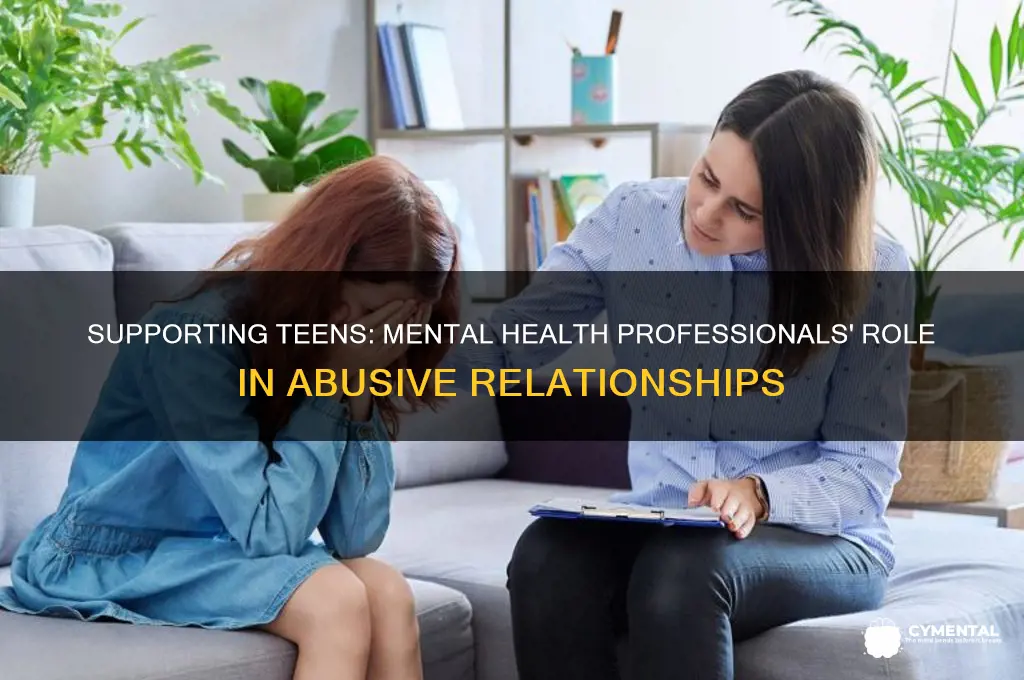
Mental health professionals play a crucial role in supporting teens trapped in abusive relationships by providing a safe, non-judgmental space to process their experiences and emotions. Through evidence-based therapies like cognitive-behavioral therapy (CBT) and trauma-focused interventions, these experts help teens recognize unhealthy relationship patterns, rebuild self-esteem, and develop coping strategies. They also educate teens about the dynamics of abuse, empowering them to make informed decisions and seek safety. Additionally, mental health professionals collaborate with schools, families, and community resources to ensure comprehensive support, fostering resilience and long-term healing for teens navigating these challenging situations.
| Characteristics | Values |
|---|---|
| Safety Planning | Develop personalized safety plans to protect teens from immediate harm. |
| Emotional Support | Provide a safe, non-judgmental space for teens to express their feelings and experiences. |
| Validation | Acknowledge the teen's experiences and emotions, validating their feelings of fear or guilt. |
| Education on Abuse | Teach teens about the dynamics of abusive relationships, including red flags and cycles. |
| Empowerment | Help teens rebuild self-esteem and confidence, emphasizing their autonomy and worth. |
| Skill-Building | Teach coping strategies, communication skills, and boundary-setting techniques. |
| Confidentiality | Ensure privacy while adhering to legal mandates for reporting severe abuse or risk. |
| Collaboration with Support Systems | Work with trusted adults, schools, or organizations to create a supportive network. |
| Trauma-Informed Care | Use approaches that recognize and address trauma without re-triggering distress. |
| Crisis Intervention | Provide immediate support during acute episodes of abuse or emotional distress. |
| Referrals to Resources | Connect teens to shelters, legal aid, or specialized services for additional support. |
| Long-Term Therapy | Offer ongoing therapy to address underlying issues and prevent future abusive relationships. |
| Parental/Guardian Involvement (if safe) | Engage caregivers in the healing process, ensuring the environment is supportive. |
| Digital Safety Guidance | Educate teens on protecting their online presence and avoiding digital abuse. |
| Cultural Sensitivity | Tailor interventions to respect the teen's cultural, racial, or LGBTQ+ identity. |
| Aftercare Support | Assist teens in maintaining progress post-relationship, focusing on resilience and growth. |
Explore related products


What You'll Learn
- Identifying signs of abuse in teens through behavioral changes, physical marks, or emotional distress
- Building trust and rapport to create a safe space for teens to share experiences
- Providing crisis intervention to ensure immediate safety and access to resources
- Teaching healthy relationship skills to empower teens with boundaries and self-worth
- Collaborating with support systems like schools, families, and legal services for comprehensive care

Identifying signs of abuse in teens through behavioral changes, physical marks, or emotional distress
Teens in abusive relationships often exhibit subtle yet significant changes in behavior, serving as red flags for mental health professionals. A sudden shift in academic performance, for instance, can be a telltale sign. A previously engaged student may become withdrawn, skipping classes or showing a marked decline in grades. This behavioral change could stem from the emotional turmoil and distraction caused by the abusive relationship, making it crucial for educators and counselors to take note and intervene.
Physical Indicators: The Silent Cry for Help
Bruises, scratches, or frequent injuries, especially in various stages of healing, are physical signs that should raise concern. Abusers often target areas easily concealed by clothing, such as the upper arms, neck, or back. Mental health professionals are trained to observe these marks during sessions, particularly in private settings where teens feel safer disclosing their experiences. For instance, a therapist might notice a pattern of injuries and gently inquire about their origin, creating a safe space for the teen to open up.
Emotional Distress: Unraveling the Inner Turmoil
Emotional distress in abused teens can manifest in various ways, often as a complex web of conflicting emotions. They may display increased irritability, lashing out at peers or family members, or conversely, become overly compliant and submissive. Anxiety and depression are common companions, with teens experiencing frequent mood swings, tearfulness, or a sense of hopelessness. A mental health professional might use structured interviews or self-report questionnaires to assess the severity of these emotional symptoms, ensuring a comprehensive understanding of the teen's inner world.
The Art of Active Listening and Observation
Identifying abuse requires a nuanced approach, combining active listening with keen observation skills. Mental health professionals are trained to create a non-judgmental environment, encouraging teens to share their experiences. During conversations, they listen for inconsistencies in the teen's narrative, such as downplaying injuries or making excuses for their partner's behavior. For example, a teen might say, "I fell down the stairs," but the pattern of injuries suggests otherwise. Professionals must then carefully probe further, offering support and resources while respecting the teen's autonomy.
Practical Steps for Intervention
When signs of abuse are suspected, mental health professionals follow a structured protocol. This includes documenting observations, ensuring the teen's immediate safety, and providing crisis intervention if needed. They may involve school counselors, social workers, or child protective services, depending on the severity and local legal requirements. Therapeutic interventions often focus on building self-esteem, teaching healthy relationship skills, and empowering teens to recognize and escape abusive patterns. Group therapy can be particularly beneficial, offering peer support and a sense of community during the healing process.
Nutrition's Power: How Healthy Eating Boosts Mental Well-Being
You may want to see also
Explore related products



Building trust and rapport to create a safe space for teens to share experiences
Teens in abusive relationships often carry a heavy burden of silence, fearing judgment, blame, or further harm if they speak up. For mental health professionals, the first step in helping these teens is to dismantle this silence by building trust and rapport. This process requires patience, consistency, and a deep understanding of the teen’s world. It’s not about rushing to solutions but about creating a safe, nonjudgmental space where the teen feels seen, heard, and believed. Without this foundation, even the most well-intentioned interventions can fall flat.
Consider the power of small, intentional actions in fostering trust. For instance, using open-ended questions like, “What’s been on your mind lately?” instead of direct inquiries about abuse allows the teen to control the narrative. Mirroring their language and emotions—such as saying, “It sounds like you’ve been feeling really alone with this”—validates their experience and shows genuine empathy. Over time, these micro-interactions signal to the teen that the therapist is a safe person, not an authority figure waiting to pounce. Research shows that adolescents are more likely to disclose sensitive information when they perceive the relationship as collaborative rather than hierarchical.
Building rapport also involves meeting teens where they are—literally and figuratively. For younger teens (ages 13–15), incorporating creative modalities like art or music therapy can bypass the pressure of verbal communication. For older teens (ages 16–19), discussing relatable topics like social media or school stress can establish common ground before addressing deeper issues. A practical tip: use the first 5–10 minutes of each session to check in about something non-threatening, like a favorite band or weekend plans. This ritual reinforces the idea that the therapist is interested in the teen as a whole person, not just their trauma.
However, trust-building is not without challenges. Teens may test boundaries, cancel sessions, or retract disclosures as a defense mechanism. Mental health professionals must remain steadfast, acknowledging these behaviors without taking them personally. For example, if a teen says, “You don’t get it,” respond with, “I might not fully understand, but I’m here to try.” This approach communicates resilience and commitment, two qualities essential for earning a teen’s trust. It’s also crucial to avoid overpromising confidentiality—explain that while sessions are private, there are limits if the teen’s safety is at risk. Transparency builds credibility, even if it’s uncomfortable.
Ultimately, the goal of building trust and rapport is to empower teens to take ownership of their story. When a teen feels safe, they are more likely to explore their feelings, challenge distorted beliefs, and consider steps toward change. This process doesn’t happen overnight; it’s a gradual unfolding, like layers of an onion being peeled away. Mental health professionals must embrace this pace, trusting that the relationship itself is a form of healing. In the words of one teen survivor, “It wasn’t the advice that helped—it was knowing someone was there, no matter what.” That presence, rooted in trust and rapport, is the cornerstone of effective support.
Gaming for Brain Health: Preventing Mental Decay Through Play
You may want to see also
Explore related products


$11.56 $18.99


Providing crisis intervention to ensure immediate safety and access to resources
In the critical moments when a teen discloses abuse, mental health professionals must act swiftly to stabilize the situation and ensure immediate safety. Crisis intervention begins with a calm, empathetic assessment of the teen’s physical and emotional state, using structured tools like the Danger Assessment (DA) to gauge risk of harm. If the teen is in imminent danger—for instance, if the abuser has access to weapons or has made explicit threats—the professional must activate emergency protocols, such as contacting law enforcement or escorting the teen to a secure location. This phase is not about long-term therapy but about creating a protective barrier between the teen and the abuser, often within the first 24–48 hours of disclosure.
Once safety is secured, the focus shifts to connecting the teen with tangible resources. Mental health professionals act as navigators, mapping out a network of supports tailored to the teen’s needs. This includes referrals to local shelters, legal aid for restraining orders, and medical care for injuries or sexual assault. For example, a 16-year-old survivor might be directed to a youth shelter with on-site counseling, while a 19-year-old could be linked to transitional housing programs. Professionals also provide practical tools, such as safety planning apps (e.g., Love Is Respect’s toolkit) or pre-paid phones to maintain secure communication. The goal is to empower the teen with options, not overwhelm them with choices, ensuring they feel supported without feeling controlled.
A critical yet often overlooked aspect of crisis intervention is addressing the teen’s immediate emotional needs. Abusive relationships erode self-worth, leaving teens vulnerable to self-blame or hopelessness. Professionals use brief, solution-focused techniques to stabilize their emotional state, such as grounding exercises or cognitive reframing to challenge distorted beliefs like “I deserved this.” For instance, a therapist might help a teen replace “I’m worthless” with “I’m strong for seeking help.” These interventions are not meant to resolve trauma but to provide emotional first aid, helping the teen regain enough clarity to engage with long-term resources.
However, crisis intervention is not without challenges. Teens may resist leaving abusive relationships due to fear, financial dependence, or emotional manipulation. Professionals must balance respect for autonomy with the duty to protect, using motivational interviewing to explore ambivalence without coercion. For example, instead of insisting a teen leave immediately, a counselor might ask, “What would need to change for you to feel safe?” Additionally, professionals must be mindful of cultural or familial barriers that may complicate disclosure or resource access. A Latina teen, for instance, might fear involving authorities due to immigration status, requiring culturally sensitive alternatives like community-based advocacy groups.
In conclusion, providing crisis intervention to teens in abusive relationships demands a blend of urgency, creativity, and compassion. It’s about meeting teens where they are—physically, emotionally, and culturally—while equipping them with the tools to reclaim their safety. By prioritizing immediate protection, connecting them to tailored resources, and offering emotional stabilization, mental health professionals lay the groundwork for healing. This phase is not the end of the journey but the first step toward breaking the cycle of abuse and fostering resilience.
Supporting NJ Residents: Mental Health Disability Assistance and Resources
You may want to see also
Explore related products


Teaching healthy relationship skills to empower teens with boundaries and self-worth
Teens in abusive relationships often struggle with distorted perceptions of love and respect, making it crucial to redefine these concepts early in intervention. Mental health professionals begin by dismantling harmful narratives, such as "jealousy equals love" or "sacrifice is necessary for commitment." Through role-playing scenarios, therapists model healthy interactions, emphasizing mutual respect and consent. For instance, a 16-year-old client might practice saying, "I feel uncomfortable when you check my messages," instead of internalizing blame. This reframing shifts the focus from tolerating mistreatment to asserting personal boundaries, a foundational skill for self-preservation.
Teaching boundary-setting is not a one-size-fits-all process; it requires tailoring to individual experiences and developmental stages. For younger teens (ages 13–15), professionals often use visual aids like a "circle of comfort" to illustrate physical and emotional limits. Older teens (ages 16–19) benefit from more nuanced discussions, such as identifying red flags in digital communication—like unsolicited late-night texts or demands for constant availability. A practical exercise involves drafting "boundary scripts," short phrases like, "I need space right now," which can be rehearsed until they feel natural. Consistency in practicing these scripts builds confidence, turning abstract concepts into actionable tools.
Self-worth is the bedrock of healthy relationships, yet abusive dynamics erode it systematically. Therapists employ evidence-based techniques like cognitive-behavioral therapy (CBT) to challenge negative self-beliefs. For example, a teen who believes, "I deserve to be treated this way," is guided to examine the evidence against this thought. Journaling exercises, such as listing three positive traits daily, reinforce self-esteem over time. Group therapy sessions can amplify this effect, as teens witness peers sharing similar struggles and victories, normalizing their experiences and fostering collective empowerment.
Empowerment through education extends beyond therapy sessions into real-world application. Mental health professionals often collaborate with schools to integrate relationship literacy into health curricula. Workshops covering topics like consent, emotional labor, and digital safety provide teens with a shared vocabulary for discussing relationships. For instance, a lesson on "emotional labor" might highlight how constantly reassuring a partner can be draining, encouraging teens to recognize when they’re carrying the emotional weight of a relationship. Such proactive education equips teens to identify unhealthy patterns before they escalate, fostering resilience and autonomy.
Finally, sustaining progress requires ongoing support and accountability. Therapists assign "homework" like tracking boundary violations in a relationship log or practicing self-care rituals daily. Family involvement is critical; caregivers are educated on how to reinforce healthy behaviors without enabling codependency. For example, a parent might validate their teen’s decision to end a toxic relationship by saying, "I’m proud of you for prioritizing your well-being." By combining skill-building, education, and support, mental health professionals not only help teens escape abusive relationships but also equip them to cultivate fulfilling, respectful connections in the future.
Corporate Responsibility: Strategies for Tackling Mental Health Challenges
You may want to see also
Explore related products

$21.95 $26


Collaborating with support systems like schools, families, and legal services for comprehensive care
Mental health professionals often serve as the initial point of contact for teens in abusive relationships, but their impact multiplies when they collaborate with broader support systems. Schools, families, and legal services each bring unique resources to the table, creating a safety net that addresses the multifaceted needs of these teens. Without this collaborative approach, interventions risk being fragmented, leaving gaps that abusers can exploit.
Consider the role of schools: educators and counselors are often the first to notice changes in behavior, attendance, or academic performance—red flags that may signal abuse. Mental health professionals can partner with schools to train staff in identifying these signs and implementing trauma-informed practices. For instance, a school might adjust a teen’s schedule to minimize contact with an abusive peer or provide a safe space during lunch. Simultaneously, mental health providers can offer on-site counseling or group therapy sessions, ensuring teens receive consistent support in a familiar environment. This dual approach not only addresses immediate safety concerns but also fosters a sense of normalcy and stability.
Families, though sometimes part of the problem, are often critical to the solution. Mental health professionals must navigate this delicate terrain by engaging parents or guardians in a way that empowers rather than alienates. For example, a therapist might educate caregivers about the dynamics of teen dating violence, helping them recognize controlling behaviors or isolation tactics. In cases where family involvement is unsafe, professionals can connect teens with alternative support systems, such as foster care or youth shelters. Legal services, too, play a pivotal role, particularly in securing protective orders or pressing charges against abusers. Mental health providers can facilitate this process by documenting evidence of abuse and advocating for the teen’s best interests in court.
The key to successful collaboration lies in clear communication and shared goals. Mental health professionals should establish formal agreements with schools, families, and legal services, outlining each party’s responsibilities and boundaries. For instance, a school might agree to notify a therapist if a teen misses multiple sessions, while a legal advocate could provide updates on court proceedings. By aligning efforts, these systems can create a cohesive care plan that addresses emotional, physical, and legal needs simultaneously.
However, collaboration is not without challenges. Confidentiality concerns, differing priorities, and systemic barriers can complicate partnerships. Mental health professionals must balance their ethical obligations to the teen with the practical realities of working with external systems. For example, while a therapist cannot disclose sensitive information without consent, they can still advocate for the teen’s safety by sharing general risk factors with school officials. Ultimately, the goal is to build a network of support that surrounds the teen, offering protection, healing, and hope for a future free from abuse.
Concerta and Mental Alertness: Boosting Focus and Cognitive Performance
You may want to see also
Frequently asked questions
Mental health professionals identify teens in abusive relationships by observing signs such as sudden changes in behavior, mood swings, withdrawal from social activities, unexplained injuries, or excessive fear or anxiety. They may also use screening tools, ask open-ended questions, and create a safe, non-judgmental space for teens to share their experiences.
Professionals use evidence-based strategies like cognitive-behavioral therapy (CBT) to help teens recognize unhealthy patterns, build self-esteem, and develop coping skills. They also provide safety planning, connect teens with resources (e.g., hotlines, shelters), and offer emotional support to empower them to make informed decisions about their relationships.
Professionals prioritize confidentiality while adhering to legal and ethical guidelines. They explain limits to confidentiality (e.g., reporting immediate danger) and involve teens in decision-making. In cases where safety is at risk, they collaborate with trusted adults or authorities while minimizing harm and maintaining trust with the teen.