Madison Cole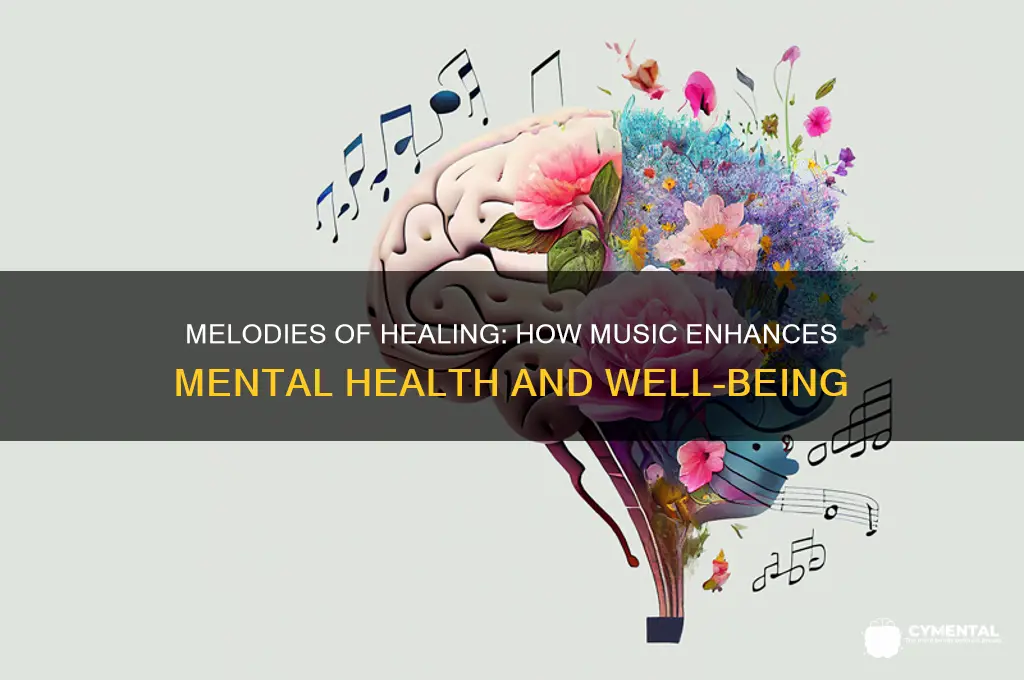
Music has long been recognized as a powerful tool for enhancing mental health and well-being, offering a unique and accessible way to manage stress, anxiety, and depression. Through its ability to evoke emotions, stimulate the brain, and provide a sense of connection, music can serve as a therapeutic outlet for individuals struggling with mental health challenges. Whether through listening, creating, or performing, engaging with music has been shown to reduce cortisol levels, improve mood, and foster a sense of calm. Additionally, music therapy, a structured intervention led by trained professionals, has gained prominence as an effective complementary treatment for conditions like PTSD, ADHD, and even chronic pain. By exploring the profound impact of music on the mind, this essay delves into how it can be harnessed as a vital resource for mental health support and healing.
| Characteristics | Values |
|---|---|
| Stress Reduction | Music lowers cortisol levels, reduces heart rate, and promotes relaxation. |
| Mood Enhancement | Listening to music releases dopamine, improving mood and reducing symptoms of depression. |
| Emotional Expression | Music provides a safe outlet for expressing and processing complex emotions. |
| Cognitive Improvement | Music therapy enhances memory, attention, and cognitive function, especially in dementia. |
| Anxiety Relief | Calming music reduces anxiety symptoms and promotes mindfulness. |
| Social Connection | Group music activities foster social interaction and reduce feelings of loneliness. |
| Pain Management | Music distracts from pain and reduces the perception of discomfort. |
| Self-Awareness | Lyrics and melodies help individuals reflect on personal experiences and emotions. |
| Sleep Improvement | Listening to soothing music before bed improves sleep quality and reduces insomnia. |
| Motivation and Focus | Upbeat music increases motivation, productivity, and focus during tasks. |
| Therapeutic Tool | Music therapy is used professionally to treat mental health disorders like PTSD and anxiety. |
| Cultural and Personal Identity | Music connects individuals to their cultural roots and personal histories. |
| Neuroplasticity | Engaging with music stimulates brain plasticity, aiding recovery from mental health issues. |
| Non-Verbal Communication | Music serves as a universal language for those struggling with verbal expression. |
| Coping Mechanism | Music provides a healthy coping strategy for dealing with trauma and stress. |
Explore related products


What You'll Learn
- Music reduces stress and anxiety through calming rhythms and soothing melodies
- Listening to music boosts mood by releasing dopamine and endorphins
- Creating music fosters self-expression and emotional release for mental clarity
- Music therapy aids in managing depression and improving emotional well-being
- Rhythmic patterns in music enhance focus and reduce symptoms of ADHD

Music reduces stress and anxiety through calming rhythms and soothing melodies
Music's power to calm the mind is not just anecdotal; it's rooted in science. Studies show that listening to music with a tempo of 60-80 beats per minute can synchronize brainwaves, inducing a state of relaxation. This phenomenon, known as "entrainment," explains why lullabies soothe infants and why slow, rhythmic music is often used in meditation practices. The key lies in the predictability of the rhythm, which signals safety to our primal brains, reducing the production of stress hormones like cortisol.
Consider this a prescription for stress relief: dedicate 20-30 minutes daily to listening to instrumental music with calming rhythms. Classical pieces like Mozart's "Piano Concerto No. 21" or modern ambient tracks by artists like Brian Eno are excellent choices. For maximum benefit, create a ritual around this practice—dim the lights, sit comfortably, and focus solely on the music. Avoid lyrics, as they can engage the analytical mind, counteracting the calming effect. This simple routine can significantly lower anxiety levels, particularly in adults aged 18-65, according to a study published in the *Journal of Music Therapy*.
While calming rhythms address stress at a physiological level, soothing melodies work on an emotional plane. Melodies with minor chords and gradual crescendos, such as those found in Debussy’s "Clair de Lune," evoke a sense of melancholy beauty, allowing listeners to process complex emotions safely. This emotional release is therapeutic, particularly for individuals experiencing situational anxiety or grief. Pairing such melodies with deep breathing exercises amplifies their effect, as the combination activates the parasympathetic nervous system, promoting relaxation.
However, not all calming music is created equal. Avoid tracks with sudden changes in volume or tempo, as these can trigger stress responses. Instead, opt for consistent, flowing compositions. Apps like Calm Radio or Spotify’s "Peaceful Piano" playlist curate such music, making it accessible for daily use. For children and teenagers, who may find classical music less relatable, nature-inspired soundtracks or instrumental covers of popular songs can be equally effective. The goal is consistency—make music a daily tool, not a sporadic remedy.
Incorporating calming rhythms and soothing melodies into your routine is a practical, evidence-based strategy for managing stress and anxiety. Unlike medication or therapy, it’s non-invasive, cost-effective, and universally accessible. Start small—replace background noise with intentional music choices, and observe how your body responds. Over time, this practice can rewire your brain’s stress pathways, offering a sustainable way to cultivate mental well-being. Remember, the right music isn’t just entertainment; it’s a tool for healing.
Labeling Mental Health: Empowerment or Stigma? Exploring Its Impact
You may want to see also
Explore related products


Listening to music boosts mood by releasing dopamine and endorphins
Music has a profound and immediate impact on our emotional state, and this effect is deeply rooted in our brain chemistry. When we listen to music that resonates with us, our brains release dopamine, often referred to as the "feel-good" neurotransmitter. This chemical surge is similar to the pleasure we experience from eating our favorite food or achieving a goal. Studies show that dopamine levels can increase by up to 9% during peak emotional responses to music, creating a natural and accessible way to elevate mood. Unlike pharmaceutical interventions, music offers a side-effect-free method to stimulate this release, making it a powerful tool for mental health management.
To harness this benefit, consider creating a personalized playlist of songs that evoke positive emotions. Start with 15–20 minutes of uninterrupted listening daily, ideally during moments of stress or low mood. For maximum impact, choose music with a tempo that matches your desired emotional state—upbeat tunes for energy, slower rhythms for relaxation. Research suggests that consistency is key; regular engagement with music can lead to sustained dopamine release, fostering long-term emotional resilience. Experiment with different genres and observe how your brain responds, as individual preferences play a significant role in triggering this chemical reaction.
While dopamine takes the spotlight, music also stimulates the release of endorphins, the body’s natural painkillers and mood enhancers. This dual chemical response explains why music can feel both exhilarating and soothing simultaneously. Endorphins are particularly activated during rhythmic activities like dancing or drumming, which combine auditory stimulation with physical movement. Incorporating such activities into your routine can amplify the mood-boosting effects of music. For instance, a 30-minute dance session to your favorite playlist can elevate endorphin levels, reducing stress and promoting a sense of well-being.
It’s important to note that the mood-enhancing effects of music are not one-size-fits-all. Factors like age, cultural background, and personal experiences influence how we respond to different sounds. For example, older adults may find classical music more calming, while younger individuals might prefer pop or electronic genres for a dopamine boost. Tailoring your musical choices to your unique preferences ensures a more effective and enjoyable experience. Additionally, combining music with mindfulness practices, such as deep breathing or meditation, can enhance its therapeutic impact by fostering a deeper connection between mind and body.
Incorporating music into your mental health toolkit is simple yet transformative. Whether you’re seeking a quick mood lift or long-term emotional support, understanding the science behind music’s effects empowers you to use it strategically. Start small, experiment with different styles, and pay attention to how your body and mind respond. By leveraging the natural release of dopamine and endorphins, music becomes more than entertainment—it becomes a proactive step toward mental well-being.
Dorothea Dix's Legacy: Transforming Mental Health Care for the Vulnerable
You may want to see also
Explore related products




Creating music fosters self-expression and emotional release for mental clarity
Music creation serves as a powerful tool for self-expression, allowing individuals to articulate emotions that words alone cannot capture. When someone composes a melody, writes lyrics, or improvises on an instrument, they externalize internal feelings, transforming abstract emotions into tangible forms. This process is particularly beneficial for those who struggle with verbal communication or who find traditional therapy intimidating. For instance, a teenager grappling with anxiety might channel their unease into a fast-paced drumbeat, while an adult processing grief could compose a somber piano piece. By giving shape to their emotions, creators often gain a clearer understanding of their own mental states, fostering introspection and self-awareness.
The act of creating music also provides a structured outlet for emotional release, acting as a healthy coping mechanism for stress, anger, or sadness. Research suggests that engaging in musical activities reduces cortisol levels, the hormone associated with stress, by up to 25%. For example, strumming a guitar or singing can serve as a cathartic release, much like journaling or physical exercise. Unlike passive listening, active music-making demands focus and presence, diverting attention away from negative thought patterns. This immersive quality makes it an effective tool for mindfulness, helping individuals achieve mental clarity by grounding them in the present moment.
To harness these benefits, consider incorporating music creation into your routine, even if you lack formal training. Start small: experiment with a simple instrument like a ukulele or use digital tools like GarageBand to compose basic tracks. Dedicate 15–30 minutes daily to this practice, treating it as a form of emotional maintenance. For children and adolescents, encourage unstructured musical play, such as drumming on household items or humming melodies, to foster creativity without pressure. Adults can join community choirs or open mic nights to combine self-expression with social connection, amplifying the therapeutic effects.
However, it’s essential to approach music creation with patience and self-compassion. Avoid setting unrealistic expectations or comparing your work to others, as this can undermine its therapeutic value. Instead, focus on the process rather than the product, allowing imperfections to coexist with progress. If feelings of frustration arise, take breaks or switch to a different creative medium temporarily. Remember, the goal is emotional release and clarity, not perfection. By embracing music as a personal rather than performative endeavor, you can unlock its full potential as a tool for mental well-being.
Supporting Reluctant Loved Ones: Strategies for Accessing Mental Health Care
You may want to see also
Explore related products


$27.99


Music therapy aids in managing depression and improving emotional well-being
Music therapy, a structured intervention led by trained professionals, harnesses the power of sound to address the complex symptoms of depression. Unlike passive listening, music therapy involves active engagement—creating, improvising, or discussing music—which fosters a sense of agency and emotional expression. Research shows that structured sessions, typically 30 to 60 minutes long, conducted 1-2 times per week, can significantly reduce depressive symptoms over 6 to 12 weeks. For instance, a meta-analysis published in *The Journal of Affective Disorders* found that music therapy, when combined with standard care, led to a 25% greater reduction in depression scores compared to standard care alone. This structured approach allows individuals to process emotions in a safe, guided environment, making it particularly effective for those who struggle with verbal communication.
Consider the case of a 32-year-old woman with treatment-resistant depression who participated in biweekly music therapy sessions. Through guided improvisation on the piano, she began to express her feelings nonverbally, translating her emotional pain into melodies. Over time, this process helped her identify and articulate her emotions, reducing her reliance on avoidance mechanisms. Her therapist noted a marked improvement in her mood and a decrease in suicidal ideation after 10 sessions. This example underscores the therapeutic potential of music as a medium for emotional exploration, particularly when facilitated by a trained professional who can interpret and guide the process.
While music therapy is powerful, it is not a one-size-fits-all solution. Its effectiveness depends on factors such as the individual’s willingness to engage, the therapist’s expertise, and the integration of music therapy with other treatments like cognitive-behavioral therapy (CBT). For adolescents, group music therapy sessions can be particularly beneficial, as they provide a sense of community and reduce feelings of isolation. Adults, on the other hand, may benefit more from individual sessions that focus on personalized emotional processing. Caution should be exercised with individuals experiencing severe psychotic symptoms, as unstructured music exposure may exacerbate their condition without professional guidance.
To incorporate music therapy into a mental health regimen, start by consulting a certified music therapist who can tailor sessions to specific needs. For those without access to formal therapy, structured self-guided practices, such as journaling about emotional responses to music or engaging in simple drumming exercises, can provide some benefits. Apps like *Thync* or *Moodfit* offer music-based mindfulness exercises, though they should not replace professional therapy. Consistency is key—aim for at least 20 minutes of active engagement with music daily, whether through listening, playing, or creating, to maximize emotional and cognitive benefits.
Ultimately, music therapy serves as a bridge between the ineffable and the expressible, offering a unique pathway to healing for those grappling with depression. Its ability to bypass cognitive barriers and directly engage the emotional core makes it a valuable tool in the mental health arsenal. While not a standalone cure, when integrated thoughtfully into a comprehensive treatment plan, music therapy can significantly enhance emotional well-being, providing both relief and a renewed sense of connection to oneself and others.
Boost Your Mood: Aerobic Exercise's Powerful Impact on Mental Health
You may want to see also
Explore related products




Rhythmic patterns in music enhance focus and reduce symptoms of ADHD
Music’s rhythmic patterns act as a metronome for the mind, particularly for individuals with ADHD. Studies show that steady beats synchronize brainwaves, fostering a state of heightened focus. For instance, a 2019 study published in the *Journal of Attention Disorders* found that children with ADHD exhibited improved concentration during tasks when exposed to music with a tempo of 60–80 beats per minute (BPM). This range mirrors the brain’s alpha wave frequency, promoting calmness and attention. Practically, incorporating instrumental tracks like classical music or ambient electronic beats at this tempo during study or work sessions can serve as a non-invasive tool to enhance productivity.
Consider the mechanism behind this phenomenon: rhythmic patterns provide external structure, compensating for the internal deficits in time perception often experienced by those with ADHD. Unlike medication, which alters brain chemistry, music acts as a behavioral scaffold, guiding the listener’s focus without side effects. For parents or educators, creating playlists with consistent rhythmic patterns can be a simple yet effective strategy. Apps like Focus@Will or Spotify’s "Deep Focus" playlists offer curated options, though customizing tracks to individual preferences yields better results. Consistency is key—aim for 30–45 minutes of rhythmic music per session, followed by short breaks to prevent habituation.
A comparative analysis reveals that not all music is created equal in this context. While lyrical songs can distract due to cognitive load, instrumental tracks with repetitive rhythms—such as those found in Baroque music or modern lo-fi beats—prove most beneficial. For example, Vivaldi’s *Four Seasons* or lo-fi hip-hop tracks typically range between 60–80 BPM, aligning with the optimal focus-enhancing tempo. Conversely, erratic rhythms or high-energy genres like EDM may exacerbate restlessness. The takeaway? Select music deliberately, prioritizing rhythm over melody or lyrics, and monitor its impact on the individual’s ability to sustain attention.
Finally, integrating rhythmic music into daily routines requires mindfulness and adaptability. For children, pairing music with structured activities like homework or chores can turn mundane tasks into engaging experiences. Adults might use rhythmic playlists during work sprints, leveraging the Pomodoro Technique (25 minutes of focus followed by a 5-minute break). Caution should be taken to avoid over-reliance on music as a crutch; instead, view it as one tool in a broader toolkit for managing ADHD symptoms. By understanding the science and applying it thoughtfully, rhythmic patterns in music can become a powerful ally in enhancing focus and reducing ADHD-related challenges.
Honoring Life and Healing: Day of the Dead’s Mental Health Benefits
You may want to see also
Frequently asked questions
Music therapy improves mental health by reducing stress, anxiety, and depression through the release of endorphins and dopamine. It also provides a non-verbal outlet for emotional expression, helping individuals process and manage their feelings.
Yes, listening to music can reduce symptoms of anxiety and depression by lowering cortisol levels, promoting relaxation, and creating a sense of comfort or distraction from negative thoughts.
Music enhances mood and emotional well-being by stimulating the brain’s reward centers, evoking positive memories, and fostering a sense of connection, whether through personal playlists or shared musical experiences.