Caleb Wright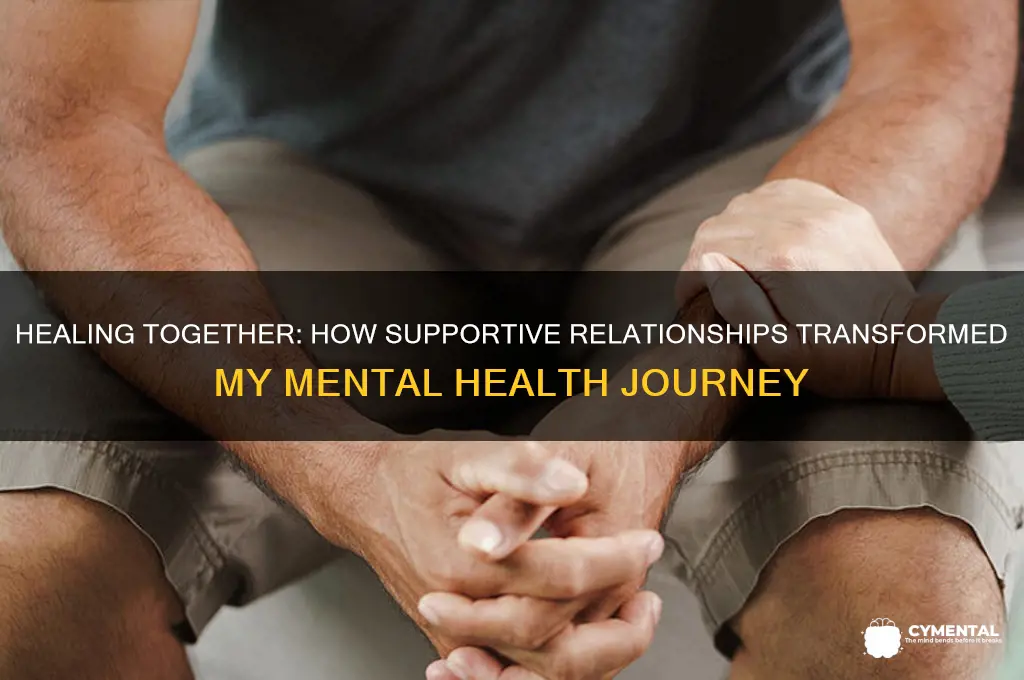
Dealing with mental health challenges can often feel isolating, but the support of others has been instrumental in navigating these struggles. Whether it’s a friend who listens without judgment, a family member who offers unwavering encouragement, or a therapist who provides professional guidance, the presence of caring individuals has made a profound difference. Their empathy, understanding, and willingness to stand by during difficult times have not only provided comfort but also helped foster resilience and hope. These relationships remind us that we are not alone and that healing is possible when we lean on the strength of those around us.
Explore related products


$9.79 $17.99


What You'll Learn
- Supportive Friends: Friends offering a listening ear and understanding during tough times
- Family Encouragement: Family providing consistent love, patience, and motivation to seek help
- Therapist Guidance: Professionals offering tools, strategies, and insights to manage mental health
- Online Communities: Connecting with others facing similar struggles for shared experiences and advice
- Workplace Support: Employers fostering a safe, understanding environment with mental health resources

Supportive Friends: Friends offering a listening ear and understanding during tough times
Friends who offer a listening ear and genuine understanding can be lifelines during mental health struggles. Their role isn’t to fix or advise but to create a safe space where emotions can be expressed without judgment. This simple act of presence—whether through a late-night text, a quiet coffee meetup, or a long drive—validates the experience of the person suffering. Research shows that feeling heard reduces cortisol levels, the stress hormone, and fosters a sense of connection, counteracting the isolating effects of mental health issues.
Consider the mechanics of this support: a friend who listens actively—without interrupting, minimizing, or shifting the focus—allows the speaker to process their thoughts aloud. This externalization can clarify tangled emotions and make them feel more manageable. For instance, a friend who responds with phrases like, “That sounds really hard,” or “I’m here for you,” reinforces empathy rather than problem-solving. Practical tip: Encourage friends to ask open-ended questions like, “How does that feel?” instead of offering solutions, as this deepens understanding and trust.
Contrast this with well-intentioned but unhelpful responses, such as “Just think positive” or “It could be worse.” These phrases, though meant to comfort, often invalidate the speaker’s experience and can deepen feelings of shame or inadequacy. A supportive friend recognizes that mental health struggles aren’t logical puzzles to solve but human experiences to witness. They prioritize emotional safety over quick fixes, understanding that healing is nonlinear and often messy.
To cultivate this kind of friendship, both parties must invest effort. For the person struggling, it’s crucial to communicate needs clearly—whether it’s asking for a distraction, a venting session, or simply silent companionship. For the friend, consistency matters: checking in regularly, even with a brief message, shows ongoing commitment. A study published in the *Journal of Social and Personal Relationships* found that perceived support—feeling that someone is reliably there—is as important as the actual support provided.
In practice, this dynamic can look like a friend who remembers to ask, “How’s your day been?” during a rough week, or who sends a meme that lightens the mood without trivializing the struggle. It’s about small, intentional actions that accumulate over time, creating a foundation of trust and care. Takeaway: Supportive friendships aren’t about grand gestures but about showing up, listening deeply, and honoring the other person’s experience—a reminder that in mental health, sometimes the most powerful help is simply being there.
Weightlifting's Mental Benefits: Boosting Mood, Focus, and Resilience
You may want to see also
Explore related products


Family Encouragement: Family providing consistent love, patience, and motivation to seek help
Family encouragement is the bedrock of mental health recovery, offering a unique blend of emotional support and practical guidance that professional help alone cannot provide. Unlike therapists or medication, family members can offer round-the-clock reassurance, creating a safety net that fosters trust and openness. For instance, a study published in the *Journal of Family Psychology* found that individuals with supportive families were 40% more likely to seek therapy and adhere to treatment plans. This statistic underscores the power of consistent love and patience in breaking down the stigma surrounding mental health and encouraging proactive steps toward healing.
Consider the role of patience in this dynamic. Mental health struggles often manifest in unpredictable ways—mood swings, withdrawal, or irritability—that can strain even the strongest relationships. Yet, when family members respond with patience rather than frustration, they model the very resilience they hope to instill. For example, a parent who calmly reassures a teenager experiencing anxiety, saying, “It’s okay to feel this way, and we’re here to help,” can defuse tension and reinforce the idea that seeking help is a sign of strength, not weakness. This approach requires practice but pays dividends in building trust and openness.
Motivation, however, must be handled delicately. Pushing too hard can backfire, while too little can leave someone feeling abandoned. A balanced approach involves setting small, achievable goals—such as scheduling a therapy session or joining a support group—and celebrating progress, no matter how incremental. For instance, a sibling might suggest, “Let’s research therapists together this weekend,” framing the task as a collaborative effort rather than a burden. This shared accountability not only reduces the stigma of seeking help but also reinforces the message that recovery is a family endeavor.
Practical tips can further amplify family encouragement. For younger individuals (ages 13–25), who often face unique challenges like academic pressure or social media-induced anxiety, families can establish tech-free zones or designated “check-in” times to foster connection. For older adults, who may struggle with isolation or generational stigma, families can organize activities that align with their interests, such as gardening or book clubs, to subtly encourage social engagement and emotional expression. Across all age groups, consistency is key—whether it’s weekly family dinners, daily affirmations, or regular reminders that professional help is a valid and courageous step.
Ultimately, family encouragement is not about fixing someone’s mental health but about creating an environment where healing can occur. By offering unwavering love, practicing patience, and providing thoughtful motivation, families can transform their role from bystanders to active allies. This approach not only aids in immediate recovery but also equips individuals with the tools to navigate future challenges, proving that the most powerful form of support often comes from those closest to us.
Decorating Cookies: A Sweet Therapy for Mental Well-Being
You may want to see also
Explore related products




Therapist Guidance: Professionals offering tools, strategies, and insights to manage mental health
Therapists are architects of mental resilience, offering structured frameworks to navigate emotional turbulence. Unlike self-help books or peer advice, their guidance is rooted in evidence-based modalities like Cognitive Behavioral Therapy (CBT), Dialectical Behavior Therapy (DBT), or Eye Movement Desensitization and Reprocessing (EMDR). For instance, CBT typically involves 12–20 sessions, during which clients learn to reframe negative thought patterns. A therapist might assign homework—such as journaling triggers or practicing mindfulness—to reinforce skills between sessions. This methodical approach ensures progress is measurable, not just anecdotal.
Consider the case of a 28-year-old with generalized anxiety disorder. A therapist might introduce the "5-4-3-2-1 grounding technique" during acute episodes: identify 5 sights, 4 textures, 3 sounds, 2 smells, and 1 taste. This tool, taught in session and practiced at home, becomes a portable lifeline. Over time, the therapist layers in exposure therapy, gradually desensitizing the client to anxiety triggers. This dual strategy—immediate relief paired with long-term rewiring—exemplifies how professionals tailor interventions to individual needs.
Not all therapist guidance is clinical. Some incorporate creative modalities like art therapy or narrative therapy, particularly with adolescents or those resistant to traditional talk therapy. For a 16-year-old struggling with depression, a therapist might use collage-making to externalize emotions, bypassing the pressure of verbal articulation. Such approaches meet clients where they are, leveraging non-verbal communication to foster insight. The therapist’s role here is not just to instruct but to curate a safe space for exploration.
However, therapist guidance is not without challenges. Clients must commit to vulnerability, often confronting painful truths. A common pitfall is expecting instant results; therapy is a marathon, not a sprint. For example, medication management—often overseen by psychiatrists—may require 4–6 weeks to show effects. Therapists mitigate frustration by setting realistic expectations, such as celebrating small wins like improved sleep or reduced panic attack frequency. This collaborative mindset shifts the focus from "fixing" to "growing."
Ultimately, therapist guidance is a partnership, not a prescription. Professionals equip clients with tools—like deep breathing exercises for panic or cognitive reframing for catastrophizing—but the onus of practice lies with the individual. A therapist might suggest a "worry time" technique: allocating 15 minutes daily to address anxieties, containing them outside that window. Such strategies demystify mental health management, transforming it from an abstract struggle into a manageable routine. In this way, therapists do not merely treat symptoms; they cultivate self-efficacy, empowering clients to become their own advocates.
Hockey's Mental Health Benefits: Boosting Resilience and Well-being on the Ice
You may want to see also
Explore related products






Online Communities: Connecting with others facing similar struggles for shared experiences and advice
Online communities have become a lifeline for many navigating mental health challenges, offering a space where anonymity meets authenticity. Unlike face-to-face interactions, these platforms allow individuals to share their deepest struggles without fear of judgment, creating a unique environment for vulnerability. For instance, forums like Reddit’s r/depression or specialized Discord servers provide 24/7 access to peers who understand the nuances of living with anxiety, bipolar disorder, or PTSD. This immediacy and accessibility can be particularly crucial during late-night panic attacks or moments of isolation when traditional support systems are unavailable.
Consider the mechanics of these communities: they thrive on shared experiences, not professional expertise. A teenager grappling with social anxiety might find solace in a TikTok comment thread where others describe similar symptoms, while a parent of a child with ADHD could gain practical strategies from a Facebook group. The power lies in the collective wisdom of lived experiences, which often complement clinical advice. For example, a study published in *JMIR Mental Health* found that 78% of participants in online mental health communities reported reduced feelings of loneliness and increased coping skills after just three months of engagement. However, it’s essential to approach these spaces with discernment, as not all advice is evidence-based.
To maximize the benefits of online communities, start by identifying platforms aligned with your specific needs. For instance, The Mighty caters to chronic illness and mental health, while 7 Cups offers peer support through chat-based conversations. Engage actively but mindfully—share your story when comfortable, ask questions, and offer support to others. Remember, these communities are not a substitute for professional treatment but a supplement. Pairing online interactions with therapy or medication can create a holistic support system. For younger users (under 18), parental guidance or involvement is advisable to ensure safety and appropriateness of content.
One cautionary note: online communities can sometimes amplify negative emotions if not navigated carefully. Venting threads or comparisons of struggles may inadvertently foster a culture of competition or hopelessness. To avoid this, seek out groups that emphasize positivity, solution-focused discussions, or structured activities like virtual mindfulness sessions. Additionally, set boundaries—limit screen time, mute notifications during vulnerable periods, and prioritize offline relationships. When used thoughtfully, these digital spaces can transform isolation into connection, turning shared pain into collective resilience.
Supporting Mental Health: Compassionate Ways to Assist Unstable Individuals
You may want to see also
Explore related products


Workplace Support: Employers fostering a safe, understanding environment with mental health resources
Employers play a pivotal role in shaping the mental health landscape for their employees, often serving as the first line of defense against workplace-induced stress and burnout. By fostering a safe and understanding environment, companies can significantly impact their workforce's overall well-being. One effective strategy is to implement comprehensive mental health resources, such as Employee Assistance Programs (EAPs), which offer confidential counseling services, legal advice, and financial planning. These programs have been shown to reduce absenteeism by up to 20% and increase productivity by 15%, according to a study by the Centre for Mental Health.
Consider the case of a global tech firm that introduced a "Mental Health First Aid" training program for managers. This initiative equipped leaders with the skills to recognize signs of mental distress and provide initial support. As a result, employees reported feeling more comfortable discussing their mental health concerns, leading to a 30% increase in help-seeking behaviors within the first year. This example underscores the importance of training and education in creating a supportive workplace culture. To replicate this success, employers should allocate resources for regular mental health workshops and ensure that all levels of management participate.
However, fostering a safe environment goes beyond formal programs. It involves cultivating a culture of empathy and openness. For instance, companies can encourage peer support networks or "wellness champions" who act as mental health advocates within teams. These individuals can organize stress-relief activities, such as mindfulness sessions or virtual yoga classes, and serve as a bridge between employees and HR. A study by the American Psychological Association found that employees with access to such support systems were 40% more likely to report high job satisfaction. Practical steps include designating quiet spaces for relaxation, offering flexible work arrangements, and regularly surveying employees to gauge their mental health needs.
Critics might argue that prioritizing mental health could strain company budgets, but the return on investment is clear. For every dollar spent on mental health interventions, businesses see an average return of $4 in improved health and productivity, as reported by the World Health Organization. Moreover, neglecting mental health can lead to higher turnover rates and increased healthcare costs. Employers must view these initiatives not as expenses but as strategic investments in their most valuable asset: their people.
In conclusion, workplace support for mental health is a multifaceted endeavor that requires commitment, creativity, and continuous evaluation. By integrating formal resources, training programs, and a culture of empathy, employers can create an environment where employees feel valued and supported. The key lies in taking proactive steps, measuring their impact, and adapting strategies to meet evolving needs. After all, a mentally healthy workforce is not just a moral imperative but a cornerstone of sustainable business success.
Helping Others: A Powerful Path to Improved Mental Well-Being
You may want to see also
Frequently asked questions
Friends and family have provided emotional support, listened without judgment, and encouraged me to seek professional help when needed. Their presence and understanding have made a significant difference in my recovery.
Therapists have guided me in developing coping strategies and understanding my emotions. Their expertise, combined with the support of loved ones, has created a strong foundation for my mental well-being.
Support groups have connected me with people who share similar experiences, reducing feelings of isolation. Hearing others’ stories and advice has provided valuable insights and hope during difficult times.
Coworkers have offered flexibility, understanding, and a safe space to discuss my needs. Their support has helped me maintain a healthier work-life balance and reduce stress.
Online communities have provided access to resources, shared experiences, and a sense of belonging. Engaging with others who understand my struggles has been empowering and comforting.