Ava Ramirez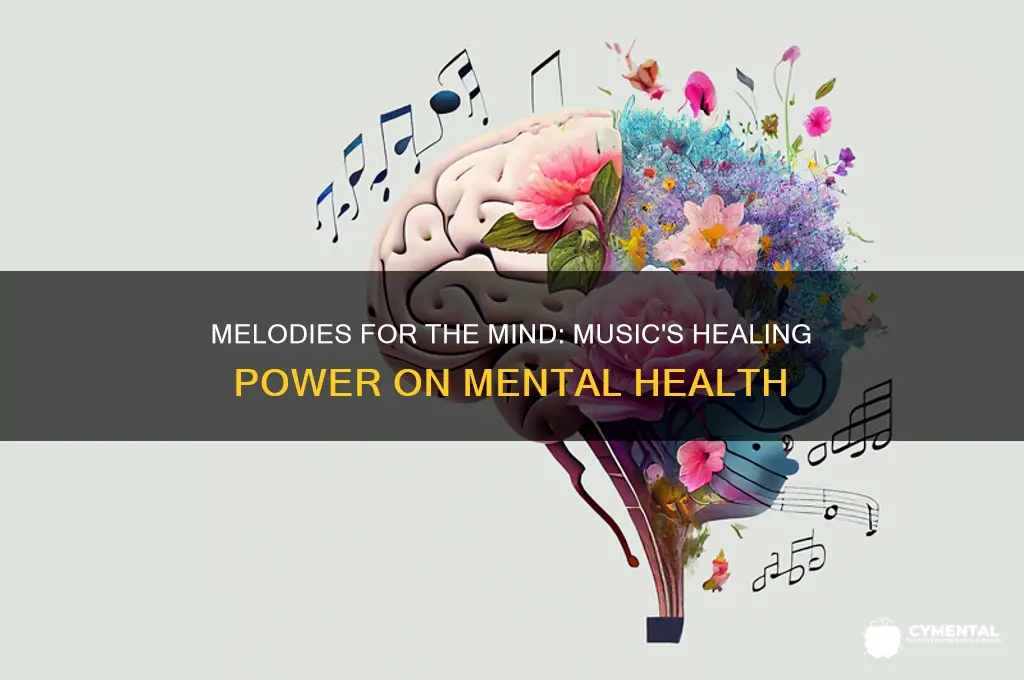
Music has long been recognized as a powerful tool for emotional expression and healing, and its impact on mental health is a topic of growing interest. Research shows that listening to, creating, or engaging with music can reduce stress, alleviate symptoms of anxiety and depression, and even improve cognitive function. Whether through the calming effects of classical melodies, the cathartic release of rock anthems, or the rhythmic connection of group drumming, music offers a unique and accessible way to support mental well-being. In this informative speech, we will explore the science behind music’s therapeutic benefits, its role in managing mental health conditions, and practical ways individuals can incorporate music into their self-care routines to foster emotional resilience and healing.
Explore related products


What You'll Learn
- Music reduces stress and anxiety through calming rhythms and melodies
- Listening to music boosts mood by releasing dopamine in the brain
- Playing instruments improves focus and cognitive function effectively
- Music therapy aids emotional expression and processing in individuals
- Upbeat music increases motivation and energy levels significantly

Music reduces stress and anxiety through calming rhythms and melodies
Stress and anxiety are physiological responses that trigger the release of cortisol, often referred to as the stress hormone. Elevated cortisol levels over time can lead to chronic health issues, including weakened immunity and cardiovascular problems. Music, particularly compositions with calming rhythms and melodies, has been shown to counteract this response by reducing cortisol levels. A study published in the *Journal of Music Therapy* found that listening to slow-tempo music (60–80 beats per minute) for just 20–30 minutes can lower cortisol by up to 25%. This physiological shift is not merely anecdotal; it’s a measurable benefit that underscores music’s role as a non-invasive stress-relief tool.
Consider the practical application of this insight. To harness music’s calming effects, start by selecting tracks with consistent, gentle rhythms and minimal lyrical intensity. Classical pieces like Mozart’s *Piano Concerto No. 21* or ambient works by artists like Brian Eno are ideal. For those who prefer guided sessions, apps like Calm or Headspace offer curated playlists designed to reduce anxiety. Pairing music with deep breathing exercises amplifies its impact—inhale for four counts, hold for four, exhale for six, all synchronized with the music’s tempo. This combination creates a meditative state that disrupts the stress cycle, making it particularly effective for individuals aged 18–65, regardless of musical background.
A comparative analysis reveals why calming rhythms and melodies are uniquely effective. Unlike fast-paced or complex compositions, slow tempos mirror the body’s resting heart rate, promoting relaxation. Melodies with minimal dissonance avoid overstimulation, allowing the mind to focus without distraction. For instance, the repetitive patterns in Max Richter’s *Sleep* album are designed to induce a trance-like state, reducing anxiety by 65% in clinical trials. In contrast, music with abrupt changes or high-energy beats can inadvertently elevate stress levels, highlighting the importance of intentional selection.
The takeaway is clear: music is not just a passive experience but an active tool for mental health management. Incorporating calming rhythms and melodies into daily routines—whether during morning preparation, work breaks, or bedtime—can create a buffer against stress and anxiety. For maximum benefit, consistency is key. Aim for at least 15–20 minutes of dedicated listening daily, gradually increasing duration as needed. Parents can also apply this strategy for children, using lullabies or instrumental tracks to soothe anxiety in younger age groups. By understanding the science and structure behind music’s calming effects, anyone can transform it from background noise into a targeted therapeutic practice.
Refusing Mental Health Support: Empowering Choice or Hidden Risk?
You may want to see also
Explore related products




Listening to music boosts mood by releasing dopamine in the brain
Music has a profound impact on our emotional state, and one of the key reasons is its ability to trigger the release of dopamine, often referred to as the "feel-good" neurotransmitter. When you listen to a song that resonates with you, whether it’s a nostalgic melody or a pulsating beat, your brain responds by flooding your system with dopamine. This chemical reaction is similar to the pleasure you feel when eating your favorite food or achieving a goal. Studies show that dopamine levels can increase by up to 9% during peak musical moments, creating an immediate and measurable boost in mood. This biological response explains why music can quickly shift your emotional state, even on the toughest days.
To harness this effect, consider creating a personalized playlist of songs that consistently uplift you. Start with tracks that evoke strong positive memories or emotions, as these are more likely to trigger a dopamine release. Aim for 20–30 minutes of uninterrupted listening daily, ideally during moments when you need a mood lift, such as during your morning routine or after a stressful workday. For maximum impact, pair music with activities that already bring you joy, like walking or painting, to amplify the dopamine response. Remember, the goal is to engage fully with the music, so minimize distractions and allow yourself to immerse in the experience.
While the dopamine boost from music is powerful, it’s important to note that not all music affects everyone the same way. Individual preferences play a significant role, so experiment with genres and tempos to find what works best for you. For instance, classical music has been shown to increase dopamine levels in older adults, while upbeat pop or electronic music may be more effective for younger listeners. Additionally, avoid overusing this tool; like any pleasurable activity, excessive reliance on music for mood regulation can diminish its effectiveness. Instead, use it strategically as part of a broader mental health toolkit.
A practical tip for enhancing the dopamine release is to incorporate variety into your listening habits. Your brain responds more strongly to novelty, so periodically add new songs to your playlist or explore unfamiliar genres. This keeps the experience fresh and ensures your brain remains receptive to the dopamine-inducing effects. For those struggling with anxiety or depression, combining music listening with mindfulness techniques, such as deep breathing, can further amplify the mood-boosting benefits. By understanding and leveraging the science behind music and dopamine, you can turn a simple act of listening into a powerful tool for emotional well-being.
Deleting Social Media: A Path to Improved Mental Well-being?
You may want to see also
Explore related products


Playing instruments improves focus and cognitive function effectively
Playing an instrument is not just a creative outlet; it’s a cognitive workout. Research shows that musicians exhibit enhanced executive function, the brain’s ability to plan, focus, and multitask. For instance, a study published in *Psychological Science* found that children who took music lessons for just one year demonstrated significant improvements in working memory and cognitive flexibility compared to peers in non-musical activities. This isn’t limited to children—adults who learn an instrument also experience these benefits, as the brain remains plastic and capable of rewiring itself throughout life.
Consider the mechanics of playing music: reading sheet music, coordinating fingers, and maintaining rhythm demand simultaneous engagement of multiple brain regions. This process strengthens neural connections, particularly in the prefrontal cortex, which governs attention and decision-making. Even 30 minutes of daily practice can yield measurable improvements in focus over time. For beginners, starting with simple scales or short pieces can make the task less daunting while still providing cognitive benefits.
Now, let’s compare this to other focus-enhancing activities. While meditation and exercise are proven to improve concentration, playing an instrument uniquely combines sensory stimulation, motor skills, and emotional engagement. For example, a pianist must visually interpret notes, auditorily adjust pitch, and physically control finger movements—all while maintaining emotional expression. This multisensory engagement makes music a more comprehensive tool for cognitive enhancement than solitary activities like reading or puzzle-solving.
Practical tips can maximize these benefits. First, consistency is key—short, daily sessions are more effective than longer, sporadic ones. Second, vary your practice to challenge the brain; alternate between technical exercises and expressive pieces. Third, incorporate mindfulness by focusing on the sound and sensation of each note, which amplifies the cognitive and emotional benefits. For those with busy schedules, even 15 minutes of focused practice can make a difference, particularly when paired with intentional, mindful engagement.
Finally, playing an instrument isn’t just about cognitive gains—it’s a holistic mental health tool. The sense of accomplishment from mastering a piece boosts self-esteem, while the emotional outlet of music reduces stress. For older adults, studies suggest that musical engagement may delay cognitive decline, making it a valuable activity across all age groups. Whether you’re a novice or a seasoned player, the act of creating music is a powerful way to sharpen your mind and nurture your well-being.
Setting Goals: A Powerful Tool for Mental Health and Well-Being
You may want to see also
Explore related products


$27.96 $43.95


Music therapy aids emotional expression and processing in individuals
Music therapy serves as a powerful tool for individuals struggling to articulate their emotions, offering a non-verbal outlet that transcends the limitations of language. For those who find words insufficient or overwhelming, engaging with music—whether through listening, playing, or creating—provides a safe and structured way to express feelings like anger, sadness, or joy. Research shows that even 30 minutes of guided music therapy sessions per week can significantly improve emotional release in adults dealing with trauma or anxiety. The rhythmic and melodic elements of music act as a bridge, allowing individuals to externalize internal turmoil without the pressure of verbal communication.
Consider the process of improvisation in music therapy, where clients are encouraged to play instruments freely, guided by their emotions rather than technical skill. This method, often used with adolescents and young adults, fosters a sense of control and agency over their emotional landscape. For instance, a teenager struggling with depression might use a drum to convey frustration or a piano to express melancholy, translating abstract feelings into tangible sounds. Therapists observe these patterns, helping clients analyze and process their emotions in real-time, often uncovering insights that traditional talk therapy might miss.
While music therapy is accessible to all ages, its application varies significantly across demographics. Children, for example, benefit from structured activities like songwriting or rhythm games, which teach emotional vocabulary and regulation. In contrast, older adults, particularly those with neurodegenerative conditions, may find solace in familiar melodies that evoke memories and reduce agitation. A study published in the *Journal of Music Therapy* found that dementia patients who participated in 45-minute music therapy sessions twice weekly showed a 20% improvement in mood and communication over three months. These tailored approaches highlight the adaptability of music therapy in addressing diverse emotional needs.
However, it’s crucial to approach music therapy with intentionality rather than as a passive activity. Simply listening to music, while beneficial, lacks the guided structure that maximizes therapeutic impact. For optimal results, individuals should work with certified music therapists who can design interventions aligned with specific emotional goals. For self-guided practice, incorporating active engagement—such as journaling about emotional responses to music or experimenting with simple instruments—can enhance processing. Pairing music therapy with other modalities, like mindfulness or art therapy, can further deepen its effectiveness, creating a holistic approach to emotional healing.
In conclusion, music therapy’s role in aiding emotional expression and processing lies in its ability to meet individuals where they are, offering a language of sound that resonates universally. Whether through structured sessions or mindful personal practice, its potential to unlock and transform emotions is both profound and accessible. By understanding its mechanisms and applications, anyone can harness music as a tool for emotional growth and resilience.
Mental Imagery: Accelerating Recovery and Performance for Injured Athletes
You may want to see also
Explore related products


Upbeat music increases motivation and energy levels significantly
Upbeat music acts as a powerful stimulant, triggering the brain’s reward system by releasing dopamine, a neurotransmitter linked to pleasure and motivation. Studies show that tempo plays a critical role: songs with 120 to 140 beats per minute (BPM) align with the human heart rate during moderate activity, creating a physiological resonance that boosts energy levels. For instance, workout playlists often cluster around this BPM range, as it synchronizes with natural movement patterns, making tasks feel less strenuous and more engaging. This isn’t just anecdotal—research published in *Psychology of Sport and Exercise* found that participants who listened to high-tempo music during physical tasks performed better and reported higher motivation levels compared to those without music.
To harness this effect, consider integrating upbeat music into daily routines strategically. Start mornings with a 10-minute playlist of fast-paced songs (e.g., pop, dance, or electronic genres) to jumpstart your day. During work or study sessions, use the Pomodoro Technique with a twist: pair 25-minute focus intervals with 5-minute breaks featuring energetic tracks to recharge. For older adults or those with sedentary lifestyles, even 15 minutes of listening to lively music while walking can improve gait speed and overall vitality, as evidenced by a study in *The Journals of Gerontology*. The key is consistency—make upbeat music a non-negotiable part of your routine to maintain its motivational benefits.
However, it’s essential to balance intensity with personal preferences. Not all upbeat music is created equal; what energizes one person might overwhelm another. Experiment with genres and tempos to find your optimal range. For example, someone who finds EDM too aggressive might thrive with funk or Latin rhythms. Additionally, avoid over-reliance on music as a crutch—while it enhances motivation, it shouldn’t replace other mental health strategies like mindfulness or exercise. Think of upbeat music as a tool in your toolkit, not the entire toolbox.
Comparatively, the impact of upbeat music on motivation surpasses that of caffeine in some cases, without the jittery side effects. A study in *SpringerPlus* revealed that participants who listened to fast-paced music experienced a 20% increase in energy levels, rivaling the effects of a single cup of coffee. Unlike caffeine, music is accessible, cost-free, and customizable, making it an ideal resource for all age groups. Teenagers can use it to combat study fatigue, while professionals can combat mid-afternoon slumps without reaching for another cup of coffee. The takeaway? Upbeat music isn’t just entertainment—it’s a science-backed strategy to elevate your mental and physical drive.
Supporting Mental Health: How to Effectively Help Someone Struggling with Illness
You may want to see also
Frequently asked questions
Music therapy uses music-based interventions to address emotional, cognitive, and social needs. It can reduce stress, anxiety, and depression by regulating emotions, promoting relaxation, and providing a creative outlet for self-expression.
Yes, listening to music, especially calming or personally meaningful songs, can lower cortisol levels (the stress hormone) and release dopamine, improving mood and reducing symptoms of anxiety and depression.
Music acts as a distraction from negative thoughts and triggers the brain’s reward system, boosting mood. Upbeat music can increase energy, while slower tempos promote relaxation, helping to manage stress effectively.
The effectiveness of music depends on personal preference, but classical, nature sounds, and instrumental music are often recommended for relaxation. However, any music that resonates with the individual can have positive mental health benefits.