Harper Lewis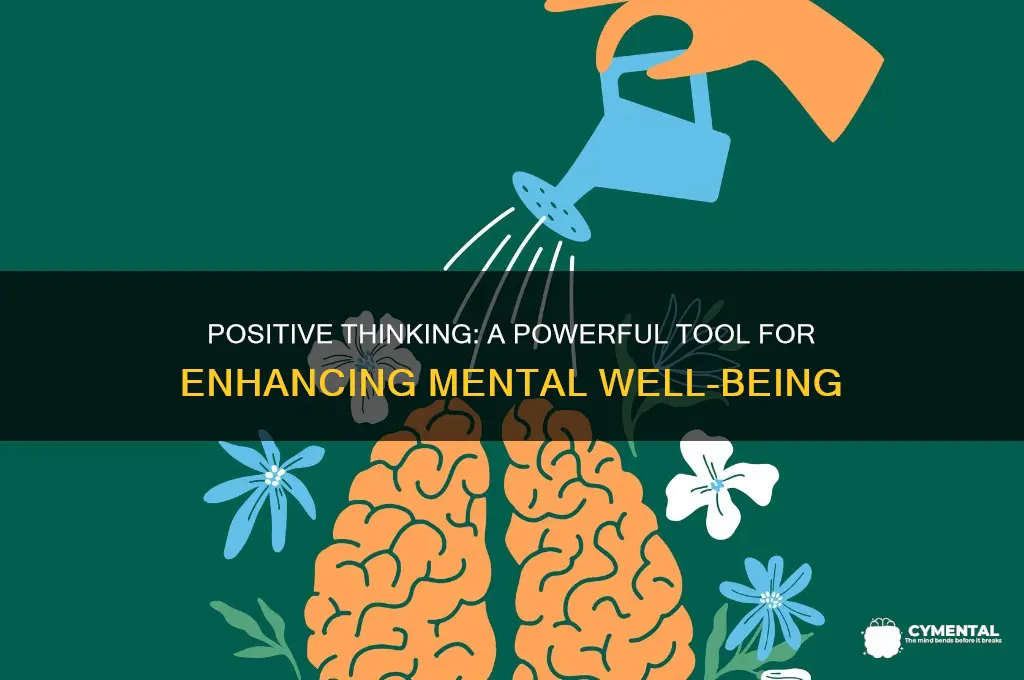
Positive thinking plays a pivotal role in enhancing mental health by fostering resilience, reducing stress, and promoting emotional well-being. When individuals cultivate a mindset focused on optimism, they are better equipped to navigate life’s challenges, viewing setbacks as opportunities for growth rather than insurmountable obstacles. This shift in perspective not only lowers anxiety and depression but also boosts self-esteem and confidence. By reframing negative thoughts and focusing on solutions, positive thinking encourages healthier coping mechanisms and improves overall psychological functioning. Additionally, it strengthens relationships and social connections, as a positive outlook tends to attract supportive interactions. Ultimately, embracing positivity can lead to a more fulfilling and balanced mental state, making it a powerful tool for long-term mental health.
| Characteristics | Values |
|---|---|
| Reduces Stress | Positive thinking lowers cortisol levels, the body's stress hormone, leading to reduced anxiety and improved overall well-being. |
| Enhances Resilience | It helps individuals bounce back from setbacks more effectively by fostering a problem-solving mindset and emotional adaptability. |
| Improves Mood | Focusing on positive thoughts increases the production of neurotransmitters like serotonin and dopamine, which are linked to happiness and pleasure. |
| Boosts Self-Esteem | Positive affirmations and self-encouragement strengthen self-worth and confidence, reducing self-doubt and negative self-talk. |
| Encourages Healthy Habits | Optimistic individuals are more likely to engage in beneficial behaviors such as regular exercise, balanced diets, and adequate sleep. |
| Strengthens Relationships | Positive thinking fosters empathy, kindness, and better communication, leading to stronger and more supportive social connections. |
| Enhances Problem-Solving Skills | A positive mindset promotes creativity and a proactive approach to challenges, making it easier to find solutions. |
| Reduces Risk of Depression | Consistent positive thinking can lower the likelihood of developing depressive symptoms by shifting focus away from negative thoughts. |
| Improves Physical Health | Positive thinking is linked to a stronger immune system, lower blood pressure, and reduced risk of chronic diseases. |
| Increases Lifespan | Studies suggest that optimistic individuals tend to live longer due to better stress management and healthier lifestyle choices. |
Explore related products




What You'll Learn
- Reduces stress by fostering resilience and promoting a calmer, more balanced mindset
- Enhances emotional well-being by focusing on optimism and gratitude daily
- Boosts self-esteem through affirmations and constructive self-perception practices
- Improves coping mechanisms by reframing challenges as opportunities for growth
- Strengthens relationships by encouraging empathy, kindness, and positive communication

Reduces stress by fostering resilience and promoting a calmer, more balanced mindset
Stress, an inevitable part of life, often feels like an overwhelming force that disrupts our mental equilibrium. However, positive thinking acts as a buffer, reducing its impact by fostering resilience—the ability to adapt and recover from adversity. When faced with challenges, a positive mindset encourages individuals to view obstacles as opportunities rather than insurmountable barriers. For instance, research shows that people who practice positive self-talk experience lower levels of cortisol, the stress hormone, during difficult situations. This physiological response highlights how optimism directly influences our body’s reaction to stress, promoting a calmer, more balanced state of mind.
To cultivate this resilience, start by reframing negative thoughts. Instead of dwelling on "I can’t handle this," try "This is tough, but I’ve overcome challenges before." Pair this cognitive shift with practical techniques like deep breathing exercises—inhale for 4 seconds, hold for 4 seconds, exhale for 6 seconds—to activate the body’s relaxation response. Incorporating mindfulness practices, such as a 10-minute daily meditation, can further enhance this effect. These steps not only reduce immediate stress but also build long-term mental toughness, making it easier to navigate future stressors with grace.
A comparative analysis reveals the stark difference between individuals who embrace positive thinking and those who don’t. Studies show that optimists are 30% less likely to report high stress levels compared to pessimists. This isn’t merely a matter of personality; it’s a skill that can be developed. For example, journaling three things you’re grateful for each day has been proven to rewire the brain toward positivity over time. Similarly, engaging in activities that bring joy—whether it’s painting, hiking, or spending time with loved ones—reinforces a balanced mindset, acting as a counterweight to life’s inevitable pressures.
However, it’s crucial to approach positive thinking with realism. Blind optimism, or ignoring genuine problems, can lead to increased stress in the long run. The goal isn’t to suppress negative emotions but to acknowledge them while maintaining a constructive outlook. For instance, if you’re facing a work deadline, recognize the anxiety but focus on actionable steps to complete the task. This balanced approach ensures that positivity serves as a tool for resilience rather than a mask for avoidance. By integrating these practices into daily life, individuals can transform their relationship with stress, fostering a mindset that is both calm and empowered.
Accessing Adult Mental Health Support in Mississippi: A Comprehensive Guide
You may want to see also
Explore related products


Enhances emotional well-being by focusing on optimism and gratitude daily
Positive thinking isn't just a feel-good concept; it's a powerful tool for reshaping our emotional landscape. Research consistently shows that cultivating optimism and gratitude daily acts as a buffer against stress, anxiety, and depression.
Imagine your mind as a garden. Negative thoughts are like weeds, choking out joy and contentment. Optimism and gratitude are the sunlight and water, nurturing resilience and emotional well-being.
One study found that individuals who practiced gratitude journaling for just 10 minutes a day experienced significant increases in happiness and life satisfaction over a six-week period. This simple act of acknowledging the good in our lives, no matter how small, rewires our brains to focus on the positive, fostering a more optimistic outlook.
Similarly, cognitive reframing, a technique used in cognitive-behavioral therapy, encourages us to challenge negative thought patterns and replace them with more realistic and positive interpretations. For example, instead of thinking, "I always mess everything up," try, "I made a mistake, but I can learn from it and do better next time."
Incorporating optimism and gratitude into your daily routine doesn't require a complete personality overhaul. Start small. Dedicate five minutes each morning to write down three things you're grateful for. It could be as simple as a warm cup of coffee, a kind word from a friend, or the sound of birdsong. Throughout the day, actively look for the silver linings in challenging situations. When faced with a setback, ask yourself, "What can I learn from this?" or "How can I grow from this experience?"
These seemingly small acts of positivity accumulate over time, building emotional resilience and fostering a sense of well-being that extends far beyond fleeting moments of happiness. Remember, cultivating optimism and gratitude is a practice, not a destination. Be patient with yourself, embrace the journey, and watch your emotional garden flourish.
Fasting for Focus: Enhancing Mental Clarity Through Intermittent Fasting
You may want to see also
Explore related products




Boosts self-esteem through affirmations and constructive self-perception practices
Positive thinking isn’t just a feel-good concept; it’s a tool that reshapes how we perceive ourselves. At the core of this transformation are affirmations—short, powerful statements that challenge negative self-talk and reinforce self-worth. For instance, repeating phrases like *“I am capable and deserving of success”* or *“I handle challenges with strength and grace”* can rewire neural pathways over time, replacing self-doubt with confidence. Research shows that consistent use of affirmations, especially when paired with emotional engagement, activates the brain’s reward centers, fostering a more positive self-image.
To harness this effectively, start small. Dedicate 5 minutes daily to stand in front of a mirror, make eye contact with yourself, and speak affirmations aloud. This tactile and visual approach amplifies their impact, particularly for individuals aged 18–35 who often struggle with self-esteem in high-pressure environments. Caution: avoid generic affirmations like *“I am perfect”*—they can feel inauthentic. Instead, tailor them to specific insecurities, such as *“I am improving every day”* for those battling perfectionism.
Constructive self-perception practices go beyond words; they involve reframing failures as learning opportunities. For example, instead of labeling yourself as *“bad at math”* after a mistake, reframe it as *“I’m still learning, and each mistake brings me closer to mastery.”* This cognitive shift, backed by cognitive-behavioral techniques, reduces self-criticism and builds resilience. A study published in *Psychology Today* found that individuals who practiced reframing for 30 days reported a 25% increase in self-esteem scores.
Pairing affirmations with actionable steps further solidifies their impact. For instance, if you affirm *“I am worthy of love”*, follow it with a small act of self-care, like preparing a healthy meal or taking a 10-minute walk. This bridges the gap between thought and behavior, making the affirmation feel tangible. For teens and young adults, journaling these practices can enhance their effectiveness, as writing helps internalize positive beliefs.
Incorporating these strategies isn’t about ignoring flaws but about cultivating a balanced, compassionate view of oneself. Over time, affirmations and constructive self-perception practices become habits, not chores. The takeaway? Self-esteem isn’t built overnight, but with consistent, intentional effort, positive thinking can lay the foundation for lasting mental well-being. Start today—your self-worth is worth the investment.
Do Mental Hospitals Help: Exploring Effectiveness and Patient Outcomes
You may want to see also
Explore related products


Improves coping mechanisms by reframing challenges as opportunities for growth
Challenges are inevitable, but our response to them shapes our mental health trajectory. Positive thinking acts as a lens that transforms obstacles into stepping stones. Instead of viewing difficulties as insurmountable barriers, reframing them as opportunities for growth shifts the focus from the problem to the potential solution. This cognitive shift is not merely optimistic fluff; it’s a proven strategy backed by psychological research. Studies show that individuals who adopt a growth mindset, seeing challenges as chances to learn and improve, experience lower stress levels and greater resilience.
Consider a practical example: losing a job can feel devastating, but reframing it as an opportunity to explore new career paths or develop new skills can turn despair into action. This isn’t about ignoring the pain of the situation but about redirecting energy toward constructive outcomes. Techniques like journaling can aid this process. Write down the challenge, then list three ways it could lead to personal or professional growth. Over time, this practice trains the brain to default to a problem-solving mode rather than a victim mentality.
However, reframing isn’t a one-size-fits-all solution. It requires intentional effort and self-awareness. Start small by identifying one recurring challenge in your life—perhaps procrastination or conflict with a coworker. Ask yourself, “What can I learn from this?” or “How might this make me stronger?” Pair this with actionable steps, such as setting micro-goals or seeking feedback. For instance, if procrastination is the issue, reframe it as an opportunity to improve time management by experimenting with the Pomodoro Technique (25 minutes of work followed by a 5-minute break).
A cautionary note: reframing should not be used to bypass genuine emotions. It’s healthy to acknowledge frustration, sadness, or fear before shifting perspective. Suppressing emotions can lead to long-term psychological strain. Instead, allow yourself to feel, then consciously choose to reframe. For younger individuals (teens and young adults), this process can be particularly impactful, as it fosters a resilient mindset during formative years.
In conclusion, reframing challenges as growth opportunities is a powerful tool for improving coping mechanisms. It’s not about denying hardship but about leveraging it for personal development. By combining emotional honesty with proactive reframing, individuals can build mental resilience that endures beyond any single challenge. Start today—identify one obstacle, reframe it, and take a small step forward. The growth you seek is often hidden within the struggle.
Marijuana and Mental Health: Exploring Potential Benefits and Risks
You may want to see also
Explore related products


Strengthens relationships by encouraging empathy, kindness, and positive communication
Positive thinking acts as a catalyst for empathy, the cornerstone of meaningful relationships. When we approach interactions with a positive mindset, we're more likely to attribute positive intentions to others' actions, even when they're ambiguous. This mental shift fosters understanding and compassion, allowing us to see beyond surface-level behaviors and connect with the emotions driving them. For instance, instead of assuming a friend's cancelled plans stem from disinterest, a positive thinker might consider external factors like unexpected work demands or personal challenges. This empathetic response strengthens the bond by demonstrating genuine care and concern.
Studies suggest that practicing empathy through positive reframing can lead to increased oxytocin levels, often referred to as the "love hormone," which promotes feelings of trust and connection.
Cultivating kindness through positive thinking creates a ripple effect within relationships. A simple act of kindness, fueled by a positive outlook, can inspire reciprocity, creating a cycle of goodwill. Imagine a colleague facing a challenging deadline. A positive thinker, instead of focusing on the potential inconvenience, might offer assistance or words of encouragement. This act, born from a belief in the colleague's ability to succeed, not only alleviates stress but also strengthens the professional bond. Research indicates that performing acts of kindness, even small ones, can boost serotonin and dopamine levels, neurotransmitters associated with happiness and well-being, benefiting both the giver and receiver.
Practically, aim for at least three deliberate acts of kindness daily, whether it's a sincere compliment, a small favor, or a listening ear.
Positive communication, fueled by a positive mindset, transforms interactions into opportunities for growth and connection. It involves actively listening without judgment, expressing gratitude, and focusing on solutions rather than dwelling on problems. For example, instead of criticizing a partner's cooking, a positive communicator might highlight the effort and suggest a joint cooking class to explore new recipes together. This approach fosters a safe and supportive environment where both individuals feel valued and understood. Studies show that couples who engage in positive communication report higher levels of relationship satisfaction and resilience during challenging times.
The power of positive thinking in relationships extends beyond individual interactions. It creates a culture of positivity that permeates social circles, fostering a sense of community and belonging. When we approach relationships with empathy, kindness, and positive communication, we not only strengthen our own mental well-being but also contribute to a more supportive and uplifting environment for those around us. This collective positivity acts as a buffer against stress, anxiety, and depression, creating a network of support that benefits everyone involved.
Boost Your Mental Health: The Power of More Sleep
You may want to see also
Frequently asked questions
Positive thinking reduces stress, anxiety, and depression by promoting a healthier mindset. It encourages focusing on solutions rather than problems, which can improve emotional resilience and overall well-being.
Yes, positive thinking can increase the production of neurotransmitters like serotonin and dopamine, which are linked to feelings of happiness and relaxation, thus improving mental health.
While it’s not a standalone cure, positive thinking can complement professional treatment by reducing negative thought patterns and fostering a more optimistic outlook, which aids in managing symptoms.
Start by challenging negative thoughts, practicing gratitude, setting small achievable goals, and surrounding yourself with supportive, positive influences. Consistency is key to seeing long-term benefits.