Harper Lewis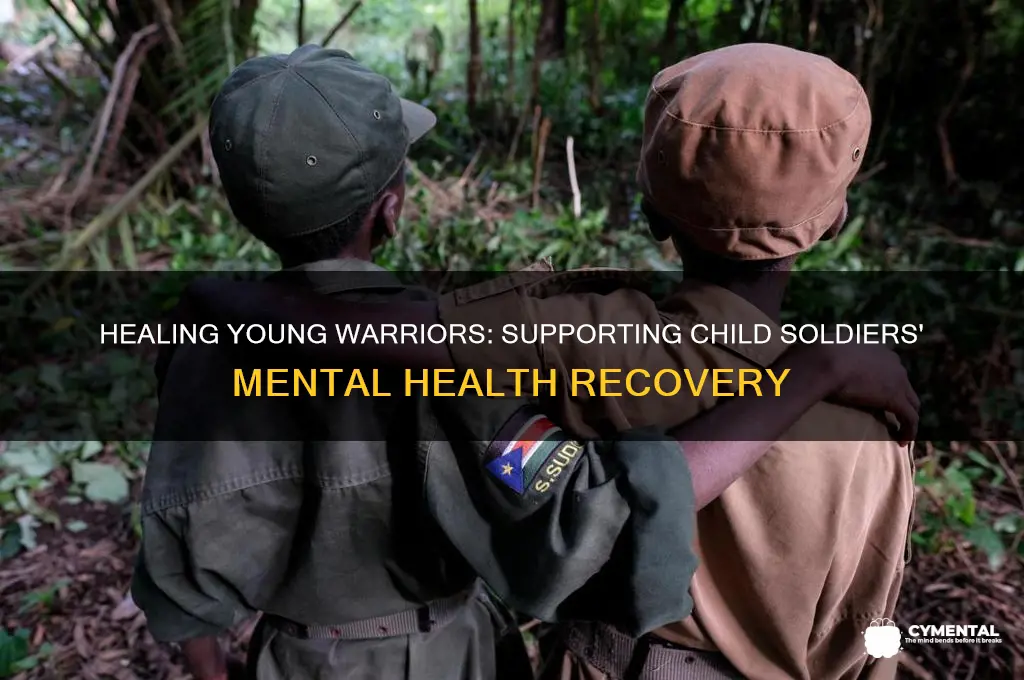
Child soldiers, forcibly recruited or coerced into armed conflicts, endure unimaginable trauma that profoundly impacts their mental health. Exposure to violence, loss, and extreme stress often leads to severe psychological issues such as PTSD, anxiety, depression, and attachment disorders. Addressing their mental health requires a multifaceted approach, including trauma-informed care, access to professional psychological support, and safe, supportive environments for reintegration. Cultural sensitivity, community involvement, and long-term rehabilitation programs are essential to rebuilding trust and fostering resilience. By prioritizing their emotional well-being, we can help these children heal, reclaim their childhood, and envision a future free from the shadows of war.
Explore related products


What You'll Learn
- Provide Safe Spaces: Create secure environments for emotional expression and psychological healing
- Trauma-Informed Care: Use therapies addressing PTSD, anxiety, and trust issues effectively
- Reintegration Support: Help reconnect with families, communities, and education systems
- Skill Development: Teach vocational skills to rebuild identity and purpose post-conflict
- Peer Support Groups: Foster bonding and shared healing among former child soldiers

Provide Safe Spaces: Create secure environments for emotional expression and psychological healing
Child soldiers, often robbed of their innocence and burdened with traumatic experiences, require safe spaces to process their emotions and begin the journey of psychological healing. These environments must be designed with intentionality, prioritizing confidentiality, non-judgment, and a sense of belonging.
Consider the case of War Child, an organization that establishes "Child Friendly Spaces" in conflict zones. These spaces, often simple structures with colorful walls and familiar toys, offer a stark contrast to the chaos outside. Trained facilitators, sometimes former child soldiers themselves, guide activities like storytelling, art therapy, and group discussions. Here, children learn it’s safe to cry, to laugh, and to express anger without fear of retribution. Research shows that such structured yet nurturing environments significantly reduce symptoms of PTSD and anxiety in this vulnerable population.
Creating safe spaces isn’t solely about physical locations. It’s about fostering a culture of trust and acceptance. For instance, incorporating peer support groups can be powerful. When child soldiers see others their age sharing similar struggles, they feel less isolated. A study in Sierra Leone found that peer-led groups, facilitated by trained adolescents, led to increased emotional disclosure and a stronger sense of hope for the future.
However, establishing these spaces comes with challenges. Ensuring physical safety in active conflict zones is paramount. Organizations must collaborate with local communities and, when possible, armed groups to guarantee the neutrality of these spaces. Additionally, cultural sensitivity is crucial. What constitutes a "safe" environment varies across cultures. For example, in some societies, group activities may be preferred over individual counseling sessions.
Ultimately, providing safe spaces for child soldiers is an investment in their future and the future of their communities. It’s about giving them permission to grieve, to heal, and to reimagine a life beyond war. By creating environments where they feel seen, heard, and valued, we offer them the chance to reclaim their childhood and build resilience for a brighter tomorrow.
Acupuncture's Role in Healing Mental Health Disorders: A Natural Approach
You may want to see also
Explore related products


Trauma-Informed Care: Use therapies addressing PTSD, anxiety, and trust issues effectively
Child soldiers, often forced into combat at a tender age, carry the weight of unimaginable trauma. Their experiences—violence, loss, and betrayal—leave deep psychological scars, manifesting as PTSD, anxiety, and profound trust issues. Trauma-informed care offers a beacon of hope, but it must be tailored to their unique needs. This approach recognizes the pervasive impact of trauma and seeks to create a safe, supportive environment where healing can begin.
One effective therapy is Cognitive Behavioral Therapy (CBT), adapted for children and adolescents. CBT helps child soldiers identify and challenge negative thought patterns stemming from their experiences. For instance, a child who believes "the world is always dangerous" can learn to reframe this thought as "some places are safe, and I can find them." Sessions typically last 45–60 minutes, conducted 1–2 times weekly for 12–16 weeks. Incorporating play or art therapy can make CBT more accessible for younger children, allowing them to express emotions they cannot yet articulate verbally.
Another powerful tool is Eye Movement Desensitization and Reprocessing (EMDR), which targets traumatic memories directly. During 60–90 minute sessions, the therapist guides the child in recalling distressing events while engaging in bilateral stimulation, such as following the therapist’s hand movements. This process helps desensitize the emotional charge of memories. EMDR is particularly effective for reducing PTSD symptoms, with studies showing significant improvement after 6–12 sessions. However, it requires a skilled therapist and should only be used when the child feels stable enough to confront their trauma.
Building trust is foundational, and Trust-Based Relational Intervention (TBRI) is specifically designed for children with a history of trauma. TBRI focuses on creating safe, nurturing relationships through three principles: connecting, empowering, and correcting. Caregivers and therapists use playful engagement, consistent routines, and gentle discipline to help child soldiers feel secure. For example, a daily ritual like sharing a meal or playing a simple game can foster connection. TBRI is not time-limited but rather a long-term approach integrated into daily interactions, making it ideal for residential care settings.
While these therapies are effective, they must be implemented with caution. Child soldiers often struggle with dissociation or emotional numbing, which can complicate treatment. Therapists should monitor for signs of retraumatization, such as increased nightmares or withdrawal, and adjust the pace accordingly. Additionally, cultural sensitivity is crucial; therapies must be adapted to align with the child’s cultural background and beliefs. For instance, incorporating traditional storytelling or community rituals can enhance engagement and relevance.
In conclusion, trauma-informed care for child soldiers requires a multifaceted approach, combining evidence-based therapies with patience, empathy, and cultural awareness. By addressing PTSD, anxiety, and trust issues through tailored interventions, we can help these young survivors reclaim their lives and build a future free from the shadows of their past.
Recognizing the Signs: How to Encourage Mental Health Support
You may want to see also
Explore related products


$12.14 $19.99


Reintegration Support: Help reconnect with families, communities, and education systems
Child soldiers often face profound challenges in reconnecting with their families, communities, and education systems after being separated by conflict. The trauma they’ve experienced—violence, displacement, and loss of identity—creates barriers to reintegration that require deliberate, compassionate intervention. Without structured support, these children risk isolation, stigma, and long-term mental health struggles. Reintegration is not just about physical return but about rebuilding trust, restoring relationships, and re-establishing a sense of belonging.
One critical step in reintegration is facilitating family reunification, but this process must be handled with care. Families may struggle to accept a child who has been involved in armed conflict, often due to cultural stigma or fear of the child’s experiences. Structured family therapy sessions, led by trained professionals, can help bridge this gap. For example, narrative therapy allows children to share their stories in a safe space, while family members learn to listen without judgment. Practical tips include starting with small, low-pressure interactions, such as shared meals or activities, and gradually increasing time together. For younger children (ages 6–12), play-based interventions, like drawing or role-playing, can help them express emotions they cannot articulate verbally.
Communities play a vital role in reintegration, but they often lack the tools to support child soldiers effectively. Community-based programs that educate locals about the psychological impact of conflict on children can reduce stigma and foster acceptance. Peer support groups, where former child soldiers connect with one another, can provide a sense of solidarity and reduce feelings of isolation. For adolescents (ages 13–18), vocational training programs integrated into community centers can offer purpose and a pathway to economic independence, which is crucial for rebuilding self-worth.
Education is a cornerstone of reintegration, yet many child soldiers face significant barriers to returning to school. Accelerated learning programs, tailored to their age and skill level, can help them catch up academically without the stigma of being in a classroom with much younger peers. Schools should also implement trauma-informed practices, such as flexible schedules and counseling services, to address emotional needs. For children under 10, incorporating art, music, and physical education into the curriculum can provide outlets for emotional expression and reduce anxiety. Older children may benefit from mentorship programs, where teachers or community leaders guide them in setting educational and personal goals.
Reintegration support must be holistic, addressing not just the child’s needs but also the systems around them. Families, communities, and schools must work together to create an environment where healing can occur. This requires sustained investment in training, resources, and policies that prioritize the mental health of child soldiers. Without this collaborative effort, reintegration remains incomplete, leaving children vulnerable to further trauma and marginalization. The goal is not just to return them to society but to empower them to thrive within it.
Lady Gaga's Mental Health Journey: A Catalyst for Creative Success
You may want to see also
Explore related products


Skill Development: Teach vocational skills to rebuild identity and purpose post-conflict
Child soldiers often lose their sense of self and purpose during conflict, stripped of their childhood and forced into roles that distort their identity. Skill development through vocational training offers a pathway to reclaiming that lost identity, providing structure, achievement, and a future beyond their traumatic past. By learning tangible skills, these young individuals can rebuild their self-worth, reintegrate into society, and envision a life defined by their own choices rather than their experiences as soldiers.
Consider the case of a 16-year-old former child soldier in Uganda who, after years of conflict, enrolled in a carpentry program. Initially withdrawn and distrustful, he gradually found solace in the precision and creativity of woodworking. Within six months, he crafted a table that became a symbol of his transformation—a tangible proof of his ability to create rather than destroy. This example underscores the power of vocational training to shift focus from survival to productivity, from violence to craftsmanship. Programs like these should target adolescents aged 14–18, offering skills such as carpentry, tailoring, or agriculture, tailored to local economic needs. Each session should balance hands-on training with psychological support, ensuring emotional safety while fostering technical competence.
However, implementing such programs requires careful consideration. Vocational training must be culturally relevant and economically viable to avoid creating false hope. For instance, teaching farming techniques in an urban setting may prove impractical. Additionally, trainers should be trained in trauma-informed practices to recognize and address triggers that may arise during skill-building activities. Group sizes should be limited to 10–15 participants to ensure individualized attention and minimize overwhelm. Pairing skill development with mentorship programs can further enhance outcomes, as mentors provide ongoing guidance and emotional support.
The persuasive argument for vocational training lies in its dual impact: it addresses both the mental health and socioeconomic reintegration of child soldiers. By mastering a skill, these young individuals gain a sense of accomplishment that counters feelings of worthlessness or guilt. Simultaneously, they acquire a means to earn a living, reducing dependency and increasing self-reliance. A study in Sierra Leone found that former child soldiers who completed vocational training reported higher levels of life satisfaction and lower rates of reoffending compared to those who did not. This highlights the long-term benefits of investing in such programs.
In conclusion, vocational skill development is not merely about teaching a trade; it is about restoring humanity. For child soldiers, learning a skill becomes a form of therapy, a way to rewrite their narrative from victimhood to agency. Organizations and governments should prioritize funding for these programs, ensuring they are accessible, sustainable, and holistic. By equipping these young individuals with skills, we offer them more than a livelihood—we give them a reason to believe in themselves and their future.
Empathetic Approaches to Encourage Mental Health Support for Loved Ones
You may want to see also
Explore related products


Peer Support Groups: Foster bonding and shared healing among former child soldiers
Former child soldiers carry psychological scars that traditional therapy alone often struggles to address. Peer support groups offer a unique solution by leveraging shared experiences to foster healing. Unlike clinical settings, these groups create a safe space where participants recognize their struggles reflected in others, reducing feelings of isolation and shame. A study by the International Center for Transitional Justice found that peer-led interventions significantly improved PTSD symptoms and social reintegration among former child soldiers in Sierra Leone, highlighting the power of collective understanding.
Implementing effective peer support groups requires careful structure. Groups should ideally consist of 8–12 participants, aged 15–24, led by a trained facilitator with a background in trauma-informed care. Sessions should meet biweekly for 90 minutes, focusing on themes like grief, anger management, and rebuilding trust. Incorporating creative activities like storytelling, art, or music can help participants express emotions when words fail. For instance, a program in Colombia used drumming circles to encourage non-verbal communication, fostering connection without forcing vulnerability.
One of the greatest strengths of peer support groups is their ability to rebuild shattered identities. Child soldiers often internalize their roles as perpetrators, struggling to see themselves as victims or survivors. In these groups, members challenge this narrative by sharing stories of resistance and resilience. For example, a 17-year-old participant in Uganda recounted how he secretly protected younger recruits, inspiring others to reframe their experiences as acts of survival rather than complicity. This collective reframing is a cornerstone of healing.
However, peer support groups are not without challenges. Facilitators must navigate power dynamics, ensuring no single voice dominates the group. Cultural sensitivities, such as gender norms or tribal affiliations, must also be respected. For instance, in some communities, male participants may hesitate to express vulnerability in mixed-gender groups, necessitating separate sessions. Additionally, ongoing monitoring is crucial to prevent retraumatization, as discussions of past violence can trigger distress.
To maximize impact, peer support groups should be integrated into broader reintegration programs. Pairing these groups with vocational training or education opportunities reinforces the sense of purpose and belonging that child soldiers often lose. For example, a program in the Democratic Republic of Congo combined peer support with agricultural training, allowing participants to heal while acquiring skills for self-sufficiency. This holistic approach ensures that emotional healing translates into tangible life improvements.
In conclusion, peer support groups are a transformative tool for addressing the mental health needs of former child soldiers. By fostering bonding and shared healing, they create a community where survivors can reclaim their humanity. While challenges exist, careful planning and integration into comprehensive programs can unlock their full potential, offering hope and restoration to those who have endured the unthinkable.
Recognizing Signs Your Child May Need Mental Health Support
You may want to see also
Frequently asked questions
Provide a safe and stable environment, offer access to trained mental health professionals, establish routines, and encourage peer support groups to foster a sense of belonging.
Train caregivers and professionals to recognize trauma symptoms, avoid re-traumatization, use non-judgmental language, and focus on building trust and emotional safety.
Education provides structure, a sense of normalcy, and opportunities for skill-building, which can boost self-esteem and reduce feelings of hopelessness.
Educate families on trauma and its effects, encourage open communication, and involve them in therapy sessions to strengthen familial bonds and support systems.
Evidence-based therapies like Cognitive Behavioral Therapy (CBT), Eye Movement Desensitization and Reprocessing (EMDR), and play therapy can help process trauma and reduce symptoms.