Harper Lewis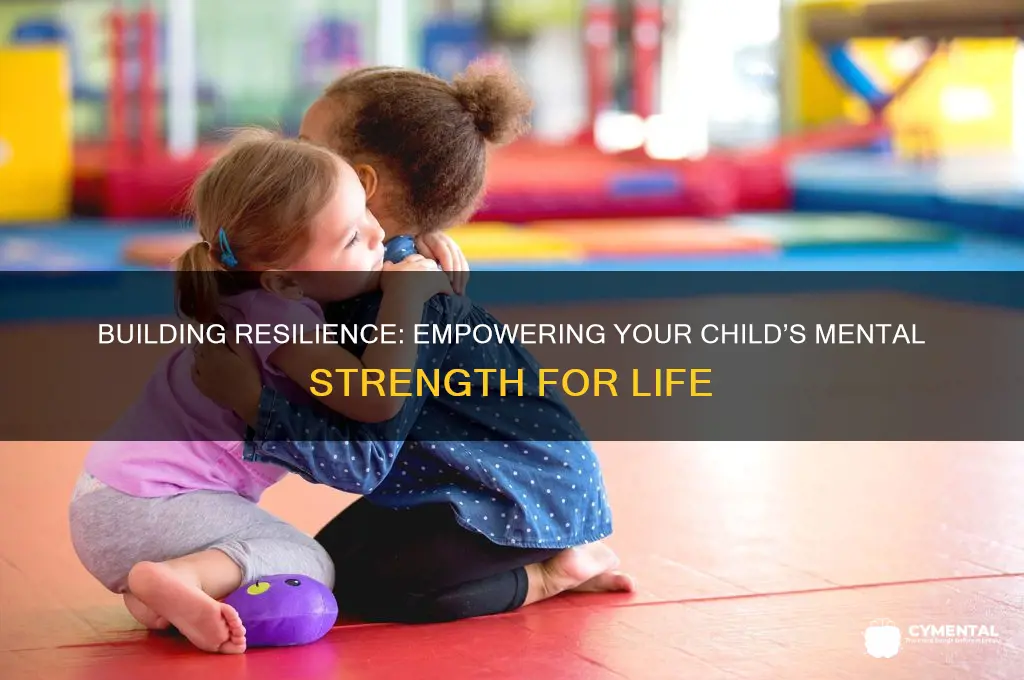
Helping your child develop mental strength is one of the most valuable gifts you can give them, as it equips them with the resilience, confidence, and emotional intelligence needed to navigate life’s challenges. Start by fostering a growth mindset, encouraging them to view setbacks as opportunities to learn rather than failures. Teach them healthy coping strategies, such as deep breathing or journaling, to manage stress and emotions. Model emotional regulation by handling your own feelings calmly and openly, showing them it’s okay to express vulnerability. Encourage independence by allowing them to solve problems on their own, while offering guidance when needed. Finally, prioritize open communication, creating a safe space for them to share their thoughts and feelings without fear of judgment. By nurturing these skills, you empower your child to face adversity with courage and build a foundation for long-term mental well-being.
Explore related products


What You'll Learn
- Encourage Problem-Solving: Teach kids to tackle challenges independently, fostering resilience and critical thinking
- Promote Emotional Awareness: Help them identify and express emotions healthily to build self-awareness
- Set Realistic Expectations: Avoid perfectionism; praise effort over outcomes to reduce pressure
- Foster Independence: Allow age-appropriate decision-making to boost confidence and responsibility
- Model Positive Mindsets: Demonstrate optimism and perseverance in your own behavior

Encourage Problem-Solving: Teach kids to tackle challenges independently, fostering resilience and critical thinking
Children who learn to solve problems independently are better equipped to handle life’s uncertainties. Start by presenting challenges as opportunities rather than obstacles. For instance, if your 8-year-old struggles with a Lego set, resist the urge to intervene immediately. Instead, ask guiding questions like, "What part seems tricky?" or "What have you tried so far?" This approach shifts their focus from frustration to strategy, building both resilience and critical thinking. Over time, they’ll internalize the process, applying it to more complex issues as they grow.
Teaching problem-solving isn’t about stepping back entirely—it’s about scaffolding support. For younger children (ages 4–7), break tasks into smaller, manageable steps. For example, if they’re overwhelmed by cleaning their room, suggest starting with one corner or category (e.g., "Let’s pick up all the books first"). For older kids (ages 8–12), introduce decision-making frameworks like listing pros and cons or brainstorming multiple solutions. Gradually reduce your involvement as they gain confidence, ensuring they feel supported but not dependent.
A common pitfall is mistaking independence for isolation. Encourage collaboration by framing problem-solving as a shared skill, not a solo endeavor. For instance, during family discussions, model how to respectfully disagree or negotiate solutions. This teaches children that seeking input isn’t a sign of weakness but a tool for better outcomes. Similarly, celebrate their efforts, not just results, to reinforce that resilience is about persistence, not perfection.
Finally, create a safe environment for failure. Let children know it’s okay to make mistakes—they’re stepping stones, not dead ends. For example, if a science project fails, ask, "What did you learn from this?" rather than focusing on the outcome. By reframing failure as feedback, you foster a growth mindset, where challenges are seen as opportunities to learn and adapt. This mindset is the cornerstone of mental strength, enabling children to approach life with curiosity and courage.
African Americans and Mental Health: Overcoming Barriers to Seeking Support
You may want to see also
Explore related products


Promote Emotional Awareness: Help them identify and express emotions healthily to build self-awareness
Children experience a whirlwind of emotions daily, often without the tools to understand or articulate them. This emotional confusion can lead to frustration, outbursts, and even long-term mental health challenges. Promoting emotional awareness isn't about eliminating negative feelings; it's about equipping your child with the vocabulary and strategies to navigate them healthily.
Think of it as building an emotional GPS. Just as a GPS helps us navigate physical spaces, emotional awareness helps children navigate their inner landscapes.
Step 1: Name It to Tame It
Start by expanding your child's emotional vocabulary beyond "happy," "sad," and "angry." Introduce words like "frustrated," "disappointed," "excited," "anxious," and "proud." When you notice your child experiencing an emotion, name it for them: "You seem really frustrated with that puzzle right now." This simple act validates their experience and provides a label for what they're feeling.
For younger children (ages 3-6), use picture books and stories to explore emotions. Books like "The Color Monster" by Anna Llenas and "Today I Feel Silly" by Jamie Lee Curtis are excellent tools.
Step 2: Create Safe Spaces for Expression
Encourage open communication about emotions by creating a judgment-free zone. Let your child know it's okay to feel all their feelings, even the difficult ones. Avoid dismissing their emotions with phrases like "Don't be silly" or "It's not that big of a deal." Instead, actively listen and reflect back what you hear: "It sounds like you're really worried about the test tomorrow."
Establish a daily "feeling check-in" routine. This could be during dinner, bedtime, or a dedicated "emotion time." Use feeling faces charts or emotion wheels to help younger children identify and express their emotions visually.
Step 3: Teach Healthy Coping Mechanisms
Once children can identify their emotions, they need tools to manage them effectively. Offer a range of coping strategies and encourage your child to experiment and find what works best for them.
- Physical Activity: Encourage movement to release pent-up energy and stress. This could be going for a walk, dancing, or playing a sport.
- Deep Breathing: Teach simple deep breathing exercises like "belly breathing" or "4-7-8 breathing" to calm the nervous system.
- Creative Expression: Drawing, writing, or playing music can be powerful outlets for emotions.
- Mindfulness Practices: Introduce age-appropriate mindfulness techniques like guided meditations or body scans to help children stay present and grounded.
For older children (ages 7+), consider apps like Headspace Kids or Calm, which offer guided meditations and mindfulness exercises specifically designed for children.
Remember: Building emotional awareness is a journey, not a destination. Be patient with yourself and your child as you navigate this process together. By providing them with the tools to understand and express their emotions healthily, you're equipping them with a vital skill for lifelong mental well-being.
Spirituality and Mental Health: Exploring Inner Peace for Well-Being
You may want to see also
Explore related products


Set Realistic Expectations: Avoid perfectionism; praise effort over outcomes to reduce pressure
Children often internalize the belief that their worth is tied to their achievements, a mindset that can be both fragile and self-limiting. Setting realistic expectations is the antidote to this toxic cycle. Start by defining success not as flawless performance but as consistent effort and growth. For instance, instead of demanding straight A’s, acknowledge the hours spent studying, the resilience shown after a setback, or the curiosity demonstrated in asking questions. This shifts the focus from outcomes to process, fostering a healthier relationship with challenges.
Consider the case of a 10-year-old who struggles with math. Praising their effort—"I noticed how you stayed focused during homework even when it was hard"—builds mental toughness more effectively than critiquing their grade. Research shows that children who are praised for effort develop a "growth mindset," believing abilities can improve through hard work. Conversely, those praised for intelligence often fear failure, avoiding tasks that might expose their limitations. For younger children (ages 5–8), use simple, specific feedback like, "You tried three different ways to solve that puzzle—that’s awesome!" to reinforce the value of persistence.
However, setting realistic expectations doesn’t mean lowering standards. It means aligning expectations with your child’s developmental stage and individual abilities. A teenager might be capable of managing a part-time job and schoolwork, but a 7-year-old overwhelmed by extracurriculars needs a pared-down schedule. Use the "40% rule" as a guideline: encourage your child to push past their comfort zone, but not so far that they feel paralyzed by pressure. For example, if they’re nervous about a recital, remind them, "It’s okay if it’s not perfect—what matters is you’re up there trying."
Perfectionism often stems from fear—fear of disappointing others, fear of failure, or fear of not measuring up. To counteract this, model imperfection yourself. Share stories of your own mistakes and how you recovered. For instance, "I messed up that presentation at work, but I learned how to prepare better next time." This normalizes failure as part of growth. Additionally, avoid over-correcting minor errors in their tasks. If they color outside the lines or mispronounce a word, resist the urge to fix it immediately. Instead, say, "I love how creative you’re being—keep going!"
Finally, create a home environment that celebrates progress, not just results. Display their artwork, even if it’s messy; cheer for their participation in sports, regardless of the score. For older children (ages 12+), involve them in setting their own goals, ensuring they’re specific and achievable. For example, instead of "Get better at soccer," encourage "Practice dribbling for 15 minutes daily this month." This fosters autonomy and reduces the pressure to meet external benchmarks. By anchoring expectations in effort and growth, you equip your child with the mental resilience to navigate life’s inevitable challenges.
Supporting Mentally Ill Homeless Relatives: Compassionate Strategies for Family Care
You may want to see also
Explore related products


$7.99 $12.99


Foster Independence: Allow age-appropriate decision-making to boost confidence and responsibility
Children as young as 2 can begin to grasp the concept of choice, though their decisions should be limited to simple, safe options like choosing between two snacks or outfits. This early introduction to decision-making lays the groundwork for independence. By age 5, children can start making slightly more complex choices, such as selecting extracurricular activities or planning parts of their day. Each age-appropriate decision builds confidence, teaching them that their opinions and preferences matter. For instance, a 7-year-old might decide how to organize their toys, fostering a sense of ownership and responsibility over their space.
Allowing children to make decisions isn’t about handing over complete control; it’s about providing structured autonomy. For a 10-year-old, this could mean letting them choose how to manage their homework schedule or decide on a family dinner menu once a week. These opportunities teach problem-solving and critical thinking. However, it’s crucial to set boundaries. For example, a teenager might want to stay out late, but a clear curfew ensures safety while still allowing them to negotiate timing. This balance between freedom and limits helps children understand consequences and develop self-discipline.
One practical strategy is to offer limited options rather than open-ended questions, which can overwhelm younger children. For a 4-year-old, ask, “Would you like to wear the blue shirt or the red one?” instead of “What do you want to wear?” As children grow, expand the scope of choices. A 12-year-old might be ready to decide how to spend their allowance, weighing short-term desires against long-term goals. This gradual increase in decision-making complexity mirrors their cognitive development, ensuring they’re challenged but not frustrated.
Mistakes are inevitable, but they’re also powerful teachers. If a child chooses to spend their allowance on a toy that breaks quickly, resist the urge to intervene. Instead, use it as a teaching moment: “What do you think you could do differently next time?” This approach encourages resilience and self-reflection. Similarly, if a teenager decides to skip studying for a test and performs poorly, discuss the connection between their choice and the outcome without assigning blame. Over time, these experiences build mental toughness, equipping children to handle setbacks with grace and determination.
Ultimately, fostering independence through age-appropriate decision-making is an investment in a child’s future. A 16-year-old who’s been making choices since childhood is better prepared to navigate the complexities of adulthood, from managing finances to maintaining relationships. By gradually releasing control and trusting their judgment, parents nurture confident, responsible individuals. This process isn’t about perfection but progress—each decision, big or small, is a step toward mental strength and self-reliance.
Take Charge of Your Mental Health: Don't Rely on Others for Support
You may want to see also
Explore related products


Model Positive Mindsets: Demonstrate optimism and perseverance in your own behavior
Children are keen observers, absorbing not just what we say but how we act, especially in challenging situations. When faced with setbacks—whether a missed promotion, a broken appliance, or a disagreement—your response becomes a blueprint for their emotional resilience. A study by the American Psychological Association highlights that parental behavior significantly influences a child’s ability to cope with stress. If you approach difficulties with frustration or defeat, they learn to mirror that helplessness. Conversely, modeling optimism and perseverance teaches them that obstacles are temporary and surmountable. For instance, instead of saying, “This always happens to me,” try, “This is frustrating, but I’ll figure out a solution.” Such language reframes adversity as an opportunity for growth, a mindset they’ll internalize over time.
To effectively model this behavior, start by acknowledging your emotions without letting them dictate your actions. For children aged 5–12, who are still developing emotional regulation, seeing you label and manage your feelings provides a practical framework. For example, if you’re stressed about a work deadline, say aloud, “I’m feeling overwhelmed, but I’m going to break this into smaller tasks to make it manageable.” This not only demonstrates problem-solving but also normalizes vulnerability, a key aspect of mental strength. For teenagers, who often crave authenticity, showing grit in pursuit of personal goals—like sticking to a fitness routine despite setbacks—speaks louder than words. Consistency is key; sporadic displays of resilience won’t leave a lasting impression.
One practical strategy is to involve your child in your problem-solving process. For younger children, this could be as simple as asking, “What do you think I should do about this broken toy?” and then narrating your decision-making. For older kids, share age-appropriate challenges you’re facing and the steps you’re taking to address them. This collaborative approach not only reinforces optimism but also fosters critical thinking. However, be mindful of oversharing; discussing adult problems in excessive detail can burden them. Keep the focus on actionable solutions rather than dwelling on the problem itself.
Caution must be taken to avoid toxic positivity, a common pitfall in modeling optimism. Phrases like “Just stay positive” or “Everything happens for a reason” can invalidate a child’s feelings and discourage emotional honesty. Instead, validate their struggles while offering a constructive perspective. For example, if your child is upset about a poor test grade, say, “It’s okay to feel disappointed, but let’s look at what you can do differently next time.” This balanced approach teaches them to acknowledge setbacks without being defined by them.
Ultimately, the goal is to create an environment where resilience is practiced, not preached. By embedding optimism and perseverance into your daily behavior, you provide your child with a living example of mental strength. Over time, these habits will shape their worldview, equipping them to navigate life’s challenges with confidence and grace. Remember, you’re not just raising a child—you’re cultivating a future adult who sees possibilities, not roadblocks.
Supporting Mentally Challenged Students: Effective Strategies for Inclusive School Environments
You may want to see also
Frequently asked questions
Foster a growth mindset by praising effort, not just results. Teach them that mistakes are opportunities to learn and improve. Encourage persistence by setting small, achievable goals and celebrating progress, not just perfection.
Emotional regulation helps children manage stress and challenges. Teach them to identify and name their emotions, practice deep breathing or mindfulness, and use positive self-talk. Model calm responses to frustration or anger to show them healthy ways to cope.
Normalize failure as part of learning and growth. Encourage them to reflect on what went wrong, brainstorm solutions, and try again. Provide emotional support without fixing their problems for them, and remind them of past challenges they’ve overcome.