Caleb Wright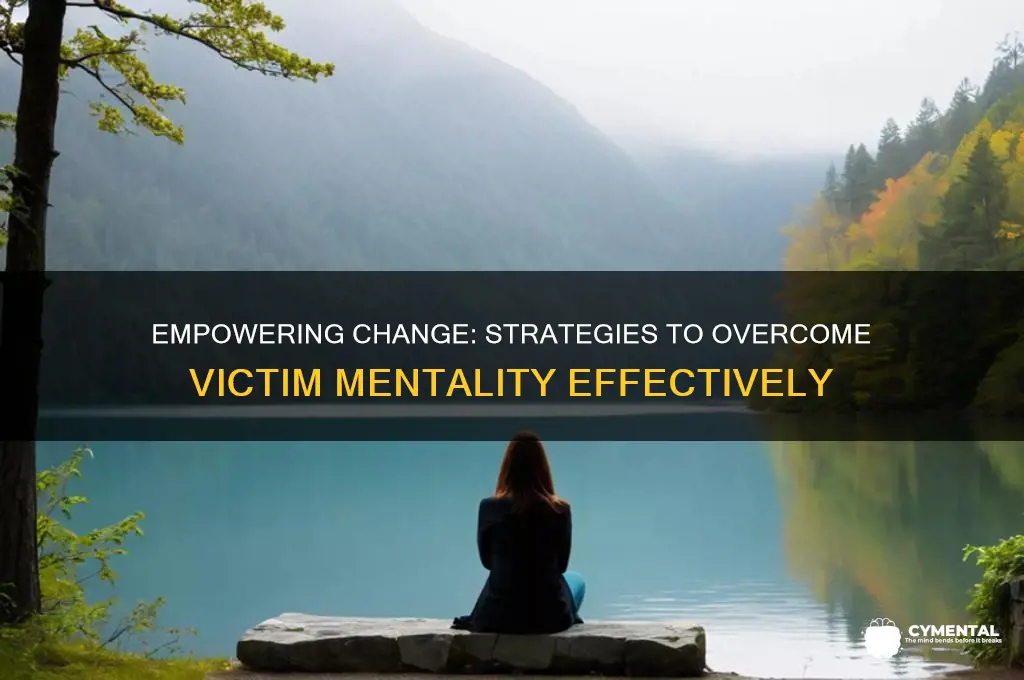
Helping someone with a victim mentality requires patience, empathy, and a strategic approach. Individuals with this mindset often perceive themselves as powerless, blaming external circumstances or others for their challenges, which can hinder personal growth and relationships. To support them, it’s essential to first validate their feelings without reinforcing the victim narrative, acknowledging their struggles while gently encouraging self-reflection. Empowering them to take small, actionable steps toward problem-solving and accountability can shift their focus from blame to agency. Encouraging a growth mindset, fostering self-compassion, and setting boundaries to prevent enabling behaviors are also crucial. Ultimately, the goal is to guide them toward recognizing their ability to influence their circumstances and build resilience, fostering a more proactive and positive outlook on life.
| Characteristics | Values |
|---|---|
| Acknowledge Their Feelings | Validate their emotions without reinforcing the victim role. |
| Encourage Self-Reflection | Help them identify patterns of thought and behavior contributing to victimhood. |
| Promote Personal Responsibility | Guide them to take ownership of their actions and decisions. |
| Build Problem-Solving Skills | Teach them to focus on solutions rather than dwelling on problems. |
| Foster Gratitude and Positivity | Encourage practices like journaling or mindfulness to shift focus to positives. |
| Set Healthy Boundaries | Help them learn to say "no" and prioritize their well-being. |
| Encourage Goal Setting | Support them in setting achievable goals to regain a sense of control. |
| Provide Support, Not Enablement | Offer help without reinforcing dependency or victim behavior. |
| Challenge Negative Narratives | Gently question their perceptions and help reframe situations objectively. |
| Encourage Social Connections | Motivate them to build supportive relationships and avoid isolation. |
| Promote Self-Care | Encourage activities that improve physical and mental health. |
| Seek Professional Help | Recommend therapy or counseling for deeper emotional and psychological support. |
| Celebrate Progress | Acknowledge small wins to boost confidence and motivation. |
| Avoid Blaming or Criticizing | Use a compassionate approach to avoid reinforcing feelings of victimhood. |
| Teach Emotional Regulation | Help them develop skills to manage emotions effectively. |
| Encourage Perspective-Taking | Help them see situations from others' viewpoints to reduce self-centeredness. |
Explore related products


What You'll Learn
- Encourage Self-Reflection: Help victims identify self-limiting beliefs and patterns through journaling or therapy
- Build Empowerment Skills: Teach problem-solving, decision-making, and goal-setting to foster independence
- Shift Perspective: Guide victims to focus on solutions rather than dwelling on problems
- Set Healthy Boundaries: Encourage assertiveness and limit interactions with toxic or enabling environments
- Promote Gratitude Practices: Introduce mindfulness or gratitude exercises to shift focus to positives

Encourage Self-Reflection: Help victims identify self-limiting beliefs and patterns through journaling or therapy
Self-limiting beliefs often lurk beneath the surface, shaping behavior and perception without conscious awareness. Encouraging individuals with a victim mentality to engage in self-reflection can act as a spotlight, illuminating these hidden constraints. Journaling, for instance, provides a safe, non-judgmental space to explore thoughts and emotions. Start by suggesting a daily practice of writing down experiences, focusing on moments that trigger feelings of helplessness or blame. Over time, patterns may emerge—recurring themes of external blame, perceived powerlessness, or catastrophic thinking. These entries become tangible evidence of the mind’s habitual tendencies, making it easier to confront and challenge them.
Therapy, particularly cognitive-behavioral therapy (CBT), offers a structured approach to identifying and dismantling self-limiting beliefs. A trained therapist can guide individuals through exercises like cognitive restructuring, where negative thought patterns are examined and replaced with more balanced perspectives. For example, someone who believes, “Nothing ever works out for me,” might be prompted to identify specific instances where things did work out, gradually shifting their worldview. Research shows that CBT can be particularly effective for those trapped in victimhood, with studies indicating significant reductions in depressive symptoms and improved coping mechanisms after 12–16 sessions.
Comparing journaling and therapy reveals their complementary strengths. Journaling is accessible, private, and self-paced, allowing for raw, unfiltered exploration. It’s ideal for those hesitant to seek professional help or who prefer solitude in their introspection. Therapy, on the other hand, provides accountability, expertise, and a structured framework, making it more effective for deeply ingrained beliefs or complex trauma. Combining both methods can yield powerful results: journaling can prepare individuals for therapy by clarifying thoughts, while therapy can offer tools to analyze and act on insights gained through writing.
Practical tips can enhance the effectiveness of self-reflection practices. For journaling, encourage specificity—instead of “I feel stuck,” prompt “What specific situation made me feel stuck, and what thoughts did I have?” For therapy, suggest setting measurable goals, such as identifying one self-limiting belief per session and creating an action plan to challenge it. Additionally, incorporating mindfulness techniques, like deep breathing before writing or therapy sessions, can improve focus and emotional regulation. Consistency is key; even 10–15 minutes daily of journaling or weekly therapy sessions can lead to noticeable shifts in mindset over 3–6 months.
Ultimately, self-reflection is not about assigning blame but about fostering awareness and agency. By helping individuals recognize their own narratives, you empower them to rewrite them. Whether through the pages of a journal or the guidance of a therapist, the process of uncovering and challenging self-limiting beliefs is a transformative journey. It requires patience, honesty, and courage, but the reward—a shift from victimhood to empowerment—is well worth the effort.
Vygotsky's Impact: Empowering Physically Disabled and Mentally Impaired Children
You may want to see also
Explore related products






Build Empowerment Skills: Teach problem-solving, decision-making, and goal-setting to foster independence
Victim mentality often stems from a perceived lack of control over one's circumstances. To counteract this, building empowerment skills is essential. Start by teaching problem-solving techniques, such as the 5-step method: identify the problem, generate possible solutions, evaluate each option, implement the best one, and review the outcome. For instance, if someone feels overwhelmed by workplace conflicts, guide them to break the issue into smaller parts—like addressing communication breakdowns—and brainstorm actionable steps like scheduling one-on-one meetings or using mediation tools. This structured approach shifts focus from the problem to potential solutions, fostering a sense of agency.
Decision-making, another critical skill, can be honed through frameworks like the pros-and-cons list or the DECIDE model (Define the problem, Enumerate criteria, Consider alternatives, Identify the best option, Develop an action plan, Evaluate outcomes). Encourage individuals to practice with low-stakes decisions, like choosing between two job offers or planning a weekend activity. Gradually, they’ll build confidence in their ability to make informed choices, reducing reliance on external validation or blame. For younger individuals (teens or early adults), start with simpler decisions and gradually introduce complexity as their skills grow.
Goal-setting is the cornerstone of independence, but it must be taught with specificity. Use the SMART criteria (Specific, Measurable, Achievable, Relevant, Time-bound) to help individuals set realistic goals. For example, instead of “I want to be happier,” reframe it as “I will practice mindfulness for 10 minutes daily for the next month.” Pair this with accountability tools, like journaling progress or sharing goals with a trusted friend. Studies show that individuals who write down their goals are 42% more likely to achieve them, making this a powerful habit to instill.
Caution against overwhelming individuals with too many skills at once. Start with one area—problem-solving, decision-making, or goal-setting—and gradually integrate others as confidence builds. Avoid overly complex frameworks initially; simplicity breeds consistency. For instance, a 30-day challenge focused on one skill can create momentum without feeling daunting. Finally, emphasize that setbacks are part of the process. Reframing failures as learning opportunities reinforces resilience, a key component of long-term empowerment. By systematically building these skills, individuals can shift from a victim mindset to one of proactive self-determination.
Isolation's Impact: Does Solitude Heal or Harm Mental Health?
You may want to see also
Explore related products





Shift Perspective: Guide victims to focus on solutions rather than dwelling on problems
Victims of circumstance often become trapped in a cycle of rumination, replaying past injustices and perceived slights like a broken record. This mental loop reinforces feelings of powerlessness and entrenches the victim mentality. To break free, it’s essential to redirect their focus from the problem itself to actionable solutions. Start by acknowledging their pain—dismissing their emotions only deepens their sense of isolation. Then, gently introduce questions that shift their gaze forward: *What’s one small step you could take today to improve this situation?* or *What resources do you already have that could help?* This reframing doesn’t erase their struggles but empowers them to see possibilities beyond their current state.
Consider the case of a person who feels perpetually undervalued at work. Instead of dwelling on past criticisms or unfair treatment, guide them to brainstorm tangible actions: *Could they schedule a meeting with their manager to discuss expectations? Could they seek feedback from a trusted colleague?* By focusing on these steps, they reclaim agency and move from passive suffering to active problem-solving. Research in cognitive-behavioral therapy supports this approach, showing that solution-focused thinking reduces symptoms of depression and anxiety by 40% in individuals prone to victimhood (source: *Journal of Clinical Psychology*, 2020). The key is consistency—encourage them to practice this mindset daily, even when progress feels slow.
However, shifting perspective isn’t about bypassing emotions or forcing positivity. It’s about balance. For instance, if someone is fixated on a betrayal, allow them to express their hurt, but then ask: *What boundaries could you set to protect yourself in the future?* This dual approach validates their experience while steering them toward constructive action. A practical tool here is the “solution journal,” where they record one actionable step each day, no matter how small. Over time, this habit rewires their brain to default to problem-solving rather than problem-dwelling.
One caution: avoid phrases like *Just look on the bright side* or *It could be worse.* These minimize their struggles and can backfire, reinforcing their sense of invalidation. Instead, use open-ended questions that encourage self-reflection: *What’s something you’ve overcome before that could inspire you now?* This approach respects their autonomy while nudging them toward growth. For younger individuals (ages 18–25), who are more susceptible to victim mentality due to developmental stages, pair this technique with structured goal-setting exercises. For older adults, focus on leveraging their life experience as a resource for resilience.
In conclusion, shifting perspective from problems to solutions is a transformative but delicate process. It requires patience, empathy, and strategic questioning. By teaching individuals to ask *What can I do?* instead of *Why did this happen to me?*, you equip them with a tool they can use for life. Remember, the goal isn’t to erase their victim mentality overnight but to gradually replace it with a mindset of empowerment and possibility. Start small, stay consistent, and watch as they begin to rewrite their narrative—one solution at a time.
Supporting Your Friend: Encouraging Mental Health Treatment with Compassion
You may want to see also
Explore related products


Set Healthy Boundaries: Encourage assertiveness and limit interactions with toxic or enabling environments
Victims of chronic adversity often struggle to distinguish between environments that foster growth and those that perpetuate stagnation. Toxic settings, characterized by manipulation, criticism, or neglect, erode self-worth, while enabling environments, though well-intentioned, reinforce dependency by shielding individuals from consequences. Recognizing these dynamics is the first step in helping someone break free from a victim mentality.
To set healthy boundaries, begin by identifying specific behaviors or situations that drain energy or trigger feelings of helplessness. For instance, a person might notice that conversations with a certain friend consistently devolve into complaints without actionable solutions. Once identified, practice assertive communication using "I" statements to express needs clearly. For example, instead of saying, "You always ignore me," try, "I feel unheard when my concerns are dismissed." Start small, with low-stakes interactions, to build confidence before tackling more challenging relationships.
Encouraging assertiveness requires a shift from passive acceptance to active self-advocacy. Role-playing scenarios can be a practical tool; practice saying phrases like, "I’m not comfortable with that," or, "I need time to think about this." Pair this with physical cues, such as maintaining eye contact and using a firm but calm tone. For individuals over 18, assertiveness training workshops or online courses can provide structured guidance, while younger individuals may benefit from peer-led exercises in controlled settings.
Limiting interactions with toxic or enabling environments doesn’t mean cutting ties entirely—it’s about creating distance proportional to the harm caused. For instance, reducing weekly calls with a critical family member to once a month or setting time limits on conversations. In extreme cases, temporary or permanent separation may be necessary. Pair this with intentional engagement in supportive environments, such as joining a hobby group or seeking mentorship from someone who models healthy boundaries.
Finally, caution against the trap of over-isolation. While distancing from harmful influences is crucial, complete withdrawal can reinforce feelings of alienation. Balance boundary-setting with proactive efforts to build new, positive connections. Celebrate small victories, like successfully declining an unreasonable request or initiating a difficult conversation. Over time, these actions rewire the mindset from one of passivity to one of empowered agency.
Accessing Mental Health Support for Adults in Georgia: A Comprehensive Guide
You may want to see also
Explore related products




Promote Gratitude Practices: Introduce mindfulness or gratitude exercises to shift focus to positives
Gratitude practices can be a powerful antidote to victim mentality, which often stems from a persistent focus on life’s negatives. By intentionally redirecting attention to the positive aspects of one’s life, individuals can begin to reframe their perspective and reduce feelings of helplessness. Research shows that regular gratitude exercises, such as journaling or mindful reflection, can rewire neural pathways to foster a more optimistic outlook. This shift doesn’t erase challenges but equips individuals with the mental resilience to approach them differently.
One effective method is the gratitude journal, where individuals write down three to five things they’re thankful for each day. This practice, when done consistently for at least 21 days, can begin to alter habitual thought patterns. For example, instead of dwelling on a difficult workday, a person might note appreciation for a supportive colleague or a moment of quiet during lunch. The key is specificity—rather than generic entries like “I’m grateful for my health,” encourage details like “I’m grateful for the energy I had to take a walk today.” This precision amplifies the emotional impact of the exercise.
Mindfulness meditation paired with gratitude can further deepen its effects. A simple 5-minute daily practice involves sitting quietly, focusing on the breath, and mentally acknowledging three things one is grateful for. This combines the calming benefits of mindfulness with the cognitive shift of gratitude, making it particularly useful for individuals who feel overwhelmed by negative emotions. Apps like Headspace or Calm offer guided gratitude meditations tailored for beginners, ensuring accessibility for all age groups, from teenagers to seniors.
However, introducing gratitude practices requires sensitivity. For someone deeply entrenched in victim mentality, being told to “just be grateful” can feel dismissive. Instead, frame these exercises as tools for self-discovery rather than solutions. Start small—perhaps with a weekly gratitude list—and gradually increase frequency. Pairing gratitude with tangible actions, like writing a thank-you note to someone who’s made a difference, can also reinforce its impact by creating a sense of connection and agency.
The ultimate goal isn’t to suppress negative emotions but to balance them with a broader perspective. Gratitude practices, when integrated thoughtfully, can help individuals recognize their capacity to influence their own narratives. Over time, this can diminish the grip of victim mentality, replacing it with a mindset that acknowledges challenges while also celebrating life’s small victories. Consistency is key—like any habit, gratitude takes time to yield noticeable results, but its transformative potential is well worth the effort.
Occupational Therapy: Empowering Mental Health Recovery and Daily Functioning
You may want to see also
Frequently asked questions
Victim mentality is a mindset where a person perceives themselves as a constant victim of circumstances, often blaming others or external factors for their problems. Signs include frequent complaints, lack of personal responsibility, and a tendency to see life as unfair or against them.
Encourage self-reflection by asking open-ended questions like, "What role do you think you played in this situation?" Avoid blaming or criticizing, and instead focus on empowering them to see their ability to influence outcomes.
Set clear boundaries and avoid rescuing them from every problem. Instead, offer empathy and guidance while encouraging them to find their own solutions. Help them focus on actionable steps rather than dwelling on the problem.
Yes, therapy, particularly cognitive-behavioral therapy (CBT), can be highly effective. It helps individuals challenge negative thought patterns, develop problem-solving skills, and shift their perspective from victimhood to empowerment.