Ava Ramirez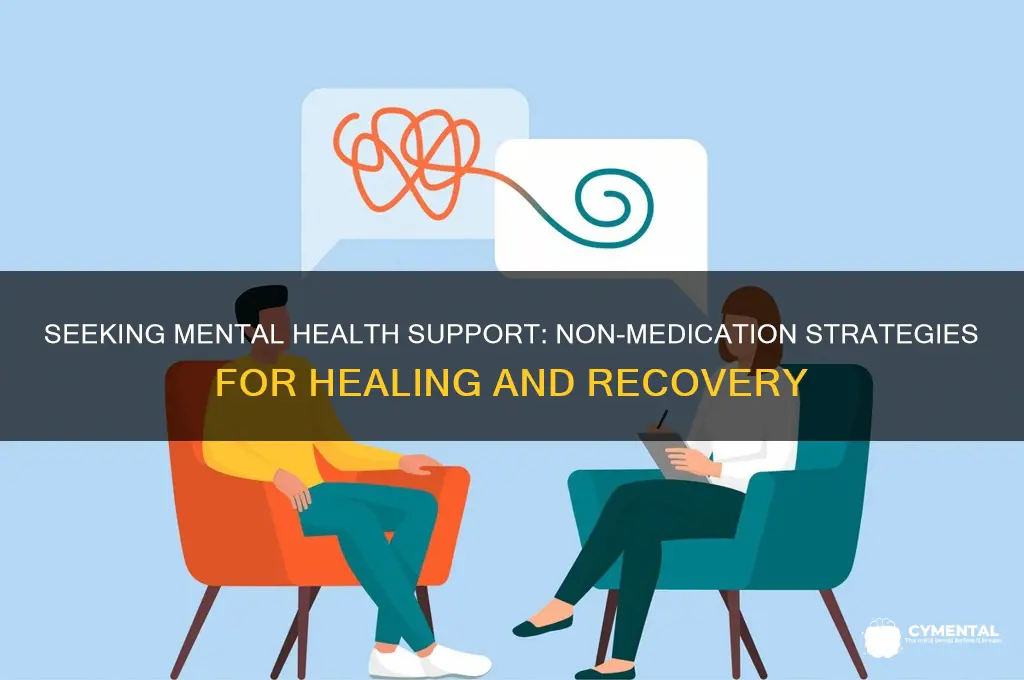
Seeking mental health support without medication is a valid and increasingly popular approach for many individuals looking to address emotional or psychological challenges. This path often involves exploring therapeutic interventions such as cognitive-behavioral therapy (CBT), mindfulness-based practices, counseling, or holistic methods like yoga, meditation, and lifestyle changes. By focusing on non-pharmacological strategies, individuals can develop coping mechanisms, gain insight into their thoughts and behaviors, and build resilience over time. It’s essential to consult with mental health professionals, such as therapists or psychologists, who can tailor a treatment plan to specific needs, ensuring a comprehensive and personalized approach to healing and well-being.
Explore related products


What You'll Learn
- Therapy Options: Explore CBT, DBT, or talk therapy for managing symptoms without medication
- Lifestyle Changes: Incorporate exercise, diet, and sleep to improve mental health naturally
- Mindfulness Practices: Use meditation, yoga, or breathing techniques to reduce stress and anxiety
- Support Networks: Lean on friends, family, or support groups for emotional assistance
- Alternative Therapies: Consider acupuncture, art therapy, or herbal remedies as complementary approaches

Therapy Options: Explore CBT, DBT, or talk therapy for managing symptoms without medication
For those seeking mental health support without medication, therapy offers a robust and evidence-based alternative. Cognitive Behavioral Therapy (CBT) stands out as a structured, goal-oriented approach that typically spans 12 to 20 sessions. It focuses on identifying and challenging negative thought patterns and behaviors, replacing them with healthier alternatives. For instance, a person with anxiety might learn to reframe catastrophic thinking ("I’ll fail this presentation") into more balanced thoughts ("I’ve prepared well, and even if I stumble, it’s not the end of the world"). CBT is particularly effective for conditions like depression, anxiety, and PTSD, with studies showing significant symptom reduction in 50–75% of cases. Its time-limited nature makes it accessible for those seeking quick, actionable strategies.
In contrast, Dialectical Behavior Therapy (DBT) is tailored for individuals struggling with emotional regulation, often seen in borderline personality disorder or chronic suicidal ideation. Developed by Dr. Marsha Linehan, DBT combines individual therapy, group skills training, and phone coaching over a 6- to 12-month period. The four core modules—mindfulness, distress tolerance, emotion regulation, and interpersonal effectiveness—equip individuals with tools to manage intense emotions without self-destructive behaviors. For example, a mindfulness exercise might involve focusing on one’s breath during a panic attack to ground oneself in the present moment. While DBT requires a higher time commitment than CBT, its comprehensive approach addresses both emotional and behavioral challenges, making it ideal for complex cases.
Talk therapy, or psychodynamic therapy, takes a different route by exploring past experiences and unconscious patterns to gain insight into current behaviors. Unlike CBT or DBT, it’s open-ended and may last months to years, depending on the individual’s needs. This approach is particularly beneficial for those seeking deeper self-understanding, such as someone grappling with recurring relationship issues rooted in childhood dynamics. While it may not provide quick fixes, its focus on long-term emotional healing can lead to profound, lasting change. For instance, a client might uncover how a fear of abandonment influences their romantic choices, allowing them to break the cycle.
Choosing the right therapy depends on your goals, symptoms, and preferences. CBT is ideal for those wanting practical, short-term solutions to specific issues, while DBT suits individuals needing intensive emotional and behavioral support. Talk therapy appeals to those prioritizing self-exploration and long-term growth. Practical tips include researching therapists who specialize in your chosen modality, inquiring about their experience with your specific concerns, and ensuring they offer a safe, nonjudgmental space. Additionally, many therapists now provide virtual sessions, increasing accessibility for those with busy schedules or limited mobility. By exploring these options, you can find a therapeutic approach that aligns with your needs, offering effective symptom management without medication.
Music's Healing Power: Boosting Mental Health and Emotional Well-being
You may want to see also
Explore related products


Lifestyle Changes: Incorporate exercise, diet, and sleep to improve mental health naturally
Physical activity is a potent tool for mental well-being, acting as a natural antidepressant and anxiety reliever. Aim for 150 minutes of moderate-intensity exercise weekly, such as brisk walking or cycling, or 75 minutes of vigorous activity like running or swimming. For those new to exercise, start with shorter sessions and gradually increase duration and intensity. Incorporate strength training twice a week to boost endorphins and improve mood. Even small changes, like taking the stairs or stretching during work breaks, can make a difference. Consistency is key—find activities you enjoy to ensure long-term adherence.
Diet plays a critical role in mental health, as the gut and brain are intricately connected. Prioritize a balanced diet rich in omega-3 fatty acids (found in salmon, flaxseeds, and walnuts), antioxidants (berries, spinach), and complex carbohydrates (whole grains, legumes). Limit processed foods, refined sugars, and caffeine, which can exacerbate anxiety and mood swings. Stay hydrated—aim for 8–10 cups of water daily. Consider consulting a nutritionist for personalized guidance, especially if dealing with specific mental health challenges like depression or ADHD. Small dietary tweaks, like swapping sugary snacks for nuts or seeds, can yield significant mental health benefits.
Sleep is the cornerstone of mental resilience, yet it’s often overlooked. Adults should aim for 7–9 hours of quality sleep per night. Establish a consistent sleep schedule by going to bed and waking up at the same time daily. Create a calming bedtime routine—avoid screens at least an hour before sleep, dim lights, and practice relaxation techniques like deep breathing or meditation. Ensure your sleep environment is cool, dark, and quiet. For those with insomnia, cognitive-behavioral therapy for insomnia (CBT-I) is a proven non-medication approach. Prioritizing sleep can improve emotional regulation, focus, and overall mental clarity.
Combining exercise, diet, and sleep creates a synergistic effect on mental health. For instance, regular physical activity improves sleep quality, while a nutrient-rich diet enhances energy levels for exercise. Start by identifying one area to focus on—perhaps improving sleep—and gradually integrate changes in diet and exercise. Track progress using a journal or app to stay motivated. Remember, these lifestyle changes are not quick fixes but sustainable habits that foster long-term mental well-being. By taking control of these three pillars, you can naturally enhance your mental health without relying on medication.
Empowering Your Friend: Overcoming Victim Mentality with Compassion and Support
You may want to see also
Explore related products


Mindfulness Practices: Use meditation, yoga, or breathing techniques to reduce stress and anxiety
Stress and anxiety often manifest physically—tightened muscles, rapid heartbeat, shallow breathing. Mindfulness practices like meditation, yoga, and breathing techniques directly counter these symptoms by engaging the body’s relaxation response. For instance, deep diaphragmatic breathing (inhale for 4 seconds, hold for 4, exhale for 6) slows heart rate and lowers cortisol levels, offering immediate relief. Unlike medication, these practices require no prescription, cost little to nothing, and can be done anywhere, making them accessible tools for managing mental health.
Consider yoga, a practice that combines physical movement with breath control and mindfulness. A 2018 study in the *Journal of Clinical Psychology* found that participants who practiced yoga for 60 minutes, three times a week, reported significant reductions in anxiety and stress after just one month. The key lies in its ability to synchronize mind and body, fostering a sense of calm through deliberate, intentional movement. For beginners, start with simple poses like Child’s Pose or Cat-Cow, holding each for 5–10 breaths, and gradually incorporate more complex sequences as flexibility and focus improve.
Meditation, another cornerstone of mindfulness, trains the mind to observe thoughts without judgment, breaking the cycle of rumination that fuels anxiety. Apps like Headspace or Calm offer guided sessions as short as 5 minutes, ideal for integrating into daily routines. Research from Harvard Medical School shows that consistent meditation practice (10–20 minutes daily) can physically alter the brain, increasing gray matter in areas associated with emotional regulation and decreasing activity in the amygdala, the brain’s "fight or flight" center. For maximum benefit, find a quiet space, sit comfortably, and focus on your breath, gently redirecting attention whenever the mind wanders.
Breathing techniques, often overlooked, are perhaps the most versatile mindfulness tool. The 4-7-8 technique (inhale for 4 seconds, hold for 7, exhale for 8) is particularly effective for acute anxiety, as it promotes parasympathetic nervous system activation. Similarly, alternate nostril breathing (inhale through one nostril, exhale through the other) balances the brain’s hemispheres, reducing mental clutter. These techniques require no equipment and can be practiced discreetly, making them ideal for stressful situations like work meetings or public speaking.
While mindfulness practices are powerful, they are not a one-size-fits-all solution. Consistency is key—sporadic practice yields limited results. Additionally, severe anxiety or trauma may require professional support alongside these techniques. However, for many, mindfulness offers a sustainable, empowering way to manage mental health without medication. Start small, be patient, and let these practices become a natural part of your daily routine. Over time, they can transform not just how you feel in the moment, but how you navigate life’s challenges.
Accessing Mental Health Care Through Medi-Cal: What You Need to Know
You may want to see also
Explore related products



Support Networks: Lean on friends, family, or support groups for emotional assistance
Human connection is a powerful antidote to mental distress. Studies show social support significantly reduces symptoms of anxiety and depression, acting as a buffer against life's stressors. This isn't about simply having people around; it's about cultivating relationships that offer understanding, empathy, and a safe space to be vulnerable.
Building a support network requires intentionality. Start by identifying individuals in your life who embody qualities like active listening, non-judgment, and reliability. These could be close friends, family members, or even colleagues who've shown genuine care. Don't underestimate the power of shared experiences – consider joining support groups focused on your specific struggles, whether it's grief, addiction, or managing chronic illness. These groups provide a unique sense of belonging and understanding that can be difficult to find elsewhere.
Remember, vulnerability is a two-way street. Be open about your needs and encourage reciprocity. Offer support to others when you can, fostering a network of mutual care and strengthening your own sense of purpose.
While support networks are invaluable, they aren't a replacement for professional help when needed. Think of them as a vital complement, providing ongoing emotional sustenance and a sense of community. By nurturing these connections, you build a resilient foundation for your mental well-being, one conversation, one shared experience, at a time.
Supporting Your Spouse: Navigating Mental Illness Together with Compassion
You may want to see also
Explore related products



Alternative Therapies: Consider acupuncture, art therapy, or herbal remedies as complementary approaches
Acupuncture, an ancient practice rooted in traditional Chinese medicine, offers a unique approach to mental health by targeting the body’s energy flow, or *qi*. Fine needles are inserted into specific points on the skin to restore balance, reduce stress, and alleviate symptoms of anxiety or depression. Studies suggest that acupuncture can stimulate the release of endorphins and regulate neurotransmitters, providing a natural alternative to medication. For instance, a 2018 meta-analysis published in the *Journal of Alternative and Complementary Medicine* found significant reductions in anxiety levels after 8–12 sessions. To try this, seek a licensed acupuncturist who specializes in mental health, and expect sessions to last 45–60 minutes, with weekly treatments recommended for best results.
Art therapy, on the other hand, harnesses creativity to express emotions and process trauma when words feel insufficient. Through painting, sculpting, or collage-making, individuals can externalize inner turmoil and gain new perspectives. This approach is particularly effective for those who struggle with verbal communication, such as children or trauma survivors. For example, a 2020 study in *Frontiers in Psychology* demonstrated that art therapy reduced symptoms of depression in adolescents by 40% over 12 weeks. To start, you don’t need artistic talent—just a willingness to explore. Begin with simple prompts like “draw your emotions today” or join a local art therapy group for structured guidance.
Herbal remedies, while often overlooked, can complement mental health care with fewer side effects than pharmaceuticals. St. John’s Wort, for instance, is widely studied for its efficacy in mild to moderate depression, with dosages typically ranging from 300–600 mg daily. Similarly, lavender oil, when used in aromatherapy or as a supplement (20–80 mg daily), has been shown to reduce anxiety symptoms. However, caution is essential: herbal remedies can interact with other medications, and quality varies widely. Always consult a healthcare provider and purchase from reputable brands certified by organizations like the USP (United States Pharmacopeia).
Comparing these therapies, acupuncture addresses physiological imbalances, art therapy fosters emotional expression, and herbal remedies provide biochemical support. While none are one-size-fits-all solutions, their complementary nature allows for personalized combinations. For instance, someone with anxiety might pair weekly acupuncture sessions with daily lavender aromatherapy and occasional art journaling. The key is consistency and patience, as these therapies often take time to yield noticeable effects.
In practice, integrating alternative therapies requires research and self-awareness. Start by identifying your primary mental health concerns and consulting professionals who specialize in these modalities. Keep a journal to track progress, noting changes in mood, energy, or symptoms. Remember, these approaches are not replacements for severe conditions but can serve as powerful tools in a holistic mental health toolkit. By exploring acupuncture, art therapy, or herbal remedies, you open doors to healing that align with your body’s natural rhythms and your unique needs.
Exploring Medical Marijuana's Potential in Treating Mental Health Disorders
You may want to see also
Frequently asked questions
Non-medication options include therapy (e.g., cognitive-behavioral therapy, mindfulness-based therapy), lifestyle changes (exercise, diet, sleep hygiene), support groups, and alternative therapies like yoga, meditation, or acupuncture.
Look for therapists specializing in talk therapy, holistic approaches, or evidence-based non-pharmacological treatments. Websites like Psychology Today or GoodTherapy allow you to filter by treatment modalities.
While lifestyle changes (e.g., regular exercise, balanced diet, stress management) can significantly improve mental health, they may not be sufficient for severe conditions. Combining them with therapy or other non-medication treatments often yields the best results.
Some natural supplements like omega-3 fatty acids, St. John’s wort, or magnesium may support mental health, but their effectiveness varies. Always consult a healthcare professional before starting any supplement to ensure safety and avoid interactions.