Lucas Bennett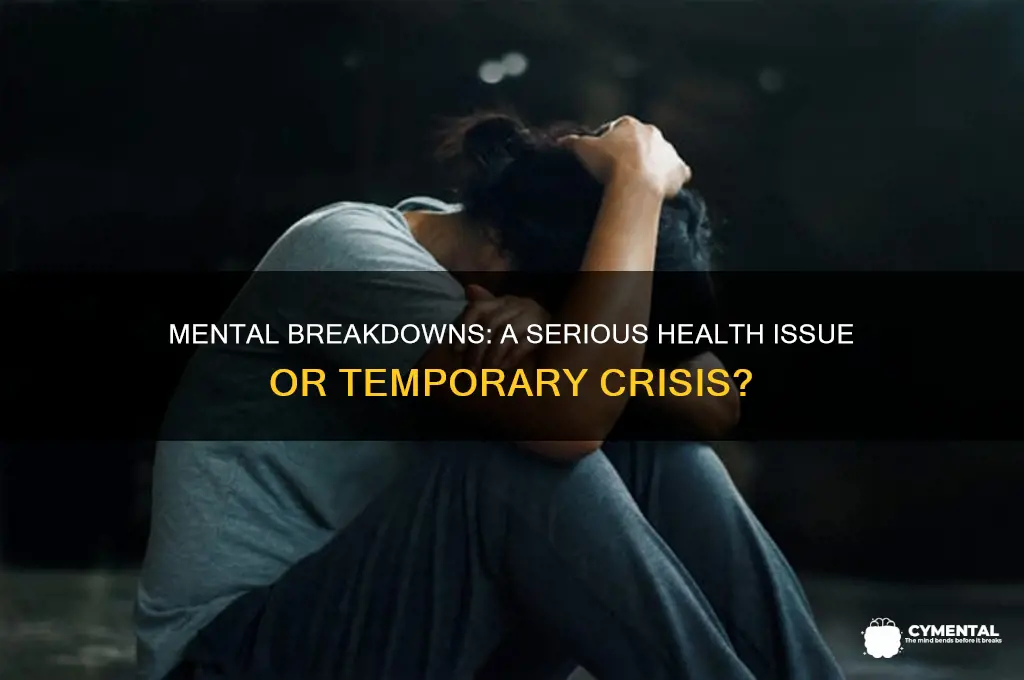
A mental breakdown, often characterized by an inability to function in daily life due to overwhelming stress, emotional exhaustion, or severe anxiety, is undeniably a significant health issue. While not a clinical diagnosis, it reflects a critical state of mental distress that can stem from prolonged exposure to stressors, trauma, or underlying mental health conditions. Recognizing it as a health concern is essential, as it can lead to severe consequences, including physical ailments, impaired relationships, and even suicidal thoughts if left unaddressed. Understanding its causes, symptoms, and treatment options is crucial for promoting mental well-being and preventing long-term damage.
| Characteristics | Values |
|---|---|
| Definition | A mental breakdown, also known as a nervous breakdown, is not a medical term but describes a period of intense mental distress and inability to function in daily life. |
| Medical Recognition | Not officially recognized as a distinct medical condition in diagnostic manuals like DSM-5 or ICD-11. |
| Symptoms | Overwhelming anxiety, depression, exhaustion, inability to concentrate, detachment from reality, and physical symptoms like insomnia or headaches. |
| Causes | Chronic stress, trauma, major life changes, underlying mental health conditions (e.g., depression, anxiety), or burnout. |
| Health Issue Classification | Considered a manifestation of underlying mental health issues rather than a standalone condition. |
| Treatment | Therapy (e.g., CBT), medication, stress management, lifestyle changes, and support from mental health professionals. |
| Prevention | Stress management, self-care, maintaining a support network, and addressing mental health concerns early. |
| Long-Term Impact | Can lead to worsening mental health if untreated, but recovery is possible with proper support and intervention. |
| Stigma | Often stigmatized due to lack of understanding, but increasing awareness emphasizes its validity as a health concern. |
Explore related products



What You'll Learn
- Symptoms and Signs: Identifying emotional, physical, and behavioral indicators of a mental breakdown
- Causes and Triggers: Stress, trauma, burnout, and other factors contributing to breakdowns
- Diagnosis and Assessment: Methods used by professionals to evaluate mental breakdown severity
- Treatment Options: Therapy, medication, self-care, and support systems for recovery
- Prevention Strategies: Techniques to manage stress and maintain mental health proactively

Symptoms and Signs: Identifying emotional, physical, and behavioral indicators of a mental breakdown
A mental breakdown, often referred to as a nervous breakdown, is not a clinical term but a colloquial description of an acute, temporary state of mental distress. While not a formally recognized medical condition, it is undeniably a health issue, as it signifies an overwhelming inability to cope with life’s demands. Recognizing the symptoms early can prevent escalation and guide timely intervention. Emotional, physical, and behavioral indicators serve as critical markers, each offering unique insights into the individual’s state.
Emotionally, individuals experiencing a mental breakdown often exhibit extreme feelings of hopelessness, anxiety, or despair. These emotions are not fleeting but persistent, often accompanied by a sense of detachment from reality or oneself. For instance, a person might describe feeling "numb" or "empty," unable to connect with activities or relationships that once brought joy. Panic attacks, characterized by rapid heartbeat, hyperventilation, and a sense of impending doom, are also common. These emotional symptoms are not merely reactions to stress but signals of a deeper psychological strain.
Physically, the body often mirrors the mind’s turmoil. Chronic fatigue, despite adequate rest, is a frequent complaint, as the body’s stress response depletes energy reserves. Sleep disturbances, such as insomnia or oversleeping, further exacerbate this exhaustion. Gastrointestinal issues like nausea, stomachaches, or changes in appetite are also prevalent, reflecting the gut-brain connection. For adults, headaches or migraines may intensify, while younger individuals might experience unexplained aches and pains. Monitoring these physical symptoms can provide tangible evidence of an underlying mental health crisis.
Behaviorally, the signs of a mental breakdown are often observable and alarming. Withdrawal from social activities, even those once enjoyed, is a red flag. Neglecting personal hygiene, missing work or school, and an inability to perform routine tasks are also common. In severe cases, individuals may exhibit erratic behavior, such as outbursts of anger or irrational decision-making. For adolescents, this might manifest as sudden changes in academic performance or increased defiance. Recognizing these behavioral shifts requires attentiveness, especially in loved ones who may downplay their struggles.
To address these symptoms effectively, a multi-faceted approach is essential. Encouraging open communication without judgment can help individuals feel supported. Practical steps, such as establishing a consistent sleep schedule, incorporating mindfulness practices, and limiting caffeine intake, can alleviate physical symptoms. For emotional distress, professional intervention, including therapy or medication, may be necessary. Early recognition and proactive measures not only mitigate the immediate crisis but also foster long-term resilience. A mental breakdown, while daunting, is a call to action—an opportunity to prioritize mental health before it reaches a critical point.
Navigating Mental Health Conversations: A Guide to Discussing Issues at Work
You may want to see also
Explore related products


Causes and Triggers: Stress, trauma, burnout, and other factors contributing to breakdowns
Stress, often hailed as the silent architect of mental breakdowns, accumulates in layers, each triggered by daily demands that exceed one’s coping capacity. Chronic stressors like financial instability, relationship conflicts, or workplace pressure build over time, eroding resilience until the mind reaches a breaking point. Acute stressors, such as sudden job loss or a major life change, can act as catalysts, accelerating the collapse. For instance, a study published in *Psychological Medicine* found that individuals exposed to high-stress environments for over six months were three times more likely to experience a breakdown. Practical tip: Monitor stress levels using a journal or app, and intervene when patterns of overwhelm emerge.
Trauma, whether experienced directly or vicariously, carves deep fissures in mental health, often leading to breakdowns when left unaddressed. Events like accidents, abuse, or witnessing violence can fragment one’s sense of safety, triggering hypervigilance, flashbacks, and emotional numbness. Complex trauma, such as repeated exposure to adversity during childhood, rewires the brain’s stress response, making individuals more susceptible to breakdowns later in life. For example, research in *The Journal of Traumatic Stress* highlights that 25% of individuals with unresolved trauma experience a breakdown within five years. Caution: Avoid self-diagnosis; seek professional help to process trauma safely.
Burnout, the occupational hazard of the modern age, is a slow-burning fuse that detonates into mental breakdowns if ignored. Characterized by emotional exhaustion, cynicism, and reduced efficacy, it thrives in environments demanding relentless productivity. A World Health Organization report classifies burnout as an occupational phenomenon, linking it to a 50% increase in breakdown risk among affected individuals. Steps to mitigate burnout include setting boundaries, prioritizing self-care, and seeking role clarity. For instance, taking a 10-minute break every hour can reduce cognitive fatigue by 30%, according to a study in *Applied Cognitive Psychology*.
Beyond stress, trauma, and burnout, other factors like genetic predisposition, substance abuse, and lack of social support play pivotal roles in triggering breakdowns. Individuals with a family history of mental health disorders are 2-3 times more likely to experience a breakdown, as per the *American Journal of Psychiatry*. Substance abuse, particularly alcohol and stimulants, exacerbates vulnerability by altering brain chemistry and impairing judgment. Conversely, a strong support network acts as a buffer, reducing breakdown risk by 40%. Comparative analysis reveals that societies prioritizing community well-being report lower breakdown rates, underscoring the importance of collective mental health initiatives.
In conclusion, understanding the multifaceted causes of mental breakdowns empowers proactive intervention. Stress, trauma, burnout, and other factors intertwine in complex ways, demanding tailored strategies for prevention and management. By recognizing early signs, seeking professional guidance, and fostering resilience, individuals can navigate these challenges before they escalate into full-blown crises. Remember, a breakdown is not a personal failure but a signal from the mind demanding attention and care.
Navigating Job Interviews: Addressing Mental Health Questions with Confidence
You may want to see also
Explore related products


Diagnosis and Assessment: Methods used by professionals to evaluate mental breakdown severity
Mental breakdowns, often referred to as acute stress reactions or emotional crises, are indeed recognized as significant health issues. They represent a state of severe emotional distress that can impair functioning and require professional intervention. To determine the severity and appropriate treatment, mental health professionals employ a variety of diagnostic and assessment methods. These methods are critical for tailoring interventions to the individual’s needs, ensuring timely and effective care.
Observation and Clinical Interviews: The initial step in assessing a mental breakdown often involves direct observation and structured clinical interviews. Professionals look for signs such as disorientation, hyperventilation, or uncontrollable crying. During interviews, they use standardized questionnaires like the Crisis Assessment Tool (CAT) to evaluate the individual’s emotional state, suicidal ideation, and ability to cope. For instance, a person experiencing a breakdown might score high on the CAT’s agitation scale, indicating a need for immediate calming strategies. These observations provide a baseline for understanding the crisis’s intensity and potential risks.
Psychological Assessments: Beyond immediate observation, professionals use psychological assessments to gauge the underlying causes and severity of the breakdown. Tools like the Beck Depression Inventory (BDI) or the Generalized Anxiety Disorder-7 (GAD-7) help quantify symptoms of depression or anxiety, which often accompany acute stress reactions. For example, a BDI score above 29 suggests severe depression, prompting a more intensive treatment plan. These assessments are not one-size-fits-all; they are tailored to the individual’s age, cultural background, and specific symptoms, ensuring a nuanced understanding of their condition.
Functional Assessment: Evaluating how the breakdown impacts daily functioning is crucial. Professionals assess whether the individual can perform basic tasks, maintain relationships, or attend work or school. A functional assessment might reveal that a 35-year-old professional is unable to concentrate at work or that a teenager has stopped attending classes due to overwhelming anxiety. This information helps determine the level of support needed, such as temporary leave from work or school-based interventions. Practical tips, like breaking tasks into smaller steps or using time-management tools, are often incorporated into the treatment plan.
Biopsychosocial Evaluation: A comprehensive approach considers biological, psychological, and social factors contributing to the breakdown. For instance, a history of trauma, recent life stressors, or underlying medical conditions like thyroid dysfunction can exacerbate symptoms. Professionals might review medical records, conduct lab tests, or consult with other healthcare providers to identify these factors. For example, a thyroid panel might reveal hypothyroidism, which can mimic symptoms of depression. Addressing these root causes ensures a holistic treatment approach, reducing the likelihood of future crises.
Risk Assessment and Safety Planning: In severe cases, professionals prioritize risk assessment to ensure the individual’s safety. This involves evaluating the risk of self-harm, harm to others, or neglect of basic needs. Safety planning includes steps like removing access to harmful substances, identifying emergency contacts, and establishing coping strategies for future crises. For a 25-year-old with suicidal ideation, a safety plan might include daily check-ins with a trusted friend and a list of crisis hotline numbers. This proactive approach empowers individuals to manage their symptoms and seek help when needed.
In conclusion, diagnosing and assessing the severity of a mental breakdown requires a multifaceted approach that combines observation, psychological tools, functional evaluation, and risk assessment. By employing these methods, professionals can develop targeted interventions that address the unique needs of each individual, reinforcing the importance of treating mental breakdowns as serious health issues.
Empathetic Strategies for Communicating with Individuals Facing Mental Health Challenges
You may want to see also
Explore related products


Treatment Options: Therapy, medication, self-care, and support systems for recovery
A mental breakdown, often referred to as a nervous breakdown, is indeed a health issue, characterized by an inability to function in daily life due to overwhelming stress, anxiety, or depression. Recognizing it as a legitimate health concern is the first step toward recovery. Treatment options are multifaceted, combining therapy, medication, self-care, and support systems to address both the immediate crisis and underlying causes. Each approach plays a unique role, and often, a combination of these strategies yields the most effective results.
Therapy stands as a cornerstone in treating mental breakdowns. Cognitive Behavioral Therapy (CBT) is particularly effective, as it helps individuals identify and reframe negative thought patterns that contribute to emotional distress. For instance, a 30-year-old professional experiencing burnout might work with a therapist to challenge the belief that their self-worth is tied to productivity. Sessions typically last 45–60 minutes, with weekly meetings recommended for at least 3–4 months. Group therapy can also provide a sense of community, reducing feelings of isolation. For those hesitant to start, online platforms like BetterHelp or Talkspace offer accessible entry points, though in-person sessions often provide deeper engagement.
Medication can be a vital tool, especially when symptoms like severe anxiety or depression are paralyzing. Antidepressants such as SSRIs (e.g., sertraline 50–100 mg/day) or benzodiazepines (e.g., lorazepam 0.5–2 mg/day for short-term relief) may be prescribed. However, medication is not a standalone solution; it works best when paired with therapy. A 45-year-old with a history of panic attacks, for example, might use medication to stabilize their symptoms while concurrently addressing triggers in therapy. It’s crucial to consult a psychiatrist for proper dosing and monitoring, as side effects and dependencies can arise, particularly with benzodiazepines.
Self-care is often underestimated but is essential for long-term recovery. Practical steps include establishing a consistent sleep schedule (7–9 hours nightly), incorporating physical activity (30 minutes of moderate exercise 3–5 times a week), and adopting mindfulness practices like meditation or journaling. A 25-year-old student might find that a 10-minute morning meditation reduces daily anxiety. Nutrition also plays a role; reducing caffeine and sugar intake can stabilize mood. While self-care alone cannot resolve a mental breakdown, it builds resilience and complements other treatments.
Support systems provide the emotional scaffolding needed during recovery. This includes family, friends, and support groups like those offered by the National Alliance on Mental Illness (NAMI). A 50-year-old caregiver, for instance, might join a support group to share experiences and learn coping strategies. Employers can also play a role by offering mental health days or flexible schedules. Open communication with loved ones is key; for example, explaining to a partner that you need quiet evenings to recharge can prevent misunderstandings. While support systems don’t replace professional treatment, they create a safety net that fosters healing.
In conclusion, treating a mental breakdown requires a holistic approach. Therapy addresses the root causes, medication manages acute symptoms, self-care builds resilience, and support systems provide emotional grounding. Each element is tailored to the individual, ensuring a personalized path to recovery. By integrating these options, individuals can not only recover but also develop tools to prevent future crises.
Addiction and Mental Health: Understanding the Frequent Co-Occurrence
You may want to see also
Explore related products




Prevention Strategies: Techniques to manage stress and maintain mental health proactively
Stress, if left unchecked, can escalate into a mental breakdown, a state of emotional and physical exhaustion that disrupts daily functioning. Recognizing this, proactive stress management becomes a cornerstone of mental health preservation. One effective technique is mindfulness meditation, which involves focusing on the present moment without judgment. Studies show that practicing mindfulness for just 10–20 minutes daily can reduce cortisol levels, the hormone associated with stress, by up to 14%. Apps like Headspace or Calm offer guided sessions tailored to beginners and advanced practitioners alike. Incorporating this practice into a morning or evening routine can create a buffer against the cumulative effects of stress.
Another powerful strategy is physical activity, which not only improves mood but also enhances resilience to stress. The American Psychological Association recommends at least 150 minutes of moderate exercise weekly, such as brisk walking or cycling. For those short on time, even 20–30 minutes of high-intensity interval training (HIIT) can yield significant benefits. Exercise triggers the release of endorphins, the body’s natural stress relievers, and promotes better sleep, a critical factor in mental health. Pairing physical activity with social interaction, like joining a fitness class, amplifies its stress-reducing effects by fostering a sense of community.
Sleep hygiene is often overlooked but plays a pivotal role in stress management. Adults aged 18–60 require 7–9 hours of sleep per night, yet many fall short due to poor habits. Establishing a consistent sleep schedule, limiting screen time before bed, and creating a restful environment—cool, dark, and quiet—can improve sleep quality. Avoiding caffeine after 2 p.m. and incorporating relaxation techniques like deep breathing or progressive muscle relaxation can further enhance sleep. Chronic sleep deprivation not only exacerbates stress but also increases the risk of mental health disorders, making it a non-negotiable aspect of prevention.
Finally, boundary-setting in personal and professional life is essential for maintaining mental equilibrium. Overcommitment and constant connectivity contribute to burnout, a precursor to mental breakdowns. Allocate specific times for work, leisure, and self-care, and communicate these boundaries clearly to others. For instance, turning off work notifications after hours or designating tech-free periods can reduce mental overload. Saying "no" when necessary, without guilt, allows for prioritization of tasks and relationships that truly matter. This deliberate approach to time management fosters a sense of control, reducing stress and promoting long-term mental well-being.
By integrating these strategies—mindfulness, physical activity, sleep hygiene, and boundary-setting—individuals can build resilience against stress and safeguard their mental health. Each technique, when practiced consistently, contributes to a holistic approach that prevents the onset of a mental breakdown, emphasizing that proactive care is far more effective than reactive intervention.
Healing Minds: Effective Strategies to Overcome Mental Health Challenges
You may want to see also
Frequently asked questions
Yes, a mental breakdown is considered a serious health issue as it often indicates overwhelming stress, emotional exhaustion, or underlying mental health conditions that require attention and treatment.
Yes, if left untreated, a mental breakdown can contribute to long-term health issues such as chronic stress, anxiety, depression, or physical health problems like cardiovascular disease or weakened immunity.
No, a mental breakdown is not the same as a mental illness, but it can be a symptom or result of one. It is a temporary state of severe emotional distress, while mental illnesses are diagnosable conditions with specific criteria.
Yes, seeking professional help is highly recommended for a mental breakdown. Therapists, counselors, or doctors can provide support, coping strategies, and treatment to address the underlying causes and prevent future episodes.