Harper Lewis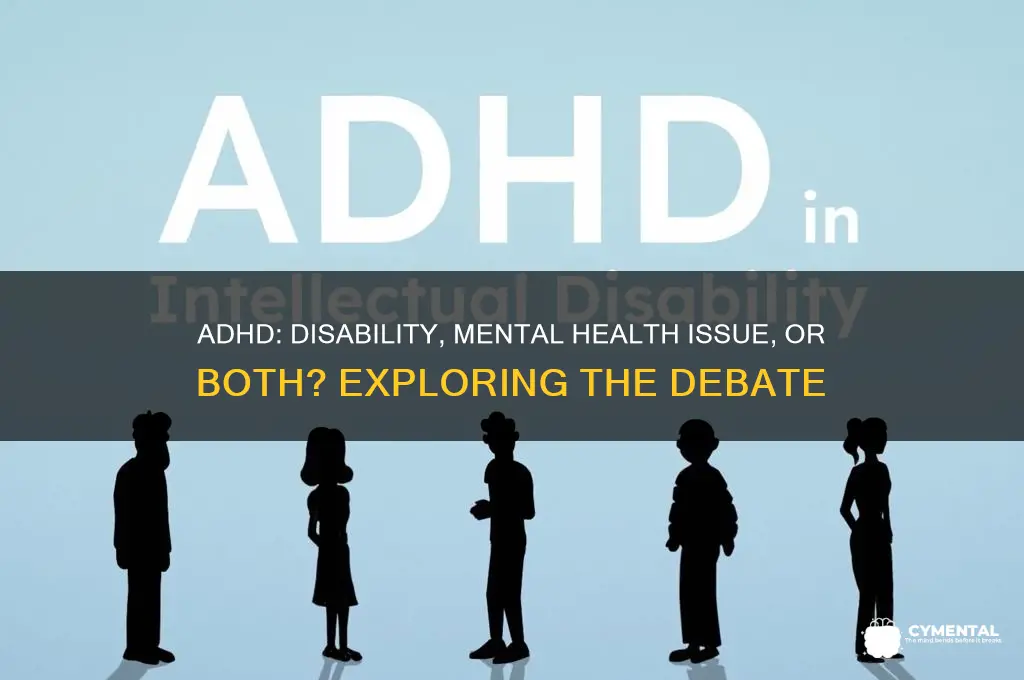
Attention-Deficit/Hyperactivity Disorder (ADHD) is a neurodevelopmental condition that affects millions of individuals worldwide, often sparking debates about its classification as either a disability or a mental health issue. While ADHD is recognized by major health organizations, including the World Health Organization (WHO) and the American Psychiatric Association (APA), as a mental health disorder, it also qualifies as a disability under laws like the Americans with Disabilities Act (ADA) when it significantly impairs daily functioning. This dual categorization highlights the complexity of ADHD, as it involves both psychological symptoms, such as inattention, hyperactivity, and impulsivity, and practical challenges that can affect education, employment, and relationships. Understanding whether ADHD is primarily a disability or a mental health issue requires examining its impact on individuals’ lives, the support systems available, and the societal perceptions that shape how it is addressed.
| Characteristics | Values |
|---|---|
| Classification | ADHD is classified as both a neurodevelopmental disorder (under mental health issues) and a disability under legal frameworks like the Americans with Disabilities Act (ADA) and the Individuals with Disabilities Education Act (IDEA). |
| Diagnostic Manuals | Recognized in DSM-5 (Diagnostic and Statistical Manual of Mental Disorders) as a mental health condition and in ICD-11 (International Classification of Diseases) as a neurodevelopmental disorder. |
| Symptoms | Inattention, hyperactivity, and impulsivity, which can impair daily functioning. |
| Legal Recognition | Considered a disability if it substantially limits major life activities, qualifying individuals for accommodations in education and workplaces. |
| Treatment | Managed through behavioral therapy, medication, and lifestyle adjustments, aligning with mental health treatment protocols. |
| Long-Term Impact | Can affect academic, occupational, and social functioning, similar to other disabilities and mental health conditions. |
| Stigma | Often stigmatized as a behavioral issue rather than a recognized medical condition, despite its classification. |
| Prevalence | Affects approximately 5-7% of children and 2.5% of adults globally, with varying severity levels. |
| Co-Occurring Conditions | Frequently co-occurs with other mental health issues like anxiety, depression, and learning disorders. |
| Advocacy | Supported by organizations like CHADD (Children and Adults with Attention-Deficit/Hyperactivity Disorder) and ADDA (Attention Deficit Disorder Association). |
Explore related products


What You'll Learn
- ADHD Classification: Is ADHD categorized as a disability, mental health disorder, or both in medical frameworks
- Legal Recognition: How does ADHD qualify as a disability under laws like the ADA or IDEA
- Symptom Impact: Do ADHD symptoms align more with disability criteria or mental health challenges
- Treatment Approaches: Are ADHD interventions focused on disability accommodations or mental health therapies
- Social Perception: How does society view ADHD—as a disability, mental illness, or neurodivergence

ADHD Classification: Is ADHD categorized as a disability, mental health disorder, or both in medical frameworks?
ADHD, or Attention-Deficit/Hyperactivity Disorder, is classified in medical frameworks as both a mental health disorder and a disability, depending on the context and the system of reference. In the *Diagnostic and Statistical Manual of Mental Disorders, Fifth Edition (DSM-5)*, ADHD is explicitly categorized under "Neurodevelopmental Disorders," a subset of mental health conditions. This classification emphasizes its origins in brain development and its impact on cognitive and behavioral functioning. However, under the *Americans with Disabilities Act (ADA)* and similar legislation, ADHD is recognized as a disability when it substantially limits major life activities, such as learning, working, or socializing. This dual classification reflects ADHD’s complex nature, blending neurological underpinnings with functional impairments that may require accommodations.
From a clinical perspective, ADHD is treated as a mental health disorder, with diagnostic criteria focusing on symptoms like inattention, hyperactivity, and impulsivity. Treatment modalities, including stimulant medications (e.g., methylphenidate at doses of 10–60 mg/day for children and adolescents) and behavioral therapy, align with mental health interventions. Yet, in educational and workplace settings, ADHD is often addressed through disability frameworks, such as Individualized Education Programs (IEPs) or reasonable accommodations under the ADA. For example, a student with ADHD might receive extended test-taking time, while an employee could request flexible scheduling to manage symptoms. This duality highlights the need for a nuanced approach that acknowledges both the psychological and functional aspects of ADHD.
The classification of ADHD as a disability is particularly relevant when symptoms interfere with daily functioning. For instance, a child struggling to complete homework due to inattention or an adult facing job instability due to impulsivity may qualify for disability protections. However, not all individuals with ADHD experience impairments severe enough to meet disability criteria. This variability underscores the importance of individualized assessments, such as functional evaluations by psychologists or occupational therapists, to determine eligibility for accommodations. In contrast, the mental health classification ensures access to evidence-based treatments, regardless of functional impact, emphasizing the disorder’s biological and psychological roots.
A comparative analysis reveals that the disability classification often focuses on external supports and environmental modifications, while the mental health classification centers on internal symptom management. For parents and educators, understanding this distinction is crucial. For example, a mental health lens might guide the use of cognitive-behavioral therapy to improve focus, whereas a disability lens could inform the implementation of classroom strategies like preferential seating or task breakdowns. Both frameworks are complementary, offering a comprehensive approach to addressing ADHD’s multifaceted challenges.
In conclusion, ADHD’s classification as both a mental health disorder and a disability in medical frameworks reflects its dual nature as a neurodevelopmental condition with potential functional impairments. Clinicians, educators, and policymakers must navigate this duality to provide holistic support. For individuals with ADHD, recognizing this classification can empower them to seek appropriate treatments, accommodations, and legal protections. Ultimately, the goal is to foster environments that accommodate ADHD’s challenges while leveraging its unique strengths, such as creativity and hyperfocus, to promote success across life domains.
Empowering Teens: Strategies for Supporting Mental Health Challenges
You may want to see also
Explore related products


Legal Recognition: How does ADHD qualify as a disability under laws like the ADA or IDEA?
ADHD, or Attention-Deficit/Hyperactivity Disorder, is legally recognized as a disability under key U.S. laws such as the Americans with Disabilities Act (ADA) and the Individuals with Disabilities Education Act (IDEA). This recognition is not merely symbolic; it grants individuals with ADHD specific protections and accommodations in education, employment, and public services. To qualify under the ADA, ADHD must substantially limit one or more major life activities, such as learning, concentrating, or interacting with others. For IDEA, ADHD must adversely affect a child’s educational performance, requiring tailored interventions like Individualized Education Programs (IEPs) or 504 Plans.
Consider the case of a college student with ADHD who struggles to complete assignments on time due to executive functioning deficits. Under the ADA, this student could request extended test times or reduced course loads as reasonable accommodations. Similarly, a child with ADHD in public school might qualify for specialized instruction, behavioral support, or modified testing environments through IDEA. These legal frameworks ensure that ADHD is not treated as a mere behavioral issue but as a condition warranting structured support.
However, qualifying for these protections is not automatic. Documentation from a licensed healthcare provider, such as a psychologist or psychiatrist, is typically required to establish the diagnosis and its impact. For adults, this might involve detailed reports outlining how ADHD impairs daily functioning, while for children, it often includes assessments of academic and social performance. Schools and employers are legally obligated to engage in an interactive process to determine appropriate accommodations, but the onus is on the individual to initiate the request and provide sufficient evidence.
A critical distinction under these laws is that ADHD must be treated as a disability only when it significantly impairs functioning, not simply because of the diagnosis itself. For instance, a person with mild ADHD symptoms that do not interfere with work or school may not qualify for ADA protections. Conversely, someone with severe symptoms, such as chronic disorganization or difficulty maintaining employment, would likely meet the criteria. This individualized approach ensures that protections are tailored to the specific needs of each person.
In practice, navigating these legal protections can be complex. For parents of children with ADHD, understanding the differences between IDEA and Section 504 is essential. IDEA provides more comprehensive services but requires a greater degree of educational impairment, while Section 504 offers broader accessibility accommodations with less stringent eligibility criteria. Adults with ADHD should familiarize themselves with the ADA’s employment provisions, such as the right to request flexible scheduling or assistive technology. Advocacy and awareness are key, as many individuals with ADHD face stigma or skepticism when seeking accommodations.
Ultimately, the legal recognition of ADHD as a disability under the ADA and IDEA transforms it from a personal challenge into a condition with actionable rights. By leveraging these laws, individuals with ADHD can access the support needed to thrive in academic, professional, and social settings. This recognition underscores the importance of viewing ADHD not as a deficit but as a neurodivergent condition deserving of equitable treatment under the law.
Navigating Termination with Compassion: Supporting Employees with Mental Health Challenges
You may want to see also
Explore related products


Symptom Impact: Do ADHD symptoms align more with disability criteria or mental health challenges?
ADHD symptoms—such as inattention, hyperactivity, and impulsivity—manifest differently across individuals, often blurring the line between disability and mental health challenges. For instance, a child struggling to complete homework due to distractibility might be seen as having a learning disability, while an adult with impulsive decision-making could be framed as experiencing a mental health issue. This duality raises the question: does the impact of ADHD symptoms align more closely with disability criteria or mental health challenges?
Consider the functional impairments ADHD causes. Under the Americans with Disabilities Act (ADA), a disability is defined as a condition that substantially limits one or more major life activities. ADHD often impairs executive functioning, time management, and social interactions—all major life activities. For example, a college student with ADHD might require extended test-taking time or organizational tools to compensate for these limitations, fitting squarely within disability accommodations. Yet, these same symptoms—distractibility, restlessness—are also diagnostic criteria for ADHD as a neurodevelopmental disorder in the DSM-5, categorizing it as a mental health condition.
From a mental health perspective, ADHD symptoms are often managed through therapeutic interventions like cognitive-behavioral therapy (CBT) and medication, such as stimulants (e.g., methylphenidate at 10–60 mg/day for adults). These treatments aim to alleviate psychological distress and improve functioning, aligning ADHD with mental health frameworks. However, the need for workplace accommodations, assistive technologies, or modified learning environments underscores its disability-like impact. For instance, an employee with ADHD might use time-tracking apps or noise-canceling headphones to manage symptoms, blending mental health management with disability support.
The interplay between these categories becomes clearer when examining long-term outcomes. Untreated ADHD can lead to comorbid conditions like anxiety or depression, reinforcing its mental health dimensions. Conversely, consistent accommodations and support can mitigate functional impairments, emphasizing its disability aspects. This dual nature suggests ADHD symptoms don’t neatly fit into one category but rather exist at the intersection of both, requiring a holistic approach to address their multifaceted impact.
Practically, individuals and professionals should focus on symptom management and functional improvement rather than rigid categorization. For parents, combining behavioral strategies (e.g., structured routines) with school accommodations (e.g., preferential seating) can address both mental health and disability aspects. For adults, advocating for workplace adjustments while engaging in therapy or medication management offers a balanced approach. Ultimately, ADHD’s symptom impact transcends labels, demanding tailored solutions that acknowledge its complexity.
Supporting Your Spouse: Navigating Mental Health Challenges Together
You may want to see also
Explore related products


Treatment Approaches: Are ADHD interventions focused on disability accommodations or mental health therapies?
ADHD interventions often straddle the line between disability accommodations and mental health therapies, reflecting the condition’s dual nature as both a neurodevelopmental disorder and a mental health issue. Treatment plans typically combine behavioral strategies, medication, and environmental adjustments to address symptoms like inattention, hyperactivity, and impulsivity. For instance, stimulant medications such as methylphenidate (e.g., Ritalin) or amphetamines (e.g., Adderall) are prescribed to regulate neurotransmitter activity, with dosages tailored to age and symptom severity—often starting at 5–10 mg for children and adjusted upward as needed. These pharmacological interventions target the mental health aspect by altering brain chemistry, but they are just one piece of the puzzle.
Disability accommodations, on the other hand, focus on modifying environments to reduce barriers for individuals with ADHD. In educational settings, this might include extended test times, quiet workspaces, or structured schedules. For adults, workplace adjustments like flexible hours or task prioritization tools can improve productivity. These accommodations do not "treat" ADHD in the traditional sense but rather create a framework that allows individuals to function more effectively despite their symptoms. For example, a student with ADHD might use a planner or digital reminders to manage assignments, while an adult might rely on noise-canceling headphones to minimize distractions at work.
Mental health therapies, such as cognitive-behavioral therapy (CBT) or mindfulness-based interventions, address the emotional and psychological challenges associated with ADHD. CBT helps individuals develop coping strategies for impulsivity, time management, and emotional regulation, often through structured sessions over 12–16 weeks. Mindfulness practices, like meditation or breathing exercises, can reduce stress and improve focus, though their effectiveness varies by individual. These therapies focus on changing thought patterns and behaviors, treating ADHD as a mental health issue rather than a disability.
The most effective treatment plans integrate both approaches, recognizing that ADHD impacts both cognitive functioning and emotional well-being. For children, parent training programs like the Incredible Years or Triple P (Positive Parenting Program) teach caregivers strategies to manage behavior while fostering a supportive environment. For adults, combining medication with organizational coaching or therapy can address both the neurological and situational aspects of ADHD. This hybrid model acknowledges that while accommodations help individuals navigate daily challenges, mental health therapies are essential for long-term emotional resilience.
Ultimately, the question of whether ADHD interventions focus on disability accommodations or mental health therapies is a false dichotomy. Successful treatment requires a multifaceted approach that leverages both strategies. For instance, a college student might use accommodations like note-takers or reduced course loads while simultaneously attending therapy to manage anxiety and improve focus. By addressing ADHD from both angles, individuals can mitigate symptoms, build skills, and thrive in various aspects of life. The key is personalization—tailoring interventions to the unique needs and circumstances of each individual.
Supporting Loved Ones: Strategies for Navigating Mental Health Challenges
You may want to see also
Explore related products


Social Perception: How does society view ADHD—as a disability, mental illness, or neurodivergence?
ADHD, or Attention-Deficit/Hyperactivity Disorder, is often pigeonholed in public discourse, yet its social perception remains fragmented. Historically, ADHD has been viewed through the lens of disability, with its inclusion in the Americans with Disabilities Act (AMA) and the Individuals with Disabilities Education Act (IDEA) cementing this perspective. However, this categorization primarily addresses the functional impairments associated with ADHD, such as difficulty sustaining attention or hyperactivity, rather than its underlying neurobiological basis. This disability-centric view has been instrumental in securing accommodations in educational and workplace settings, but it also risks reducing ADHD to a list of deficits, overlooking its complexities.
Contrastingly, the mental health framework positions ADHD as a psychiatric condition, emphasizing its diagnosis and treatment within clinical settings. The DSM-5 (Diagnostic and Statistical Manual of Mental Disorders, 5th edition) classifies ADHD under neurodevelopmental disorders, aligning it with conditions like autism spectrum disorder. This perspective highlights the role of therapy, medication (e.g., stimulants like methylphenidate, dosed at 0.3–1.0 mg/kg/day for children), and behavioral interventions. While this approach offers structured treatment pathways, it can inadvertently stigmatize ADHD as a "mental illness," perpetuating misconceptions that it is solely a product of emotional or psychological dysfunction rather than a neurodevelopmental variation.
In recent years, the neurodivergence movement has reframed ADHD as a natural variation in human cognition, challenging pathologization. Advocates argue that ADHD represents a different way of thinking and processing information, characterized by strengths like creativity, hyperfocus, and adaptability. This perspective encourages societal acceptance and celebrates neurodiversity, but it can also downplay the challenges individuals face, such as executive dysfunction or emotional dysregulation. For instance, while a software engineer with ADHD might excel in problem-solving, they may struggle with task initiation without structured support.
The tension between these perspectives—disability, mental illness, and neurodivergence—reflects broader societal attitudes toward difference. For parents of children aged 6–12, navigating these frameworks is critical: schools may prioritize disability accommodations (e.g., extended test times), while therapists focus on mental health strategies (e.g., cognitive-behavioral therapy). Practical tips include advocating for individualized education plans (IEPs) that address both functional impairments and strengths, and fostering open conversations about ADHD to reduce stigma. Ultimately, society’s view of ADHD is not monolithic; it is a dynamic interplay of medical, social, and cultural constructs that shape how individuals with ADHD are understood and supported.
Supporting Loved Ones: Navigating Mental Health Challenges with Compassion and Care
You may want to see also
Frequently asked questions
Yes, ADHD (Attention-Deficit/Hyperactivity Disorder) is recognized as a disability under laws like the Americans with Disabilities Act (ADA) in the U.S., provided it substantially limits major life activities.
Yes, ADHD is classified as a neurodevelopmental disorder within the category of mental health conditions, as outlined in diagnostic manuals like the DSM-5.
Yes, ADHD is both a mental health condition and a disability, as it affects cognitive functioning and can impair daily life activities.
It may qualify for disability benefits if the symptoms significantly impact daily functioning and meet the criteria set by organizations like the Social Security Administration (SSA).
Treatment approaches are similar, often involving therapy, medication, and accommodations, but the context (e.g., workplace, school) may influence how it is addressed as a disability.