Madison Cole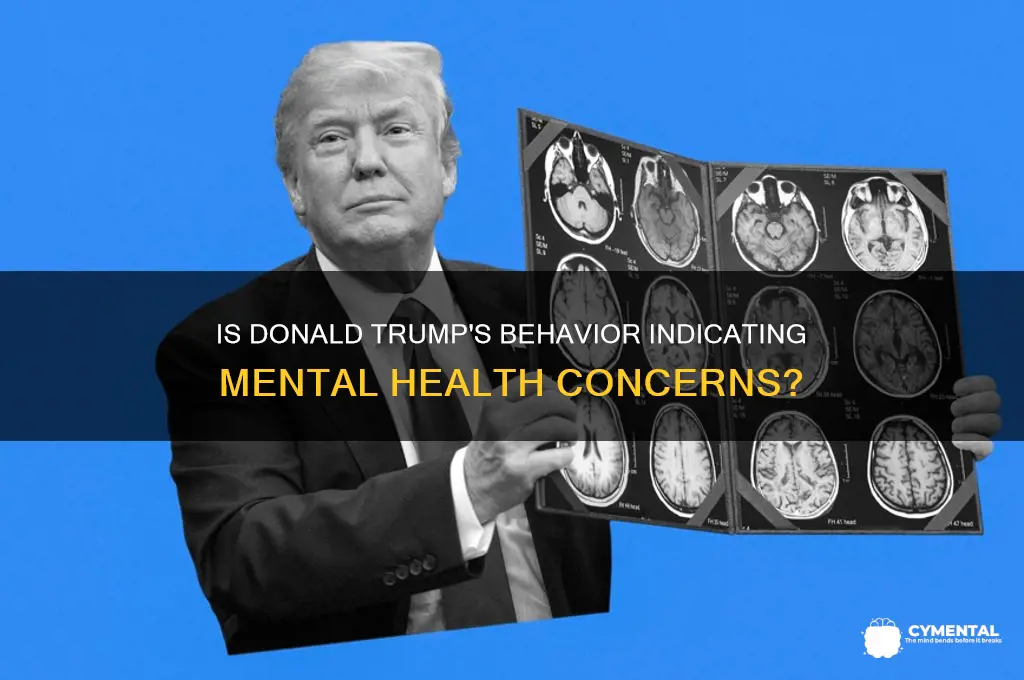
The question of whether former President Donald Trump is experiencing mental health issues has sparked significant debate and speculation, fueled by his controversial statements, erratic behavior, and divisive political actions. Critics often point to his tendency to make unsubstantiated claims, his volatile communication style, and his apparent disregard for established norms as potential indicators of underlying psychological challenges. Supporters, however, argue that these traits reflect his unique personality and political strategy rather than any mental health concerns. While public figures’ mental health is a sensitive topic, the discussion surrounding Trump underscores broader societal questions about accountability, leadership, and the intersection of personal well-being with public service. Without access to a professional diagnosis, definitive conclusions remain elusive, leaving the issue open to interpretation and ongoing scrutiny.
Explore related products

$25


$9.99 $25


What You'll Learn

Trump's erratic behavior and public statements
Donald Trump's presidency and post-presidency have been marked by a series of public statements and behaviors that many observers describe as erratic, raising questions about his mental health. From unsubstantiated claims of election fraud to sudden policy shifts announced via Twitter, his actions often defy conventional political norms. For instance, during a 2017 speech at the United Nations, he referred to North Korean leader Kim Jong Un as "Rocket Man," a nickname that blurred the line between diplomacy and provocation. Such moments have led mental health professionals, political analysts, and the public to speculate about the underlying causes of his behavior.
Analyzing these patterns, it’s instructive to examine the role of impulsivity in Trump’s communication style. His reliance on social media as a direct channel to the public often resulted in unfiltered statements that contradicted official White House positions. For example, his tweet in 2019 about canceling a secret meeting with the Taliban at Camp David caught his own administration off guard. This impulsivity, combined with a tendency to repeat falsehoods—such as claims about voter fraud in the 2020 election—has fueled concerns about his judgment and decision-making processes. Critics argue that such behavior undermines trust in institutions, while supporters view it as a rejection of political correctness.
A comparative perspective reveals how Trump’s behavior contrasts with that of previous presidents. Unlike the measured, scripted communication of leaders like Barack Obama or George W. Bush, Trump’s speeches and tweets often lack coherence or consistency. For instance, his shifting stance on issues like gun control—advocating for both stricter laws and arming teachers—has left policymakers and the public confused. This unpredictability, while appealing to some as a sign of authenticity, raises questions about his ability to lead with clarity and purpose.
Persuasively, it’s worth noting that diagnosing mental health issues from a distance is both unethical and unreliable. However, Trump’s behavior aligns with traits associated with narcissistic personality disorder, as outlined in the DSM-5, including a grandiose sense of self-importance and a need for excessive admiration. His frequent attacks on critics, such as labeling journalists "the enemy of the people," and his obsession with perceived slights, like the size of his inauguration crowd, exemplify these traits. While not a clinical diagnosis, such observations highlight the need for a nuanced discussion about mental health in leadership roles.
Practically, for those concerned about erratic behavior in public figures, it’s essential to focus on patterns rather than isolated incidents. Documenting inconsistencies, fact-checking claims, and encouraging media literacy can help the public discern between genuine leadership and performative chaos. For mental health professionals, advocating for ethical discussions about public figures’ behavior—without stigmatizing mental illness—is crucial. Ultimately, Trump’s case serves as a reminder of the importance of stability and accountability in leadership, regardless of political affiliation.
Understanding Transgender Identities: Mental Health Perspectives and Societal Misconceptions
You may want to see also
Explore related products





Psychological analyses of Trump's personality traits
Donald Trump’s personality has been a subject of intense psychological scrutiny, with experts often focusing on traits such as narcissism, impulsivity, and a penchant for dominance. One of the most cited frameworks for analyzing his behavior is the Narcissistic Personality Inventory (NPI), a tool used to measure narcissistic traits. Trump’s high scores on self-absorption, grandiosity, and a need for admiration align closely with the criteria for narcissistic personality disorder (NPD). For instance, his frequent use of superlatives like “the best,” “the greatest,” and “unprecedented” reflects a narcissistic tendency to exaggerate achievements and seek validation. While NPD is a clinical diagnosis requiring professional evaluation, these traits are evident in his public persona and decision-making patterns.
To understand Trump’s impulsivity, consider his Twitter (now X) usage during his presidency. His late-night tweets often bypassed traditional communication channels, revealing a lack of impulse control and a disregard for consequences. Psychologists note that such behavior aligns with the trait of disinhibition, where immediate gratification overrides long-term planning. This impulsivity extends to his leadership style, marked by abrupt policy shifts and unpredictable decisions. For example, his sudden withdrawal from international agreements like the Paris Climate Accord demonstrates a pattern of acting on instinct rather than deliberation. Practical advice for managing such traits in leadership roles includes implementing checks and balances, such as requiring multiple approvals for significant decisions.
A comparative analysis of Trump’s personality reveals parallels with authoritarian leaders throughout history. His preference for hierarchical structures, disdain for criticism, and tendency to vilify opponents echo traits of authoritarianism. Psychologists argue that this stems from a deep-seated need for control and a binary worldview of “us vs. them.” For instance, his labeling of the press as “the enemy of the people” mirrors tactics used to consolidate power by undermining dissent. However, unlike clinical authoritarian personalities, Trump’s behavior also exhibits a performative aspect, often tailored to appeal to his base. This duality complicates psychological assessments, as it blurs the line between genuine traits and calculated political strategy.
Descriptively, Trump’s emotional regulation—or lack thereof—is another focal point of psychological analyses. His public outbursts, such as lashing out at critics or displaying overt anger during rallies, suggest difficulty managing negative emotions. This aligns with the concept of emotional dysregulation, a trait often associated with personality disorders. For individuals exhibiting similar behaviors, mindfulness techniques and cognitive-behavioral therapy (CBT) can be effective tools. CBT, in particular, helps reframe negative thought patterns and improve emotional control. While these strategies are not tailored to Trump specifically, they offer a framework for addressing similar traits in a therapeutic context.
In conclusion, psychological analyses of Trump’s personality traits reveal a complex interplay of narcissism, impulsivity, authoritarian tendencies, and emotional dysregulation. While these traits do not definitively indicate a mental disorder without clinical diagnosis, they provide insight into his behavior and decision-making. For those seeking to understand or manage similar traits, whether in themselves or others, evidence-based strategies like CBT and structured decision-making processes can be invaluable. Trump’s case underscores the importance of distinguishing between personality traits and clinical conditions, while highlighting the broader implications of such traits in leadership roles.
Relationship Struggles: Unraveling Their Impact on Mental Health and Well-Being
You may want to see also
Explore related products



Media speculation on Trump's cognitive health
Media speculation about Donald Trump's cognitive health has been a persistent and polarizing topic, fueled by his age, public behavior, and controversial statements. At 77, Trump is among the oldest individuals to seek the U.S. presidency, and concerns about age-related cognitive decline are not uncommon in public figures. Observers have scrutinized his speech patterns, memory lapses, and decision-making, often comparing them to established markers of cognitive impairment. For instance, his repeated mispronunciations, such as calling former President Obama "Barack HUSSAIN Obama" during rallies, have raised questions about his mental acuity. While some dismiss these as gaffes or political theatrics, others argue they may signal deeper cognitive issues.
Analyzing the evidence, it’s crucial to distinguish between normal age-related changes and potential red flags. Cognitive decline in older adults often manifests as memory loss, difficulty with problem-solving, or confusion with time and place. Trump’s detractors point to instances like his struggle to recall the name of the Republican National Committee chair during a speech or his contradictory statements on policy matters. However, diagnosing cognitive impairment requires rigorous medical evaluation, not armchair speculation. The media’s reliance on anecdotal evidence and partisan narratives complicates the discourse, often blurring the line between legitimate concern and political weaponization.
A persuasive argument against overblown speculation is the lack of concrete medical evidence. Trump’s 2018 physical examination, conducted by White House physician Ronny Jackson, declared him to be in "excellent health" with no cognitive issues. While critics question the objectivity of such assessments, they remain the only official medical insights available. The media’s tendency to amplify unverified claims, such as rumors of Trump’s alleged difficulty passing a cognitive test, underscores the need for journalistic restraint. Without access to his medical records or a formal neuropsychological evaluation, any conclusions about his cognitive health remain speculative.
Comparatively, media scrutiny of Trump’s cognitive health differs from that of other public figures. For example, President Biden’s age and occasional verbal stumbles have also sparked debates, but the discourse is often framed as a bipartisan concern rather than a partisan attack. Trump’s case, however, is uniquely intertwined with his divisive political persona, making it difficult to separate genuine health concerns from political animosity. This dynamic highlights the media’s role in shaping public perception and the ethical responsibility to report with nuance and accuracy.
In practical terms, the media’s fixation on Trump’s cognitive health has broader implications for public discourse. It risks stigmatizing aging and cognitive decline, perpetuating stereotypes about older adults’ competence. Instead of fixating on speculative diagnoses, journalists could focus on policy implications and the broader issue of age and fitness for office. For instance, advocating for mandatory cognitive assessments for presidential candidates could provide a standardized, non-partisan approach to addressing these concerns. Ultimately, the media’s role should be to inform, not to diagnose, leaving medical evaluations to professionals while holding public figures accountable for their actions and decisions.
Trans Perspectives on Mental Health: Challenges, Resilience, and Support
You may want to see also
Explore related products


Expert opinions on Trump's mental stability
Donald Trump's mental stability has been a subject of intense debate, with experts across various fields weighing in. Psychiatrists, psychologists, and political analysts have offered divergent opinions, often influenced by their disciplinary perspectives and methodological constraints. While some argue that diagnosing a public figure from afar is unethical, others contend that Trump's behavior warrants scrutiny due to its potential impact on governance and public safety.
One prominent perspective comes from mental health professionals who caution against armchair diagnoses. The American Psychiatric Association’s "Goldwater Rule" explicitly prohibits psychiatrists from offering professional opinions on individuals they have not personally evaluated. Despite this, some experts have pointed to observable patterns in Trump’s behavior—such as impulsivity, grandiosity, and a tendency to distort reality—as potential indicators of narcissistic personality disorder or other conditions. For instance, Dr. John Gartner, a psychologist, has publicly stated that Trump exhibits traits consistent with malignant narcissism, a condition characterized by paranoia, sadism, and a lack of empathy. However, critics argue that such assessments lack clinical rigor and risk stigmatizing mental health issues.
Political analysts, on the other hand, often frame Trump’s behavior through the lens of strategy and persona. They suggest that his erratic communication style and provocative statements may be calculated to dominate media narratives and solidify his base. For example, his use of hyperbole and misinformation could be seen as tools to maintain relevance rather than symptoms of cognitive impairment. This perspective emphasizes the performative aspects of Trump’s public image, downplaying concerns about mental stability in favor of a more pragmatic interpretation of his actions.
A comparative approach reveals how public figures’ mental health has historically been scrutinized. For instance, President Ronald Reagan faced questions about his cognitive abilities during his second term, while President Abraham Lincoln’s melancholia was well-documented. However, Trump’s case is unique due to the proliferation of social media and 24-hour news cycles, which amplify and dissect his every word and action. This heightened visibility has led to both overdiagnosis and underdiagnosis, as experts and the public alike struggle to separate personality from pathology.
Ultimately, the debate over Trump’s mental stability highlights the limitations of remote assessment and the need for ethical boundaries in professional discourse. While his behavior may raise legitimate concerns, definitive conclusions remain elusive without a formal evaluation. For those seeking to understand his actions, a multidisciplinary approach—combining insights from psychology, politics, and media studies—offers the most comprehensive framework. Practical takeaways include recognizing the dangers of speculative diagnoses and advocating for nuanced discussions that avoid reducing complex behaviors to simplistic labels.
Mental Health as Disability: Understanding Rights, Support, and Inclusion
You may want to see also
Explore related products


Trump's response to mental health accusations
Donald Trump's responses to accusations of mental health issues have been characterized by defiance, strategic deflection, and a focus on projecting strength. When faced with claims questioning his cognitive fitness, Trump often employs a three-pronged approach: dismissing the accusers, highlighting his own perceived successes, and counterattacking with allegations of bias or incompetence against his critics. For instance, during his presidency, when journalists or political opponents raised concerns about his erratic behavior or speech patterns, Trump would frequently label such claims as "fake news" or part of a "witch hunt," framing himself as a victim of media malice rather than addressing the substance of the accusations.
Analytically, Trump's strategy serves multiple purposes. By refusing to engage with the accusations directly, he avoids legitimizing them, a tactic often used in crisis management. Simultaneously, his counterattacks aim to shift the narrative from his mental health to the credibility of his detractors. This method not only rallies his base, who view such accusations as politically motivated, but also creates a perception of invulnerability. For example, after the publication of Michael Wolff's *Fire and Fury*, which portrayed Trump as erratic and unfit, Trump took to Twitter to describe himself as a "very stable genius," a phrase that, while mocked by critics, effectively reframed the conversation around his self-proclaimed intelligence rather than his mental health.
Instructively, Trump's approach offers a playbook for public figures facing similar accusations: control the narrative, attack the messenger, and leverage personal achievements to counter doubts. However, this strategy comes with risks. By avoiding substantive discussion of mental health, Trump inadvertently stigmatizes the issue, potentially discouraging others from seeking help. For individuals in the public eye, a more balanced approach might involve acknowledging concerns while emphasizing professional evaluations or personal resilience. For instance, a public figure could release a statement from a medical professional or openly discuss their mental health practices, such as therapy or stress management techniques, to address accusations transparently.
Comparatively, Trump's response contrasts sharply with how other leaders have handled mental health accusations. For example, when Canadian Prime Minister Justin Trudeau faced questions about his mental acuity during the 2021 election, he responded by emphasizing his commitment to transparency and public service, without resorting to personal attacks. This approach not only defused the issue but also reinforced his image as a leader willing to engage with criticism constructively. Trump's combative style, while effective in mobilizing his supporters, often polarizes public opinion and leaves the original accusations unresolved.
Descriptively, Trump's reactions to mental health accusations are a window into his broader communication style: aggressive, self-aggrandizing, and relentlessly focused on winning the PR battle. His use of hyperbolic language, such as calling himself a "genius" or labeling critics as "losers," creates a spectacle that dominates headlines, often at the expense of nuanced discussion. This approach, while successful in maintaining his base's loyalty, underscores a missed opportunity to destigmatize mental health conversations. For those studying crisis communication, Trump's case is a cautionary tale about the limits of deflection and the importance of addressing concerns head-on, even if only to provide clarity or reassurance.
Recognizing Mental Health Struggles: Signs and Signals to Watch For
You may want to see also
Frequently asked questions
There is no official medical diagnosis confirming that Donald Trump has mental issues. Speculations about his mental health are often based on public behavior, statements, or opinions from critics, but only a qualified mental health professional can make such a determination.
No, licensed mental health professionals are ethically bound by the Goldwater Rule, which prohibits diagnosing public figures without a personal examination and consent. Any public claims about Trump's mental health are speculative and not based on professional evaluations.
Interpretations of Trump's behavior vary widely. Some view his actions as unconventional or controversial, while others see them as strategic or reflective of his personality. Without a formal assessment, it is impossible to attribute his behavior to mental health issues.
Trump has publicly dismissed claims about his mental health, often labeling them as politically motivated attacks. He has not acknowledged any mental health issues and has emphasized his mental acuity, including taking a cognitive test in 2020, which he claims he passed "very well."