Lucas Bennett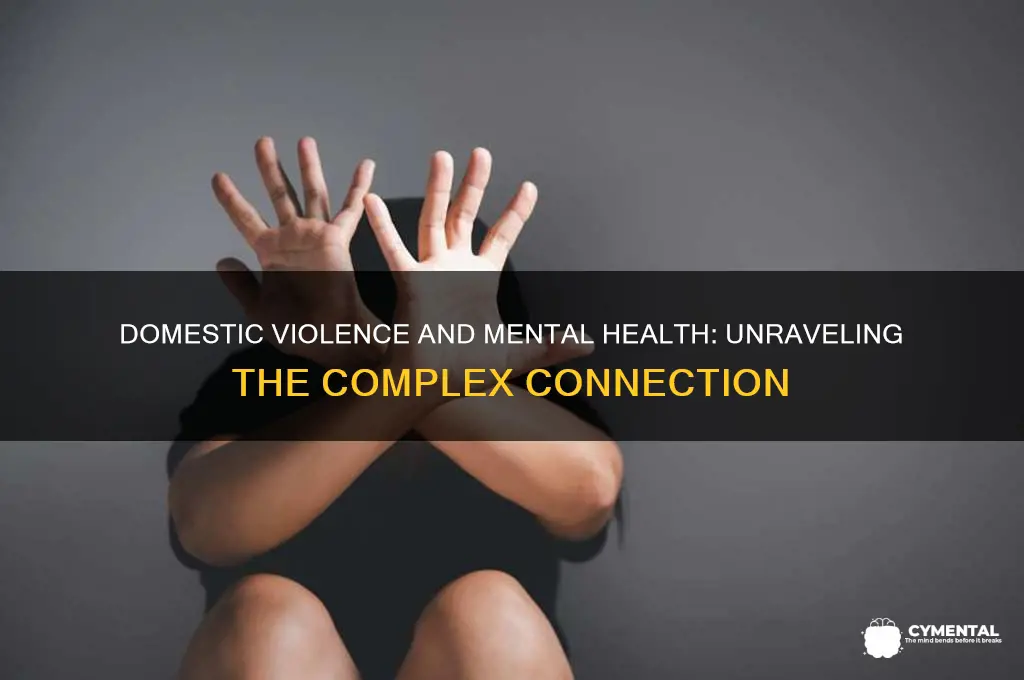
Domestic violence is increasingly recognized not only as a social and legal issue but also as a significant mental health concern, affecting both perpetrators and survivors. The psychological impact of domestic violence is profound, often leading to conditions such as depression, anxiety, post-traumatic stress disorder (PTSD), and substance abuse in survivors. Perpetrators, on the other hand, may exhibit underlying mental health issues such as personality disorders, anger management problems, or unresolved trauma, which can contribute to abusive behaviors. Addressing domestic violence thus requires a multifaceted approach that integrates mental health interventions, support systems, and preventive measures to break the cycle of abuse and promote healing for all involved.
| Characteristics | Values |
|---|---|
| Prevalence of Mental Health Issues in Victims | Approximately 60-80% of domestic violence survivors experience mental health issues such as depression, anxiety, and PTSD (National Coalition Against Domestic Violence, 2023). |
| Impact on Children | Children exposed to domestic violence are at a higher risk of developing mental health disorders, with 40-60% experiencing anxiety, depression, or behavioral issues (American Psychological Association, 2022). |
| Perpetrator Mental Health | A significant proportion of perpetrators (30-50%) have mental health issues, including substance abuse, personality disorders, and mood disorders (World Health Organization, 2021). |
| Cycle of Abuse | Domestic violence often creates a cycle where victims develop mental health issues, which can perpetuate the abuse and make it harder to leave the relationship (National Institute of Mental Health, 2023). |
| Long-term Effects | Survivors may experience long-term mental health consequences, including chronic PTSD, depression, and anxiety, even after leaving the abusive relationship (Office on Women's Health, 2022). |
| Intersectionality | Domestic violence disproportionately affects marginalized communities, including women, LGBTQ+ individuals, and people of color, who may face additional mental health challenges due to systemic oppression and discrimination (Centers for Disease Control and Prevention, 2023). |
| Treatment and Support | Integrated treatment approaches, including trauma-informed care and mental health services, are crucial for addressing the mental health needs of domestic violence survivors and perpetrators (Substance Abuse and Mental Health Services Administration, 2022). |
| Prevention Strategies | Addressing mental health issues through early intervention, education, and community-based programs can help prevent domestic violence and reduce its impact on mental health (World Health Organization, 2021). |
| Policy and Legislation | Policies and legislation that address domestic violence should also consider the mental health needs of survivors and perpetrators, including access to mental health services and support (National Network to End Domestic Violence, 2023). |
| Research and Awareness | Ongoing research and awareness campaigns are necessary to understand the complex relationship between domestic violence and mental health, and to develop effective prevention and intervention strategies (National Institute of Justice, 2022). |
Explore related products


What You'll Learn

Impact on Survivors' Mental Health
Domestic violence leaves an indelible mark on survivors, and its impact on mental health is profound and multifaceted. The constant exposure to fear, control, and abuse creates a toxic environment that erodes self-esteem, distorts perception, and fosters a pervasive sense of helplessness. Survivors often internalize the abuser's criticisms, leading to a distorted self-image and a deep-seated belief that they are unworthy of love and respect. This internalization of abuse can manifest as depression, anxiety, and post-traumatic stress disorder (PTSD), with symptoms such as flashbacks, nightmares, and severe anxiety attacks. For instance, a study published in the *Journal of Interpersonal Violence* found that 60% of domestic violence survivors meet the criteria for PTSD, a rate comparable to combat veterans.
Consider the psychological mechanisms at play. The brain's stress response system, particularly the hypothalamic-pituitary-adrenal (HPA) axis, becomes dysregulated under chronic stress. Prolonged exposure to cortisol, the stress hormone, can lead to structural changes in the brain, particularly in the hippocampus and prefrontal cortex, areas critical for memory and emotional regulation. This biological underpinning explains why survivors often struggle with concentration, decision-making, and emotional stability long after the abuse has ended. Practical steps for survivors include seeking therapy modalities like Cognitive Behavioral Therapy (CBT) or Eye Movement Desensitization and Reprocessing (EMDR), which have proven effective in addressing trauma-related symptoms.
A comparative analysis reveals that the mental health impact of domestic violence is not uniform across all survivors. Factors such as the duration of abuse, the presence of social support, and individual resilience play significant roles. For example, children exposed to domestic violence are at a heightened risk of developing mental health issues, with studies showing that 40% of these children exhibit behavioral problems by age 12. Similarly, marginalized groups, such as LGBTQ+ individuals or immigrants, may face additional barriers to accessing mental health care, exacerbating their suffering. Advocacy groups emphasize the need for tailored interventions that address these disparities, such as culturally sensitive counseling and community-based support networks.
Persuasively, it is critical to recognize that the mental health consequences of domestic violence extend beyond the individual survivor, affecting families and communities. The intergenerational transmission of trauma is a stark reality, as children of survivors are more likely to experience mental health issues and perpetuate cycles of violence. Breaking this cycle requires a holistic approach that includes not only individual therapy but also systemic interventions like education programs and policy reforms. For instance, schools can implement trauma-informed practices to support affected children, while policymakers can allocate funding for accessible mental health services.
Descriptively, the journey to recovery for survivors is often marked by both challenges and resilience. Many survivors report feeling a sense of liberation and empowerment as they reclaim their lives, but this process is rarely linear. Setbacks, such as triggering events or residual self-doubt, are common. Practical tips for survivors include maintaining a routine, engaging in self-care activities like mindfulness or exercise, and building a supportive network. For partners or friends, active listening and validation are crucial, as is avoiding phrases like "just move on," which can minimize the survivor's experience. Ultimately, understanding the profound mental health impact of domestic violence is the first step toward fostering healing and preventing further harm.
Untreated Mental Health Issues in Children: Long-Term Consequences and Impact
You may want to see also
Explore related products



Abusers' Psychological Profiles
Domestic violence is not solely a behavioral issue but often a manifestation of underlying psychological disturbances. Understanding the psychological profiles of abusers is crucial for identifying patterns, implementing effective interventions, and breaking cycles of abuse. While not all abusers fit a single mold, research highlights common traits and conditions that frequently appear in their profiles.
Analytical Perspective:
Abusers often exhibit traits of personality disorders, particularly narcissistic, borderline, or antisocial personality disorder. Narcissistic abusers manipulate through entitlement and a need for control, while those with borderline traits may cycle between idealization and devaluation, creating emotional instability. Antisocial abusers show a disregard for others’ rights, often using aggression to dominate. Studies indicate that up to 80% of domestic violence perpetrators have co-occurring mental health issues, such as depression, anxiety, or substance abuse disorders. These conditions do not excuse abuse but explain the psychological framework driving their actions.
Instructive Approach:
To assess an abuser’s psychological profile, professionals use tools like the Psychopathy Checklist-Revised (PCL-R) or the Domestic Violence Inventory (DVI). These assessments evaluate traits like impulsivity, lack of empathy, and history of manipulation. For instance, a PCL-R score above 30 suggests high psychopathic tendencies, while a DVI score over 15 indicates severe risk for repeated violence. Practitioners should also screen for substance abuse, as 40-60% of abusers misuse alcohol or drugs, which exacerbates aggression. Early identification of these traits allows for targeted interventions, such as cognitive-behavioral therapy (CBT) or anger management programs.
Comparative Analysis:
Unlike situational abusers, who may act violently due to stress or external triggers, habitual abusers display a consistent pattern of control and coercion. Situational abusers often express remorse and are more receptive to change, whereas habitual abusers rationalize their behavior and resist accountability. For example, a situational abuser might attend counseling and modify behavior after a single incident, while a habitual abuser may complete a program but revert to controlling tactics. This distinction underscores the need for tailored interventions: situational abusers benefit from short-term counseling, while habitual abusers require long-term, intensive treatment addressing deep-seated psychological issues.
Descriptive Insight:
Abusers frequently employ psychological tactics like gaslighting, isolation, and emotional manipulation to maintain power. Gaslighting involves distorting the victim’s perception of reality, while isolation cuts off support systems, leaving victims dependent. For instance, an abuser might say, “You’re imagining things—I never hit you,” or “Your friends don’t really care about you.” These behaviors stem from insecurities and a need to dominate, often rooted in childhood trauma or unresolved attachment issues. Understanding these tactics helps victims recognize abuse and empowers them to seek help.
Persuasive Argument:
Addressing abusers’ psychological profiles is not just a clinical necessity but a societal imperative. Without treatment, abusers perpetuate cycles of violence, harming generations. Programs like the Duluth Model focus on holding abusers accountable while addressing underlying issues like anger and control. However, success rates vary, with recidivism around 40%. To improve outcomes, interventions must integrate mental health treatment, such as trauma-informed care and mindfulness-based therapies. By treating the root causes, society can reduce domestic violence and foster healthier relationships.
In conclusion, abusers’ psychological profiles reveal a complex interplay of personality disorders, mental health issues, and learned behaviors. Recognizing these patterns enables targeted interventions, breaking cycles of abuse and promoting healing for both perpetrators and survivors.
Transgender Identities: Exploring Genetic Influences vs. Mental Health Perspectives
You may want to see also
Explore related products






Trauma and PTSD in Victims
Domestic violence inflicts profound psychological wounds, often culminating in trauma and post-traumatic stress disorder (PTSD) among survivors. Unlike acute stress disorder, which resolves within a month, PTSD persists, with symptoms such as flashbacks, hypervigilance, and emotional numbing becoming chronic. Studies show that 40-60% of domestic violence victims meet the diagnostic criteria for PTSD, a rate comparable to combat veterans. This statistic underscores the severity of the mental health crisis embedded within abusive relationships.
Consider the mechanism of trauma in this context: repeated exposure to threats, violence, and manipulation rewires the brain’s fear response system. The amygdala, responsible for detecting danger, becomes hyperactive, while the prefrontal cortex, which regulates emotions, weakens. For instance, a survivor might experience panic attacks triggered by seemingly benign stimuli—a raised voice, a specific scent, or even a particular time of day—that remind them of past abuse. This conditioned response is not a choice but a physiological consequence of prolonged terror.
To address trauma and PTSD in victims, evidence-based interventions are critical. Cognitive Behavioral Therapy (CBT) and Eye Movement Desensitization and Reprocessing (EMDR) are gold-standard treatments. CBT helps reframe traumatic memories and develop coping strategies, while EMDR targets the neurological roots of trauma by reprocessing distressing memories. For example, a 12-week EMDR program has been shown to reduce PTSD symptoms by 50% in domestic violence survivors. However, access to these therapies remains a barrier, particularly for marginalized communities, highlighting the need for affordable, culturally sensitive mental health services.
A comparative analysis reveals that children exposed to domestic violence are equally vulnerable to trauma and PTSD. Witnessing abuse activates the same fear pathways as experiencing it directly, with 25% of exposed children developing PTSD. This intergenerational transmission of trauma demands early intervention, such as trauma-focused CBT tailored for children, which incorporates play therapy and caregiver involvement. Schools and pediatricians play a pivotal role in identifying at-risk children, offering a critical lifeline before symptoms escalate.
Finally, self-care strategies can complement professional treatment. Grounding techniques, such as the 5-4-3-2-1 method (identifying five things you see, four you can touch, etc.), help manage flashbacks in real time. Journaling, mindfulness, and consistent sleep hygiene also mitigate hyperarousal. However, these practices are not substitutes for therapy but tools to empower survivors in their healing journey. The takeaway is clear: trauma and PTSD in domestic violence victims are treatable, but recovery requires a multifaceted approach—clinical intervention, systemic support, and individual resilience.
Is Anger a Disorder? Understanding Its Mental Health Implications
You may want to see also
Explore related products




Cycle of Abuse and Mental Patterns
Domestic violence often perpetuates a cycle of abuse, a pattern so insidious that it becomes a mental health crisis for both the victim and the perpetrator. This cycle typically unfolds in four stages: tension building, acute violence, reconciliation, and calm—only to repeat. Each phase reinforces mental patterns that entrap individuals, making it difficult to break free. For instance, victims may develop hypervigilance during the tension-building phase, constantly anticipating the next outburst, while perpetrators may experience escalating anger that they rationalize as justified. Understanding these stages is crucial because they highlight how domestic violence is not just a physical act but a psychological trap.
Consider the mental patterns that emerge during the reconciliation phase, often referred to as the "honeymoon period." Here, the perpetrator may apologize profusely, promise change, or shower the victim with affection. This phase exploits the victim’s hope and desire for stability, creating a cognitive dissonance where they question the severity of the abuse. Over time, this pattern erodes self-esteem and fosters a sense of dependency, making it harder for victims to leave. For perpetrators, this phase reinforces their belief that they can control the relationship through manipulation, further entrenching abusive behaviors.
Breaking the cycle requires targeted interventions that address these mental patterns. Cognitive-behavioral therapy (CBT) is particularly effective for both parties. For victims, CBT helps identify and challenge distorted beliefs, such as "I deserve this" or "It’s my fault," while rebuilding self-worth. For perpetrators, CBT focuses on anger management, accountability, and altering the thought processes that justify abuse. Practical steps include setting clear boundaries, creating a safety plan, and seeking support from professionals or support groups. For example, victims can start by identifying safe spaces or trusted contacts, while perpetrators can enroll in anger management programs or couples therapy under professional guidance.
A comparative analysis reveals that the cycle of abuse mirrors addiction patterns, where both the victim and perpetrator become psychologically dependent on the dynamics of the relationship. Just as an addict craves a substance, the perpetrator craves control, and the victim may develop a traumatic bond, seeking validation from their abuser. This analogy underscores the need for treatment approaches that address the psychological roots of abuse, rather than solely focusing on the physical acts. For instance, mindfulness-based interventions can help victims break the cycle of hypervigilance, while perpetrators can benefit from empathy-building exercises to challenge their dehumanization of the victim.
In conclusion, the cycle of abuse is not just a series of events but a deeply ingrained mental pattern that sustains domestic violence. By recognizing and addressing these patterns, individuals can disrupt the cycle and pave the way for healing. Practical steps, such as therapy, boundary-setting, and support networks, are essential tools in this process. Ultimately, viewing domestic violence through the lens of mental health offers a more comprehensive approach to prevention and recovery, emphasizing the psychological dimensions that often go unnoticed.
Enhance Your Well-Being: Practical Strategies to Improve Mental Health Issues
You may want to see also
Explore related products


Role of Therapy in Recovery
Domestic violence leaves deep psychological scars, often manifesting as anxiety, depression, post-traumatic stress disorder (PTSD), and complex trauma. Therapy plays a pivotal role in unraveling these layers, offering survivors a structured path to reclaim their mental well-being. Through evidence-based modalities like Cognitive Behavioral Therapy (CBT), Eye Movement Desensitization and Reprocessing (EMDR), and trauma-focused therapies, survivors learn to challenge distorted beliefs, process traumatic memories, and rebuild a sense of safety. For instance, CBT helps reframe thoughts like "I am worthless" into "I am resilient," while EMDR targets the physiological imprint of trauma, reducing flashbacks and hypervigilance. These approaches are not one-size-fits-all; therapists tailor interventions to individual needs, often incorporating mindfulness, art therapy, or group support for holistic healing.
The therapeutic process begins with establishing safety—both physical and emotional. Survivors often enter therapy with fragmented trust, making the therapist-client relationship a cornerstone of recovery. Sessions typically start with grounding techniques, such as deep breathing or progressive muscle relaxation, to manage acute distress. Over time, therapists guide survivors in exploring their trauma narratives, gradually exposing them to painful memories in a controlled environment. This phased approach, known as titration, prevents retraumatization and fosters empowerment. For children exposed to domestic violence, play therapy becomes a vital tool, allowing them to express emotions they cannot articulate verbally. Adolescents, on the other hand, may benefit from dialectical behavior therapy (DBT) to regulate emotions and improve interpersonal skills.
One of the most transformative aspects of therapy is its ability to restore agency. Domestic violence systematically erodes a survivor’s sense of self, but therapy provides a space to redefine identity outside the context of abuse. Through narrative therapy, survivors rewrite their stories, shifting from victimhood to survivorship. Practical strategies, such as safety planning and boundary-setting, are integrated into sessions to address immediate concerns while fostering long-term resilience. For example, a therapist might help a client practice saying "no" assertively or develop a code word to signal distress to trusted allies. These tangible skills complement emotional healing, creating a foundation for sustainable recovery.
Despite its benefits, therapy for domestic violence survivors is not without challenges. Access to specialized care remains a barrier, particularly in underserved communities. Stigma, financial constraints, and logistical hurdles like childcare can deter survivors from seeking help. Therapists must also navigate countertransference, as the intensity of trauma narratives can evoke strong emotional responses. To mitigate these issues, telehealth platforms have emerged as a viable alternative, offering flexible, confidential support. Additionally, community-based programs and support groups provide supplementary resources, ensuring survivors have a continuum of care. Ultimately, therapy is not a quick fix but a collaborative journey, requiring patience, compassion, and unwavering commitment to healing.
Navigating Mental Health Conversations: A Guide for Students and Professors
You may want to see also
Frequently asked questions
Domestic violence is not classified as a mental health issue itself, but it is closely linked to mental health. Perpetrators may have underlying mental health conditions, and victims often experience severe psychological impacts such as anxiety, depression, or PTSD.
While mental health issues alone do not cause domestic violence, certain conditions like untreated anger disorders, substance abuse, or personality disorders can contribute to abusive behavior when combined with other factors like learned behaviors or societal influences.
Domestic violence can lead to long-term mental health issues in survivors, including depression, anxiety, PTSD, low self-esteem, and suicidal thoughts. The trauma experienced often requires professional intervention for recovery.
Many perpetrators benefit from mental health treatment, especially if underlying issues like anger management, substance abuse, or trauma are contributing to their behavior. However, accountability and behavioral change programs are also essential components of intervention.