Harper Lewis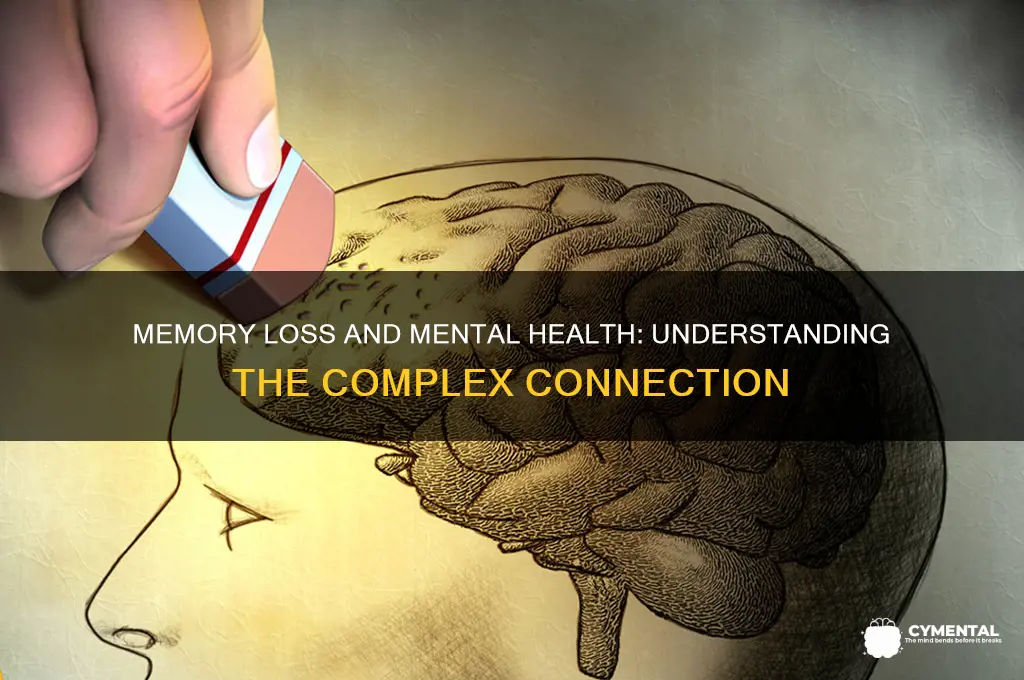
Memory loss can be a concerning symptom that often raises questions about its connection to mental health. While it is commonly associated with aging or neurological conditions, memory impairment can also be linked to various mental health issues. Conditions such as depression, anxiety, and post-traumatic stress disorder (PTSD) have been known to impact memory function, leading to difficulties in recalling information or forming new memories. Understanding the relationship between memory loss and mental health is crucial, as it can help identify underlying psychological factors and guide appropriate treatment approaches to address both cognitive and emotional well-being.
| Characteristics | Values |
|---|---|
| Definition | Memory loss is not a standalone mental health issue but can be a symptom of underlying mental health conditions or other medical issues. |
| Associated Mental Health Conditions | Depression, anxiety, PTSD, bipolar disorder, schizophrenia, and dementia-related disorders (e.g., Alzheimer's disease). |
| Causes | Aging, neurological disorders, trauma, stress, medication side effects, substance abuse, vitamin deficiencies, sleep deprivation, and chronic conditions like diabetes or hypertension. |
| Types of Memory Loss | Short-term memory loss, long-term memory loss, and episodic or semantic memory impairments. |
| Diagnosis | Cognitive assessments, neurological exams, brain imaging (MRI, CT scans), blood tests, and psychological evaluations to rule out mental health disorders. |
| Treatment | Cognitive-behavioral therapy (CBT), medication (e.g., antidepressants, memory-enhancing drugs), lifestyle changes (exercise, diet, sleep hygiene), and management of underlying conditions. |
| Prevention | Mental health support, stress management, regular exercise, healthy diet, adequate sleep, social engagement, and cognitive stimulation (e.g., puzzles, learning new skills). |
| Impact on Mental Health | Memory loss can exacerbate anxiety, depression, and feelings of helplessness, affecting overall quality of life and daily functioning. |
| Latest Research | Studies highlight the link between untreated mental health issues (e.g., chronic stress, depression) and accelerated cognitive decline, emphasizing early intervention. |
| Stigma | Memory loss is often stigmatized as a normal part of aging or a sign of weakness, delaying diagnosis and treatment for mental health-related causes. |
| Support Systems | Counseling, support groups, caregiver assistance, and memory aids (e.g., calendars, reminders) are crucial for managing memory loss associated with mental health issues. |
| Prognosis | Varies depending on the cause; reversible in cases like depression or vitamin deficiency, but progressive in neurodegenerative conditions like Alzheimer's. |
| Public Awareness | Increasing awareness about the connection between memory loss and mental health is essential for early detection and reducing stigma. |
Explore related products


What You'll Learn
- Types of Memory Loss: Distinguishing between normal forgetfulness, mild cognitive impairment, and dementia
- Causes of Memory Loss: Exploring factors like aging, trauma, stress, medications, and neurological conditions
- Memory Loss and Anxiety: Investigating the link between chronic stress, anxiety, and memory impairment
- Depression’s Impact on Memory: Examining how depression affects concentration, recall, and long-term memory
- Treatment and Management: Discussing therapies, lifestyle changes, and interventions to address memory-related mental health issues

Types of Memory Loss: Distinguishing between normal forgetfulness, mild cognitive impairment, and dementia
Memory loss is not a one-size-fits-all phenomenon. Understanding the nuances between normal forgetfulness, mild cognitive impairment (MCI), and dementia is crucial for early intervention and appropriate management. Let's dissect these distinctions.
Normal Forgetfulness: The Everyday Slip-Ups
We’ve all misplaced keys, forgotten names, or blanked on appointments. This type of memory lapse is a natural part of the brain’s processing, especially as we age. For instance, forgetting why you entered a room or struggling to recall a word mid-sentence are common examples. These moments are typically fleeting and don’t interfere with daily functioning. A practical tip: Use mnemonic devices or digital reminders to offset minor forgetfulness. For adults over 50, such lapses are often benign, but tracking their frequency can help differentiate them from more serious issues.
Mild Cognitive Impairment (MCI): The Gray Zone
MCI represents a noticeable decline in cognitive abilities, including memory, beyond what’s expected for age. Unlike normal forgetfulness, MCI may manifest as forgetting important events, repeatedly asking for the same information, or struggling with complex tasks like bill paying. Studies suggest 10–20% of individuals over 65 have MCI, with a subset progressing to dementia annually. If you notice consistent memory issues affecting work or social life, consult a neurologist. Early interventions, such as cognitive training or lifestyle modifications, may slow progression.
Dementia: The Progressive Decline
Dementia is not a single condition but a cluster of symptoms affecting memory, reasoning, and social abilities severely enough to impair daily life. Alzheimer’s disease accounts for 60–80% of dementia cases. Unlike MCI, dementia involves profound memory loss—forgetting close family members’ names, getting lost in familiar places, or neglecting personal hygiene. Diagnosis often involves cognitive tests, brain imaging, and ruling out reversible causes like vitamin deficiencies. While no cure exists, medications like donepezil (5–10 mg daily) can manage symptoms, and caregivers play a vital role in support.
Distinguishing Features: A Comparative Lens
Normal forgetfulness is episodic and reversible; MCI is persistent but doesn’t cripple independence; dementia is debilitating and progressive. For example, forgetting a colleague’s name is normal, repeatedly forgetting your own address signals MCI, and being unable to navigate home indicates dementia. Tracking changes over 6–12 months can clarify the trajectory. Keep a journal of memory incidents to share with healthcare providers for accurate assessment.
Practical Takeaways: When to Act
If memory issues disrupt daily routines, consult a specialist. Early detection of MCI can delay dementia onset, while dementia management focuses on quality of life. Incorporate brain-healthy habits: exercise, a Mediterranean diet, and social engagement. For caregivers, respite care and support groups are essential. Memory loss may start as a minor inconvenience, but recognizing its type ensures proactive, tailored responses.
Recognising Mental Health Issues: A UK Guide to Spotting Signs
You may want to see also
Explore related products


Causes of Memory Loss: Exploring factors like aging, trauma, stress, medications, and neurological conditions
Memory loss is not merely a byproduct of aging but a complex phenomenon influenced by a myriad of factors. Among the elderly, mild forgetfulness is common, yet significant memory impairment can signal underlying issues. Aging affects the brain’s ability to encode and retrieve memories, particularly in regions like the hippocampus, which shrinks with age. However, not all memory loss in older adults is irreversible; lifestyle changes, cognitive exercises, and early intervention can mitigate decline. For instance, individuals over 65 who engage in regular physical activity and mental stimulation show slower cognitive deterioration compared to their sedentary peers.
Trauma, both physical and emotional, can leave indelible marks on memory function. Brain injuries, such as concussions or traumatic brain injuries (TBIs), disrupt neural pathways critical for memory consolidation. A single severe TBI increases the risk of dementia by 1.5 to 3 times, according to studies. Emotional trauma, like PTSD, often manifests as fragmented or suppressed memories, as the brain attempts to protect itself from distressing recall. Therapies like Eye Movement Desensitization and Reprocessing (EMDR) have shown promise in restoring memory function by reprocessing traumatic events in a controlled manner.
Chronic stress and anxiety are silent saboteurs of memory, hijacking the brain’s resources and impairing its ability to form new memories. Prolonged exposure to stress hormones like cortisol damages the hippocampus, leading to short-term memory lapses. For example, students experiencing exam-related stress often report difficulty retaining information despite hours of study. Managing stress through mindfulness practices, adequate sleep, and stress-reduction techniques like deep breathing can safeguard memory function. A study found that individuals practicing mindfulness meditation for 8 weeks showed increased gray matter density in the hippocampus, enhancing memory resilience.
Medications, while often life-saving, can inadvertently contribute to memory loss. Common culprits include anticholinergics (used for allergies or depression), benzodiazepines (for anxiety), and even some sleep aids. For instance, long-term use of benzodiazepines like diazepam (Valium) can impair memory, particularly in doses exceeding 10 mg daily. Patients should consult healthcare providers to weigh the benefits against cognitive risks and explore alternatives like cognitive-behavioral therapy for anxiety or melatonin for sleep disorders.
Neurological conditions, such as Alzheimer’s disease, Parkinson’s, and multiple sclerosis, directly target memory by damaging brain structures and neural networks. Alzheimer’s, the most common cause of dementia, begins with mild memory lapses and progresses to severe cognitive impairment. Early detection through biomarkers like amyloid-beta levels in cerebrospinal fluid can lead to timely interventions, such as acetylcholinesterase inhibitors, which slow symptom progression. While these conditions are not curable, symptom management and lifestyle modifications can improve quality of life and delay memory decline.
Understanding the multifaceted causes of memory loss empowers individuals to take proactive steps in preserving cognitive health. Whether through lifestyle adjustments, medical interventions, or therapeutic strategies, addressing the root causes can mitigate memory impairment and foster resilience in the face of cognitive challenges.
Unveiling Stigma: How Society Treats Mental Health Struggles
You may want to see also
Explore related products


Memory Loss and Anxiety: Investigating the link between chronic stress, anxiety, and memory impairment
Chronic stress and anxiety don't just wear down your emotional well-being; they actively reshape your brain's architecture, particularly the hippocampus, a region critical for memory formation. Studies show that prolonged exposure to stress hormones like cortisol can shrink the hippocampus by up to 14%, impairing its ability to encode and retrieve memories. This isn't just a theoretical concern—individuals with generalized anxiety disorder (GAD) are 50% more likely to report memory problems compared to the general population. The link is bidirectional: anxiety exacerbates memory loss, and memory lapses fuel further anxiety, creating a self-perpetuating cycle.
To break this cycle, consider targeted interventions that address both stress and cognitive function. Mindfulness-based stress reduction (MBSR) programs, for instance, have been shown to reduce cortisol levels by 30% in participants after just 8 weeks. Pairing mindfulness with cognitive training exercises, such as spaced repetition or dual-tasking activities, can enhance memory resilience. For older adults (ages 60+), combining aerobic exercise (30 minutes, 3x/week) with cognitive stimulation has been proven to improve memory recall by 20%. Practical tip: use apps like Elevate or Lumosity to integrate brain training into your daily routine, but avoid multitasking during these sessions—focused attention is key.
While lifestyle changes are powerful, they’re not always enough. For severe cases, pharmacological interventions like selective serotonin reuptake inhibitors (SSRIs) can reduce anxiety symptoms and, in turn, alleviate memory impairment. However, these medications come with caveats: SSRIs may initially worsen memory in some users, particularly during the first 2–4 weeks of treatment. Always consult a healthcare provider to weigh the risks and benefits. Alternatively, natural supplements like rhodiola rosea (300–600 mg/day) or ashwagandha (250–500 mg/day) have shown promise in reducing stress without cognitive side effects, though more research is needed for definitive recommendations.
Comparing anxiety-induced memory loss to age-related cognitive decline reveals a critical distinction: the former is often reversible. Unlike neurodegenerative conditions, memory impairment linked to anxiety responds well to stress management and emotional regulation. A 2021 study found that individuals who successfully managed their anxiety through therapy saw a 40% improvement in memory performance within 6 months. This underscores the importance of early intervention—addressing anxiety not only preserves mental health but also safeguards cognitive function. Practical takeaway: track your stress levels using a journal or app like Daylio to identify patterns and intervene before memory issues escalate.
Finally, social support plays an underappreciated role in mitigating the anxiety-memory connection. Engaging in group activities or therapy can reduce feelings of isolation, a known stress amplifier. For example, cognitive-behavioral therapy (CBT) groups have been shown to lower anxiety scores by 50% in participants, with corresponding improvements in memory tasks. If in-person groups aren’t feasible, virtual communities or even pet companionship can provide similar benefits. Remember, memory loss in the context of anxiety isn’t a life sentence—it’s a call to action. By addressing the root cause, you can reclaim both your emotional and cognitive health.
Snapchat's Dark Side: Uncovering Its Impact on Mental Well-Being
You may want to see also
Explore related products


Depression’s Impact on Memory: Examining how depression affects concentration, recall, and long-term memory
Depression doesn't just cloud emotions; it tangibly impairs cognitive functions, particularly memory. Studies show that individuals with depression often experience difficulties in concentration, recall, and long-term memory retention. This isn’t merely a side effect of feeling "down"—it’s a neurological consequence of how depression alters brain chemistry and structure. For instance, chronic stress and elevated cortisol levels, common in depression, can damage the hippocampus, a brain region critical for memory formation. Understanding this link is crucial, as memory issues can exacerbate feelings of inadequacy or hopelessness, creating a vicious cycle.
Consider the daily impact: a depressed individual might struggle to focus during a conversation, forget important appointments, or find it hard to recall details from past events. These aren’t signs of laziness or lack of care; they’re symptoms of a brain under duress. Research highlights that depression reduces neuroplasticity, the brain’s ability to form new neural connections, which is essential for learning and memory. Practical steps to mitigate this include structured routines, mindfulness exercises, and cognitive-behavioral therapy (CBT), which has been shown to improve memory function in depressed patients by 30–40% over 12 weeks.
Comparatively, memory loss in depression differs from age-related decline or conditions like Alzheimer’s. While Alzheimer’s involves irreversible brain damage, depression-related memory issues are often reversible with treatment. Antidepressants, particularly selective serotonin reuptake inhibitors (SSRIs), can improve memory by restoring neurotransmitter balance, though results vary. For example, a study found that 60% of patients on SSRIs reported better concentration after 8 weeks. However, medication alone isn’t a cure-all; combining it with lifestyle changes, such as regular exercise and a balanced diet, yields the best outcomes.
A persuasive argument for addressing this issue lies in its broader implications. Untreated memory problems in depression can hinder academic performance, career advancement, and personal relationships. For instance, a college student with untreated depression might fail exams not due to lack of studying but because they can’t retain information. Employers may misinterpret memory lapses as incompetence, leading to job insecurity. Breaking this stigma requires education and proactive intervention, such as workplace mental health programs that include memory-enhancing strategies like spaced repetition and mnemonic devices.
In conclusion, depression’s impact on memory is profound but manageable. By recognizing the neurological roots of these symptoms and adopting targeted interventions, individuals can reclaim their cognitive abilities and improve their overall quality of life. Whether through therapy, medication, or lifestyle adjustments, addressing memory loss in depression is not just about mental health—it’s about restoring functionality and hope.
Biden's Mental Health: Fact-Checking Concerns and Political Narratives
You may want to see also
Explore related products




Treatment and Management: Discussing therapies, lifestyle changes, and interventions to address memory-related mental health issues
Memory loss, whether mild or severe, can significantly impact an individual’s quality of life and mental health. Addressing it requires a multifaceted approach that combines therapies, lifestyle adjustments, and targeted interventions. Cognitive behavioral therapy (CBT), for instance, has proven effective in managing memory-related anxiety and depression, which often exacerbate forgetfulness. By reframing negative thought patterns, individuals can reduce stress and improve focus, indirectly enhancing memory retention. For older adults, CBT sessions tailored to age-related concerns can be particularly beneficial, often integrated into weekly 45-minute sessions over 8–12 weeks.
Lifestyle changes play a pivotal role in memory management, acting as both preventive measures and complementary strategies. Regular physical activity, such as 150 minutes of moderate aerobic exercise weekly, boosts blood flow to the brain and stimulates neurogenesis. Dietary modifications, like adopting a Mediterranean diet rich in omega-3 fatty acids, antioxidants, and whole grains, have been linked to slower cognitive decline. Sleep hygiene is equally critical; adults should aim for 7–9 hours of uninterrupted sleep nightly, as poor sleep disrupts memory consolidation. Practical tips include maintaining a consistent sleep schedule, limiting caffeine after 2 p.m., and creating a restful environment free of screens before bed.
Pharmacological interventions are another cornerstone, particularly for memory loss tied to conditions like Alzheimer’s disease or vascular dementia. Cholinesterase inhibitors (e.g., donepezil, rivastigmine) are commonly prescribed to slow cognitive decline, often starting at low doses (e.g., 5 mg daily) and titrated upward based on tolerance. For vascular-related memory issues, managing cardiovascular risk factors—such as controlling blood pressure and cholesterol—is essential. Antidepressants or anti-anxiety medications may also be introduced to address comorbid mental health issues, though these should be monitored closely for side effects, especially in older populations.
Emerging interventions, such as cognitive training programs and brain stimulation techniques, offer additional avenues for improvement. Apps like Lumosity or BrainHQ provide structured exercises to enhance memory, attention, and problem-solving skills, though their long-term efficacy remains under study. Transcranial magnetic stimulation (TMS), a non-invasive procedure approved for depression, is being explored for memory disorders, with sessions typically lasting 30–60 minutes, 5 days a week for 4–6 weeks. While these methods show promise, they should be viewed as adjuncts to, not replacements for, established therapies and lifestyle changes.
Ultimately, managing memory-related mental health issues demands a personalized, proactive approach. Combining evidence-based therapies, strategic lifestyle adjustments, and medical interventions can mitigate symptoms and improve overall well-being. Caregivers and individuals alike should prioritize consistency and patience, as progress may be gradual. Regular follow-ups with healthcare providers ensure that treatment plans evolve with the individual’s needs, fostering resilience in the face of cognitive challenges.
Supporting Family Mental Health: Strategies for Understanding and Healing Together
You may want to see also
Frequently asked questions
No, memory loss is not always a mental health issue. It can result from various factors, including aging, stress, lack of sleep, medication side effects, or medical conditions like thyroid problems or vitamin deficiencies.
Yes, anxiety and depression can contribute to memory loss. These conditions often impair concentration and focus, making it harder to encode and retrieve memories effectively.
Yes, memory loss is a common early symptom of dementia and Alzheimer’s disease. However, not all memory issues indicate these conditions, and a proper medical evaluation is necessary for an accurate diagnosis.
In some cases, yes. Memory loss caused by mental health issues like stress, anxiety, or depression may improve with treatment, such as therapy, lifestyle changes, or medication. However, memory loss due to progressive conditions like dementia is typically not reversible.